Rocky soil tests every tool a gardener owns. A cheap trowel bends on the first stone. A good one keeps its shape and keeps working year after year. This guide explains how to find the best garden trowel for rocky soil, what features matter most, and how to keep the tool in fine condition.
Why the Right Trowel Matters in Rocky Soil
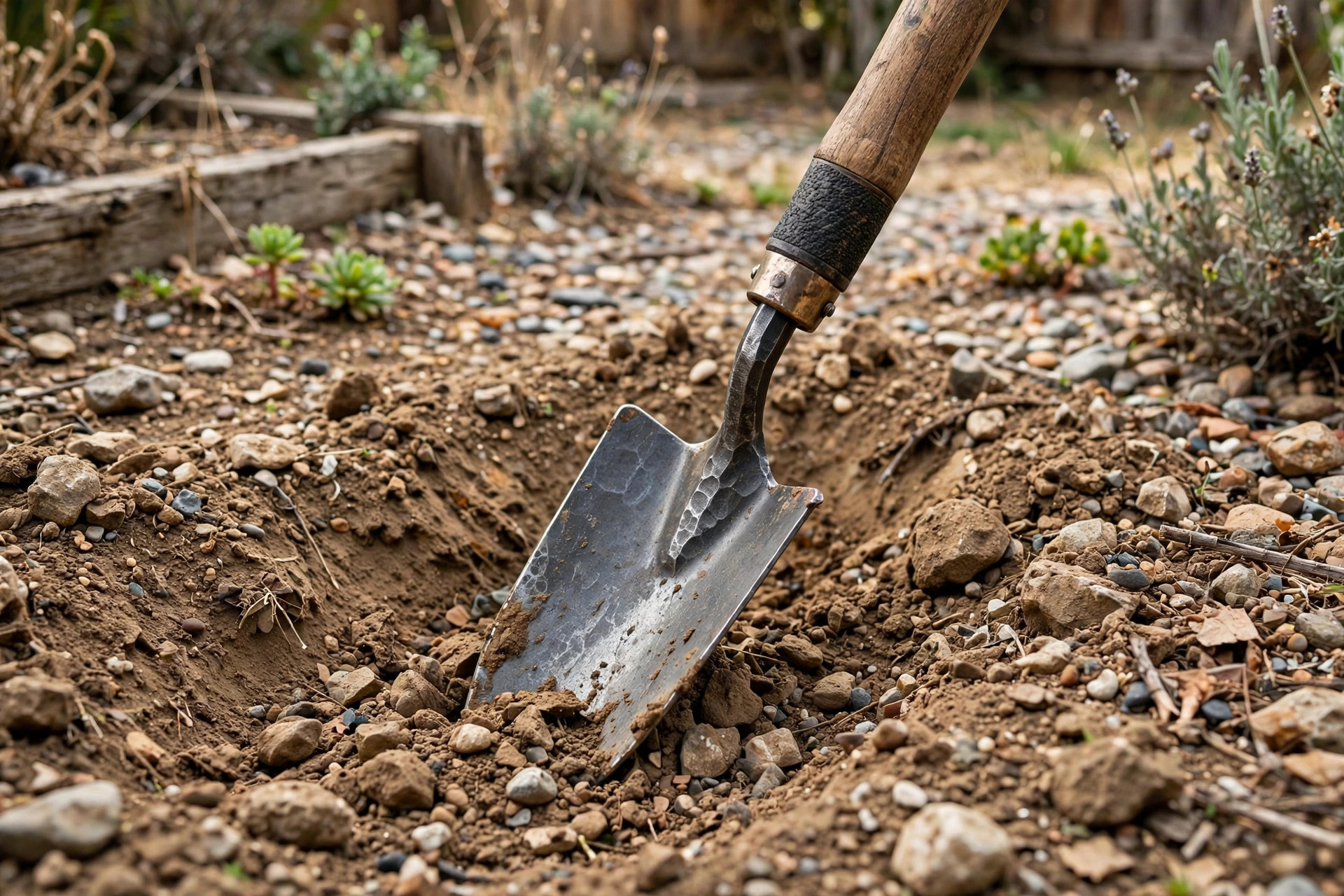
Rocky soil is common across much of the United States. New England gardens sit on ground full of glacial stone. Much of the Southwest has hard, rocky clay. In all these places, a standard stamped-steel trowel is often not strong enough. The blade bends, the handle loosens, and the edge chips when it strikes rock.
A trowel made for rocky ground works differently. Its blade is forged from a single piece of steel or thick aluminum alloy. Forging compresses the metal and makes it far stronger than flat stamped steel. The blade resists bending when it hits a buried stone. It also holds a sharper edge, so it can cut through small roots and scrape along the side of a large rock without chipping.
The right trowel also saves the hands. Rocky soil means more force and more vibration with every dig. A handle that fits the hand reduces blisters and wrist strain. Gardening guides from Gardener’s Supply note that comfort matters, since a tool that hurts will sit unused in the shed.
Finally, a good trowel saves money over time. One strong trowel that lasts ten years costs less than five cheap trowels replaced every other season. For gardeners working difficult ground, durability is the cheapest choice.
What to Look For When Choosing: Best Garden Trowel for Rocky Soil
Not every trowel sold as “heavy duty” deserves the name. Look at these features before buying.
Forged One-Piece Steel Blade
The single most important feature is a forged blade. Forged means the metal was heated and hammered into shape. This makes it dense and tough. Stamped blades are cut from flat sheet metal and bent into a scoop. They cost less, but they bend easily in hard soil. For the best garden trowel for rocky soil, choose a blade of carbon steel, stainless steel, or thick forged aluminum. Carbon steel is very strong but needs care to prevent rust. Stainless steel resists rust and works well in damp soil. Forged aluminum is light and strong, though not quite as hard as steel.
Blade Width and Shape
A narrow blade digs more easily into rocky ground. A blade three inches wide or less slips between stones better than a wide scoop. Some trowels have a pointed or sharpened tip. A sharp tip bites into hard soil and roots instead of sliding off them. Transplanter trowels, which have long narrow blades with measurement marks, also work well in rocky beds because they reach deep between stones.
Sharp or Serrated Edges
Some heavy-duty trowels have a serrated edge on one side of the blade. This small saw edge cuts small roots cleanly when the trowel is pulled through the soil. Other trowels have a fully sharpened straight edge. Both help in rocky soil, where roots often wind around stones. Avoid blades with paper-thin edges, which chip on contact with rock.
Handle Strength and Comfort
The handle is where cheap trowels fail first. In rocky soil, the gardener must pry and lever, and weak handles crack or snap. Look for a handle that is part of the same forging as the blade, or one that is riveted firmly through the metal shank. Hardwood handles, like ash or hickory, are strong and traditional. Modern soft-grip handles cushion shock and resist weather. A longer handle gives more leverage for prying stones.
Depth Markings
Measurement marks stamped into the blade are a small but useful feature. Bulb planting and transplanting need correct depth. In rocky soil, where digging deeper takes extra work, it helps to know when the hole is deep enough on the first try. Look for marks in both inches and centimeters.
Weight and Balance
A heavy trowel tires the hand over a long afternoon. Hold the tool before buying if possible. It should feel solid, not flimsy, with the weight sitting in the palm rather than pulling forward.
Detailed tool reviews and side-by-side tests, such as those published by Consumer Reports and The Spruce, help compare blade strength, handle comfort, and durability across brands.
Types of Trowels That Handle Rocky Soil
Several trowel styles can work in rocky ground. Each has strengths for different jobs.
Standard digging trowels with forged blades. These are the workhorse choice. A forged carbon-steel or stainless-steel trowel with a moderately narrow blade handles most rocky soil tasks: digging planting holes, loosening soil around stones, and moving small amounts of dirt. Brands like Fiskars and Corona make well-known forged models sold at garden centers nationwide.
Transplanter trowels. Long, narrow, and deeply dished, these slide between rocks to lift plants with their roots intact. Many have serrated edges and depth marks. If most of your work is planting and transplanting in rocky soil, a transplanter may be the better single tool.
Hori-hori knives. The Japanese hori-hori is part knife, part trowel. Its long steel blade has a serrated edge on one side and a sharp edge on the other. It digs, cuts roots, and pries small stones. In rocky soil, the thick steel blade is very hard to bend.
Heavy-duty contractor or mason-style trowels. Some gardeners use margin trowels or small masonry trowels, built from thick steel to handle abuse. They are tough enough for rocky soil, though they lack gardening features like depth marks.
Folding and specialty trowels. Folding trowels are made for camping, not for serious rocky-soil gardening. Skip them for this job.
For gardeners who want to understand their ground before choosing tools, pairing a strong trowel with soil testing helps. A simple test shows whether the soil is rocky clay, sandy gravel, or loam with scattered stone. Our own guide on garden soil test kit reviews covers the testing step in detail.
Cost and Price Guide
Hand trowels range from a few dollars to well over fifty. Price roughly tracks quality, but the most expensive tool is not always the best fit.
Budget models: $5 to $12. These are stamped-steel trowels with plastic or painted handles. They work for soft soil but are not the best garden trowel for rocky soil. They bend and break under hard use. Buyers should expect to replace them often.
Mid-range models: $13 to $30. This is the sweet spot. Many forged carbon-steel and stainless-steel trowels live in this range. They have strong blades, decent handles, and often include depth marks or serrated edges. For most home gardeners with rocky soil, a trowel in this range does the job for years.
Premium models: $30 to $60 and up. These include forged stainless-steel trowels, high-end Japanese hori-hori knives, and trowels with ergonomic hardwood handles. They last longest and feel best in the hand. Serious gardeners who dig every weekend may find the investment worthwhile.
Stores like Home Depot and Lowe’s run spring garden promotions that bring premium trowels into the mid-range price band. Seasonal roundups from Bob Vila and Family Handyman also highlight good value picks.
One tip: buy the best trowel you can afford, but buy only what you need. A single forged trowel covers most rocky-soil work. A second tool, like a transplanter or hori-hori, can be added later.
How to Use a Trowel in Rocky Soil
Even the strongest trowel works better with the right technique.
Test before you dig. Push the trowel tip into the soil first to feel what lies below. If it rings or stops hard against stone, do not force it. Work around the stone instead.
Use the tip to loosen, the scoop to lift. In rocky soil, the job has two steps. First, break the soil loose with the trowel tip, working around stones. Then scoop the loose soil out. Trying to scoop hard, packed soil in one motion is what bends blades.
Pry with care. A forged trowel can pry small stones loose. Slide the blade under the stone, press the handle down slowly, and let the blade do the lifting. Never slam the handle or stand on it. For stones larger than a fist, switch to a full-size shovel or a digging bar.
Keep the edge sharp. A dull trowel needs more force, and more force means more strain on the blade. Sharpen the cutting edge with a small file or sharpening stone a few times each season. A sharp edge cuts roots and bites into soil with less effort.
Wet the ground first. Dry rocky soil is at its hardest. Water the bed the day before digging. Damp soil digs far more easily, and the trowel suffers less strain.
Dig at an angle. Coming straight down puts the full force on the tip. Entering the soil at an angle lets the blade slide past small stones instead of striking them head-on.
Care and Upkeep
A good trowel lasts decades with simple care. Rocky soil is hard on tools, so care matters even more.
Clean after every use. Knock off soil with a stiff brush or an old rag. Rocky soil holds moisture against the metal, which leads to rust. For carbon-steel blades, dry the tool fully before storing.
Sharpen regularly. Use a flat mill file or a pocket sharpening stone. Follow the original edge angle, usually about 25 degrees. Work both sides of a double-edged blade. Serrated edges rarely need sharpening; a light pass with a small round file restores them.
Oil the blade. A thin coat of mineral oil or linseed oil on a carbon-steel blade keeps rust away during storage. Stainless-steel blades need this less but still benefit in humid climates.
Check the handle. Tighten loose rivets. Sand rough wooden handles smooth and rub in linseed oil to keep the wood from cracking. If a soft grip tears, wrap it with grip tape or replace the tool.
Store indoors. Keep trowels in a dry shed, garage, or tool bag. Tools left in the garden rust fast, and wooden handles rot.
Repair, do not force. A slightly bent blade can often be straightened in a vise. A cracked handle should be replaced, not taped, since taped handles fail at the worst moment in rocky ground.
Safety
Rocky soil and strong tools demand respect. A few simple habits prevent most injuries.
Wear gloves. Heavy leather or coated work gloves protect against blisters, sharp stone edges, and slips. Gloves also improve grip when the soil is wet.
Watch for flying chips. Striking rock can send small chips flying. Safety glasses cost little and protect the eyes, especially when prying stones.
Mind the wrist. Prying with a bent wrist invites strain and sprains. Keep the wrist straight and let the arm and shoulder supply the force. Take breaks during long sessions. Switch hands when possible.
Know what is buried. Call the local utility marking service before digging deep in any yard. Buried cables and pipes hide in rocky soil as easily as in soft soil.
Keep tetanus shots current. Soil, rust, and sharp tools are the classic recipe for tetanus. A booster every ten years, as doctors advise, is cheap insurance for every gardener.
Store tools safely. Sharp trowels belong in a tool bag, bucket, or rack, never loose on the ground where a bare foot or a pet can find them. Families with young gardeners may like our guide to garden tool sets for kids.
Frequently Asked Questions
What is the best garden trowel for rocky soil made of?
Forged carbon steel or forged stainless steel gives the best strength for the price. Forged aluminum alloy is a good light-weight option. Avoid thin stamped steel, which bends in hard, stony ground.
How do I sharpen a garden trowel?
Clamp or hold the trowel firmly and draw a flat mill file along the cutting edge at the original angle, about 25 degrees. A few passes on each side restore the edge. Serrated edges need only a light touch with a small round file.
Should the blade be stainless steel or carbon steel?
Both work. Carbon steel is slightly harder and holds an edge longer, but it rusts if neglected. Stainless steel resists rust well and is easier to maintain. In wet climates, stainless is the simpler choice. In dry climates, either serves.
What size trowel works best in rocky soil?
A narrow blade, about two to three inches wide, slips between stones more easily than a wide scoop. A longer blade, like that of a transplanter or hori-hori, reaches deeper around rocks. For general use, a standard forged trowel with a slightly narrow blade is the best all-around pick.
Can a trowel remove large rocks?
No. A hand trowel can pry out stones up to fist size. Anything larger needs a full-size shovel, a digging bar, or a pick. Forcing a trowel on large rocks bends or breaks it.
A Final Word
Rocky soil makes gardening harder, but it does not make it impossible. Generations of gardeners have grown fine gardens in stony ground. The best garden trowel for rocky soil is simply a strong, honest tool: a forged blade, a firm handle, a sharp edge. Choose it well, use it with care, and it will outlast the rocks it meets. And for crops where the ground fights back too hard, growing vegetables in containers is a fine way to sidestep the stones altogether.
References
Bob Vila. (n.d.). Home improvement advice. https://www.bobvila.com Burpee. (n.d.). Seeds, plants, and gardening supplies. https://www.burpee.com Consumer Reports. (n.d.). Product reviews and ratings. https://www.consumerreports.org Corona Tools. (n.d.). Garden and landscape tools. https://www.corona-tools.com Family Handyman. (n.d.). DIY home repair and maintenance. https://www.familyhandyman.com Fiskars. (n.d.). Garden and cutting tools. https://www.fiskars.com Gardener’s Supply Company. (n.d.). Gardening tools and supplies. https://www.gardeners.com Lowe’s. (n.d.). Home improvement products. https://www.lowes.com The Home Depot. (n.d.). Home improvement products. https://www.homedepot.com The Spruce. (n.d.). Home and garden advice. https://www.thespruce.com
Was this guide helpful?

About David Wilson
The My Garden US editorial team writes practical, in-depth home and garden guides for American homeowners — tested advice, no fluff.