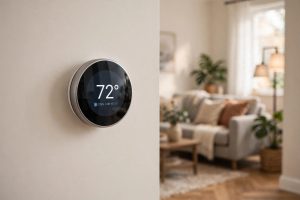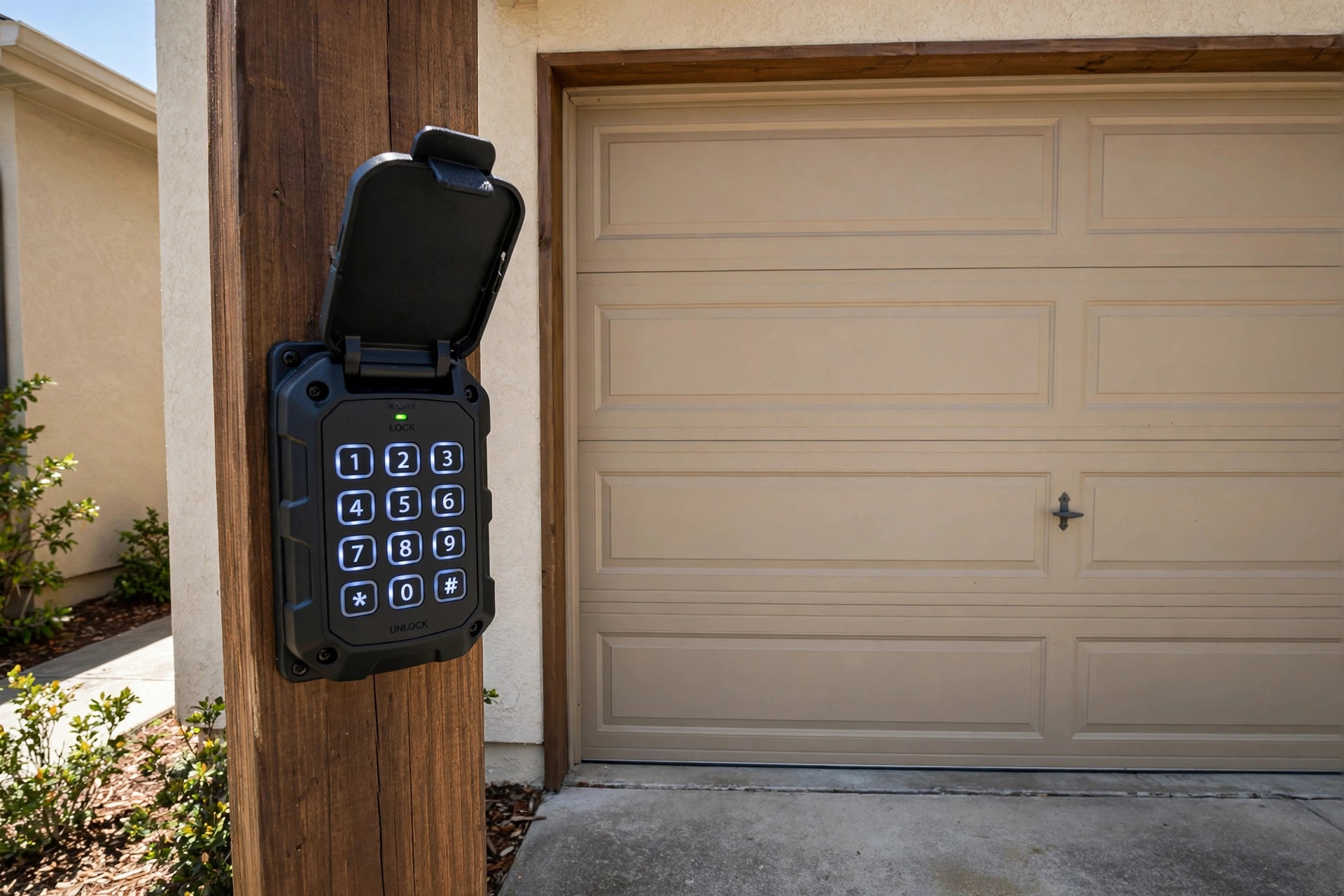

A garage is the most used door in many American homes. Cars come and go through it. Children arrive home from school through it. Guests enter through it. Yet the garage door is often the least protected door in the house. A wireless keypad changes that. It gives the garage door the same kind of code-based entry that front doors have had for years. The best keypad lock for garage door usa is not one single product. It is the one that fits your opener, your weather, and your daily habits. This guide walks through how these locks work, what to look for, what they cost, and how to keep them working for years.
Why a Keypad Lock for the Garage Door Matters
Most break-ins that start at the garage do not start with force. They start with a remote left in a car parked outside, or a code that has not been changed in years. A keypad lock solves both problems. There is nothing to steal from a car because the code lives in your head. There is no worn-out remote to fail at midnight because the keypad is fixed to the door frame and built for weather.
A keypad also ends the hide-a-key problem. Spare keys under mats and rocks are an open secret. With a keypad, you give a neighbor or a repair worker a temporary code instead of a physical key. When the job is done, you delete the code. No lock change. No worry.
For families, the value is plain. A child can punch in a code and come home after school without carrying a house key. A dog walker can enter at a set hour. And many modern keypads log when a code is used, so you know when the door opened. Security writers at The Verge have noted for years that the garage is the weak point of the smart home. A keypad closes that gap in the simplest way possible.
How a Garage Door Keypad Lock Works: Best Keypad Lock for Garage Door Usa
A garage keypad is not a deadbolt. It is a wireless control pad for the garage door opener. You mount it on the outside of the garage door frame. You press a personal code. The keypad sends a radio signal to the opener. The opener runs the motor and lifts the door. Close the door the same way, or with the wall button inside.
The signal uses rolling code technology on modern units. Each press sends a new code. An old captured signal cannot be played back to open the door. This is the same protection that stops thieves from copying car remotes. The U.S. Consumer Product Safety Commission keeps safety records on garage door openers and their controls, and modern openers with auto-reverse sensors are the standard you should expect any keypad to work with.
Power comes from a battery inside the keypad housing. Most run on a 9-volt battery. Some newer models use coin cells or AAA batteries. When the battery runs low, the backlight dims or the keys stop responding. Change the battery once a year and you will rarely have a failure.
What to Look for When You Choose
Compatibility with Your Opener
This is the first and most important check. A keypad must speak the radio language of your opener. Major brands such as Chamberlain, LiftMaster, and Craftsman use specific frequencies and code systems. A universal keypad can learn many of them. A brand-specific keypad works only with its own brand. Check the opener brand and the year it was made before you buy. Testing labs such as Consumer Reports stress that compatibility is the top reason for returns in this category.
Code Features
Look for a keypad that holds more than one permanent code. Four or five codes is common. Better units add temporary codes that work for a set number of hours or days. This is the feature that lets you admit a house cleaner or a delivery driver without sharing your main code. Some keypads also have a one-touch close button, which locks the door without a code.
Weather and Build Quality
The keypad lives outside. Rain, snow, dust, and summer heat all reach it. Choose a unit with a sealed housing and a flip cover over the keys. Backlit keys matter in winter darkness. Keys that are raised and rubberized work with gloves on. Cheap plastic housings crack after two or three summers in southern states. Spend a little more for a housing that survives your climate.
Smart and Wi-Fi Options
Some keypads now link to home Wi-Fi through a smart garage controller. These let you open the door from your phone, set schedules, and get alerts when the door is left open. If you already use a Ring camera or a Google Home setup, check whether the keypad or its hub works with your system. CNET reviews smart home gear each year, and their buying guides are a good place to compare app quality before you commit.
Types of Garage Keypad Locks
Universal Wireless Keypads
A universal keypad learns the code of your existing opener. You press a learn button on the opener, enter a code on the keypad, and the two pair. These are the best value for most homes. They cost less than brand-name units and work across many opener brands. The trade-off is that they rely on the opener’s own security system, so they are only as strong as the opener behind them.
Brand-Specific Keypads
Opener makers sell their own keypads. A LiftMaster keypad with a LiftMaster opener is a matched pair. Setup takes minutes. Features such as motion-sensing backlight and timed codes work best in these pairs. If your opener is less than ten years old, the brand’s own keypad is often the smoothest choice. It costs more than a universal unit, but the extra money buys certainty.
Smart Wi-Fi Keypads and Controllers
A smart garage controller adds phone control, voice control, and alerts to almost any opener. You wire a small hub to the opener and link it to your Wi-Fi. From then on, your phone is a second keypad. This is the right pick if you want to check the door from work or let a guest in while you are away. Reviewers at PCMag test these hubs for range, app speed, and reliability.
Keypad Deadbolts for Garage Side Doors
Many garages have a side door or a door into the house. A keypad deadbolt on that door is a different product from a garage keypad. It is a real lock with a keypad instead of a keyhole. Our guide to the best smart lock for front door reviews usa covers these in detail. Pairing a garage keypad with a keypad deadbolt on the side door gives full coverage. The garage entry stays code-based from every direction.
Cost and Price
A basic universal wireless keypad costs between 25 and 45 dollars in the United States. Brand-specific keypads run from 35 to 70 dollars. Smart Wi-Fi controllers cost between 50 and 130 dollars, plus the cost of the app service if one applies. Most models carry no monthly fee.
Professional installation adds 75 to 150 dollars to the bill. Many handymen will mount and pair a keypad in under an hour. But most keypads are a true do-it-yourself job. You need a screwdriver, a ladder, and the opener manual.
Replacement batteries cost a few dollars a year. Flip covers and mounting brackets are cheap when bought with the unit. All told, a keypad is one of the least costly security upgrades a homeowner can make. Whole-home systems from companies like ADT and SimpliSafe run far higher, and they still leave the garage door itself under-protected unless you add a keypad or a smart controller.
Installation: Do It Yourself or Call a Pro
Most homeowners can install a wireless keypad in thirty minutes. Mount the keypad on the door frame at a height children can reach but where rain does not pool. Five feet is the common choice. Then pair it with the opener. The pairing steps are simple: press the learn button on the opener, enter your chosen code on the keypad, and press enter. Test the door three times from outside before you call the job done.
Call a professional when the opener is very old. Openers made before the early 1990s may lack rolling codes and safety sensors. A keypad will still work with them, but the security gain is small. A new opener with a new keypad is the honest fix. Also call a pro if the door itself is out of balance. A keypad cannot fix a door that sticks or slams.
One caution: never mount the keypad where a ladder or a truck can knock it off. The side frame of the garage door, under the eave, is the safe spot.
Care and Upkeep
A keypad needs little care, but a small routine keeps it reliable. Change the battery once a year, in the fall, before cold weather drains weak cells. Wipe the keys with a damp cloth twice a year. Dust and grit work into the key seals and make keys stick.
Check the flip cover after storms. A cracked cover lets water into the housing, and water kills the circuit board. Replacement covers are cheap. Replace one at the first sign of a crack rather than after the first failure.
Change your codes once a year as well. Old codes leak through habit. Changing codes takes two minutes and costs nothing.
Watch the door’s behavior too. If the door hesitates after you enter the code, the problem is usually the battery or the opener’s antenna, not the keypad. Check the simple things first.
Safety
A keypad is a convenience device, not a vault door. Treat it as one layer of a larger plan. Keep the emergency release cord on the opener out of reach of the door windows. Thieves have fished coat hangers through door windows to pull that cord. A simple zip tie or a release shield blocks that trick.
A keypad means no one needs a remote outside the garage. Store remotes inside the garage, not in a car parked in the driveway.
Make sure the opener’s safety sensors work. These are the small electric eyes near the floor on each side of the door. They stop the door from closing on a child or a pet. Test them monthly with a rolled towel. The U.S. Consumer Product Safety Commission has tracked garage door injuries for decades, and working sensors are the single best guard against them.
If you rent out the home, remember that garage codes are access credentials. Our article on smart lock for airbnb remote access reviews explains how hosts manage codes for guests. Change garage codes between tenants just as you would change door locks.
Finally, use strong codes. A birthday is a guess away. Four random digits beat four meaningful ones. Never use the same code for the garage and the front door. If you want fingerprint entry for the main door instead of codes, see our comparison of the best fingerprint door lock reviews 2026 usa.
Frequently Asked Questions
Will a keypad work with my old garage door opener?
It depends on the age and the brand. Keypads made for modern rolling-code openers work with most openers built after the mid-1990s. Very old openers that use fixed dip-switch codes need a compatible keypad or a receiver upgrade. Check the opener brand and the year on the motor unit label before you buy.
Do I need Wi-Fi for a keypad lock to work?
No. A basic wireless keypad talks straight to the opener by radio. It needs no Wi-Fi and no phone. Wi-Fi matters only if you want phone control, alerts, or voice commands. For pure code entry at the door, radio is enough and it keeps working when the internet goes down.
How long does the battery last?
Most keypad batteries last one to two years. Cold weather shortens battery life. Change the battery each fall and keep a spare in the house. When keys stop lighting up or the door stops responding, the battery is the first thing to check.
Can someone guess or steal my code?
Guessing is hard when codes are random and changed yearly. Stealing is harder still because modern keypads use rolling radio codes that cannot be replayed. The real risk is a code shared too widely. Give temporary codes to workers and delete them when the work ends. Never write the code on the keypad or near the door.
What is better: a universal keypad or the brand’s own keypad?
The brand’s own keypad wins on setup ease and feature match. A universal keypad wins on price and on homes with more than one opener brand. If your opener is new and you want every feature, buy the brand unit. If you want a simple, low-cost upgrade, a universal keypad does the job.
Does a keypad replace the need for a monitored security system?
No. A keypad controls entry. It does not watch the house or call for help. Companies like ADT and SimpliSafe offer monitored systems that pair well with keypads. The Google Store also sells smart home devices that can work alongside a garage keypad. Think of the keypad as the lock on the door and the security system as the guard behind it.
A Final Word
The best keypad lock for garage door usa is the one you install and use every day. A thirty-dollar universal keypad on a solid opener beats a hundred-dollar smart system that never gets set up. Pick a unit that fits your opener, mount it in a sheltered spot, choose a code no one can guess, and change the battery each year. That is the whole job. Your garage becomes as easy to lock as your front door, and you never hide a spare key again.
References
ADT. (n.d.). Home security and automation. https://www.adt.com CNET. (n.d.). Technology news and reviews. https://www.cnet.com Consumer Reports. (n.d.). Product reviews and ratings. https://www.consumerreports.org Google Store. (n.d.). Smart home devices. https://store.google.com PCMag. (n.d.). Technology product reviews. https://www.pcmag.com Ring. (n.d.). Smart home security devices. https://www.ring.com SimpliSafe. (n.d.). Home security systems. https://www.simplisafe.com The Verge. (n.d.). Technology news and reviews. https://www.theverge.com U.S. Consumer Product Safety Commission. (n.d.). Product safety information. https://www.cpsc.gov
Was this guide helpful?

About David Wilson
The My Garden US editorial team writes practical, in-depth home and garden guides for American homeowners — tested advice, no fluff.
You May Also Like
Best Smart Lock for Front Door Reviews USA: A Full Buyer Guide
May 28, 2026 0 views
The Best Video Intercom System for Home Use in the USA
July 29, 2026 0 views
The Best Smart Doorbell for Hearing Impaired USA Homes
September 6, 2026 0 views