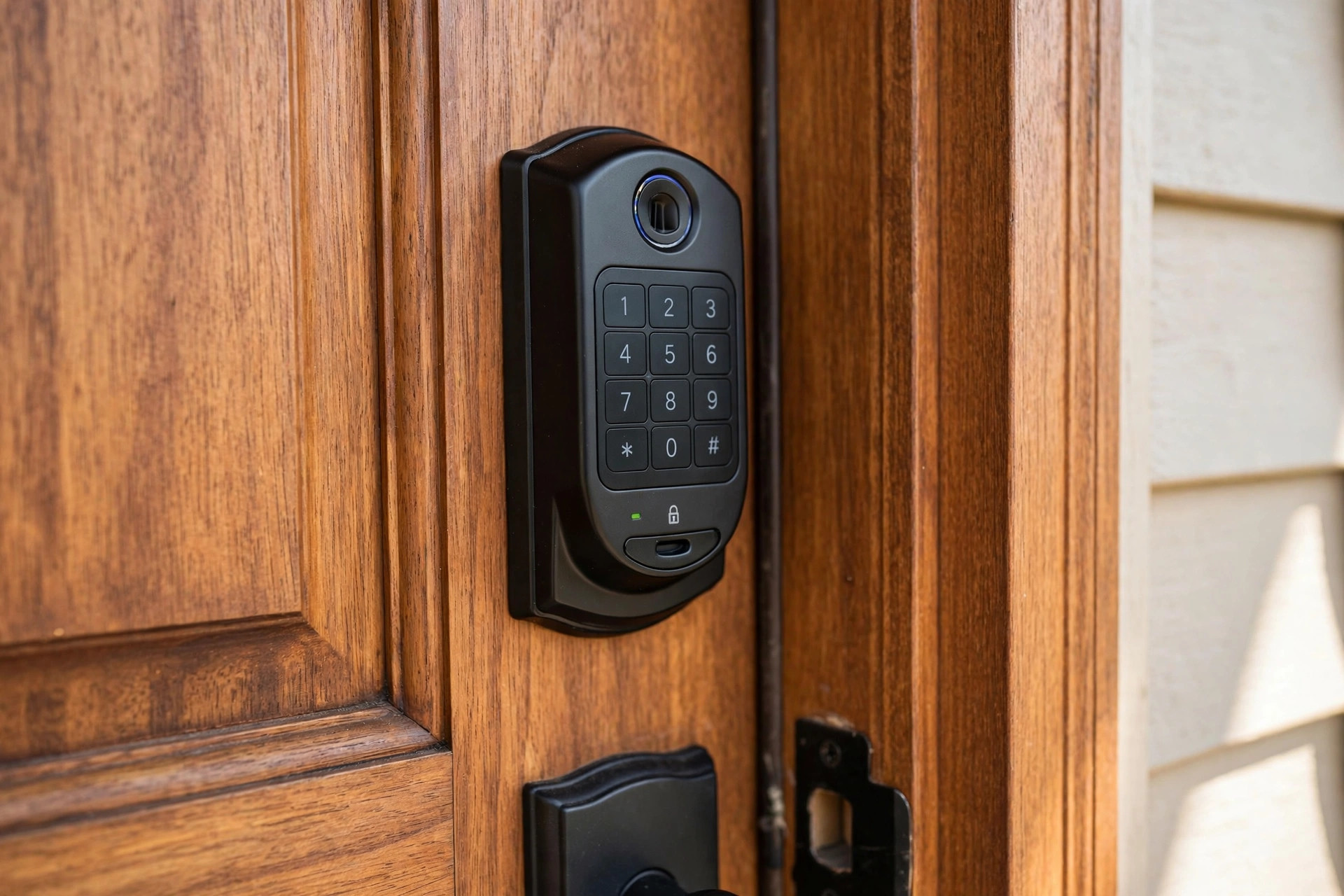

The best fingerprint door lock reviews 2026 usa help homeowners in the United States pick a deadbolt that opens with a touch of the finger. No key to lose. No code to forget. The lock reads your fingerprint and turns the bolt in less than a second. Reviews in 2026 show that these locks have grown much more reliable than the early models. Readers today can choose from basic keypad-free deadbolts and full smart locks that pair with a phone. This guide sums up what the reviews say, so you can buy with care and fit the right lock to your own front door.
Why a Fingerprint Door Lock Matters
A front door lock is the first line of defense for any home. A standard key lock works well, yet keys get lost, copied, or left under a mat. A fingerprint door lock takes the key out of the picture. Only registered fingers can open the door. Most models in the 2026 reviews store fifty or more fingerprints, so the whole family gets in with ease. Guests and workers can use a spare code or a backup key when the owner allows it.
Speed is another reason these locks matter. A good reader unlocks in well under one second. That helps on a rainy night when your hands are full of groceries. Many models also send a phone alert each time the door opens, which tells parents when children get home from school. The best smart lock for front door reviews usa often name fingerprint models as top picks for this reason.
Reliability has improved. Early fingerprint locks sometimes failed in cold or wet weather. The 2026 models carry better sensors and sealed housings. Reviewers test them in rain, heat, and dust, and the better brands hold up. Battery life has grown too. Four AA batteries now last six months to a full year in most homes.
What to Look For When You Choose: Best Fingerprint Door Lock Reviews 2026 Usa
Sensor Type and Accuracy
The heart of the lock is the sensor. Capacitive sensors are the common choice in 2026. They read the fine ridges of the finger and reject most false prints. Reviewers look for a false rejection rate under one percent. That means the lock opens on the first try almost every time. Optical sensors cost less but can be slower and easier to fool. For a front door, a capacitive reader is the safer pick.
Speed and Memory
A fast lock matters more than it sounds. Look for models that unlock in under one second. The lock should store at least twenty fingerprints, though fifty is common. Check how many codes it stores as well. Ten to twenty backup codes give you room for guests, cleaners, and neighbors.
Battery Life and Power Backup
Almost all fingerprint door locks run on AA or AAA batteries. Reviews measure how long a set lasts under daily use. The best models reach eight to twelve months. A low-battery warning is a must. Most locks beep or flash when power runs low. A USB emergency port on the outside is a wise extra. If the batteries die, a short charge from a phone charger lets you get in.
Smart Features
Many 2026 models link to a phone through Bluetooth or Wi-Fi. The app shows a log of who entered and when. Some locks work with voice helpers from major brands like the ones sold on the Google Store. Remote locking helps when you leave the house and wonder if you locked up. Wi-Fi models use more battery, so weigh the gain against the cost of new batteries.
Fit and Build
Measure your door before you buy. Standard American doors are one and three eighths to one and three quarters of an inch thick. The lock must match the backset, which is the distance from the door edge to the hole center. Most homes use two and three eighths or two and three quarter inches. Good locks come with both sizes in the box. A metal body feels solid and resists kicks. Zinc alloy is the common strong choice.
Types of Fingerprint Door Locks
Reviews in 2026 sort these locks into three groups.
Standalone fingerprint deadbolts. These do one job and do it well. You register fingerprints at the lock itself. No phone app and no Wi-Fi. They cost less and their batteries last longest. They suit owners who want simple keyless entry.
Smart fingerprint deadbolts. These add Bluetooth or Wi-Fi. You manage codes and view entry logs in an app. Many link to home hubs and voice control. They cost more and drain batteries faster. They suit tech-minded owners who want full control from a phone.
Fingerprint lever locks. These replace the handle rather than the deadbolt. They fit interior doors, offices, and garage entries. They are easier to fit but offer less force against kicks than a true deadbolt. Many owners pair a lever lock with a separate deadbolt for the main entry.
Some buyers also read keyless entry door lock reviews 2026 usa before they decide, since keypad models share many of the same parts.
What the 2026 Reviews Say
Across the major review sites, a few themes repeat. Testers at Consumer Reports stress build quality and resistance to picking and drilling. Their scores favor locks with strong metal housings and clean app design. Tech reviewers at CNET and PCMag spend time on setup and daily use. They like locks that pair in minutes and keep a steady Bluetooth link. The Verge often notes how well a lock fits into a wider smart home.
Brand names come up again and again. Longtime lock makers earn praise for sturdy deadbolts and honest specs. Newer smart brands earn praise for fast readers and slick apps. The schlage vs kwikset smart lock comparison usa is a common side read, since both firms sell fingerprint models in the United States. Reviewers advise buyers to check the warranty. Two to three years is standard, and the better brands back their finish against rust.
Fingerprint speed is the headline test. The top models open in half a second. Mid-range models take about one second. Budget models can take two seconds and fail more often with wet fingers. If you live in a rainy state, pay for the better sensor.
App quality splits opinion. Some apps are simple and stable. Others push ads or need an account for basic use. Read the app store ratings before you buy. A lock with a poor app will annoy you every day.
Cost and Price
Prices in the United States in 2026 fall into three bands.
Budget locks run from about forty to ninety dollars. They unlock with a fingerprint and a code. Build quality is fair. Battery life is shorter, and the app may be basic. They suit rental units and side doors.
Mid-range locks run from about ninety to one hundred eighty dollars. This is where most reviewers find the best value. Readers are fast. Bodies are metal. Apps are stable. Many add Wi-Fi or Bluetooth and a doorbell chime link.
Premium locks run from about one hundred eighty to three hundred fifty dollars. They add features like palm or face unlock, video cameras, and deep smart home ties. Brands like Ring and SimpliSafe sell full home systems that pair well with these locks, and ADT offers monitored plans that include smart locks. Premium buyers pay for the whole system, not just the bolt.
Fitting costs add to the price if you hire help. A locksmith charges roughly seventy-five to one hundred fifty dollars to fit a deadbolt. Most owners fit these locks themselves in thirty minutes with a screwdriver, since the door holes match standard sizes.
Care and Upkeep
A fingerprint lock needs little care, but a few habits keep it sharp. Wipe the sensor with a dry soft cloth once a month. Oils from skin build up and slow the reader. Never use water or cleaners on the sensor. Check the batteries twice a year. Change them when the low-battery light shows. Keep the backup key in a safe place outside the home, such as with a trusted neighbor.
Update the app when the maker releases a fix. Updates close security holes and fix bugs. If the lock connects to Wi-Fi, use a strong home network password. Register each family member’s finger twice, at slightly different angles. This raises the first-try success rate.
In cold states, check the lock’s rated range. Most work from minus twenty to plus one hundred fifty degrees Fahrenheit. A covered porch helps in harsh weather. If the reader slows in winter, warm your finger for a few seconds first.
For homes near the coast, salt air can dull the finish over time. A light coat of car wax on the metal body twice a year slows this wear. Do not wax the sensor face. Tighten the mounting screws once a year, since daily use can loosen them. If the bolt starts to drag, a small spray of dry graphite in the strike plate keeps it smooth.
Safety
A fingerprint lock is safe when it is fitted right and used with sense. The U.S. Consumer Product Safety Commission offers general home safety guidance that applies to any door hardware. Always fit the strike plate with long screws that bite into the door frame stud. Short screws are the weak link in many break-ins.
Keep a backup way in. Every fingerprint lock should have a key override or a USB power port. Teach children the backup code in case the reader fails. Do not share the master code. Delete old fingerprints and codes when a worker or guest no longer needs access.
Biometric data stays on the lock in most models. It does not travel to the cloud. Check the maker’s privacy policy to be sure. Avoid locks that force you to store prints on outside servers.
FAQ
How accurate are fingerprint door locks in 2026? Very accurate. The best models open on the first try more than ninety-nine times out of a hundred. Wet or dirty fingers cause most misses. Wiping the finger and the sensor fixes it.
What happens if the battery dies? The lock warns you weeks ahead with beeps and flashing lights. If you miss the warning, most models have a USB port on the outside. A phone charger gives enough power for one unlock. A backup key also works.
Can someone copy my fingerprint to break in? It is very hard. Modern capacitive readers check for live skin and reject photos or molds in most tests. A strong deadbolt body matters more than this rare risk.
Do fingerprint locks work in rain and cold? Yes, within their rated range. Sealed housings keep rain out. Cold slows some readers a little. A porch roof and a quick wipe keep them working well.
Are these locks hard to install? No. Most fit a standard door hole in twenty to forty minutes with a screwdriver. The app walks you through fingerprint setup in a few minutes.
Should I pick Wi-Fi or Bluetooth only? Bluetooth saves battery and works fine at home. Wi-Fi adds remote control and alerts from anywhere but drains batteries faster. Pick Wi-Fi if you want to check the door from work.
A Final Word
The best fingerprint door lock reviews 2026 usa agree on the basics. Buy a metal deadbolt with a fast capacitive reader. Make sure it fits your door. Pick the smart features you will truly use. Spend in the mid-range for the best mix of price and quality. Fit it with long screws, keep the backup key safe, and change the batteries on time. Do that, and your front door will open with a touch for years to come.
References
ADT. (n.d.). Home security and automation. https://www.adt.com CNET. (n.d.). Technology news and reviews. https://www.cnet.com Consumer Reports. (n.d.). Product reviews and ratings. https://www.consumerreports.org Google Store. (n.d.). Smart home devices. https://store.google.com PCMag. (n.d.). Technology product reviews. https://www.pcmag.com Ring. (n.d.). Smart home security devices. https://www.ring.com SimpliSafe. (n.d.). Home security systems. https://www.simplisafe.com The Verge. (n.d.). Technology news and reviews. https://www.theverge.com U.S. Consumer Product Safety Commission. (n.d.). Product safety information. https://www.cpsc.gov
Was this guide helpful?

About Lisa Anderson
The My Garden US editorial team writes practical, in-depth home and garden guides for American homeowners — tested advice, no fluff.
You May Also Like
The Best Smart Display for Kitchen Counter USA Kitchens
May 24, 2026 0 views
Smart Water Valve Shutoff Reviews 2026 USA: An Honest Guide
July 23, 2026 0 views
Tesla Powerwall vs Generac PWRcell Comparison
July 10, 2026 0 views