
A wet basement is a slow problem that turns into a fast one. First it is a damp smell after a storm. Then it is a stain along the wall. Then it is mold behind the boxes and a repair bill that no one wants. This is why so many homeowners search for affordable basement waterproofing services near me. They want a fix that works and a price they can live with.
This guide walks through what these services do, how they price their work, and how to choose a company without paying too much or getting too little.
Why Basement Waterproofing Matters
Water is patient. It finds every small crack in a foundation wall. In most American homes, the soil around the foundation holds rain water against the concrete. Over time, this pressure pushes water through cracks, joints, and even tiny pores in the wall. The result is a basement that leaks in spring, sweats in summer, and smells all year.
The damage is not only about comfort. Water weakens wood framing and rots sill plates. It feeds mold, which can harm the air the whole family breathes. It ruins carpet, drywall, and stored goods. In some cases, standing water can damage the home’s foundation itself, which is the costliest repair of all. A small leak left alone often becomes a large one. It is cheaper to stop water early than to fix the damage later.
A good waterproofing job also helps when a home is sold. Buyers ask about past leaks. A dry basement with a proper system in place gives them peace of mind and can add real value to the sale price.
How to Find Affordable Basement Waterproofing Services Near Me
The word “affordable” does not mean “cheap.” It means a fair price for work that lasts. Here is how to find that balance when you look for affordable basement waterproofing services near me.
Start by asking neighbors and friends. Word of mouth is still the best source for honest local contractors. A neighbor who had the work done two years ago can tell you what it cost and whether the basement stayed dry.
Get at least three written quotes. Every company should visit the home, look at the problem, and put the plan in writing. A quote over the phone is worth very little. An in-home visit shows how serious the leak is and what method the company will use.
Check the company’s record. Look for a business license, general liability insurance, and workers’ compensation coverage. Ask how long the company has been in business. A firm that has worked in your town for ten years will still be there if you need help with a warranty claim.
Read reviews with care. A few bad reviews among many good ones are normal. Look for patterns. If several customers say the crew left a mess or the office never returned calls, take that as a warning.
Ask what the warranty covers. A lifetime warranty on paper means little if the company will not stand behind it. Ask whether the warranty covers labor and materials, whether it transfers to a new owner, and what voids it.
Be wary of high-pressure sales. A salesperson who demands a signed contract on the spot is not giving you a fair deal. A good company lets you think it over.
Homeowners who also plan other exterior work can look at related guides, such as a foundation crack repair cost guide, to see how foundation fixes fit into the bigger picture.
What to Look For in a Waterproofing Contractor
Not all basement problems need the same fix. The right contractor first finds the source of the water, then offers the fix that fits. Here are the signs of a good one.
A good contractor asks questions. When did the leak start? Does it happen with every rain or only in spring? Is there a sump pump already? These answers point to the cause.
A good contractor inspects the outside too. The grade of the soil, the gutters, and the downspouts matter as much as the basement walls. Sometimes the best fix is outside the house: longer downspout extensions or better grading cost far less than an interior system.
A good contractor explains the work in plain terms. You should know what will be torn up, how long it will take, and what it will cost. If the explanation is full of jargon and scare talk, get a second opinion.
A good contractor puts everything in writing. The scope of work, the price, the start date, and the warranty terms should all appear in the contract before any money changes hands.
Types of Basement Waterproofing Services
There are two main approaches: inside and outside. Most affordable basement waterproofing services near me offer both, and many homes need a mix.
Interior Drain Systems
The most common interior fix is a perimeter drain, often called a French drain. Workers remove a strip of the basement floor along the wall. They lay a drain pipe in gravel, then connect it to a sump pump that sends water outside. This system catches water where it enters and moves it away before it reaches the floor. It costs less than exterior digging and works well for most homes.
Interior wall coatings are another option. Sealant paints can slow down minor seepage through walls. They are cheap and easy to apply, but they are not a true fix for active leaks. Think of them as a helper, not a cure.
Exterior Waterproofing
Exterior waterproofing stops water before it touches the wall. Crews dig down to the footing, clean the wall, apply a waterproof membrane, and add drain tile at the base. This is the most complete fix and the most expensive one. It is often used when the foundation has major cracks or when the wall is being repaired anyway.
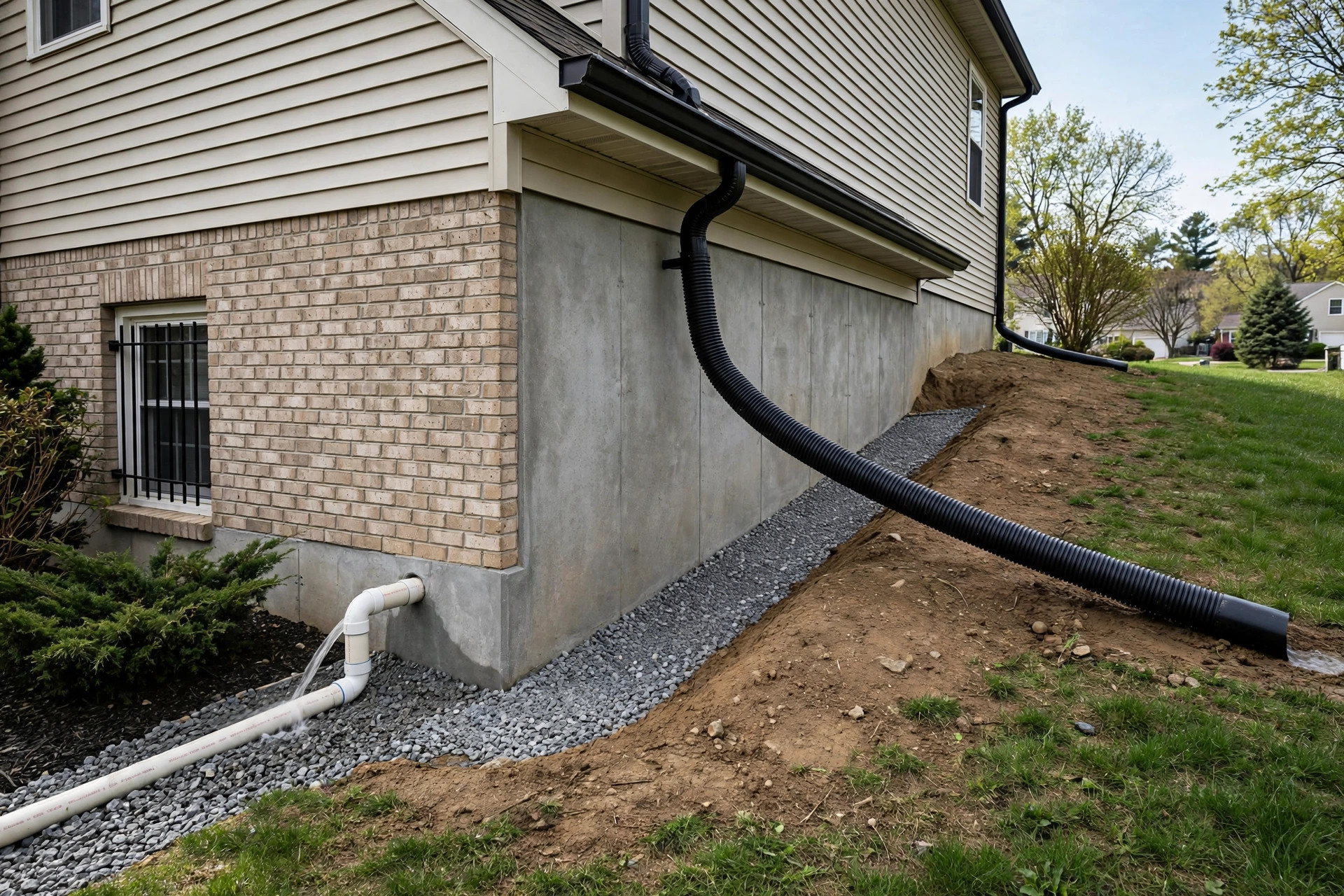
Grading and drainage work is the simplest exterior fix. Soil should slope away from the house for at least six feet. Gutters should be clean, and downspouts should carry water well past the foundation. Many damp basements improve a great deal once these basics are fixed. Guides on exterior drainage and hard surfaces, such as tips for concrete driveway resurfacing, show how ground surfaces near the home affect where water flows.
Sump Pumps
A sump pump is the heart of most interior systems. It sits in a pit at the lowest point of the floor and pumps collected water out of the house. Battery backup pumps are worth the extra cost. Power outages often come with heavy storms, and that is when the pump is needed most.
Cost and Price of Basement Waterproofing
Price is the reason most people search for affordable basement waterproofing services near me, so let us be plain about numbers. Costs vary by region, home size, and the method used. These are broad ranges, not quotes.
Minor crack sealing can run from 300 to 800 dollars per crack. Interior drain systems with a sump pump often run from 3,000 to 8,000 dollars for a full basement. Exterior excavation and membrane work can run from 8,000 to 20,000 dollars or more. Grading and downspout work is the cheapest fix, often under 1,000 dollars.
Several things move the price up. A finished basement costs more to fix because walls and floors must be opened and restored. Deep foundations cost more to dig around. Hard soil, nearby utilities, and poor access to the yard all add labor time.
To keep the price fair, ask each bidder to break the quote down by task. Ask whether the price includes restoring the floor, walls, and landscaping. A low quote that leaves the basement floor torn up is not really low.
Payment terms matter too. Never pay the full amount up front. A deposit of ten to twenty-five percent is normal. The rest should be due when the work is done and the basement is dry.
Homeowners who are also looking at walls or retaining structures may want to compare bids from top rated retaining wall builders when the yard holds water against the house.
Care and Upkeep After Waterproofing
A waterproofing system is not a one-time event. A little care each year keeps it working for decades.
Test the sump pump twice a year. Pour a bucket of water into the pit and make sure the pump starts, runs, and stops on its own. Replace a pump that is more than seven to ten years old, or one that runs all the time.
Keep gutters clean. Clogged gutters pour water next to the foundation, which is the exact problem you paid to fix. Clean them in spring and fall.
Walk the yard after a heavy rain. Look for new puddles near the foundation. Check that downspouts still point away from the house and that the soil still slopes outward.
Watch the basement walls. New stains, white powdery deposits, or a musty smell mean water is finding a new path. Call the contractor while the warranty is still in force.
Change furnace filters and run a dehumidifier in summer. Damp air feeds mold even when there is no visible leak. Keep indoor humidity below fifty percent if you can.
Safety Notes for Basement Water
Standing water in a basement can be dangerous. Never walk through water if it may have reached outlets or appliances. Turn off the power to the area first, or call an electrician.
Sump pump discharge lines can freeze in winter in cold states. A frozen line sends water back into the pit and can burn out the pump. Make sure the line slopes down and stays clear of ice.
If mold is present, do not tear out large areas without care. Mold spores spread when disturbed. Small spots can be cleaned with soap and water, but large patches should be handled by a professional with proper gear.
When crews dig around the foundation, they must shore the trench and mark buried lines first. Ask the contractor about safety steps before the shovels come out.
Frequently Asked Questions
How long does basement waterproofing last?
A well-installed interior drain system can last thirty years or more. Exterior membranes last twenty-five to forty years depending on the material. Sump pumps wear out sooner, often in seven to ten years, and should be replaced on a schedule.
Can I waterproof my basement myself?
Small jobs are doable. A handy homeowner can apply wall sealant, extend downspouts, and fix the grade around the house. Interior drains and exterior digging are not weekend projects. They need skill, tools, and a plan for safety. Most people are better off hiring a pro for those.
Does homeowner insurance cover basement leaks?
Usually not. Standard policies do not cover seepage through walls or floors. They may cover sudden pipe bursts but not slow leaks. Flood insurance is a separate policy and covers rising water from outside. Read the policy and talk to the agent before a storm hits.
How do I know if I need interior or exterior waterproofing?
It depends on the source of the water. If water comes through the wall-floor joint in many spots, an interior drain is often the answer. If the foundation wall is cracked or bowing, exterior work may be needed. A good contractor will tell you which one your home needs, or whether simple grading fixes will do.
What is the cheapest way to stop a wet basement?
Start with the free and cheap steps. Clean the gutters, extend the downspouts ten feet from the house, and build up soil so it slopes away. Seal small cracks with hydraulic cement. If the basement stays dry after that, you have saved thousands. If not, you have at least ruled out the simple causes.
How long does the work take?
An interior drain system in an average basement takes two to four days. Exterior excavation takes one to two weeks because of digging and backfill. Simple crack sealing can be done in a day.
A Short Final Word
Finding affordable basement waterproofing services near me is not about picking the lowest bid. It is about finding a local company that finds the real source of the water, writes down a fair plan, and stands behind the work. Start with the simple fixes, get three written quotes, check licenses and reviews, and read the warranty. A dry basement protects the home, the health of the family, and the value of the property. It is one of the smartest repairs a homeowner can make.
For more background, see This Old House, Bob Vila, and Family Handyman. For more background, see The Spruce, The Home Depot, and Lowe’s. Buying guides are also published by James Hardie and CertainTeed.
References
Bob Vila. (n.d.). Home improvement advice. https://www.bobvila.com CertainTeed. (n.d.). Building materials and exterior products. https://www.certainteed.com Family Handyman. (n.d.). DIY home repair and maintenance. https://www.familyhandyman.com James Hardie. (n.d.). Fiber cement siding and exterior products. https://www.jameshardie.com Lowe’s. (n.d.). Home improvement products. https://www.lowes.com The Home Depot. (n.d.). Home improvement products. https://www.homedepot.com The Spruce. (n.d.). Home and garden advice. https://www.thespruce.com This Old House. (n.d.). Home renovation guidance. https://www.thisoldhouse.com
Was this guide helpful?

About Emily Rodriguez
The My Garden US editorial team writes practical, in-depth home and garden guides for American homeowners — tested advice, no fluff.
You May Also Like

Finding Reliable Exterior House Painting Services in Texas
May 6, 2026 0 views
Top Rated Insulated Garage Doors for California Apartments
February 3, 2026 0 views
Best Vinyl Replacement Windows for New England Homes
January 4, 2026 0 views