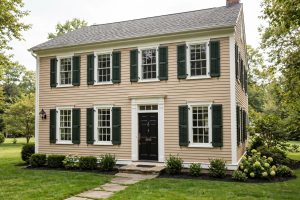
Color can make a small house feel bigger or smaller. The right siding color opens up a compact home and gives it presence on the street. The wrong one closes it in and makes it look like a box. This is one of the highest-impact decisions in any small-home exterior update, and it costs nothing extra to get right. Here is what to know about siding color for small house before you start.
Table of Contents
Table of Contents
Small houses have less wall to work with. Every color choice shows. There is no long facade to absorb a bold experiment. That means the rules are a little different than for a big two-story. Light, simple, and coordinated beat dark, busy, and complicated almost every time.
This guide explains how to choose siding color for a small house. You will learn why light colors add visual size, how trim and accents shape perception, which palettes work best, and the mistakes that shrink a small home.
Siding Color for Small House: The Golden Rule: Light Colors Add Size
When it comes to siding color for small house, getting the details right makes all the difference.
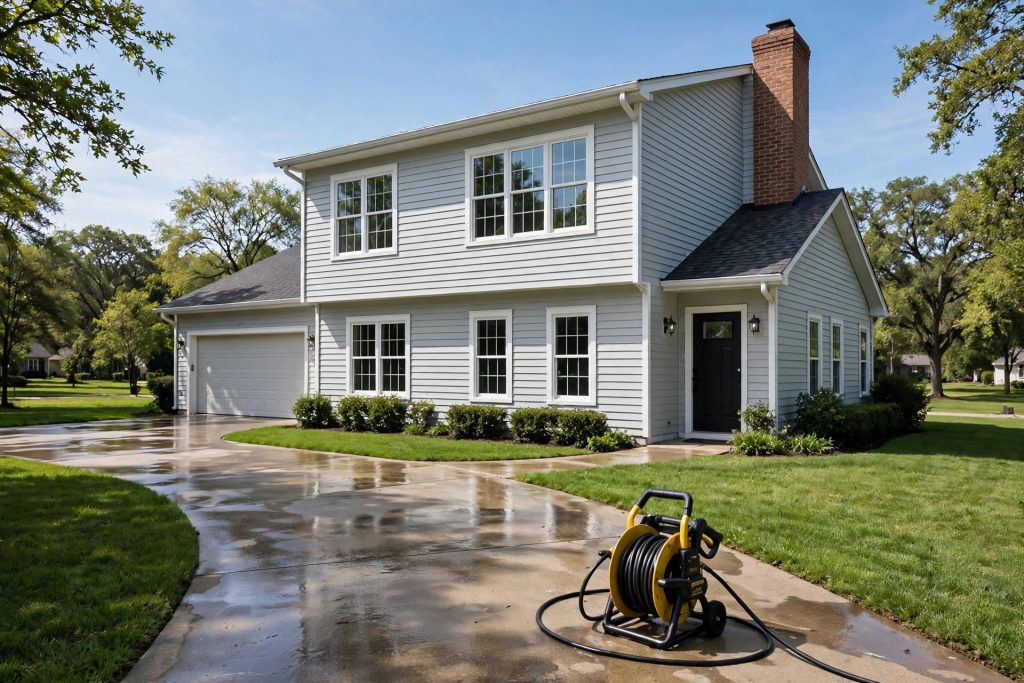
Many homeowners find that siding color for small house is easier than they expected once they know the basics.
This is the single most important principle. Light colors reflect more light. They make surfaces look larger and more open. Dark colors absorb light and make surfaces recede and feel smaller. On a small house, that effect is strong.
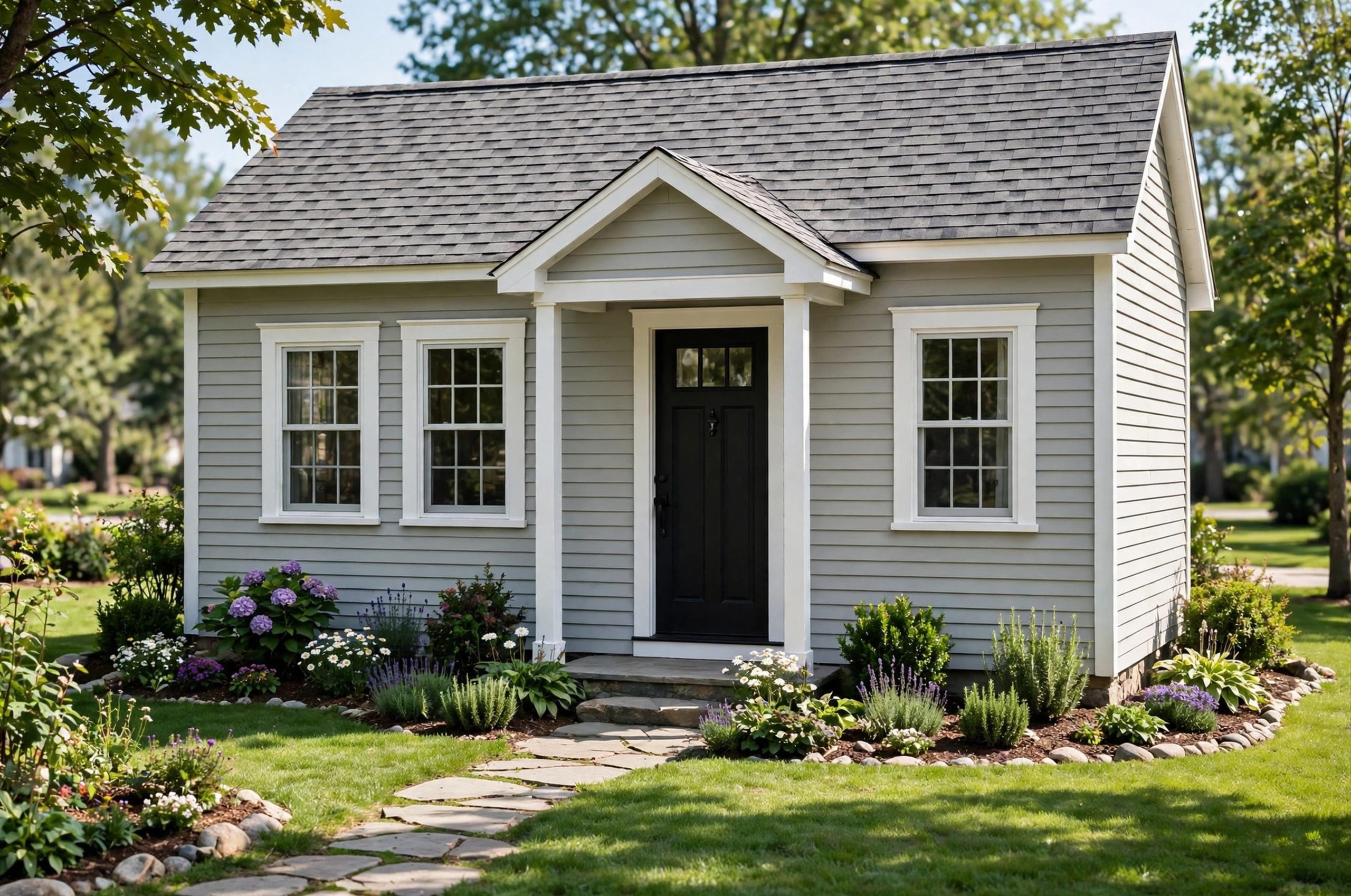
White, cream, light gray, pale beige, and soft pastels all make a small home look bigger from the curb. They also make the house feel more welcoming. A small white cottage looks charming. The same cottage in dark brown can look like a shed.
That does not mean every small house must be white. Light sage, pale blue-gray, warm greige, and buttery cream all work. The key is keeping the main siding color on the lighter side of the spectrum. As E-Architect notes in its siding and curb appeal guide, light colors like white, cream, or pale gray can make smaller homes appear larger and more open.
Dark colors are not banned. They just need a strategy. A dark accent wall, dark shutters, or a dark front door adds depth and contrast without shrinking the house. Keep the dark to less than a third of the exterior. Let the light siding do the heavy lifting.
Understand Light Reflectance
Many homeowners find that siding color for small house is easier than they expected once they know the basics.
The key to siding color for small house is choosing the right approach for your space and budget.
Paint and siding makers rate colors by Light Reflectance Value, or LRV. It runs from 0 (pure black) to 100 (pure white). For a small house, aim for siding with an LRV above 55 or so. That keeps the color firmly in the light family.
LRV also affects heat. Dark siding absorbs more sun and can raise cooling costs in hot climates. Light siding reflects heat and keeps the house cooler. In the South and Southwest, this is a real comfort and cost factor, not just a looks issue. Facetra's curb appeal guide discusses how LRV ties into both appearance and energy costs.
The Three-Color Rule
The key to siding color for small house is choosing the right approach for your space and budget.
With a little planning, siding color for small house can fit even a busy schedule.
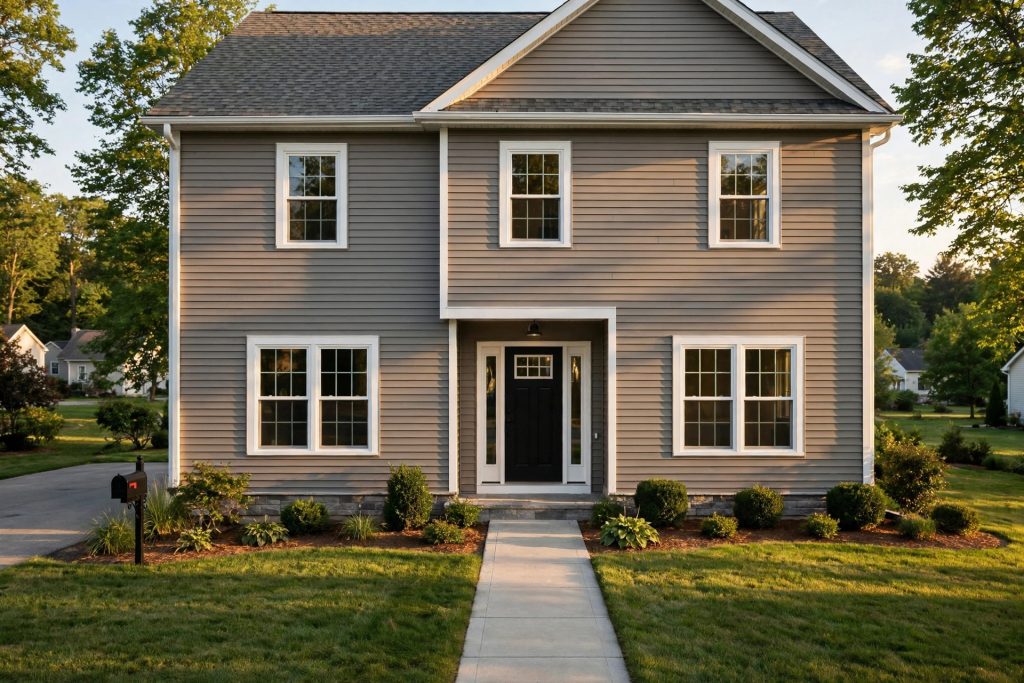
Small houses look best with a simple palette. Use three colors: one for the siding, one for the trim, and one accent for the front door and maybe shutters. That is it. More colors chop a small facade into visual pieces and make it look smaller.
The classic small-house formula:
- Siding: a light neutral (white, light gray, cream, pale beige)
- Trim: white or a slightly lighter shade than the siding
- Accent: one confident color for the door (navy, red, deep green, black)
Crisp white trim against light gray siding is the workhorse combination. It is clean, timeless, and makes every small house look cared for. Lost at E Minor's light gray siding ideas show how one adaptable neutral supports many styles when the trim and accents are coordinated.
Trim Tricks That Add Size
With a little planning, siding color for small house can fit even a busy schedule.
Before you start, it helps to understand how siding color for small house works in real homes.
Trim is not just decoration on a small house. It is a visual tool.
Keep trim light. White or off-white trim outlines the house and makes its edges read clearly. Dark trim on a small house can look heavy and compress the facade.
Do not overdo the trim. Too many trim boards, corner boards, and decorative pieces chop up a small wall. Keep the trim simple and consistent. Let the siding breathe.
Match the garage door to the siding. On a small house, the garage door is a huge part of the front view. Painting it a contrasting color turns it into the focal point. Painting it the siding color lets it disappear. The front door should be the star, not the garage.
Use vertical accents sparingly. A board-and-batten gable or a vertical accent section can add height to a squat ranch. But limit mixed siding styles. Dzinly's small-space design guide recommends no more than two siding types on a compact exterior to avoid visual clutter.
Best Palettes for Small Houses
Before you start, it helps to understand how siding color for small house works in real homes.
A good plan for siding color for small house saves time, money, and frustration.
Here are proven combinations, organized by style.
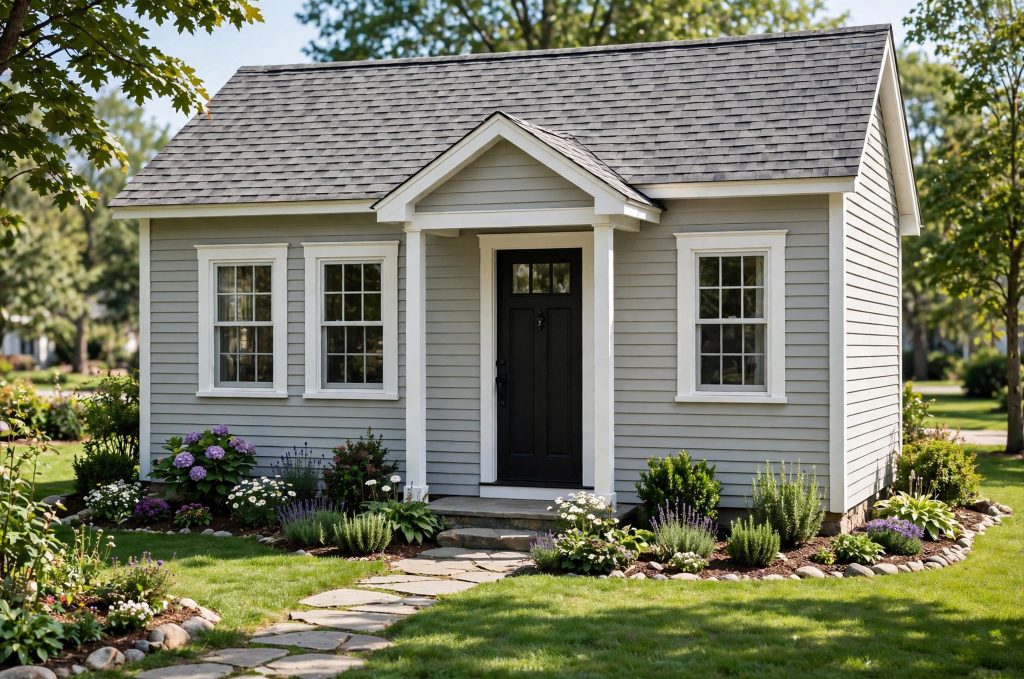
Classic cottage: Light gray siding, bright white trim, navy front door. Fresh, timeless, and friendly. Works on almost any small house.
Warm traditional: Cream siding, white trim, deep red or forest green door. Cozy and inviting. Great with brick or stone accents.
Modern minimal: Warm white siding, matching white trim, black door and black light fixtures. Clean and sharp. The monochrome look makes small modern homes feel larger.
Coastal: Pale blue-gray siding, white trim, white or navy door. Airy and relaxed. Perfect for small homes near water or with a beachy vibe.
Earthy craftsman: Light sage siding, cream trim, dark bronze or espresso door. Grounded and natural. Works well with wood accents and stone.
Farmhouse: White siding, white trim, black shutters and black door. High contrast, very popular, and very forgiving on small footprints.
When your small house has mixed materials, like siding plus brick or stone, pick a siding color that ties to the masonry instead of competing with it. Roof House Pedia's guide to siding color with brick roofs applies the same logic to roofs: harmonize, do not fight.
A little planning makes siding color for small house much easier.
Work With Your Roof
A good plan for siding color for small house saves time, money, and frustration.
For most people, siding color for small house comes down to a few smart choices.
The roof is the one color you cannot change cheaply. The siding must get along with it.
- Gray or black roof: almost anything works. Cool grays, blues, and crisp whites all pair well.
- Brown roof: stick with warm siding colors. Cream, beige, warm gray, and sage work. Cool blue-gray can clash.
- Red or terracotta roof: warm neutrals are safest. Cream, tan, and warm white keep the peace.
- Green roof: rare, but it pairs with cream, beige, and soft gray.
When in doubt, pull the undertone from the roof into the siding. A roof with warm brown undertones wants warm-leaning siding. This one step prevents most color disasters.
Test Before You Commit
For most people, siding color for small house comes down to a few smart choices.
If you are new to siding color for small house, start with the simplest option and build from there.
Siding color looks different on a sample chip than on a whole house. Sunlight, shade, and surrounding greenery all shift how a color reads. Always test.
Get large samples of your top choices. Most siding makers offer sample boards. Paint stores sell large swatch cards. Prop them against the house and look at them in morning light, midday sun, and evening shade. Look on a cloudy day too. Colors go flat and cool under clouds.
Live with the samples for several days. Walk past them. Glance from the street. The right color will feel settled. The wrong one will nag at you. Trust that instinct.
Digital visualizer tools help too. Many siding makers offer apps that let you preview colors on a photo of your home. Our comparison of siding color visualizer tools covers the options, including picks for cold climates and a Florida-focused guide.
Mistakes That Shrink a Small House
If you are new to siding color for small house, start with the simplest option and build from there.
Going too dark on the main siding. Dark colors close in a small facade. Save dark for accents.
Using too many colors. Four or five exterior colors turn a small house into a patchwork. Stick to three.
High-contrast trim everywhere. White trim on dark siding looks great on big houses. On small ones, strong contrast can chop the facade into pieces. Keep contrast moderate.
Ignoring the neighbors. You do not need to match the street, but a neon-bright small house next to muted colonials looks jarring and can hurt resale. Fit the neighborhood's general tone.
Forgetting the front door. The door is the jewel of a small house. A confident door color gives the whole exterior a focal point. Do not leave it the same flat color as everything else.
Choosing trendy over timeless for the siding. Siding lasts decades. Today's hot color can look dated in ten years. Keep the big surface classic. Express trends in the door color, which repaints in a weekend.
Material Matters Too
When it comes to siding color for small house, getting the details right makes all the difference.
The siding material affects how color reads. Vinyl siding comes in set factory colors with a matte finish. Fiber cement like James Hardie takes paint beautifully and offers deep, rich factory finishes through its color collections. You can browse real installations in James Hardie's photo showcase and design ideas gallery to see how colors look at full scale.
Wood siding takes stain, which is a different animal. Stain lets the grain show and comes in its own palette. Our guide to cedar siding stain colors covers that world. And if farmhouse style is your target, modern farmhouse exterior paint colors goes deeper on that palette.
Pro Home Services sums up the resale angle well: neutral, broadly appealing colors protect your home's value. On a small house, that advice matters even more, because bold choices are harder to ignore.
The Bottom Line
Many homeowners find that siding color for small house is easier than they expected once they know the basics.
Choosing siding color for a small house comes down to a few clear rules. Go light on the main color to add visual size. Keep the palette to three colors. Keep trim light and simple. Let the garage door blend in and the front door stand out. Match the siding to the roof's undertone. Test big samples in real light.
Follow those rules and your small house will look bigger, brighter, and more valuable from the curb. Color is free. Getting it right is priceless. Once you try it, siding color for small house gets easier each time.
References
Dzinly. (n.d.). Maximizing curb appeal: Transforming compact homes with small space design. https://dzinly.com/blog/maximizing-curb-appeal-transforming-compact-homes-with-small-space-design-1
E-Architect. (n.d.). Siding can make or break your house curb appeal. https://www.e-architect.com/articles/siding-can-make-or-break-your-house-curb-appeal
Facetra. (n.d.). Improving US curb appeal siding: The ultimate guide to exterior value. https://facetra.halonusa.com/improving-us-curb-appeal-siding-the-ultimate-guide-to-exterior-value/
Bellwether Homes. (n.d.). James Hardie siding colors and styles to consider. https://bellwetherhomes.com/james-hardie-siding-colors-styles-consider-colorado/
Hatch Homes. (n.d.). James Hardie siding design options for NC and SC homes. https://www.hatchyourhome.com/james-hardie-siding/design-ideas/
James Hardie. (n.d.). Photo showcase. https://www.jameshardie.ca/color-and-design/house-siding-ideas-gallery/photo-showcase
Lost at E Minor. (n.d.). 30 light grey house design with siding ideas for curb appeal. https://www.lostateminor.com/30-light-grey-house-design-with-siding-ideas/
Pro Home Services. (n.d.). How color affects your curb appeal. https://prohomeservices.com/how-color-affects-your-curb-appeal/
Roof House Pedia. (n.d.). How to choose siding color for brick colored roof house. https://roofhousepedia.com/how-to-choose-siding-color-for-brick-colored-roof-house/
Was this guide helpful?

About My Garden US
The My Garden US editorial team writes practical, in-depth home and garden guides for American homeowners — tested advice, no fluff.
You May Also Like
Top Rated Soffit and Fascia Repair Reviews: How to Find a Contractor You Can Trust
July 23, 2026 19 views
Top Rated Wood Siding Replacement Reviews: A Plain Guide for Homeowners
March 24, 2026 19 views
Top Rated Insulated Vinyl Siding for Humid Climates
April 29, 2026 15 views