
A keyless entry door lock reviews 2026 usa search brings up more choice than ever before. Keypad locks, fingerprint locks, and app-controlled deadbolts fill the shelves of every home store. For many American homes, this is the first door upgrade in years, and the range of prices and features can feel like a lot. This guide walks through the whole subject in plain terms. It explains how these locks work, what to look for, what they cost, and how to keep them safe. By the end, you will know how to read reviews with a clear eye and pick a lock that fits your door, your budget, and your daily habits.
Why It Matters
The front door is the first line of protection for any home. Old keys get lost, copied, or left in the hands of people who no longer live there. A keyless lock fixes this in a simple way. You enter a code, press your finger, or tap a phone, and the door opens. When someone moves out or a code needs to change, you change it in a minute. There is no locksmith bill and no waiting for new keys.
Keyless locks also help busy homes run smooth. Children come home from school and enter their own code. A neighbor can check on a pet while you are at work. A cleaner can come on a set day with a code that works only on that day. Many models keep a log of every entry, so you can see who came and went and at what time. For rental homes and vacation homes, this control is worth its weight in gold. Owners grant and remove access from a phone, even from across the country. A related write-up on the best smart lock for front door reviews usa covers these use cases in more depth.
There is also the simple comfort of never fumbling for keys in the rain or the dark. Your hands are full of groceries. Your hands are cold. A code or a fingerprint solves the problem in seconds. That small daily gain adds up across a year.
What to Look For: Keyless Entry Door Lock Reviews 2026 Usa
Entry Methods
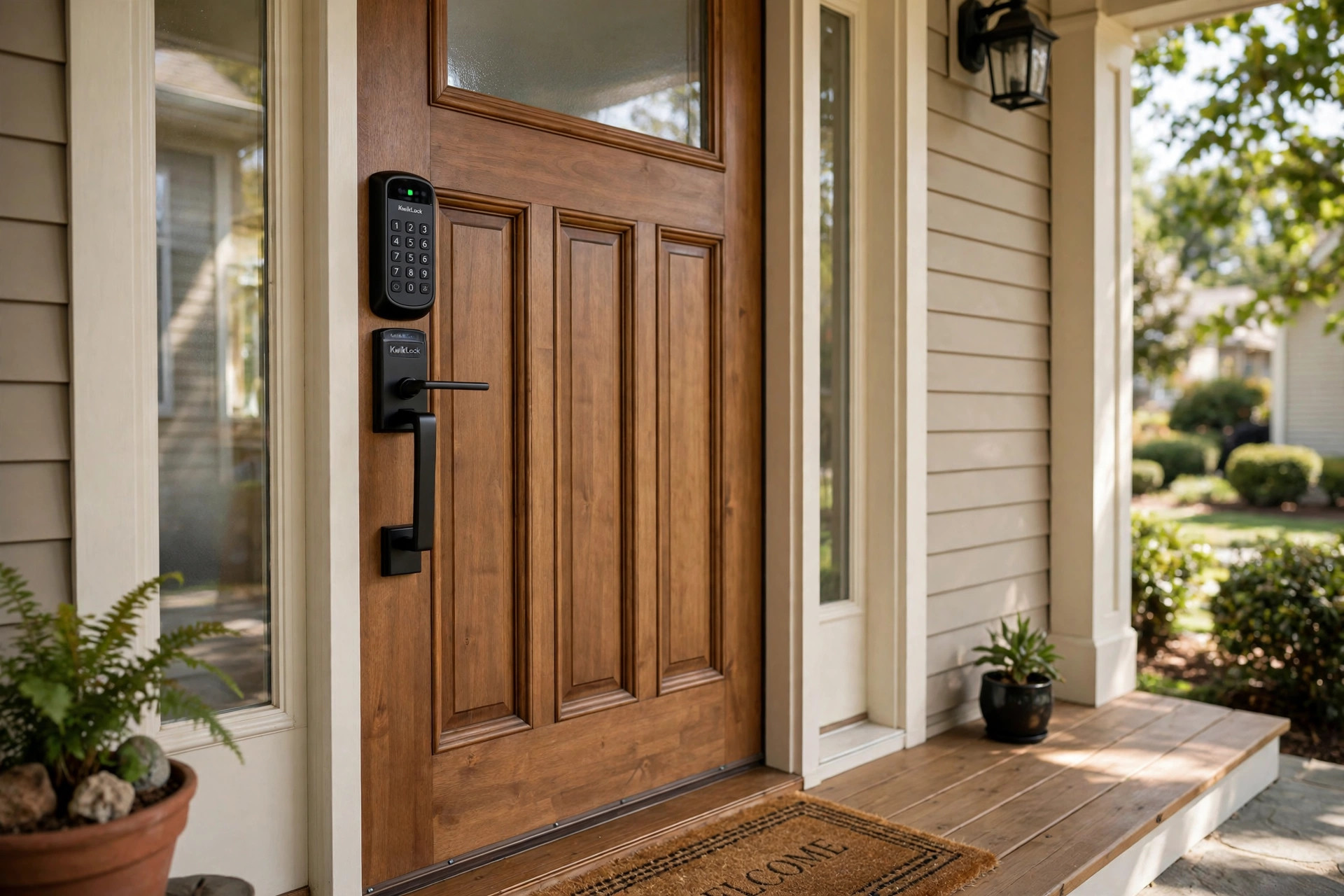
Most keyless locks offer at least two ways to enter. A keypad lets you type a code. A fingerprint reader scans your print. Some models open with a phone over Bluetooth or Wi-Fi. Others use a small card or fob. The best models offer more than one method, so a dead battery or a cut finger does not lock you out. When you read keyless entry door lock reviews 2026 usa roundups, check how fast the fingerprint reader works and whether the keypad lights up at night.
Power Source
Nearly all keyless locks run on batteries, usually four AA cells. Battery life runs from six months to well over a year, based on use and brand. Look for a model with a low-battery warning light and a backup plan. Many have a small port where you can touch a portable battery to wake the lock. Nearly every model also ships with a physical key as a last resort. Store that key outside the house, with a neighbor or in a safe place, not under the mat.
Door Compatibility
Before you buy, measure your door. Most locks fit a standard backset of two and three-eighths inches or two and three-quarter inches, and a door thickness of one and three-eighths to one and three-quarter inches. Thick doors, metal doors, and old mortise setups may need an adapter kit or a different model. Check the maker page for a fit guide. A good review, such as those found at Consumer Reports, will note which doors each model fits.
Connectivity
Some locks work alone, with no internet link. Others connect over Wi-Fi, Z-Wave, Zigbee, or a home hub. A connected lock lets you lock the door from work, grant a guest code from the car, and get alerts when someone enters. If you do not want internet in your door, a stand-alone keypad lock gives strong security with less to maintain. Decide how much remote control you truly need before you pay for it.
Types and Options
Keypad Deadbolts
The keypad deadbolt is the most common type in keyless entry door lock reviews 2026 usa lists. It replaces a standard deadbolt with one that has a number pad. You type a four to eight digit code, the bolt turns, and you are in. Most store twenty to thirty codes, and many let you set one-time codes for guests. Prices are modest, install is simple, and there is no phone app to learn. These suit families, renters, and anyone who wants keyless entry without fuss.
Fingerprint Smart Locks
Fingerprint locks scan your print in under a second. Many store fifty or more prints, which serves large families well. This type sits one price step above keypad models. Reviews note that reader quality varies, so read the user notes about wet or cold fingers. For a deeper look at this style, see the related piece on best fingerprint door lock reviews 2026 usa. If you like fast, touch-based entry, this is the type to study first.
Wi-Fi and App-Controlled Locks
Connected locks pair with a phone app over Wi-Fi or Bluetooth. They bring remote locking, guest codes from afar, entry logs, and voice control through smart speakers. Some also pair with cameras and alarms in a full home system. The trade-off is price and battery use, and a greater need to keep the app and software up to date. Models from big security brands, such as those at Ring and ADT, pair well with full home systems. Independent tests at PCMag and CNET compare app speed and ease across brands.
Card and Fob Locks
Some locks open with a small RFID card or fob that you tap against the lock. These are common in offices and small rental buildings. At home, they suit older users or young children who struggle with codes. The cards are easy to carry on a key ring, and a lost card can be removed from the system in seconds. Few home models lead with this feature, so you will find them in commercial-grade lines.
Cost and Price
Prices in 2026 run in clear bands. A basic keypad deadbolt costs about thirty to eighty dollars. Mid-range fingerprint and app models run from one hundred to two hundred dollars. Top-end locks with Wi-Fi, cameras, and full app control run from two hundred to three hundred and fifty dollars. The cost of the lock is the main cost. Install is often a do-it-yourself job with a screwdriver, so labor is zero for most buyers.
A paid install, through a locksmith or a home service, adds fifty to one hundred and fifty dollars. Some home stores offer install at checkout. Compared with the cost of a locksmith visit for a lost key, a keyless lock often pays for itself within a few years. When you compare prices, use real prices from known stores, such as those at the Google Store and home improvement retailers, rather than third-party sellers with thin return policies.
Set a budget before you shop. A seventy-dollar keypad lock gives most homes everything they need. Pay more only if remote access, logs, or fingerprint speed matter to your daily life.
How to Install
Most keyless locks fit in thirty minutes or less. You remove the old deadbolt, slide the new bolt through the door edge, fit the keypad on the outside, and screw the inside plate in place. A printed template and a Phillips screwdriver are all you need. Many makers post short video guides on their sites, and guides at The Verge walk through setup in plain steps.
Test the lock before you close the door. Enter codes, test the fingerprint, and confirm the bolt slides free. A bolt that drags will drain batteries fast. If the door frame needs a small fix, do it now. Keep the physical backup key in a safe spot from day one.
If your door is thick, metal, or part of a multi-point system, call a locksmith. The extra cost buys a clean fit and full warranty cover.
Care and Upkeep
Keyless locks need little care, but a few small habits keep them working for years. Change batteries once a year, even if the lock still works. Clean the keypad and fingerprint reader with a soft dry cloth. Keep software up to date on connected models. Every few months, check the strike plate screws and tighten them if loose. Long screws that reach the wall stud add real strength to the frame.
Change codes on a schedule. Give each family member their own code rather than one shared code. That way, the entry log tells you who is who. Remove codes for guests and workers the same week their visit ends. For rentals, reset all codes between tenants. A guide on smart lock for airbnb remote access reviews shows how hosts manage this at scale.
Safety Notes
A keyless lock is only as safe as the door it sits on. Use a deadbolt with at least a one-inch throw. Pair it with a solid strike plate and long screws. The U.S. Consumer Product Safety Commission posts general home safety guidance at CPSC, and testing groups like Consumer Reports rate lock strength in lab tests. Look for ANSI Grade 1 or Grade 2 ratings, which mark real resistance to force.
Codes are secret by nature. Do not use a birth year, an address, or a repeating number. Do not share the main code with workers; give them a time-limited guest code. On connected locks, use a strong, unique app password and turn on two-step sign-in. Keep the app and the lock software current, since updates often fix security gaps.
Note that no lock stops a determined break-in through a window or a weak door frame. A keyless lock is one part of a full plan that includes good lighting, solid doors, and, if you wish, a camera or alarm. Simple systems from makers like SimpliSafe pair cleanly with smart locks for this purpose.
FAQ
Do keyless locks work when the power is out?
Yes. They run on batteries inside the lock, not on house power. A power cut does not affect them. If the batteries die, most models have a backup port or a physical key.
Can a keyless lock be hacked?
Any connected device can be attacked in theory. In practice, break-ins through lock hacking are rare. Strong app passwords, software updates, and a model from a known brand lower the risk to a very small level. Stand-alone keypad locks with no internet link remove the question entirely.
How many codes can I store?
Most keypad models store twenty to thirty codes. Higher-end models store fifty or more. That is enough for a family plus regular guests, workers, and a few spares.
Are keyless locks hard to install?
No. Most fit in under thirty minutes with a screwdriver. The job is simpler than hanging a shelf. Only thick doors, metal doors, or old mortise locks call for a pro.
What happens if the fingerprint reader fails?
You use the keypad, the app, or the backup key. Every good model offers more than one way in. Read reviews for notes on reader speed in cold or wet weather before you buy.
Do I need Wi-Fi for a keyless lock?
No. Basic keypad and fingerprint models work fine with no internet. You need Wi-Fi only if you want remote locking, alerts, and guest codes from afar.
A Short Final Word
The 2026 market for keyless entry door locks is full and mature. Basic keypad models give simple, safe, key-free entry for a small price. Fingerprint and app models add speed and remote control for those who want more. Measure your door, set your budget, and pick an entry method that suits your hands and your habits. Read real reviews, check the fit guide, and change your codes on a schedule. Do these simple things, and your new lock will serve your home well for many years.
References
ADT. (n.d.). Home security and automation. https://www.adt.com CNET. (n.d.). Technology news and reviews. https://www.cnet.com Consumer Reports. (n.d.). Product reviews and ratings. https://www.consumerreports.org Google Store. (n.d.). Smart home devices. https://store.google.com PCMag. (n.d.). Technology product reviews. https://www.pcmag.com Ring. (n.d.). Smart home security devices. https://www.ring.com SimpliSafe. (n.d.). Home security systems. https://www.simplisafe.com The Verge. (n.d.). Technology news and reviews. https://www.theverge.com U.S. Consumer Product Safety Commission. (n.d.). Product safety information. https://www.cpsc.gov
Was this guide helpful?

About David Wilson
The My Garden US editorial team writes practical, in-depth home and garden guides for American homeowners — tested advice, no fluff.
You May Also Like
Whole House Generator Cost Installed 2026 USA: A Plain Guide to Prices
January 3, 2026 0 views
Alexa vs Google Home 2026 Comparison USA: Which Voice Assistant Wins Your Home
March 24, 2026 0 views
Smart Porch Light With Camera Reviews USA
January 14, 2026 0 views