Introduction
When spring arrives, most children want to help in the yard. They watch parents dig, plant, and water. They want to join in. The best garden tool set for kids makes this possible. It gives young hands tools that fit. It turns work into play. It also teaches patience, care, and respect for living things. A good set is not a toy. It is real equipment, built small and built safe. This guide explains how to choose one. It covers size, materials, price, care, and safety. It also answers the questions parents ask most often.
Why Children Need Their Own Garden Tools: Best Garden Tool Set for Kids
Adult tools do not suit small bodies. A full-size shovel is heavy for a child. The handle is too long. The child must strain to lift it. That strain can hurt the back or wrists. A trowel made for an adult is too wide for a small hand. The child loses grip. The work feels hard, and the fun fades fast.
The best garden tool set for kids solves these problems. Handles are short. Heads are small. Weight is low. A child can hold the tool with one hand. A child can carry a full tote across the yard. When tools fit, children work longer and with more care. They dig where they mean to dig. They plant without crushing roots.
There are deeper gains too. Gardening teaches cause and effect. A child plants a seed, waters it, and watches it grow. The child learns that steady work brings results. Gardening also builds strength. Digging and raking are honest exercise. A child who owns real tools also gains pride. The set is theirs. They care for it. They store it. This sense of ownership builds habits that help in school and at home. Many teachers praise school garden programs that use kid-sized tools. Reviews at Consumer Reports note that tools made for children hold up better when they match the child’s age and strength.
What to Look for in the Best Garden Tool Set for Kids
The Right Size and Weight
Age guides size. For ages three to five, choose very short hand tools. The set should feel light, almost like an extension of the hand. For ages six to nine, a set with medium handles works well. The child can reach farther without bending too far. For ages ten and up, look for tools that sit between toy size and adult size. Some brands call these “junior” tools.
Test the weight in the store if you can. Hold the tool yourself. If it feels heavy to you, it will feel heavier to a child. The full set should be light enough for the child to carry in one trip. Many good sets come with a tote bag or bucket. That keeps everything together.
Safe Design
Sharp edges have no place in a child’s tool set. Look for rounded blade edges on trowels. Look for smooth, sanded handles with no splinters. The heads should attach firmly to the handles. A loose head can fly off and cause injury. Shake each tool before you buy. If you hear a rattle or feel movement, put it back.
Some sets use metal heads. Others use heavy plastic. Both can work. Metal digs better in firm soil. Plastic is lighter and rusts never. For very young children, plastic or soft metal is the safer pick. The Spruce offers guides that compare materials for family gardens.
Strong Materials
Cheap tools bend on first use. A bent trowel frustrates a child. The child may quit gardening for the season. Look for handles made of ash wood or strong hardwood. These last for years. Heads should be stainless steel or coated steel. Coated steel resists rust. Stainless steel costs more but lasts longer.
Check the reviews before you buy. Bob Vila and Home Depot both carry user reviews that note which sets survive a full season of digging. A set that survives one season often survives five. Also look at how the parts join. A trowel head welded or riveted to the handle lasts longer than one held by a single screw. Forged metal beats stamped metal. These small details separate a set that lasts from one that fails.
Types of Kids’ Garden Tool Sets
Hand Tool Sets
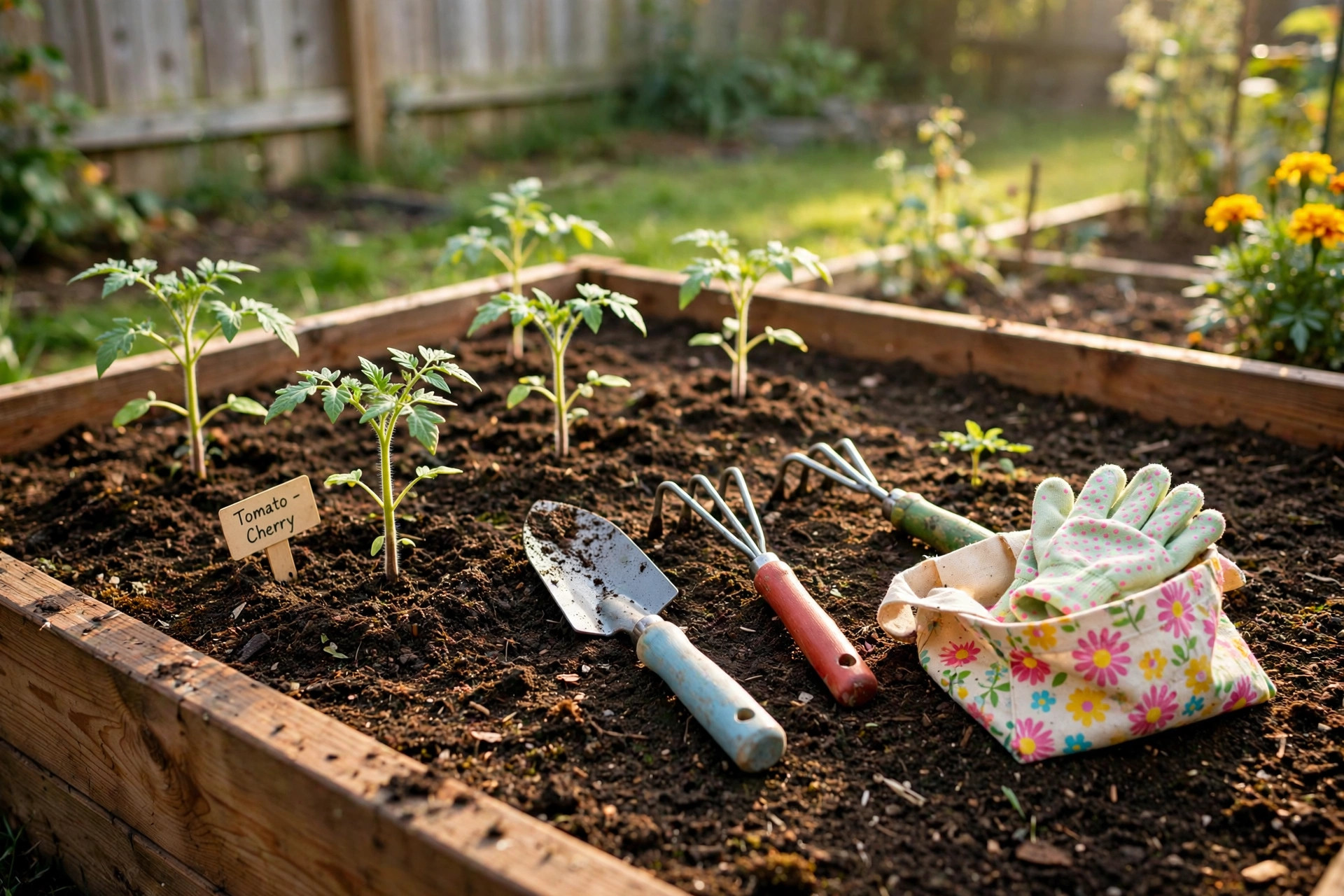
Hand tool sets are the most common. They hold a trowel, a hand rake, and a small cultivator. Some add a weeder or a transplanter. These sets suit container gardens, raised beds, and small plots. A hand tool set is the best choice for beginners. It is also the cheapest type.
Pair a hand tool set with a kneeling pad made for gardens to keep small knees clean and comfortable during planting time.
Long-Handled Sets
Long-handled sets include a small shovel, a rake, and sometimes a hoe. The handles are shorter than adult tools but longer than hand tools. These sets let children work standing up. They suit larger garden beds and lawns. They also let older children do real work, such as spreading mulch or clearing leaves.
A long-handled set costs more than a hand tool set. It is a good buy for children aged eight and up who garden often.
Sets With Extras
Some sets add gloves, a watering can, seed packets, or a spray bottle. These bundles make fine gifts. The extras teach the full cycle of gardening. The child digs, plants, waters, and watches. Gloves protect small hands from blisters. A small watering can teaches measured watering.
Watch the quality of the extras. Some bundles pair good tools with thin gloves that tear in a week. Lowe’s and Gardener’s Supply both sell bundles where each piece meets a fair standard. Read the details before you buy. Let the child pick the color if options exist. A child who chooses their own set guards it with more care.
Cost and Price: What to Expect
Prices vary with material and brand. A basic three-piece plastic set may cost under ten dollars. These sets suit toddlers who play more than they work. A mid-range metal hand tool set usually costs between fifteen and thirty dollars. This is the sweet spot for most families. The tools work well and last for seasons.
Long-handled junior sets run from thirty to sixty dollars. Sets with extras, such as gloves and watering cans, often cost between twenty and forty dollars. Stainless steel sets sit at the top of the range. They can cost fifty dollars or more.
Price alone does not tell quality. A fifteen-dollar set with solid reviews beats a forty-dollar set with weak ones. Check the warranty too. Some makers, such as Fiskars, stand behind their tools with long guarantees. A guarantee shows trust in the product. Watch for spring sales as well. Many stores cut garden prices in late April and May. End-of-season clearance in September can save half the cost. Buying off season is a smart move for parents planning ahead.
Care and Upkeep
Good care makes tools last. Teach children to clean tools after each use. A stiff brush removes most soil. A damp cloth finishes the job. Dry the tools fully before storing them. Wet steel rusts fast.
Once a month, check wooden handles for splinters. Sand rough spots smooth. Rub a little linseed oil into the wood each season. This keeps the wood from drying out and cracking.
Store the set in a dry place. A garage shelf or a garden shed works well. Many families hang tools on a pegboard. This keeps them off damp floors. It also teaches children to put tools back where they belong.
Sharpening is rarely needed for kids’ tools. The edges should stay rounded for safety. If a trowel edge gets a nick, file it smooth rather than sharp.
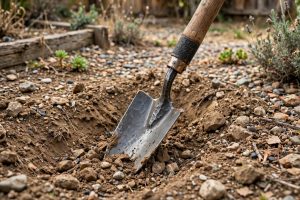
For rocky ground, grown-ups may prefer a tougher garden trowel for rocky soil, while children stick to their lighter set in softer beds.
Safety Rules for Young Gardeners
Safety comes first in every garden. Set clear rules before the first dig. Children should always garden with an adult nearby. No child should use sharp adult tools, such as pruners or loppers. Those stay in adult hands.
Teach children to carry tools with the heads down. A trowel held head-up can strike a face if the child trips. Teach them to set tools down in one spot, not scattered on the ground. A hidden rake on the lawn is a trap for bare feet.
Sun and water matter too. Give children hats and sunscreen. Keep a water bottle close. Take breaks in the shade on hot days.
Check the garden for hazards before the child starts. Remove broken glass, sharp stones, and thorny weeds. Lock up chemicals, fertilizers, and pesticides. Store them high and out of reach. Corona Tools reminds gardeners that even simple hand tools demand respect and care.
A seed starting schedule by zone can help you plan safe, season-right projects to do together with your child.
Frequently Asked Questions
What age is right for a kids’ garden tool set?
Most sets suit ages three and up. Toddlers aged three to five do best with light plastic tools and close adult help. Children aged six to nine can handle metal hand tools. Children ten and older often enjoy junior long-handled tools. Always match the set to the child’s size, not just the age on the box.
Are kids’ garden tools real tools or toys?
The best sets are real tools. They dig, cut weeds, and move soil. Toys bend and break. Real tools have metal heads and wood handles. They cost more, but they teach real skills. Check product details for words like “steel head” and “wood handle.” Those mark real tools.
How many pieces should the set have?
Three to five pieces is plenty for a start. A trowel, a rake, and a cultivator cover most jobs. More pieces add fun but also add clutter. A child who loses tools in the grass gains nothing from a ten-piece set. Start small. Add pieces as the child’s interest grows.
Can kids’ tools handle real garden work?
Yes, within limits. A child’s trowel can dig planting holes and weed a bed. It cannot break hard clay or pry rocks. Save heavy work for adults. Give children their own tasks, such as planting seeds, watering, and harvesting. This keeps them busy and safe.
What is the best material for kids’ garden tools?
For young children, coated steel or sturdy plastic is best. These materials are light and safe. For older children, stainless steel lasts longest. Wood handles beat plastic handles for comfort and life span. Avoid thin metal that bends. It fails fast and frustrates the child.
Where can I buy a good kids’ garden tool set?
Garden centers, hardware stores, and online shops all carry them. Stores like Home Depot and Lowe’s stock several brands in spring. Burpee sells sets paired with seeds, which makes a fine starter kit. Read reviews before you buy, and compare prices across two or three sellers.
A Short Final Word
The best garden tool set for kids is the one that fits the child, holds up to real use, and stays safe. Size matters more than brand. Materials matter more than price. Start with a simple set, teach safe habits, and garden together. The child will learn skills that last a lifetime. The memories will last longer still. Few gifts teach so much for so little cost. Start this spring, and watch the garden and the child grow together.
References
Bob Vila. (n.d.). Home improvement advice. https://www.bobvila.com Burpee. (n.d.). Seeds, plants, and gardening supplies. https://www.burpee.com Consumer Reports. (n.d.). Product reviews and ratings. https://www.consumerreports.org Corona Tools. (n.d.). Garden and landscape tools. https://www.corona-tools.com Fiskars. (n.d.). Garden and cutting tools. https://www.fiskars.com Gardener’s Supply Company. (n.d.). Gardening tools and supplies. https://www.gardeners.com Lowe’s. (n.d.). Home improvement products. https://www.lowes.com The Home Depot. (n.d.). Home improvement products. https://www.homedepot.com The Spruce. (n.d.). Home and garden advice. https://www.thespruce.com
Was this guide helpful?

About Robert Taylor
The My Garden US editorial team writes practical, in-depth home and garden guides for American homeowners — tested advice, no fluff.