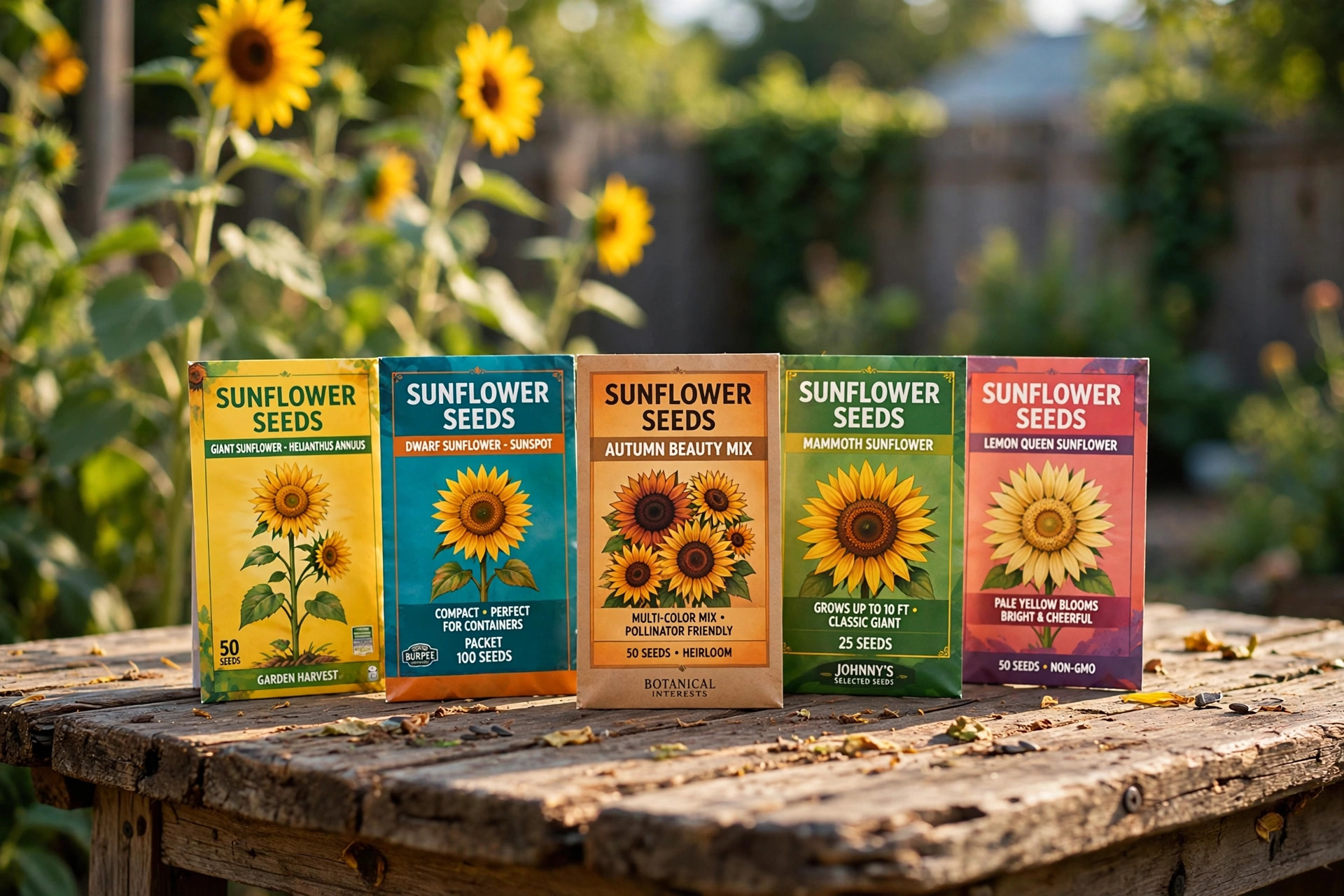

Sunflowers are among the easiest and most rewarding plants a home gardener can grow. One packet of seeds can turn into a row of golden blooms in about two months. This guide brings together sunflower seed packs reviews and a clear buying guide for shoppers across the USA, so you can pick the right packet with confidence. We cover the main types of sunflower seeds, what to look for on the label, what prices to expect, how to plant and care for your flowers, and answers to common questions. Whether you want giant heads for harvesting or small pots for the porch, you will find solid advice below.
Why It Matters
Few flowers give back as much as the sunflower. The seeds are cheap, the plant grows fast, and the blooms bring bees, butterflies, and birds into the yard. Children love them because the plants grow visibly taller each week. Many gardeners plant them as a first crop each spring.
Reading sunflower seed packs reviews before you buy matters for one simple reason: not all packets are the same. One packet may hold 50 seeds of a giant variety. Another may hold 200 tiny seeds meant for a border row. Some brands print the germination rate and the pack date on the back. Others do not. A good review tells you which brands give full counts, fresh seed, and true-to-type plants.
The USA market is wide. Big national brands sell in garden centers in every state. Smaller seed houses sell rare and heirloom types by mail. Knowing how these choices differ saves you from a poor harvest and from wasted money. A little research up front means fewer empty spots in the row and a much better show of flowers when summer arrives.
What to Look for When You Buy: Sunflower Seed Packs Reviews Buying Guide Usa
Start with the seed packet itself. A quality packet tells you the variety name, the number of seeds inside, the year the seed was packed, and the expected germination rate. It should also show the number of days to bloom and the mature height. If these facts are missing, think twice.
Check the pack date. Fresh seed grows best. Most sunflower seed stays strong for two to three years when kept cool and dry, but year-old seed gives the best results. A packet with no date is a gamble.
Look at the seed count. Packs vary from 20 seeds to several hundred. For a long row of flowers, a large count is better value. For a few pots, a small count is fine.
Match the variety to your space. Giant types can reach ten or twelve feet and need room. Dwarf types stay under two feet and do well in pots. Mid-size types work in borders and beds.
Read reviews from other growers. Look for notes about how many seeds sprouted, whether the flowers matched the picture, and how the brand handled problems. Reviews on gardening forums and retailer pages give a real picture of quality.
For general seed-buying tips and planting advice, gardeners can learn a lot from Burpee, one of the oldest seed houses in the country. The growing guides at Park Seed are also helpful for beginners choosing flower varieties.
Types of Sunflower Seed Packs
Sunflower seed packs fall into several clear groups. Each one suits a different goal.
Giant and Tall Types
These are the classic giants. Varieties in this group grow eight to twelve feet tall and carry large heads full of seed. They are the best choice for gardeners who want to harvest seeds for snacks or bird feed. They also make a fine living fence along a property line. Reviews for giant types are usually strong, and most brands carry them.
Dwarf and Patio Types
Dwarf types grow one to three feet tall. They bloom in pots, window boxes, and small beds. Many are pollen-free, which makes them good cut flowers for the home. Seed packs for dwarfs are popular with city gardeners who have little ground space.
Mid-Height Garden Types
These grow four to seven feet tall. They suit the middle of the flower border and the back of the vegetable bed. They bloom in a range of colors, from classic gold to deep red and rust. For a general mix of heights and shades, many gardeners pair sunflowers with wildflower seed mixes.
Cut Flower Types
These are grown for bouquets. The stems are long and strong. The heads are often single and the flowers may be pollen-free so they do not drop yellow dust on tables. Reviews for cut flower mixes are strong among home florists.
Mixed and Novelty Packs
Mixed packs hold several colors and heights in one packet. They are fun for children and for first-time growers. Reviews warn that some mixes grow unevenly, so read the packet before you buy.
If you grow herbs alongside your flowers, you may also like our guide to organic herb seeds. And for a fragrant border plant, see our reviews of lavender seed packets.
Research from federal agriculture programs, such as the resources at NIFA, explains how seed quality and variety choice affect yields in home gardens. The planting calendar at The Old Farmer’s Almanac is a useful tool for timing your sowing by region.
Cost and Price
Sunflower seed packs are one of the cheapest ways to fill a garden with color. Standard packets sell for one to four dollars in most USA stores. A single packet often holds enough seed for a full row.
Value packs and bulk bags cost more up front but bring the per-seed price down. A bulk bag of one ounce or more can plant a large bed or a whole fence line. Expect to pay eight to twenty dollars for larger packs, depending on the variety and the brand.
Heirloom and rare types cost a little more. These come from smaller growers and may carry only twenty to fifty seeds per packet. The higher price buys unique colors and proven seed stock.
Watch for seed count when you compare prices. A three-dollar packet with 200 seeds is a better deal than a two-dollar packet with 30 seeds. Always divide the price by the seed count to find the true value.
Seed-starting gear is another small cost. If you start indoors, you may want trays and a sunny window. The how-to articles at Gardening Know How walk through indoor starting step by step. The Spruce also publishes plain guides on when to sow directly outdoors.
Planting and Care
Sunflowers are simple to plant. Sow seeds one inch deep and about six inches apart. Water the soil well after planting. Most types sprout in seven to fourteen days when the soil is warm, around 70 degrees Fahrenheit.
Wait until after the last frost to plant outdoors. Sunflowers hate cold soil. In most of the USA, late April through June is the right window. For a long bloom season, sow a new row every two weeks until midsummer.
Sunflowers need full sun. Give them at least six hours of direct light each day. They grow in average soil and do not need rich compost. In fact, too much fertilizer makes weak stems that fall over in wind.
Tall types may need support. Tie the stems loosely to stakes when the plants reach three feet. This keeps them standing in summer storms.
Water deeply but not often. Once a week is enough in most climates. Let the top inch of soil dry between waterings. In hot, dry states, you may need to water twice a week until the plants are knee-high. After that, the roots grow deep and the plants handle dry spells well.
Deadhead spent blooms to keep new flowers coming. If you want seed heads for birds, leave the last flowers on the stalk. Cover the heads with mesh bags if you want to save the seed for yourself. To save seed for next year, cut the heads when the backs turn yellow-brown, hang them in a dry shed for two weeks, and rub the seeds loose into a paper bag. Store the dry seed in a sealed jar in a cool place.
Pest problems are few. Cutworms may eat young stems. Birds may eat new seed. A simple fence or row cover fixes both. Most growers find that sunflowers need less care than almost any other flower.
The variety trials reported by Proven Winners show which flower types perform well across regions. Mail-order gardeners also trust the plant guides at Monrovia and White Flower Farm for spacing and care tips.
Safety
Sunflower seeds and plants are safe for people and most pets. The seeds are a common snack. The flowers are not toxic to dogs or cats, but it is still wise to keep pets from chewing garden plants, as the ASPCA notes in its plant lists.
A few safety notes matter for the gardener. Tall sunflowers can fall in high wind, so stake them near paths and fences. Wear gloves when you handle dry stalks, because the rough stems can scratch the skin. Keep harvested seed in a sealed container so it stays fresh and so mice do not find it.
One caution: some seed packets are treated with a coating to fight soil disease. The packet will say so on the label. Treated seed should not be eaten by people or animals. If you plan to eat the harvest, buy untreated seed.
Frequently Asked Questions
How many seeds come in a sunflower seed pack?
Most retail packs hold 50 to 200 seeds, depending on the brand and the variety. Bulk bags hold much more. Always check the label, because counts vary widely between brands.
How long do sunflower seeds stay good?
Most sunflower seed keeps its sprouting power for two to three years when stored in a cool, dry place. Year-old seed sprouts best. Check the pack date on the label before you buy.
Can I grow sunflowers in pots?
Yes. Choose a dwarf variety that stays under two feet tall. Use a pot at least ten inches wide with drainage holes. Give the plant full sun and water when the soil surface dries.
When should I plant sunflower seeds in the USA?
Plant after the last frost, when the soil is warm. For most of the country this means late April through June. You can sow new rows every two weeks until midsummer for blooms into fall.
Why did my sunflowers grow so tall but never bloom?
The most common cause is shade. Sunflowers need at least six hours of full sun each day. Poor, cold, or very wet soil can also delay blooms. Plant in the open and water only when needed.
Are sunflower seed packs worth the money compared to nursery plants?
Yes, in almost every case. A two-dollar packet can grow dozens of flowers. Nursery plants cost far more per plant. Seeds also give you more variety choices than most garden centers carry.
A Final Word
Sunflowers reward the gardener who plans a little. Pick the right variety for your space, read the label, and check reviews from other growers. Sow after the frost, give the plants sun and room, and you will have golden blooms for months. For most American gardeners, a packet of sunflower seed is the simplest path to a bright summer garden. Start with one packet this year, and you will likely grow more next year.
Related guides on this site include heirloom vegetable seeds buying guide usa, organic herb seeds buying guide usa, and wildflower seed mixes buying guide usa.
References
Burpee. (n.d.). Seeds, plants, and gardening supplies. https://www.burpee.com Garden. (n.d.). Home and garden information. https://garden.example.com/wildflower-seed-mixes-buying-guide-usa/ Garden. (n.d.). Home and garden information. https://garden.example.com/organic-herb-seeds-buying-guide-usa/ Garden. (n.d.). Home and garden information. https://garden.example.com/lavender-seed-packets-buying-guide-usa/ Gardening Know How. (n.d.). Gardening guides and plant care. https://www.gardeningknowhow.com Monrovia. (n.d.). Plants for home gardens. https://www.monrovia.com National Institute of Food and Agriculture. (n.d.). Agricultural research and extension. https://www.nifa.usda.gov Park Seed. (n.d.). Seeds, plants, and gardening supplies. https://www.parkseed.com Proven Winners. (n.d.). Plants and gardening inspiration. https://www.provenwinners.com The Old Farmer’s Almanac. (n.d.). Gardening calendars and advice. https://www.almanac.com The Spruce. (n.d.). Home and garden advice. https://www.thespruce.com White Flower Farm. (n.d.). Plants, bulbs, and garden supplies. https://www.whiteflowerfarm.com
Was this guide helpful?

About Lisa Anderson
The My Garden US editorial team writes practical, in-depth home and garden guides for American homeowners — tested advice, no fluff.
You May Also Like
Lavender Seed Packets Buying Guide USA: How to Choose the Best Seeds for Your Garden
March 21, 2026 0 views
Tulip Bulbs Fall American Homes Guide: Planting for a Brighter Spring
July 28, 2026 0 views
Snake Plants Indoor California Homes USA: A Complete Care Guide
May 22, 2026 0 views