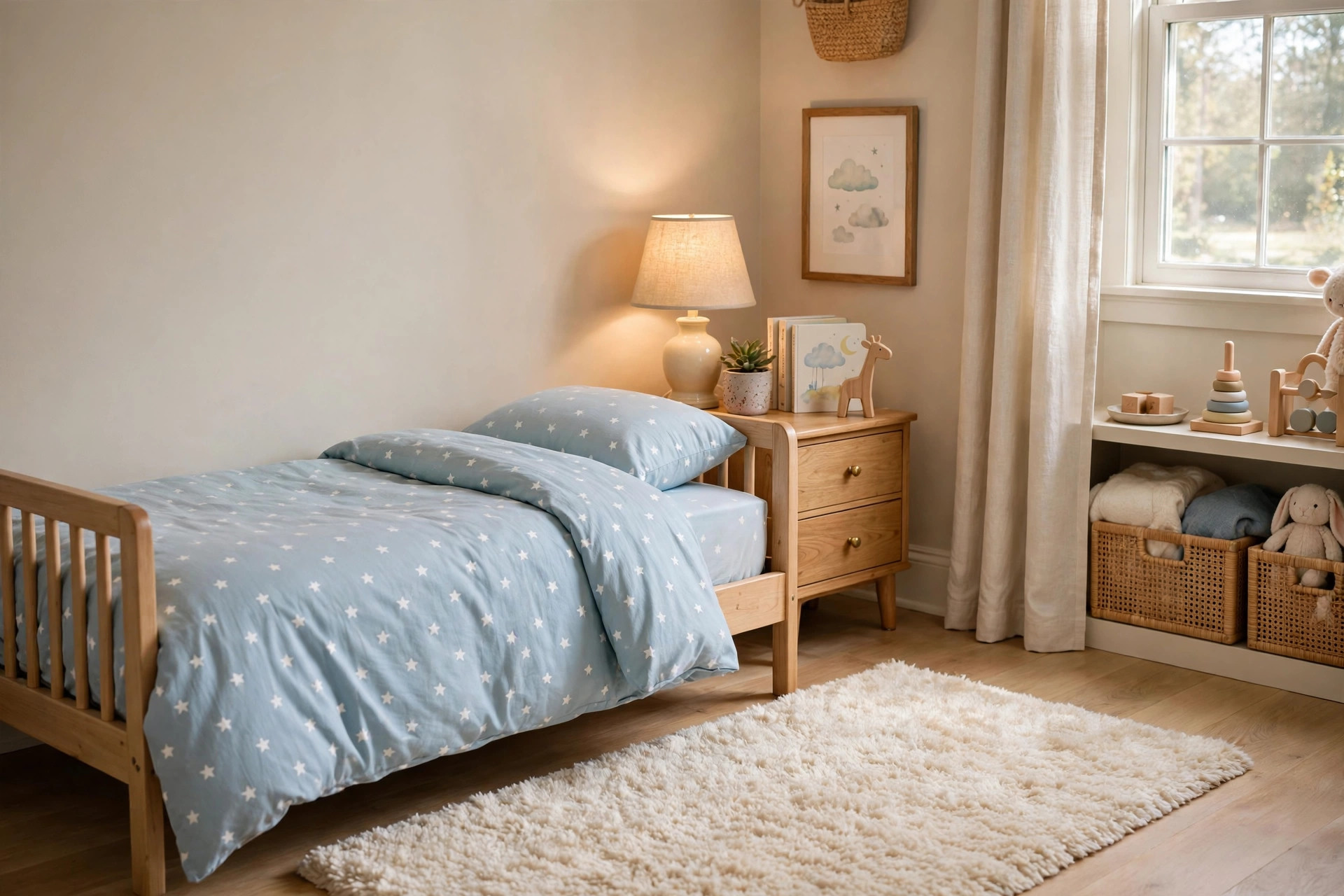

The move from a crib to a first big bed is a big step in a young child’s life. A toddler duvet cover set for first big bed use can make that step easier and more pleasant. The right set keeps the child warm, fits the bed well, and washes without trouble. The wrong set can slip, bunch up, or feel too hot. This guide walks you through the choice in plain terms. It covers size, fabric, safety, price, and daily care. It also answers the questions parents ask most often.
Why the First Big Bed Matters
A toddler bed or a small twin bed feels very different from a crib. The crib has high rails. The sheets fit tight. The child cannot roll out. The first big bed is open. The child can climb in and out alone. This new freedom is exciting. It can also be uneasy at bedtime.
A soft, familiar duvet cover set gives comfort. The child learns that the new bed is a safe and pleasant place. A set with a favorite color or a gentle print can make the bed feel like home from the first night. Many parents buy the new bedding a week or two before the move. They let the child see it, touch it, and even nap under it. By moving day, the bedding already feels known.
The set also matters for practical reasons. Toddlers spill water, have accidents, and drop crumbs in bed. A duvet cover protects the duvet inside. You wash the cover, not the whole duvet. That saves time and money. A good toddler bedding set with pillow for crib teaches the same lesson at the crib stage. The habit of a washable cover carries over well to the big bed.
What to Look for When You Choose: Toddler Duvet Cover Set for First Big Bed
Keep the list short. Five points cover most of what matters.
Fit. A toddler duvet cover set for first big bed use should match the duvet inside and the bed size. Common toddler duvet sizes run about 40 by 60 inches or 42 by 60 inches. A twin duvet is larger, about 68 by 86 inches. Check the label on your duvet first. Then buy the cover to match. A cover that is too big lets the duvet shift and bunch in one corner. A cover that is too small strains at the closure and may tear.
Fabric. Cotton is the most common and the most trusted choice. Look for 100 percent cotton or a cotton blend with a thread count between 200 and 400. This range feels soft but stays strong through many washes. Percale weave feels crisp and cool. Sateen weave feels smooth and a little warmer. Flannel suits cold rooms. Avoid stiff fabrics that rustle when the child moves.
Closure. Covers close with buttons, ties, or zippers. Hidden zippers are the simplest for parents. They keep the duvet inside and lie flat against the child’s body. Buttons work well too, but check that they sit flat and cannot come loose. Corner ties inside the cover hold the duvet in place. Use them every time you put the cover on.
Weight and warmth. A toddler needs less warmth than an adult. A light or medium duvet with a breathable cover is enough for most homes. If the room stays near 68 to 72 degrees at night, a light fill works fine. Heavy fills make small children sweat. Sweat leads to restless sleep.
Ease of washing. The cover should survive the washing machine at least once a week. Look for machine washable and dryer safe on the label. Pre-shrunk cotton holds its size better. Dark colors hide stains but show lint. Light colors show stains but look fresh. There is no wrong answer here, only what suits your home.
Sizes and Fits for the First Big Bed
Three bed types are common for toddlers leaving the crib.
A toddler bed uses the crib mattress. It is low to the floor. It often has small guard rails. A toddler-size duvet cover, about 40 by 60 inches, fits best. The cover stays light and does not drag on the floor.
A twin bed is the next step up. Many families skip the toddler bed and go straight to a twin. A twin duvet cover measures about 68 by 86 inches. This gives more drape on the sides. Some parents prefer a slightly smaller cover on a twin bed so the child is not lost under extra fabric.
A twin XL or full bed is larger than a toddler needs. If the child sleeps in the family guest bed, fold extra fabric under the mattress on the far side. Never let heavy extra bedding pile near the child’s face.
Measure before you buy. Write down the length and width of the duvet and the mattress. Bring the numbers when you shop. It takes one minute and prevents most fit problems.
Types and Options
Duvet cover sets for toddlers come in a few main styles.
Plain cotton sets. These are solid colors or simple stripes. They match any room. They are often the cheapest option. They also make it easy to spot dirt, which helps you know when to wash.
Printed and themed sets. These show animals, stars, cars, or storybook figures. Many children love them. A print the child picks out can build pride in the new bed. Just make sure the print uses safe, colorfast dyes. Cheap prints can bleed in the wash.
Organic cotton sets. These use cotton grown without certain pesticides. They cost more. They suit families who want fewer chemicals near the child’s skin. Look for a trusted mark such as GOTS on the label.
Microfiber sets. These are made from fine synthetic fibers. They cost less than cotton. They resist wrinkles. Some microfiber feels warm and less breathable, so check reviews about heat before buying for a warm sleeper.
Reversible sets. These show one pattern on each side. The child gets two looks in one purchase. They also hide small stains when guests visit.
Most sets include the duvet cover and one pillowcase. Some add a fitted sheet or a flat sheet. Read the package list. If the set lacks a pillowcase in toddler size, buy one to match so the bed looks finished.
Cost and Price
Prices vary widely. A basic toddler duvet cover set for first big bed shoppers often find costs between 15 and 30 dollars. Mid-range cotton sets run 30 to 60 dollars. Organic or brand-name sets can reach 60 to 100 dollars or more.
What drives the price up? Higher thread count, organic marks, licensed prints, and extra pieces in the set. What keeps it down? Microfiber, plain colors, and store brands. Retailers such as Target and IKEA carry low-cost options that still wash well. Specialty shops like Pottery Barn Kids sell higher-end sets with detailed prints.
Buy two covers if the budget allows. One stays on the bed while the other is in the wash. Nighttime accidents do not wait for laundry day. Two covers remove the stress of a midnight change.
Care and Upkeep
A simple routine keeps the set fresh for years.
Wash the cover every one to two weeks, and at once after any accident or illness. Use warm water and a mild detergent. Skip fabric softener most of the time. It coats fibers and can reduce softness over time. Wash with like colors.
Dry on medium heat or on a line outdoors. Sunlight freshens cotton and helps lift mild stains. Remove the cover while it is still slightly damp and put it back on the duvet. This reduces wrinkles and makes the job easier.
Shake the duvet and smooth it inside the cover each morning. Use the corner ties. A duvet that stays in place lasts longer and keeps the child evenly warm.
Store the spare cover folded in the child’s closet or a drawer near the bed. Keep it where you can reach it fast at night. A small plastic bin under the bed works well too.
Replace the set when the fabric thins, the closure fails, or stains no longer wash out. Most sets last two to three years of steady use.
Safety Notes
Bedding safety deserves care, even though a toddler is past the newborn stage.
Keep the sleep area simple. A fitted sheet, a duvet in its cover, and a small pillow are enough. Remove large stuffed toys, extra blankets, and loose pillows from the bed at night. The U.S. Consumer Product Safety Commission offers guidance on safe sleep areas for young children, and its advice favors an uncluttered bed.
Make sure nothing can trap the child. The duvet should not be so large that it wraps around the child’s head. Guard rails on a toddler bed should leave no wide gaps where a head or limb could catch.
Check strings, ribbons, and loose threads on the cover. Trim any long ties. Small parts that come loose can be a choking risk. When the cover wears thin, replace it rather than patch it many times.
Room temperature matters as much as bedding. A room between 68 and 72 degrees with light bedding suits most toddlers. If the child wakes sweaty, use a lighter duvet. If the child wakes cold, add warm sleepwear before adding heavier bedding. Guidance from the American Academy of Pediatrics and HealthyChildren.org can help parents set a safe and comfortable sleep routine.
Setting Up the New Bed
A calm setup makes the first nights smoother.
Involve the child. Let them pick between two cover options you approve. Let them help pull the cover onto the duvet. Small jobs build ownership.
Keep the rest of the routine unchanged. Same bath, same book, same song. The bed is new. Everything else should feel known. A quiet room helps too. Some families add a nursery wall clock silent for baby sleep so ticking does not disturb light sleepers.
Place a soft rug or mat beside the bed. Early in the change, the child may roll out. A low bed plus a soft landing keeps bumps minor. A night light with a warm glow helps the child find the bed after a bathroom trip.
Expect a few restless nights. Most children settle within one to two weeks. Stay patient and keep the routine steady. The new duvet cover set becomes part of the comfort that tells the child it is time to sleep.
FAQ
At what age should a child move to a first big bed? Most children move between 18 months and 3 years. There is no single right age. Signs of readiness include climbing out of the crib, asking for a big bed, or outgrowing the crib. The What to Expect site and Babylist guides describe these signs in more detail for new parents.
What size duvet cover fits a toddler bed? A cover near 40 by 60 inches fits most toddler beds that use a crib mattress. Always measure your duvet first. The cover should match the duvet, not just the bed.
Is a duvet safe for a two-year-old? For most healthy toddlers past infancy, a light duvet is fine. Keep the bed free of extra loose items. Use a duvet sized for the child, not an adult-size one. If you have concerns, ask your child’s doctor.
How often should I wash the duvet cover? Every one to two weeks is a good rule. Wash at once after spills, accidents, or illness. A second cover makes this easy.
Cotton or microfiber for a toddler? Cotton breathes better and suits most children. Microfiber costs less and resists wrinkles. For warm sleepers, cotton is the safer pick. Reviews on Consumer Reports and The Spruce compare fabrics in depth.
Can the child use an adult pillow with the new set? No. Use a small, flat toddler pillow. Adult pillows are too thick and can strain a small neck. Many toddler duvet cover sets include a matching toddler pillowcase.
What if the child keeps kicking the duvet off? Try lighter sleepwear plus a light duvet rather than a heavy one. Some children simply run warm. A breathable cotton cover helps. Keep the room near 68 to 72 degrees.
A Short Final Word
A toddler duvet cover set for first big bed use is a small purchase with a large effect. It marks the move to the big bed. It keeps the child warm and the duvet clean. It gives the child something soft and familiar on new ground.
Choose the right size. Pick breathable cotton if you can. Wash it often. Keep the bed simple and safe. Let the child take part in the choice. Do these things, and the first big bed will soon feel like the only bed the child has ever known.
Families setting up a shared room may also want to read about the best nursery crib for twins small room for ideas on fitting two sleepers in a tight space.
References
American Academy of Pediatrics. (n.d.). Child health resources. https://www.aap.org American Academy of Pediatrics. (n.d.). HealthyChildren.org. https://www.healthychildren.org Babylist. (n.d.). Baby registry and gear guides. https://www.babylist.com Consumer Reports. (n.d.). Product reviews and ratings. https://www.consumerreports.org IKEA. (n.d.). Home furnishings. https://www.ikea.com Pottery Barn Kids. (n.d.). Kids furniture and decor. https://www.potterybarnkids.com Target. (n.d.). Retail store. https://www.target.com The Spruce. (n.d.). Home and garden advice. https://www.thespruce.com U.S. Consumer Product Safety Commission. (n.d.). Product safety information. https://www.cpsc.gov What to Expect. (n.d.). Pregnancy and parenting guidance. https://www.whattoexpect.com
Was this guide helpful?

About Emily Rodriguez
The My Garden US editorial team writes practical, in-depth home and garden guides for American homeowners — tested advice, no fluff.
You May Also Like

The Best Kids Chair for Desk Ergonomic Support: A Parent’s Guide
August 6, 2026 0 views
Best Convertible Crib for Small Nursery Room: A Parent’s Buying Guide
August 13, 2026 0 views
Nursery Rocking Chair Wooden for Classic Look
June 21, 2026 0 views