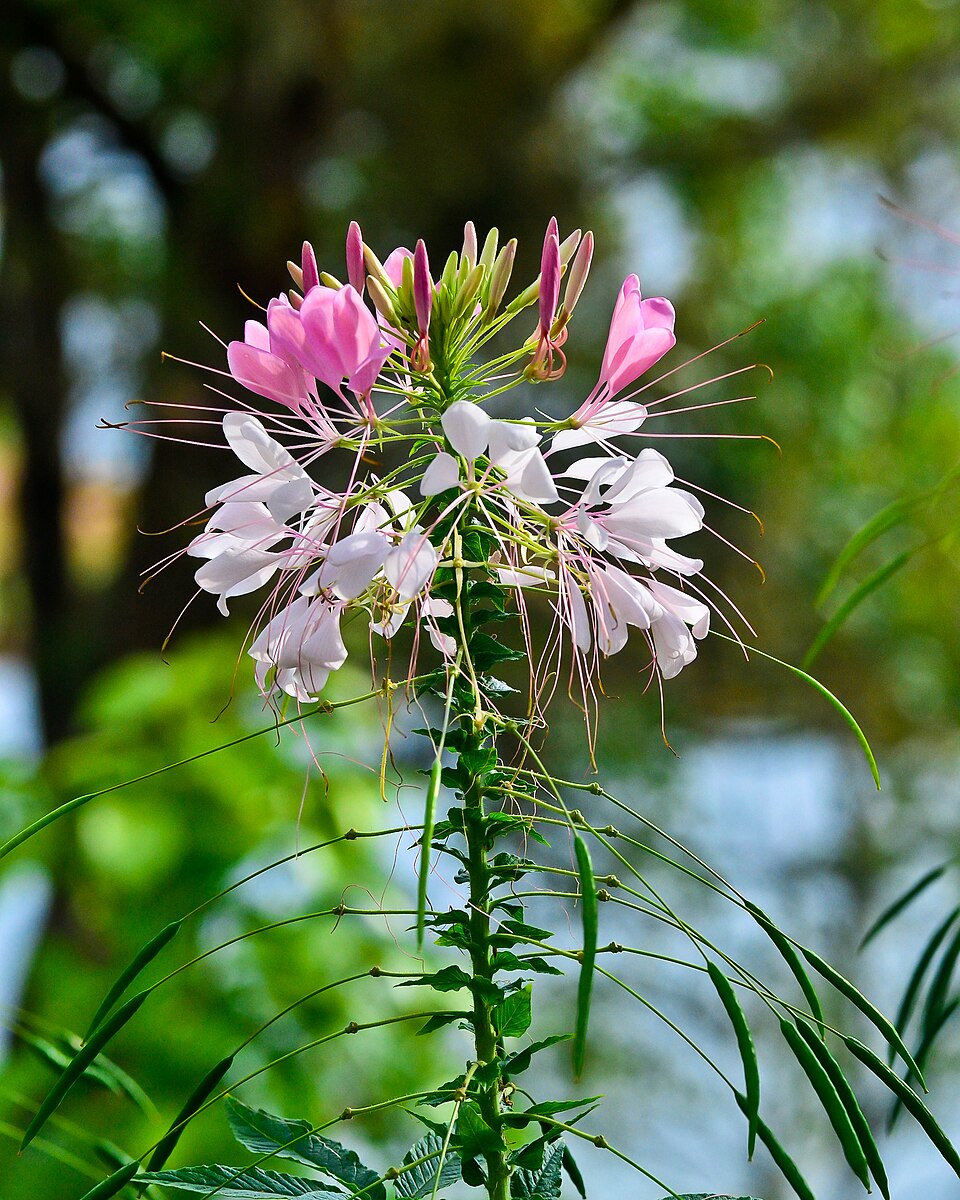
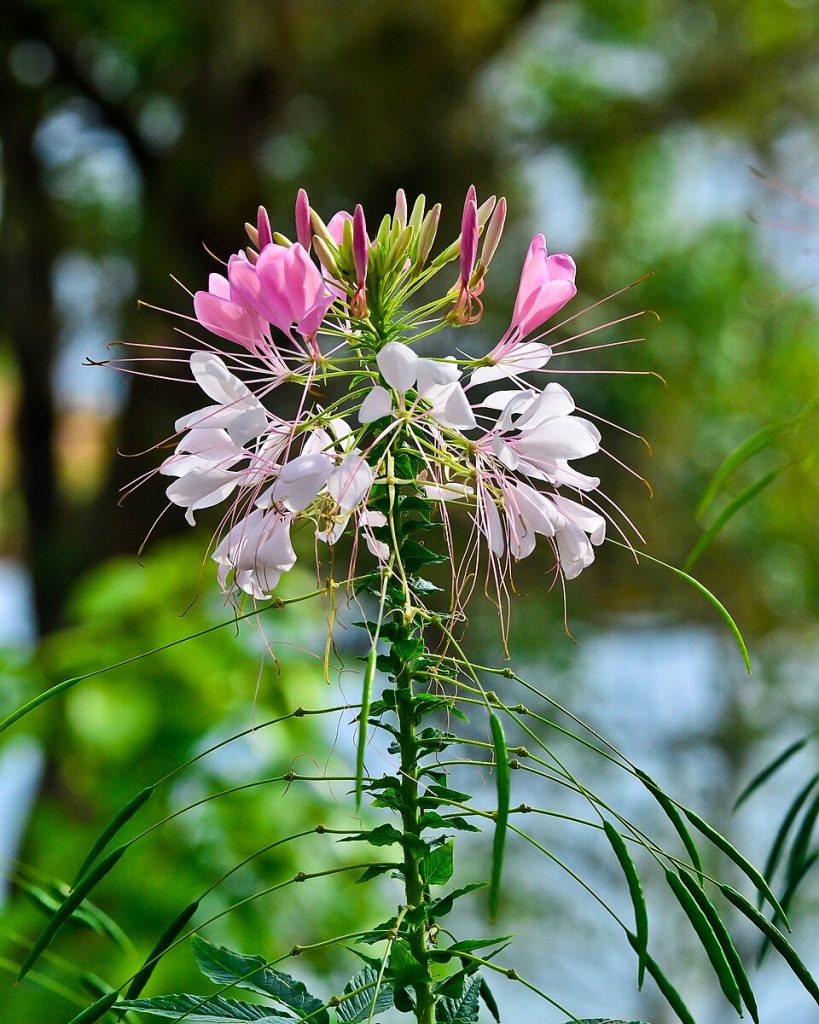
Cleome looks like fireworks frozen mid-burst. Its tall stems carry airy clusters of spidery pink, white, or purple flowers, each head blooming from the bottom up for weeks. Behind a border, cleome adds height and motion that few annuals match, and it blooms from midsummer until frost without deadheading.
Table of Contents
Table of Contents
This guide shows how to grow cleome, the spider flower, from seed to self-sowing patch. It is a tender annual grown everywhere in the United States, sown after frost and thriving on heat. Seedlings start slowly, then explode. Wear gloves when handling it; the stems carry small thorns. Let a few pods ripen and you will have volunteers for years. cosmos and zinnias bloom in the same tall back border.

Photo: Wikimedia Commons
Choosing a Variety
When it comes to how to grow cleome, getting the details right makes all the difference.

Many homeowners find that how to grow cleome is easier than they expected once they know the basics.
The standard is Cleome hassleriana, sold in mixes and named series. The Sparkler series stays compact at two to three feet for smaller gardens, while tall types reach four feet or more. Señorita Rosalita is a popular sterile variety that blooms without setting the spiky seed pods.
Buy fresh seed each year or started plants in spring. Seed-grown cleome is economical for large plantings. The Missouri Botanical Garden annual pages list cleome series with heights.
The Sparkler series stays compact at two to three feet for smaller gardens; tall types reach four feet for the back border. Senorita Rosalita is sterile and never sets the spiky pods. Choose height to match the spot. The University of Minnesota Extension annual guides compare cleome series.
When and How to Plant
Many homeowners find that how to grow cleome is easier than they expected once they know the basics.
The key to how to grow cleome is choosing the right approach for your space and budget.
Sow cleome seed on the soil surface and press it in without covering, since it needs light to germinate. Start indoors about six weeks before the last frost, or direct sow after all danger of frost has passed. Loosen the bed and mix in compost, though cleome tolerates poor soil.
Space plants twelve to eighteen inches apart in full sun. Seedlings are slow at first, so keep the bed weed-free until they size up. check your USDA zone planting dates to set your sowing week. Transplant carefully; young cleome resents root disturbance. The Old Farmer's Almanac annual sowing guides cover surface sowing.
Transplanting cleome needs care because the seedlings resent root disturbance. Start seeds in biodegradable pots or soil blocks that go straight into the ground, so the roots never know they were moved. If you must use cell packs, transplant when seedlings are small, with the root ball completely intact, and water them in immediately. Do it on a cloudy day or in the evening to reduce shock. Direct sowing avoids the issue entirely and is the preferred method; reserve transplants for getting a head start in short seasons. Either way, handle the young plants as little as possible.
Once established in warm soil, they take off fast and the early fuss is forgotten. The seedlings that are never disturbed always outperform the ones that are.
Soil and Sun
The key to how to grow cleome is choosing the right approach for your space and budget.
With a little planning, how to grow cleome can fit even a busy schedule.
Cleome wants full sun and average, well-drained soil. It tolerates poor soil better than most tall annuals, which makes it handy for new beds. Six to eight hours of direct sun gives the sturdiest stems and the most flowers.
Drainage should be decent; cleome dislikes soggy ground. A near-neutral pH is fine. Do not over-enrich the bed; too much nitrogen makes tall, floppy plants. The Clemson HGIC annual pages recommend the same lean approach for spider flowers.
Watering and Feeding
With a little planning, how to grow cleome can fit even a busy schedule.
Before you start, it helps to understand how how to grow cleome works in real homes.
Water at the base until established, then cleome handles drought well. Once the plants are growing strongly, they need little supplemental water except in severe drought. Overwatering pushes soft growth.
Feed lightly, if at all. A compost-enriched bed at planting is enough for the season. Heavy feeding makes leggy plants that need staking. If blooming is strong, feeding is unnecessary. sunflowers nearby likes similar lean treatment. The Clemson Cooperative Extension warns against overfeeding tall annuals.
Care Through the Season
Before you start, it helps to understand how how to grow cleome works in real homes.
A good plan for how to grow cleome saves time, money, and frustration.
Tall three-to-four-foot varieties may lean, so site them mid-border where neighbors support them, or stake in windy spots. Wear gloves when handling; the stems carry small thorns. Watch for aphids and spider mites on the buds; a strong spray of water usually controls them.
Deadhead to extend bloom, or leave flowers for self-sown volunteers. The spidery seed pods that follow the flowers are ornamental in their own right. In fall, pull the plants after frost and compost them. The UF IFAS Gardening Solutions site shows common annual-flower pests.
Decide your deadheading strategy early in the season based on what you want next year. If you want volunteers, leave the last flush of flowers on several plants to form pods; if you want a tidy garden with no surprises, deadhead everything. A middle path works well: deadhead through the main season for continuous bloom, then stop in early fall and let the final flowers set seed. The pods are ornamental in their own right, adding spidery texture to the fall garden.
In regions with short falls, the pods may not fully ripen before frost; collect the most mature ones and finish drying them indoors in a paper bag. Cleome asks little beyond this decision: sun, lean soil, occasional water, and a verdict on its seeds.
Harvest
A good plan for how to grow cleome saves time, money, and frustration.
For most people, how to grow cleome comes down to a few smart choices.
Cut stems for vases when half the florets on a head are open; they last several days in water. The flowers open from the bottom up, so a cut stem keeps developing. Strip the lower leaves and place in water immediately.
For next year's plants, let a few pods ripen and drop seed where they stand. Cleome self-sows reliably, and next season's volunteers usually outperform pampered transplants. Collect seed in a paper bag if you want to sow it elsewhere. The Gardenia.net guides describe seed saving for annuals.
Troubleshooting
For most people, how to grow cleome comes down to a few smart choices.
If you are new to how to grow cleome, start with the simplest option and build from there.
Leggy, floppy plants usually mean too much shade, too much nitrogen, or overcrowding. Give full sun, ease off feeding, and space properly. Seedlings that stall in cool spring weather take off once heat arrives; be patient.
Aphids on buds distort the flowers; treat early with water or soap. Spider mites stipple leaves in hot, dry weather; overhead watering discourages them. If plants fail to self-sow, the pods were deadheaded too thoroughly or a sterile variety was grown; let pods ripen on fertile types. Cleome has no serious diseases; rotation and air flow keep it clean.
Letting Cleome Self-Sow
If you are new to how to grow cleome, start with the simplest option and build from there.
When it comes to how to grow cleome, getting the details right makes all the difference.
Cleome's greatest trick is planting itself. Leave a few spent flower heads on the plants in fall, and the spidery pods ripen and drop seed where they stand. Next spring, seedlings appear on their own, usually outperforming pampered transplants. This is how cleome becomes a permanent, free resident of the garden.
Manage it lightly. In spring, thin the volunteers to proper spacing and pull any that sprout in paths or where they are not wanted. If you grow a sterile variety like Senorita Rosalita, there will be no volunteers; save seed from fertile types in a paper bag if you want to sow elsewhere. One caution: in warm regions the self-sowing can be enthusiastic, so deadhead most heads and leave only a few for next year. Done right, you sow cleome once and enjoy it for years. The Old Farmer's Almanac annual guides list cleome among the most reliable self-sowers.
Cleome for Pollinators
When it comes to how to grow cleome, getting the details right makes all the difference.
Many homeowners find that how to grow cleome is easier than they expected once they know the basics.
Cleome is a pollinator magnet of the first order, and planting it for wildlife is as rewarding as planting it for show. The spidery flower heads produce abundant nectar over a long season, from midsummer until frost, bridging the late-summer gap when many flowers fade. Butterflies work the blooms all day, hummingbirds visit the taller varieties, and native bees crowd the flower heads in the morning.
To maximize the wildlife value, plant cleome in drifts rather than singles; a mass of bloom draws pollinators from farther away and keeps them working longer. Skip the deadheading on a few plants and let the pods develop, since the extended bloom feeds insects into fall. Avoid spraying anything on or near the planting; cleome's few pests rarely need intervention, and insecticides undo the whole point.
Site the drift where you can watch it: outside a kitchen window or along a path you walk daily. The combination of butterflies, hummingbirds, and the airy flowers is one of summer's great shows, and it comes from a packet of seed sown after frost. Few annuals feed this many pollinators for this little effort.
Cleome is the easy height for the back of the border. Surface sow after frost, give it sun and lean soil, stake only if needed, and let it bloom from midsummer to frost. Save seed or let it self-sow, and it becomes a permanent, free resident. Few annuals give this much drama for this little work.
References
Missouri Botanical Garden. (n.d.). Cleome hassleriana. https://www.missouribotanicalgarden.org/
Clemson Cooperative Extension. (n.d.). HGIC: Annual flowers. https://hgic.clemson.edu/
Old Farmer's Almanac. (n.d.). Growing cleome: planting guide. https://www.almanac.com/
UF IFAS Gardening Solutions. (n.d.). Flower gardening. https://gardeningsolutions.ifas.ufl.edu/
Was this guide helpful?

About My Garden US
The My Garden US editorial team writes practical, in-depth home and garden guides for American homeowners — tested advice, no fluff.
You May Also Like
How to Grow New England Aster: Fall Color
October 14, 2026 17 views
Garlic Bulbs Planting Deals Near Me: How to Find Seed Garlic at a Good Price
April 22, 2026 15 views
How to Grow Basil: A Beginner's USA Guide
October 6, 2026 51 views