This garlic bulbs planting american homes guide begins with a simple truth. Garlic is one of the easiest foods a home grower can plant. It asks for little. It grows through the winter. It comes back in the summer with a harvest far better than store bulbs. A first-time grower can learn the full cycle in one season.
Garlic sits in the ground for about eight or nine months. That sounds long, but most of that time the plant cares for itself. The grower plants in the fall, covers the bed with mulch, and waits for spring. When the weather warms, green shoots rise. By early summer, the bulbs are ready to dig. Few garden tasks give this much reward for so little labor.
This guide covers each step in plain order. It explains how to choose seed garlic, when to plant in different American regions, how deep to set the cloves, what garlic costs, how to keep the plants healthy, and how to harvest and store the crop. Whether the home has a backyard bed, a raised box, or a sunny corner of a community plot, these steps hold true.
Why Planting Garlic at Home Matters
Garlic from the home garden tastes different. Store bulbs travel far and sit in warehouses for months. Home-grown garlic is firm, heavy, and full of flavor. Many cooks say it has more bite and more sweetness than anything bought in a bag.
The plant is also thrifty. One pound of seed garlic can yield four to six pounds at harvest. Few crops multiply so well. A bed of fifty cloves, planted in a few hours, can fill a pantry for months.
Garlic fits well in small spaces. It needs about six inches between cloves. A raised bed four feet wide and four feet long can hold forty or more plants. Gardeners with only a balcony can even grow garlic in deep pots, though the harvest is smaller.
The crop also teaches patience and timing. Fall planting goes against the habit of spring sowing. It shows the grower how winter cold helps certain plants. Hardneck garlic, for instance, needs weeks of cold to form proper bulbs. The winter does the work for free.
Garlic leaves few problems for neighbors. It has almost no smell until the leaves are crushed. It draws few pests. Deer and rabbits rarely touch it. For a first vegetable crop, garlic is a gentle teacher.
How to Choose Garlic Bulbs for Planting: Garlic Bulbs Planting American Homes Guide
The most important choice is the seed stock. Never plant garlic from the grocery store if it can be avoided. Store bulbs may carry disease. They may be a type unsuited to the local climate. They are often treated to slow sprouting, which weakens them in the soil.
Buy seed garlic from a garden supplier. Good suppliers test their stock and name the variety. Each bulb should be firm and heavy for its size. The paper skin should be dry and whole. Avoid bulbs with soft spots, mold, or cloves that rattle loose inside.
Pick a variety suited to the region. Hardneck types do best where winters are cold. Softneck types suit mild winters and warm summers. A grower in Minnesota should choose differently than one in Florida. When in doubt, ask the supplier which types grow well in the local state.
Order early. Seed garlic sells out fast in late summer. Good suppliers like Burpee and Park Seed list their garlic stock by midsummer. Ordering in July or August gives the best choice of varieties.
Buy enough for the plan, plus a little extra. One pound of seed garlic holds roughly forty to sixty cloves, depending on the type. A pound plants a bed about four feet by eight feet at six-inch spacing. Beginners should start with one pound and expand later.
Check the bulb size at arrival. Larger cloves tend to make larger bulbs at harvest. When breaking the bulbs apart at planting time, plant the biggest, fattest cloves. The small inner cloves can go to the kitchen instead.
Types of Garlic: Hardneck and Softneck
Garlic falls into two broad groups. The choice between them is the most important decision in this whole process.
Hardneck Garlic
Hardneck garlic sends up a stiff central stalk, called a scape, in late spring. The stalk grows straight through the center of the leaves. Growers cut the scapes when they curl. The cut scapes are edible and prized by cooks.
Hardneck types prefer cold winters. They grow best in the northern states, the upper Midwest, and mountain regions. They produce fewer but larger cloves per bulb, often four to eight. The flavors are bold and complex. Many food writers call hardneck the best-tasting garlic of all.
Hardneck stores for a shorter time, usually four to six months. It should be eaten first. Common types include Rocambole, Purple Stripe, and Porcelain. Each has its own flavor and color.
Softneck Garlic
Softneck garlic has no stiff center stalk. Its leaves are soft and pliable, which is why it braids so well. The bulbs hold many small cloves, often ten to twenty, arranged in layers.
Softneck types suit mild climates. They grow well in the South, the coastal West, and any region with gentle winters. They store for a long time, often eight to ten months or more. This is the garlic most often seen in stores.
Softneck flavors are milder than hardneck. The plants are also more forgiving of warm winters. Where the winter never gets very cold, softneck is the safe choice. Garden writers at Gardening Know How describe it as the reliable workhorse of warm regions.
Elephant Garlic
Elephant garlic is not true garlic but a type of leek. It grows very large bulbs with mild flavor. It plants the same way as true garlic and harvests in summer. Some growers like it for its gentle taste and huge cloves.
When to Plant Garlic in American Climates
Garlic goes into the ground in the fall. The goal is to plant early enough for roots to form before the soil freezes, but late enough that green shoots stay short through winter.
In northern states, plant from late September to mid-October. The soil should be cool but workable. A good rule is to plant about three weeks before the first hard freeze.
In the middle states, plant from mid-October to early November. The timing shifts later as the climate warms.
In the deep South and mild coastal areas, plant in November or even December. Southern growers may need to chill seed garlic in the refrigerator for several weeks before planting. Cold treatment tricks the cloves into thinking winter has passed, which helps bulbs form. The garden planners at Almanac note that southern garlic planting runs on a very different clock than northern planting.
Watch the soil, not the calendar alone. The best planting day is dry and cool. The soil should crumble in the hand, not stick in clods. Never plant in mud.
How to Plant Garlic Cloves Step by Step
1. Prepare the Bed
Pick a spot with full sun, at least six hours a day. Garlic hates wet feet, so the soil must drain well. Raised beds work very well for this crop.
Loosen the soil eight to ten inches deep. Mix in two inches of finished compost. Garlic is a hungry plant and pays back good feeding. Avoid fresh manure, which can burn the young roots and bring disease.
2. Break the Bulbs
On planting day, break the bulbs into single cloves. Keep the papery skin on each clove. Handle them gently. Damaged or bruised cloves may rot instead of growing.
Separate the cloves just before planting. Cloves dried out over many days sprout weakly.
3. Set the Cloves
Push each clove into the soil pointy end up, flat root end down. Planting upside down is the most common beginner error. The pointed tip should aim at the sky.
Set the cloves two to three inches deep. In very cold regions, plant a little deeper, up to four inches. Space them six inches apart in rows eight to twelve inches apart.
4. Water and Mulch
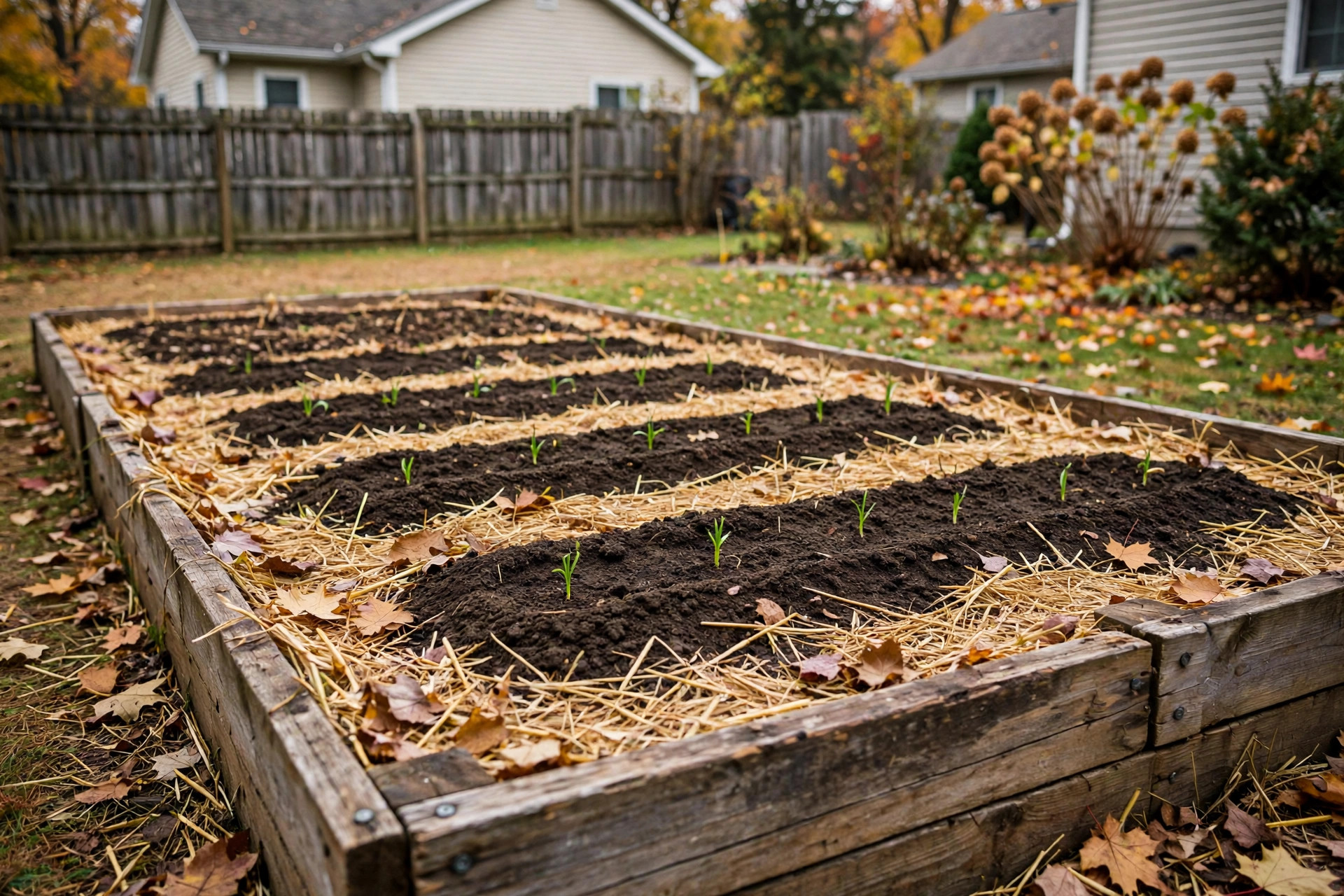
Water the bed well after planting. Then cover it with four to six inches of mulch. Straw is the classic choice. Shredded leaves work too. Mulch keeps the soil temperature steady and stops winter heaving, which can push shallow cloves out of the ground.
5. Mark the Rows
Garlic sleeps for months under its mulch blanket. Mark each row with a label naming the variety and the planting date. Come spring, the labels save much confusion.
Cost of Garlic Bulbs and Planting Supplies
Seed garlic costs more than kitchen garlic, but it is still cheap for what it returns. Expect to pay between eight and twenty dollars per pound, depending on the variety and the supplier. One pound plants a generous bed.
Compost costs little if made at home. A bag of garden compost from a store runs a few dollars. Straw mulch for a small bed costs under ten dollars.
The tools needed are basic: a trowel, a rake, and a watering can or hose. Most home gardeners own these already. There is no special equipment for garlic.
Compared with many garden crops, garlic is one of the cheapest to start. The main cost is the seed stock itself. After the first harvest, a grower can save the largest bulbs to replant, which cuts the cost to nearly nothing in later years.
Shoppers comparing prices across garden retailers will find seed garlic at many trusted outlets, from specialist growers to large home stores listed by The Spruce in their garden guides.
Care and Upkeep Through the Seasons
Fall care is simple. Once the mulch is down, leave the bed alone. Rain and snow do the rest. If the fall is very dry, water once a week until the ground freezes.
In spring, green shoots push through the mulch. This is a welcome sight. Pull back some mulch if it mats down too thick, so the shoots get light. Keep the bed weeded. Garlic hates competition from weeds, which steal water and food.
Water during dry spells. Garlic needs about an inch of water per week while it grows. Stop watering when the lower leaves begin to yellow. This usually happens two to three weeks before harvest. Extra water at the end can rot the bulbs or stain the skins.
Feed once in spring if the soil is poor. A balanced garden fertilizer, or a side dressing of compost, is enough. Do not overfeed. Too much nitrogen late in the season makes leafy plants and small bulbs.
Cut the scapes on hardneck garlic when they curl into a loop. Snapping them off sends the plant’s energy down into the bulb. The scapes can be chopped into stir-fries, pesto, or grilled whole.
Watch for pests, though garlic has few. Onion thrips may appear in hot, dry weather. A strong spray of water usually controls them. Good air flow between plants helps prevent fungal leaf spots.
Safety for Gardeners and Homes
Garlic is safe to grow and handle. A few common-sense points keep the work pleasant.
Wear gloves when breaking bulbs and digging in soil. Soil can hide sharp bits and irritate skin. Gloves also stop the garlic oils from soaking into the hands.
Wash hands after handling seed garlic treated with any coating. Some suppliers dust cloves with a mild fungicide. The coating is safe when used as directed, but hands should be washed before eating.
Keep mulch away from the house foundation. Thick straw against siding can draw insects. Leave a clear gap between garden mulch and the home.
Store harvested garlic where pets cannot reach large amounts. Small kitchen use is fine, but dogs in particular should not eat much garlic. Keep drying racks out of reach.
Lift bulbs with a fork, not by pulling the stems. Yanking can tear the stems and bruise the bulbs. A garden fork loosened under the row lifts them cleanly.
Frequently Asked Questions
How long does garlic take to grow?
About eight to nine months from fall planting to summer harvest. Cloves planted in October are usually ready the following June or July. The exact time depends on the variety and the local weather.
Can I grow garlic in pots?
Yes. Use a pot at least twelve inches deep and wide. Fill it with good potting soil mixed with compost. Plant cloves two inches deep and three inches apart. Pots dry out faster than beds, so water more often. The harvest is smaller, but the method works well for small homes.
Why did my garlic make only small bulbs?
The most common causes are planting too late, crowding the cloves, poor soil, or too little water in spring. Small seed cloves also make small bulbs. Next season, plant earlier, space wider, feed the soil, and plant only the largest cloves. Growers who want deep how-to detail can read planting advice from Monrovia and Proven Winners, both of which publish home-gardener guides.
Should I plant garlic from the grocery store?
It is better not to. Store garlic may carry disease and may be a type unsuited to the local climate. Seed garlic from a garden supplier is tested, named, and suited to growing. The small extra cost pays for itself in a healthy crop.
What are garlic scapes, and what do I do with them?
Scapes are the curly flower stalks of hardneck garlic. They appear in late spring. Cut them when they make one full curl. Eat them fresh, cook them like green beans, or blend them into pesto. Removing them also helps the bulb grow larger.
How do I know when garlic is ready to harvest?
Count the leaves. When the bottom three or four leaves have turned brown but five or six green leaves remain, it is time. Dig one test bulb first. The cloves should fill the skin fully and feel firm. Do not wait until all leaves die, or the bulbs may split open in the ground.
How do I store harvested garlic?
Cure the bulbs first. Lay them in a warm, dry, airy place out of direct sun for two to four weeks. Then trim the roots, cut the stems to about an inch, and store in a cool, dark spot with air flow. Properly cured softneck garlic can last eight months or more. Hardneck lasts four to six months. Research summaries from the NIFA extension network back up these home-storage practices.
A Short Final Word
Garlic rewards the patient gardener. The work is done in one cool afternoon in the fall. Then winter passes, spring comes, and the green rows rise like a promise kept. By summer, the grower pulls up bulbs that smell stronger and taste sweeter than anything from a store shelf.
Start small. One bed, one pound of seed, one variety suited to the region. Learn the rhythm of the plant. Save the best bulbs for next year’s planting. Within two seasons, the home will have its own garlic tradition.
For more reading on bulbs and garden plants, the variety guides at Gurney’s offer a useful next step. This garlic bulbs planting american homes guide ends where the real work begins: in the soil, in the fall, with a handful of cloves and a little faith in the season.
For related planting guides, see onion sets planting buying guide usa, garlic bulbs planting buying guide usa, and garlic bulbs planting for sale usa.
References
Burpee. (n.d.). Seeds, plants, and gardening supplies. https://www.burpee.com Gardening Know How. (n.d.). Gardening guides and plant care. https://www.gardeningknowhow.com Gurney’s Seed & Nursery Co. (n.d.). Seeds, plants, and garden supplies. https://www.gurneys.com Monrovia. (n.d.). Plants for home gardens. https://www.monrovia.com National Institute of Food and Agriculture. (n.d.). Agricultural research and extension. https://www.nifa.usda.gov Park Seed. (n.d.). Seeds, plants, and gardening supplies. https://www.parkseed.com Proven Winners. (n.d.). Plants and gardening inspiration. https://www.provenwinners.com The Old Farmer’s Almanac. (n.d.). Gardening calendars and advice. https://www.almanac.com The Spruce. (n.d.). Home and garden advice. https://www.thespruce.com
Was this guide helpful?

About Lisa Anderson
The My Garden US editorial team writes practical, in-depth home and garden guides for American homeowners — tested advice, no fluff.