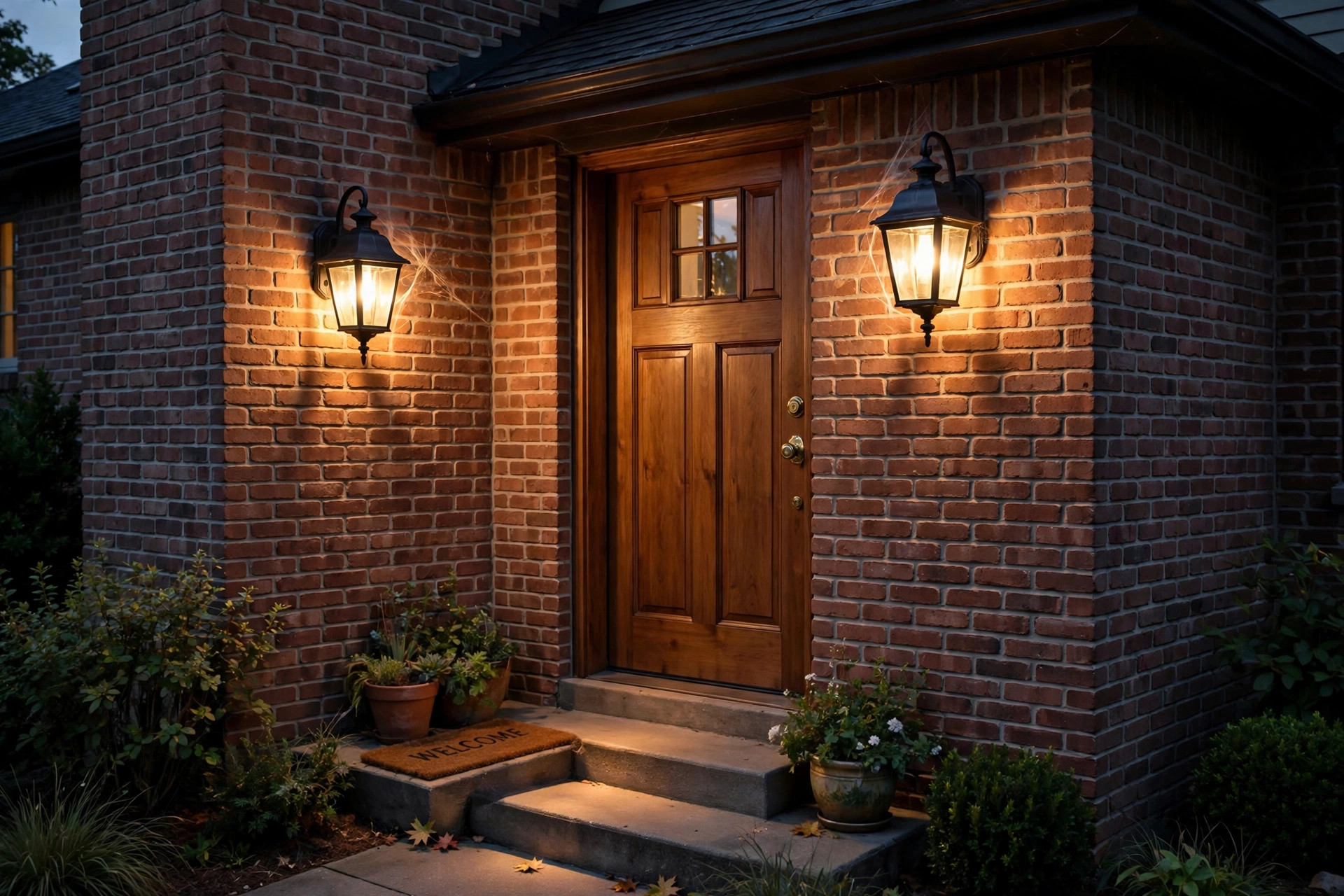
This outdoor wall lanterns reviews buying guide USA is for home owners who want safe light by the front door, the garage, or the patio. Wall lanterns are small lamps that hang on an outside wall. They look like old lanterns, but most now use electric or LED lamps. A good lantern helps guests see the steps. It helps you see who is at the door. It makes the house look warm and cared for.
Why Wall Lanterns Matter
Light by the door is one of the simplest ways to make a home safer. A dark entry hides ice on the steps. It hides a loose board on the porch. It makes keys hard to find. A lantern fixes all of this with one small fixture. The U.S. Consumer Product Safety Commission tracks many home injuries that start with poor lighting, which shows why this small upgrade matters.
A wall lantern also warns off trouble. Thieves look for dark houses. A lit porch tells them someone lives there and pays care. Police in many towns say lit entries are less likely to be hit. You do not need bright floodlights. A soft lantern glow is often enough.
Curb appeal is the third reason. A house with warm lights by the door looks cared for. If you ever sell, buyers judge the home in the first few seconds, and they often see the front entry in the evening. Good lanterns give the home a finished look.
Local rules can also play a role. Some cities ask for a light by every outside door. New home builders often add the cheapest lantern they can find. Many home owners replace those soon after they move in.
What to Look for When You Buy: Outdoor Wall Lanterns Reviews Buying Guide Usa
Buying a lantern is simple when you know the key points. Start with the weather rating. This is the most common thing buyers get wrong.
Weather rating. Look for a UL or ETL listing for “wet location” on the box or the listing. A wet rated light can sit in direct rain. A damp rated light is fine under a porch roof but should not get direct rain. Bob Vila and other home guides stress this point in almost every outdoor light review. If you skip it, water can get in and ruin the light fast.
Size and scale. A lantern that is too small looks lost on a big wall. As a rule, the lantern should be about one third the height of the door. For a six foot door, look for a lantern around two feet tall. For a pair flanking a door, each one can be a bit smaller, about one quarter of the door height. Lighting specialists like Lumens show size guides that follow this same rule.
Brightness. Brightness is measured in lumens, not watts. For a porch lantern, 450 to 800 lumens is enough for most doors. More than that can glare in the eyes of guests. Fewer than 450 may leave steps too dark. If the lantern takes a screw in bulb, you can change the brightness later by swapping the bulb. Energy Star rated bulbs now give good light while using very little power.
Light color. Color is measured in Kelvin, written as K. Warm light is 2700K to 3000K. It looks like an old porch bulb. Cool white is 4000K and up. It looks harsh and blue. Most buyers prefer warm light for a front door. It feels friendly. It also fits older house styles. Some towns with dark sky rules prefer warm light too.
Materials. Cheap lanterns are made of thin steel that rusts in two years. Better ones use powder coated aluminum, solid brass, or stainless steel. Powder coat is a thick paint baked on in the factory. It holds up well. Brass costs more but lasts for decades in coastal air. Check the screws too. Stainless screws do not rust the way plain steel screws do.
Glass. Clear glass gives the most light. Seeded glass has small bubbles in it and looks old style. Frosted glass softens the light and hides the bulb. Frosted glass also cuts glare. If you hate seeing a bare bulb, pick frosted or seeded.
Controls. Many lanterns now come with built in dusk to dawn sensors. The light turns on at dark and off at sunrise. This saves power and effort. Motion sensor models turn on only when someone walks by. These pair well with sensor porch lights and motion flood lights for full yard coverage. This Old House notes that dusk to dawn models are the most set and forget choice.
Wiring and mount. Most wall lanterns need a round junction box in the wall. Older homes often have one already by the door. If yours does not, you may need an electrician to add one. Check the size of the back plate. It should cover the box fully so rain cannot get behind it.
Types of Outdoor Wall Lanterns
Shoppers in the USA will see the same few styles again and again. Each suits a different house and need.
Traditional carriage lanterns. These look like the lamps on old carriages. They have a curved top, clear glass sides, and a small candle style bulb inside. They fit colonial, farmhouse, and craftsman homes. They are the most common style sold at Lowe’s and similar stores.
Modern lanterns. These have clean lines, square frames, and simple glass. They fit ranch homes and new builds. They often use LED bulbs that are built in. You cannot change the bulb, but the LED lasts many years.
Up and down lights. These lanterns throw light up the wall and down the steps at the same time. They look smart on brick and stone walls. The wall itself glows, which gives a rich look. They can be bright, so pick a lower lumen model to avoid glare.
Solar lanterns. Solar models charge by day and glow by night. They need no wiring. This makes them good for sheds, fences, and far garage walls. The light is weaker than wired models. On cloudy days they may fade early. Buyers who want solar for the yard often also look at solar path lights.
Dusk to dawn lanterns. A small eye on the fixture reads the light level. When it gets dark, the lamp turns on by itself. These are ideal for people who forget to flip the switch. They use LED bulbs, so the power bill stays tiny.
Cost and Price
Prices in the USA span a wide range. A basic lantern from a big box store like Home Depot runs 30 to 70 dollars. These are fine for a rental or a quick fix. Mid range models from 70 to 150 dollars use better metal and better seals. This is the sweet spot for most home owners. Premium models from 150 to 400 dollars use brass or copper. Lamps Plus and other lighting shops carry many of these higher end picks.
Bulbs add a small cost. LED bulbs cost 8 to 20 dollars each but last for years. Old style bulbs cost less up front but burn out fast and use more power. The U.S. Department of Energy notes that LED bulbs use up to 90 percent less power than old bulbs. Over ten years, LED bulbs save far more than they cost.
Labor is the other cost. If you can swap a lantern on an old box yourself, the cost is zero. A licensed electrician charges about 150 to 350 dollars to add a new box and wire a lantern. Prices are higher on the coasts and lower in small towns. Get two quotes before you hire.
Watch out for false savings. A 25 dollar lantern that rusts in two years costs more in the long run than a 90 dollar one that lasts fifteen. Reviews on Consumer Reports often show that mid range brands beat the cheapest picks on life span.
Care and Upkeep
Outdoor lanterns need little care, but a few small habits keep them bright for years.
Clean the glass. Dust and bugs dim the light over time. Wipe the glass with a soft cloth and mild soap twice a year. Do not use harsh cleaners. They can scratch the glass and dull the finish.
Check the seals. Look at the rubber gasket where the glass meets the frame. If it is cracked or loose, water can get in. Many makers sell spare gaskets. A new gasket costs a few dollars and takes minutes to fit.
Fight rust. Small rust spots can be sanded and touched up with outdoor metal paint. Catch them early. Once rust eats through thin metal, the lantern is done. Powder coated models resist rust far better than painted steel.
Clear insect nests. Wasps love to build nests inside warm lanterns. Check inside in spring. Turn the power off first. Knock out nests with a broom. Do not spray bug killer on a hot bulb.
Change bulbs on time. LED bulbs fade slowly rather than burning out. If your porch seems dimmer than it used to be, the bulb may be at the end of its life. Keep one spare on hand so the door is never dark.
Trim plants. Bushes grow over lanterns and block the light. Trim them back each spring so leaves do not trap water against the fixture, which speeds up rust.
Safety
Safety is the part buyers skip, and it is the part that matters most.
Turn off the power. Flip the breaker before you touch any wiring. Test that the power is off with a cheap voltage tester. Do not trust the wall switch alone. A miswired switch can leave power on the line.
Use the right rating. A lantern rated for damp use only should never sit in open rain. Water and power do not mix. If the old fixture by your door is corroded, replace the box too. A weak box can let the heavy lantern pull loose.
GFCI protection. Outside outlets and some light circuits need GFCI protection by code. A GFCI cuts power fast if water causes a short. If your panel is old, ask an electrician whether your outside lights are protected.
Check for recalls. Now and then a maker recalls a light for fire or shock risk. The U.S. Consumer Product Safety Commission posts these recalls. It is worth a quick check before you buy an off brand model.
Mind the neighbors. Bright lights that spill into other yards cause fights. Pick a lantern with a shade or glass that aims light down. Warm low glare bulbs help. The Spruce and other home guides note that shielded lights cut light trespass.
Bulb heat. Old style bulbs get very hot. Keep them away from wood trim and dry leaves. LED bulbs from brands like Philips run much cooler, which is one more reason to pick LED.
Frequently Asked Questions
How big should my porch lantern be? As a rule, the lantern should be about one third as tall as the door. For a standard six foot door, that means a lantern about two feet tall. If you hang one on each side of the door, each can be a bit smaller. Big doors and tall walls need bigger lanterns. A tiny light on a big wall looks wrong and gives too little light.
Should I pick LED or a regular bulb? Pick LED. LED bulbs last ten to twenty times longer than old bulbs. They use far less power. They run cooler, which is safer near wood trim. They now come in warm colors that look just like old porch light. The higher price up front pays back in power savings and fewer bulb changes.
Can I install a wall lantern myself? Yes, if there is already a junction box in the wall. Swap the old light for the new one with the breaker off. The wires are usually color matched: black to black, white to white, green or bare to ground. If there is no box, or if the wiring looks old and brittle, call an electrician. Bad wiring is not worth the risk.
Will these lights hold up in rain and snow? Wet rated models will. The UL wet location mark means the light was tested against rain and snow. Damp rated models should only go under a covered porch. In harsh coastal or lake areas, pay more for brass or stainless steel. Salt air eats cheap steel fast.
How long do outdoor wall lanterns last? A cheap steel lantern may last three to five years. A mid range powder coated model often lasts ten to fifteen years. Brass and copper models can last twenty five years or more with light care. LED bulbs add to the life. Built in LED models last as long as their driver board, often ten years or more.
A Final Word
The right lantern is the one that fits your door, survives your weather, and gives warm steady light. Spend a bit more for good metal and a true wet rating. Pick warm LED light. Keep the glass clean and the seals tight. Do that, and your front door will look warm and stay safe for many years. Use this outdoor wall lanterns reviews buying guide USA the next time you shop, and you will buy with confidence instead of guesswork.
References
Bob Vila. (n.d.). Home improvement advice. https://www.bobvila.com Consumer Reports. (n.d.). Product reviews and ratings. https://www.consumerreports.org ENERGY STAR. (n.d.). Energy efficient products. https://www.energystar.gov Lamps Plus. (n.d.). Lighting and home decor. https://www.lampsplus.com Lowe’s. (n.d.). Home improvement products. https://www.lowes.com Lumens. (n.d.). Lighting and ceiling fans. https://www.lumens.com Philips. (n.d.). Lighting products. https://www.philips.com The Home Depot. (n.d.). Home improvement products. https://www.homedepot.com The Spruce. (n.d.). Home and garden advice. https://www.thespruce.com This Old House. (n.d.). Home renovation guidance. https://www.thisoldhouse.com U.S. Consumer Product Safety Commission. (n.d.). Product safety information. https://www.cpsc.gov U.S. Department of Energy. (n.d.). Energy efficiency and renewable energy. https://www.energy.gov
Was this guide helpful?

About Jennifer Lee
The My Garden US editorial team writes practical, in-depth home and garden guides for American homeowners — tested advice, no fluff.