
Many grill owners have heard the same warning. Small wire bristles can break off an old brush. They stick to the grates. Then they end up on food. Hospitals see real injuries from this each year. That is why interest in the best grill brush without bristles reviews has grown so fast. Cooks want clean grates without any loose wire. This guide walks you through the options in plain words. It covers what to look for, the main types, fair prices, care, and safety. By the end you can pick one with confidence.
Why a Bristle-Free Grill Brush Matters
Old wire brushes work well at first. The steel wires scrape off burnt grease. But wires loosen over time. Heat, rust, and hard scrubbing all weaken them. A single wire can be thinner than a hair. It hides in the food. It can be swallowed without notice.
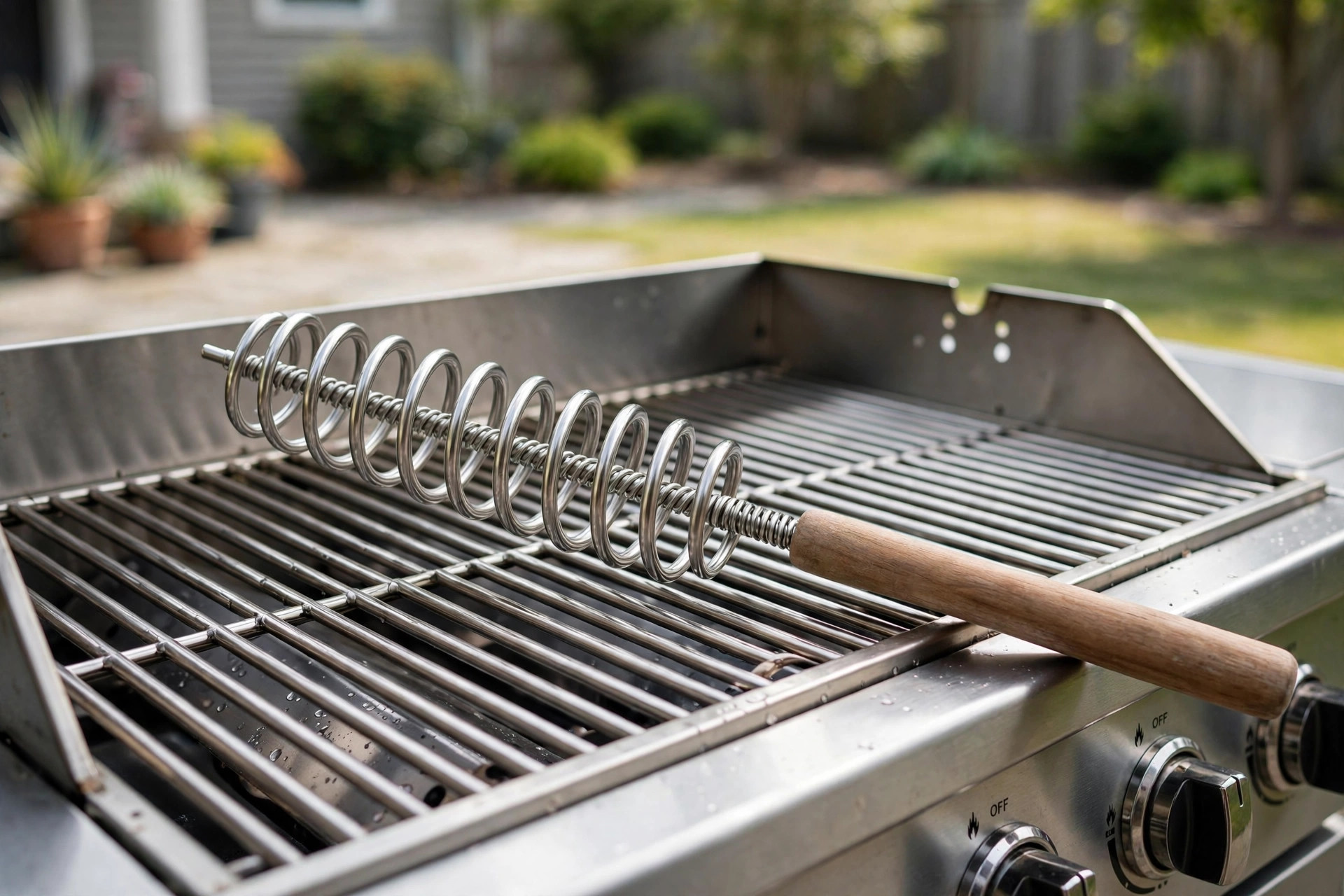
A bristle-free brush removes this risk at the root. There is no wire to break off. Coil brushes use a wound spring of metal. Steam brushes use water and heat. Wood paddles wear grooves into the wood until they match your grates. All of them clean without leaving small metal bits behind.
There is a second benefit. Many of these tools clean better on hot grates. A coil wraps around each bar of the grate. It scrubs three sides at once. A wood paddle forms a custom groove after a few uses. The fit gets better with age, not worse.
Peace of mind matters too. When guests come over, the last thing you want is a hidden hazard. A bristle-free tool lets you serve food with a clear mind.
There is also a cleaning angle many cooks miss. Wire brushes shed tiny pieces as they age. Those pieces fall into the drip pan and vents. They are hard to see. They can block the small holes in burner tubes on a gas grill. A blocked tube gives you an uneven flame. Hot spots and cold spots follow. A coil or steam brush leaves nothing behind, so the grill keeps burning clean and even.
What to Look for When You Choose One: Best Grill Brush Without Bristles Reviews
Read a few best grill brush without bristles reviews and you will see the same points come up again and again. Here is what counts most.
The Cleaning Head
The head does the work. Check how it is built. A coil head should be one solid piece of wound steel. It should not have cut ends that can snag. A steam brush should hold water well and release it only when you press. A scraper head should be wide enough to cover the grate bars.
Size matters. A head that is too small takes many passes. A head that is too wide cannot reach corners. Most grates clean best with a head three to four inches wide.
The Handle and Scraper
Long handles keep your hands away from heat. Look for a handle of at least sixteen inches. The grip should feel firm in a wet hand. Some brushes add a second edge, a flat scraper, for burnt spots. That small edge saves you from digging at the grate with the coil.
Also check how the head joins the handle. Rivets and strong welds last longer than glue. Shake the brush in the store if you can. If it rattles, put it back.
Types of Grill Brushes Without Bristles
There are three main kinds. Each has its own way of cleaning. Reviews at places like the Weber store and Char-Broil show cooks using all three.
Coil and Spring Brushes
The coil brush is the most common bristle-free choice. A heavy steel spring replaces the wire head. You drag it across hot grates. The coils squeeze around each bar and scrape grease from three sides.
These brushes cost little. They last a long time. They work on gas, charcoal, and pellet grills. Many pitmasters on sites like AmazingRibs favor the coil style for daily cleaning.
One thing to know: the coil wears down slowly. After a season or two it may lose its spring. That is your sign to replace it. Do not wait until it is flat and weak.
Steam Brushes
A steam brush holds water in the handle or head. As you scrub a hot grate, water turns to steam. The steam loosens burnt food. The heat of the grate does most of the work.
Steam brushes clean with less force. They are kind to porcelain-coated grates. They are also good for cooks who grill often and want quick cleanups between batches.
The tank needs refills. That is the main drawback. For a long cook with many rounds, you may refill twice. Still, many Traeger grill owners keep one by the grill for fast wipe-downs.
Flat Scraper Pads and Wood Paddles
Flat pads use a stiff pad or mesh instead of wire. Wood paddles use a plain piece of hardwood. You heat the grill, then press the paddle down. The wood burns grooves that match your grate bars.
Wood paddles improve with use. The grooves get deeper and fit tighter. They are cheap and simple. Reviews on The Spruce Eats note they work best on standard round-bar grates.
Pads wear out faster. You will replace them more often than a coil. But they are gentle on delicate coatings.
Cost and Price
Bristle-free brushes cost less than most cooks expect. A basic wood paddle can sell for under ten dollars. A good coil brush often sells between fifteen and twenty-five dollars. Steam brushes sit at the top, usually twenty to forty dollars.
Price depends on build. Solid handles and full steel heads cost more. Cheap brushes can still work, but they wear out fast. For daily grillers, the mid-range is the sweet spot.
Some brands sell the brush as part of a tool set. A set may add tongs, a spatula, and a scraper. These bundles often cost less than buying each piece alone. Check whether you need the extras before you pay for them. If you already own good tongs, a single brush is the better buy.
Compare prices at large stores before you buy. Home Depot and Napoleon both list several options with buyer ratings. Buying during spring sales can cut the price by a third.
Think of it as a season of use. Even a twenty-dollar brush costs pennies per cook if you grill twice a week. Compare that to a hospital visit and the choice is easy.
If you want to compare designs side by side, read our guide to the best grill brush for cast iron grates. Cast iron needs a gentler touch than bare steel.
Care and Upkeep
A bristle-free brush still needs care. Rinse the head after each use. Shake off loose ash. Let it dry before you store it. Water left on steel invites rust.
For coil brushes, check the spring now and then. Look for flat spots or rust. A worn coil scrubs less and can scratch grates.
For steam brushes, empty the tank after each cook. Stale water leaves scale inside. Run a little vinegar through it once a month if your water is hard. Do not use harsh soap on the head. Soap can leave a film that shows up on your next cook. Warm water and a rinse are enough.
Wood paddles need almost no care. Knock off the loose char before you hang them up. Store them dry. They will darken with use. That is normal.
Hang your brush where it stays dry. A covered spot near the grill works well. Do not leave it lying on wet ground.
Regular deep cleans keep grates in shape too. Learn how to clean stainless steel grill grates the right way between heavy cooks.
Safety
The whole point of going bristle-free is safety. But a few rules still apply.
Always wear heat-resistant gloves when you brush hot grates. Steam rises fast. It can burn your hands and arms. Keep the handle between you and the heat.
Let the grill cool to a safe level before you reach under it. Grease fires can start from a drip. Keep a lid or fire spray nearby.
Check the brush before each use. Even bristle-free heads wear out. Look for cracks, bent coils, or loose joints. Replace a damaged brush at once.
Keep the brush away from children. The scraper edge is sharp. Store it on a hook out of reach.
If you cook for large groups, a wireless BBQ thermometer is a good partner tool. It keeps you from lifting the lid and losing heat.
Experts at Big Green Egg and Broil King stress the same habit: clean hot, store dry, inspect often.
Frequently Asked Questions
Do bristle-free grill brushes clean as well as wire brushes? Yes, for most cooks they do. A coil brush wraps around each bar and scrubs three sides at once. A steam brush lifts burnt food with heat. It may take one or two extra passes. The result is the same clean grate.
Can I use a coil brush on porcelain-coated grates? You can, but be gentle. Use light pressure. Hard pressing can chip the coating over time. Steam brushes and wood paddles are softer on coated grates.
How often should I replace my grill brush? Replace a coil brush when the spring flattens or rusts. That is usually after one to two seasons of heavy use. Replace steam brush pads when they wear thin. Replace wood paddles when the grooves get too deep to grip.
Are steam grill brushes safe to use? Yes, with care. Wear gloves. Keep your hands and face clear of rising steam. Let the grill stay at grilling heat, not full blast. Follow the maker’s guide for filling the tank.
What is the best way to clean between the grates? Heat the grill first. Burnt food loosens on hot metal. Then brush with firm, even strokes. For stuck spots, use the scraper edge. A second pass with a damp rag picks up fine ash.
Where can I read trusted reviews before I buy? Look at buyer ratings from big stores and test groups. Consumer Reports tests grill tools for durability. Store pages show real buyer notes.
A Final Word
The best grill brush without bristles reviews all point to the same lesson. You do not need wire to get a clean grate. Coil brushes, steam brushes, and wood paddles each do the job well. Pick the kind that fits your grill and your habits. Clean the grates while they are hot. Store the brush dry. Check it now and then. Your food stays safe and your grill lasts longer.
References
AmazingRibs.com. (n.d.). Barbecue and grilling science. https://www.amazingribs.com Big Green Egg. (n.d.). Kamado grills and outdoor cooking. https://www.biggreenegg.com Broil King. (n.d.). Gas and charcoal grills. https://www.broilkingbbq.com Char-Broil. (n.d.). Gas and charcoal grills. https://www.charbroil.com Consumer Reports. (n.d.). Product reviews and ratings. https://www.consumerreports.org Napoleon. (n.d.). Fireplaces, grills, and heating products. https://www.napoleon.com The Home Depot. (n.d.). Home improvement products. https://www.homedepot.com The Spruce Eats. (n.d.). Recipes and cooking guides. https://www.thespruceeats.com Traeger. (n.d.). Wood pellet grills. https://www.traeger.com Weber. (n.d.). Grills and outdoor cooking. https://www.weber.com
Was this guide helpful?

About Sarah Mitchell
The My Garden US editorial team writes practical, in-depth home and garden guides for American homeowners — tested advice, no fluff.
You May Also Like

The Best BBQ for Super Bowl Party: A Complete Guide
April 17, 2026 0 views
How to Grill Pineapple for Dessert: A Simple Step-by-Step Guide
June 1, 2026 0 views
Best Outdoor Prep Table for BBQ: A Practical Buyer’s Guide
July 28, 2026 0 views