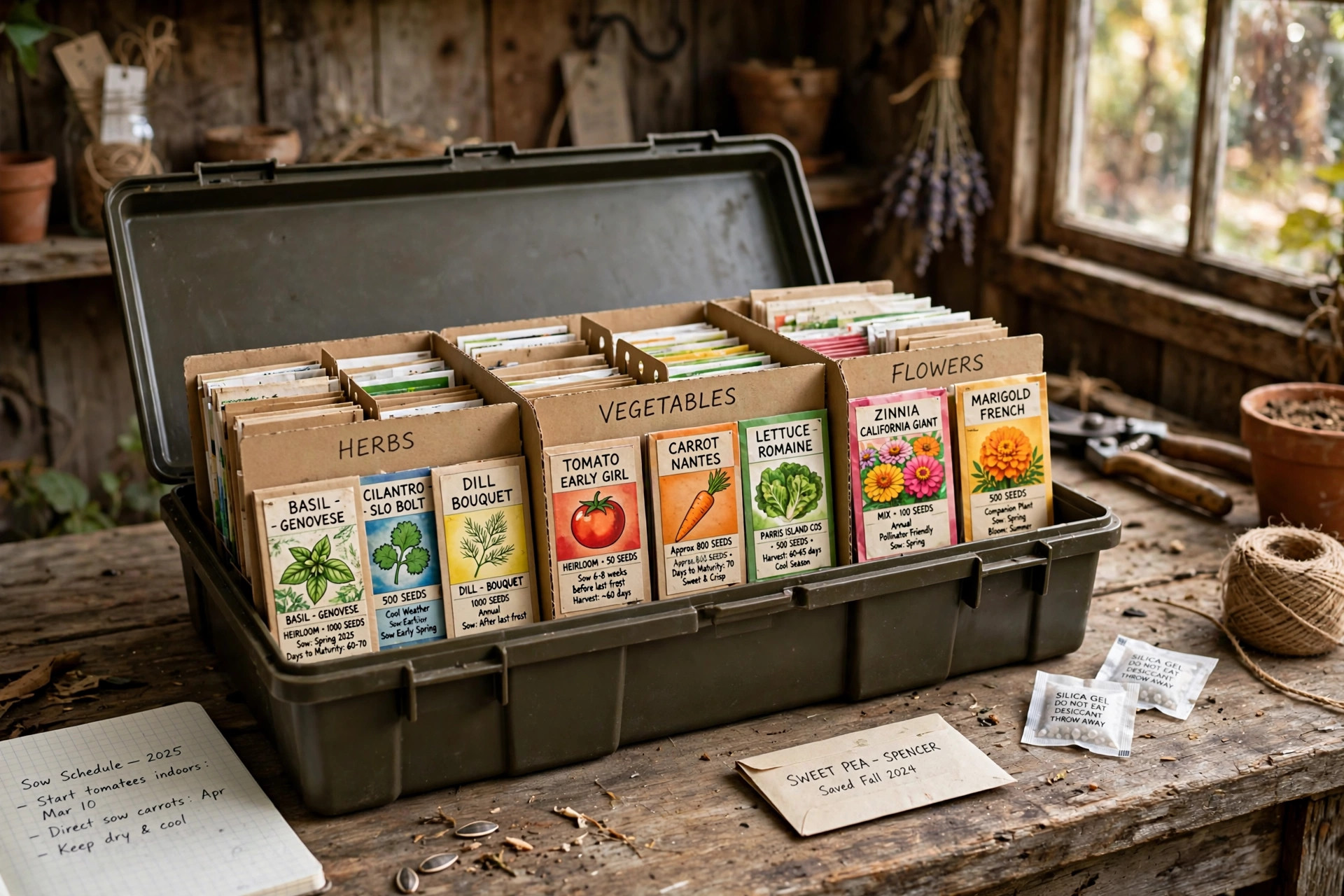

Every gardener knows the drawer of doom. It is the junk drawer where seed packets go to die. Packets from three seasons ago lie crushed under rubber bands and old twine. The labels blur. The tomato seed from last spring sits beside a packet of beans dated 2019. Nothing is sorted. Nothing is sealed. When planting time comes, the gardener digs through the mess and hopes for the best. A seed storage organizer for gardeners ends that problem. It is a simple box, binder, or case that holds seed packets in neat order. It keeps them cool, dry, and dark. It turns a mess into a system. This guide explains why it matters, how to choose one, what types exist, what they cost, and how to use them well.
Why a Seed Storage Organizer Matters
Seeds are alive. A seed holds a tiny plant in rest. It waits for warmth, water, and soil. But it also waits in fear of three enemies: heat, moisture, and light. Heat shortens seed life. Moisture wakes the seed too early and starts rot. Light and air break down the seed coat over time. A packet left on a sunny windowsill may lose half its power in one summer. A packet kept cool and dry may sprout well for five years.
Most gardeners buy more seed than they plant. A packet of carrots holds hundreds of seeds. A home garden needs only a few dozen. The rest should last for next year. But only if stored right. This is where a seed storage organizer for gardeners earns its place. It is not just a box. It is a tool that guards your money and your harvest.
An organizer also saves time. In spring, every day counts. When the soil warms, the gardener must plant fast. An organizer with labeled sections lets you find the peas in seconds. No digging. No torn packets. No buying seeds you already own because you could not find them.
How to Choose a Seed Storage Organizer: Seed Storage Organizer for Gardeners
Before you buy, think about your seed collection. Count your packets. A new gardener may have twenty. A keen gardener may have two hundred. Buy for the collection you will have in two years, not the one you have today. A box that is too small will force packets back into the drawer. Tool makers like Fiskars and how-to sites like Family Handyman both advise gardeners to plan storage around growth, not just the current clutter.
Next, think about where it will live. The best place for seed storage is cool, dry, and dark. Many gardeners use a shelf in the basement, a cool closet, or a corner of the refrigerator. Your organizer must fit that space. Measure first.
Then look at these key traits.
Seal and Moisture Protection
The lid or zipper must close tight. Moisture is the worst enemy of stored seed. A box with a loose lid lets damp air in. A gasket seal or a zip-lock style closure keeps damp air out. Some organizers come with slots for silica gel packs. These small packs soak up moisture inside the box. They are cheap and they work well. Independent testing groups such as Consumer Reports have long stressed that moisture control matters more than the price of the container itself.
Light Blocking
Seeds keep best in the dark. Choose an organizer made of opaque plastic, metal, or thick cardboard. Clear boxes look nice on a shelf. But they let light in. If you love the look of a clear box, store it inside a dark cabinet. A seed storage organizer for gardeners should be a dark home for seeds, not a display case.
Labeling System
The best organizer is useless if you cannot tell what is inside. Look for one that takes labels well. Card dividers with tabs work like a card catalog. Some gardeners sort by plant family: brassicas, legumes, roots, greens, flowers. Others sort by planting season: early spring, after frost, summer, fall. Pick the system that matches how you plan your garden. Many gardeners also pair their organizer with waterproof plant markers so the variety names stay clear from packet to plot.
Packet Size
Seed packets are small. But some come in odd shapes. Bulky items like large bean packets or seed starting kits may not fit slim sleeves. Check that the pockets or slots hold a standard packet with room to spare. If you save your own seed in envelopes, make sure those fit too.
Types of Seed Storage Organizers
There is no single best type. Each has strengths. Here are the main options.
Photo Storage Boxes with Dividers
These boxes were made for photographs, but gardeners adopted them long ago. They hold small plastic cases that each take one seed packet. The cases stack in a divided box. Tabs on the dividers mark each section. This type is cheap, light, and easy to carry to the garden. Similar storage boxes are sold in the garden departments of The Home Depot and Lowe’s, which stock a wide range of seed-starting and storage gear each spring. It is a favorite for learning how to start seeds indoors guide season after season.
Binders with Pocket Pages
A binder uses clear pocket pages made for cards or photos. Each pocket holds one packet. You can flip through your whole collection like a book. Tabbed dividers split the binder into groups. Binders work well for large collections. They sit flat on a shelf. The risk is light exposure, so keep the binder in a dark place or use a seed storage organizer for gardeners with an opaque cover.
Small Totes and Craft Boxes
Craft stores sell small totes with snap lids and movable dividers. These are sturdy and cheap. They stack well. They come in many sizes. A silica gel pack fits easily in the corner. For the gardener who wants a simple box that does the job, this is a strong choice.
Metal Tins and Cookie Boxes
Some gardeners use metal tins with tight lids. These block light fully. They look handsome on a shelf. The weak point is moisture control. Metal does not breathe, so any damp air trapped inside stays inside. Add a desiccant pack and check the seal.
Refrigerator-Safe Cases
For the most serious seed keepers, a small case that lives in the refrigerator is the gold standard. Cold slows the aging of seeds. A sealed case with desiccant packs keeps them dry too. This method follows the classic rule for how to store garden seeds long term: cool, dry, and dark, with steady temperature. Specialty retailers such as Gardener’s Supply Company also carry purpose-built seed-keeping boxes designed around this same rule.
What to Pay: Cost and Price
A seed storage organizer for gardeners costs less than most garden tools. Prices run from a few dollars to about forty dollars.
– Simple plastic photo boxes with cases: five to fifteen dollars. – Binders with pocket pages: ten to twenty dollars. – Sturdy craft totes with dividers: eight to twenty dollars. – Metal tins: five to twelve dollars. – Large multi-tray organizer sets: twenty-five to forty dollars.
Add a few dollars for extras. A bag of silica gel packs costs little and lasts for years if you recharge them in the oven. A label maker or a set of divider tabs costs under ten dollars. Compared with the cost of replacing dead seed each spring, the organizer pays for itself in one season. Seed packets now cost three to five dollars each. Lose ten packets to bad storage and you have lost more than the price of the best organizer on the market.
Setting Up Your Organizer
Start by pulling every seed packet you own out of drawers, bags, and pockets. Lay them on a table. Throw away any packet that is moldy, damp, or chewed by mice. Check the dates printed on the packets. Most vegetable seeds keep well for three to five years in good storage. Onion and parsnip seed fade faster, a point confirmed by seed suppliers like Burpee, which publishes germination data for home gardeners. You can test old seed with a simple germination test: place ten seeds on a damp paper towel, seal it in a bag, and wait a week. Count how many sprout. That tells you the truth.
Next, group the keepers. Common groups are vegetables, herbs, and flowers. Within vegetables, group by family or by planting time. Write the group names on the divider tabs. Slip each packet into its slot. Put a small silica gel pack in the box. Add a list on the lid: what you have and how much. Some gardeners keep a simple notebook with sowing dates beside the organizer. This pairs well with a good seed starting mix, since stored seed and fresh mix together decide how spring begins.
Store the finished organizer in a cool, dark place. A basement shelf away from the furnace is ideal. A closet on a north wall works too. If you use the refrigerator, keep the box in the main body, not the door, where temperatures swing. Let the box warm to room temperature before you open it. This stops moist room air from condensing on cold packets.
Care and Upkeep Through the Year
An organizer is not a buy-once-and-forget item. It needs a little care each season.
In late winter, open the box and plan. Pull the packets you will sow soon. Check dates. Replace silica gel packs if they feel damp or have changed color. Many packs can be dried in a warm oven and used again.
In spring, take the box to the potting bench, not the garden bed. Wind and rain can soak packets fast. Take out what you need, close the box, and return it to its shelf the same day.
In summer, resist the urge to leave the box in the shed. Sheds get hot. Heat is the quiet killer of seed life. Keep the box in the house, even if the shed holds your other gear under a good garden tool storage ideas for shed plan.
In fall, do an audit. Note what you used up. Note what grew well. Write it down. This record is worth more than any catalog. It tells you what to buy and what to skip. Guides from The Spruce and Bob Vila echo the same advice: a storage system is only as good as its upkeep, and seed storage is no different.
Safety Notes
Seed storage is safe work, but a few cautions apply.
Some seeds are treated with fungicide. Treated seed is often dyed pink or blue. Do not store treated seed near food or where children might reach it. Keep it clearly labeled. Wash your hands after handling it.
Silica gel packs are not food. Keep them away from small children and pets. Use the paper-wrapped kind, not loose beads, around kids.
Seeds themselves can be a risk in one case: some ornamental seeds are toxic if eaten. Castor bean and moonflower seed are examples. Store them in a locked box or on a high shelf, and label them clearly.
Finally, check your packets for pests. Seed weevils and pantry moths can infest stored seed. If you see fine dust or tiny holes in a packet, seal it in a bag and throw it away. Do not put it back in the organizer.
Frequently Asked Questions
How long do seeds last in a seed storage organizer for gardeners? Most vegetable seeds last three to five years in cool, dry, dark storage. Tomatoes and beans often last longer. Onions, parsnips, and corn lose vigor faster. The printed date is a guide, not a law. A germination test tells you the real story.
Can I store seeds in the refrigerator? Yes. The refrigerator is one of the best places for seed storage. Use a sealed container with desiccant packs. Keep it in the main section, away from the door. Let the container warm up before opening so moisture does not condense on cold packets.
Can I store seeds in the freezer? Yes, if the seeds are very dry. The freezer works well for long-term storage of fully dried seed. Use an airtight container and desiccant. Do not freeze seed in a frost-free freezer that cycles often unless the container is truly airtight, because the cycles move moisture around.
Do I need silica gel packs? They help a great deal. They pull moisture out of the air inside the box. A few packs cost little. You can recharge most of them in a low oven. In dry climates you may do fine without them, but in humid regions they are close to essential.
Should I keep seed packets in their original envelopes? Yes. The original packet carries the variety name, the lot number, and the date. Slip the whole packet into the organizer. If you save your own seed, write the variety, the year, and the source on each envelope before filing it.
What is the best way to organize packets inside the box? Use the system you will actually keep up. Sorting by planting season works well for busy gardeners. Sorting by plant family works well for crop rotation planners. Either way, label the dividers and keep a master list on the lid.
A Short Final Word
A garden starts long before the first spade turns the soil. It starts on a shelf, in a box, in the dark quiet where seeds wait. A seed storage organizer for gardeners is a small purchase that guards a large investment: your seeds, your money, and your spring. Choose a box that seals well, blocks light, and fits your shelf. Sort your packets, label the sections, and add a desiccant pack. Then give the box the same care you give the garden itself. The seeds will do the rest.
References
Bob Vila. (n.d.). Home improvement advice. https://www.bobvila.com Burpee. (n.d.). Seeds, plants, and gardening supplies. https://www.burpee.com Consumer Reports. (n.d.). Product reviews and ratings. https://www.consumerreports.org Family Handyman. (n.d.). DIY home repair and maintenance. https://www.familyhandyman.com Fiskars. (n.d.). Garden and cutting tools. https://www.fiskars.com Gardener’s Supply Company. (n.d.). Gardening tools and supplies. https://www.gardeners.com Lowe’s. (n.d.). Home improvement products. https://www.lowes.com The Home Depot. (n.d.). Home improvement products. https://www.homedepot.com The Spruce. (n.d.). Home and garden advice. https://www.thespruce.com
Was this guide helpful?

About Michael Thompson
The My Garden US editorial team writes practical, in-depth home and garden guides for American homeowners — tested advice, no fluff.
You May Also Like
How to Harden Off Seedlings Before Planting: A Simple Day by Day Plan
June 28, 2026 0 views
Compost Accelerator for Faster Breakdown: A Practical Guide
May 6, 2026 0 views
The Best Garden Hose Hanger for Wall Mounting
April 24, 2026 0 views