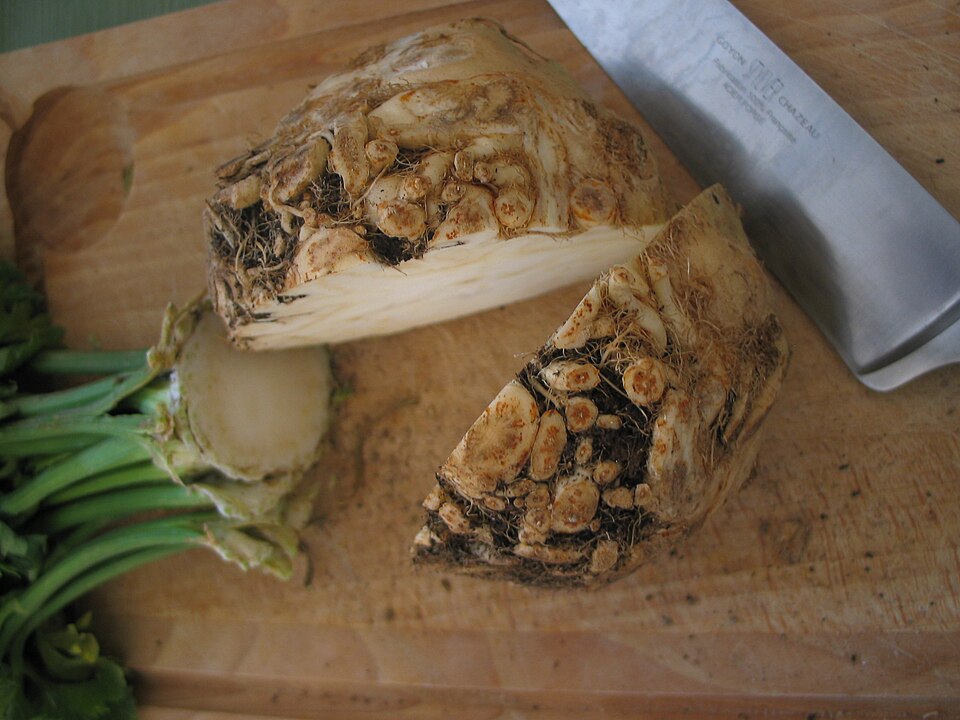
Celeriac looks like a vegetable that lost a fight. Its knobby, gnarled bulbs are objectively ugly, but peel away the rough exterior and you find sweet, nutty flesh that roasts like a potato and grates raw into the classic French remoulade. It is one of the great winter vegetables, storing for months.
Table of Contents
Table of Contents
This guide shows how to grow celeriac from dust-fine seed to harvest. It needs a long, cool-but-frost-free season, constant moisture, and an early indoor start; the seed germinates slowly and the seedlings grow slower. Hardy in the sense of tolerating cool weather, it bolts if chilled below 40 degrees as a young plant. Give it rich soil that never dries out, and be patient. carrots and parsnips share the cool-season bed.

Photo: Wikimedia Commons
Choosing a Variety
When it comes to how to grow celeriac, getting the details right makes all the difference.

Many homeowners find that how to grow celeriac is easier than they expected once they know the basics.
Brilliant is a popular variety with smooth, round roots and good storage. Diamant is a European standard with large, uniform knobs. Mars refines the shape further for easier peeling. All are Apium graveolens var. rapaceum, the root-forming celery.
Buy fresh seed each year; celeriac seed loses vigor in storage. One packet sows far more than most gardens need. The USDA PLANTS Database lists the variety with its cultivated range.
Brilliant and Diamant are both excellent; Brilliant edges ahead for smooth roots that peel easily, while Diamant gives larger knobs. Either serves the home garden well. The Clemson Cooperative Extension variety guides compare root smoothness.
When and How to Plant
Many homeowners find that how to grow celeriac is easier than they expected once they know the basics.
The key to how to grow celeriac is choosing the right approach for your space and budget.
Start celeriac seed indoors ten to twelve weeks before your last spring frost. This is one of the earliest indoor sowings in the vegetable garden. Press the dust-fine seed onto the surface of moist mix without covering, since it needs light to germinate. Keep it warm and constantly moist; germination is slow and erratic.
Transplant sturdy seedlings outdoors after all danger of frost has passed, spacing them eight to twelve inches apart. Never let transplants dry out or chill below 40 degrees, or they bolt. check your USDA zone planting dates to count back your indoor sowing week. Harden seedlings off carefully before planting out. The Old Farmer's Almanac planting calendar helps with the long lead time.
Use deep cell packs or soil blocks for starting seed; celeriac seedlings grow slowly and need room for their roots. Transplant the whole block undisturbed to avoid checking growth. The USDA National Agricultural Library seed-starting references cover block sowing for slow crops.
Soil and Sun
The key to how to grow celeriac is choosing the right approach for your space and budget.
With a little planning, how to grow celeriac can fit even a busy schedule.
Celeriac wants full sun to part shade and rich, moisture-retentive soil with a pH between 6.0 and 6.8. Work generous compost into the bed before transplanting; this is a hungry, thirsty crop. The soil should hold water like a sponge without staying soggy.
A near-neutral pH suits it. In sandy soil, add extra organic matter to hold moisture. Full sun in cool weather is best; in warm regions, afternoon shade helps. Raised beds work if filled with moisture-holding mix. The University of Minnesota Extension recommends the same rich, damp bed for celery family crops.
Watering and Feeding
With a little planning, how to grow celeriac can fit even a busy schedule.
Before you start, it helps to understand how how to grow celeriac works in real homes.
Never let celeriac dry out. This is the golden rule: drought makes the knobs woody, hollow, and cracked. Mulch heavily with straw and water constantly so the soil stays evenly moist. In hot weather, check daily.
Feed every few weeks with compost tea or balanced fertilizer; celeriac is a heavy feeder. A compost-enriched bed at planting plus regular feeding through the season keeps the knobs sizing up. If growth stalls, water and food are the first suspects. kale nearby wants similar rich treatment. The Clemson HGIC vegetable guides stress constant moisture for celery crops.
A thick straw mulch is nearly mandatory; it holds the constant moisture celeriac demands and keeps the knobs clean. Replenish the mulch as it settles through the season. The Missouri Botanical Garden vegetable pages recommend heavy mulching for celery family crops.
Care Through the Season
Before you start, it helps to understand how how to grow celeriac works in real homes.
A good plan for how to grow celeriac saves time, money, and frustration.
Pull off a few outer leaves through the season to direct energy into the root. Hill soil gently around the developing bulb late in the season to keep it tender and white, though this is optional. Keep the bed weed-free; celeriac competes poorly.
Watch for celery leaf miners tunneling in the leaves; remove affected foliage. Slugs love the moist bed; bait or patrol in the evening. If plants bolt, sending up a flower stalk, cold stress is usually the cause; there is no fixing a bolted plant. The UF IFAS Gardening Solutions site shows leaf miner damage.
Late in the season, hill a little soil around the developing knobs to blanch them white and tender. Pull soil gently up around each bulb with your hands, taking care not to bury the growing point at the center. This earthing-up is optional, but blanched knobs peel easier and have milder flavor. At the same time, keep removing the lowest outer leaves as they yellow; they contribute nothing and can harbor slugs. By early fall the plants should show proud, swelling knobs sitting half above the soil.
Keep the water coming through this swelling stage; a dry spell now makes the centers woody just when they should be turning creamy. The final month of steady moisture decides the eating quality of the whole crop.
Harvest
A good plan for how to grow celeriac saves time, money, and frustration.
For most people, how to grow celeriac comes down to a few smart choices.
Harvest when the knobs reach three to four inches across, before hard freezes arrive. Lift with a fork, trim off the tangle of small roots, and cut the leafy tops. The knobs look rough; that is normal.
Peel thickly with a knife to reveal the creamy flesh. Roast like potatoes, mash, or grate raw into remoulade with mustardy dressing. Store the knobs in a cool, humid spot for months; a root cellar is ideal. The Old Farmer's Almanac storage guides cover root cellaring.
Troubleshooting
For most people, how to grow celeriac comes down to a few smart choices.
If you are new to how to grow celeriac, start with the simplest option and build from there.
Woody, hollow knobs mean drought. Keep water absolutely consistent and mulch heavily; celeriac forgives many things but not dryness. Bolting in spring means transplants got chilled below 40 degrees; wait until nights are reliably warm and harden off carefully.
Small knobs usually mean crowding, hunger, or a short season. Space properly, feed regularly, and start seed early indoors. Leaf miners tunnel unsightly trails but rarely ruin the root; remove damaged leaves. If seedlings damp off indoors, the mix was too wet and airless; use fresh mix and water from below. In zones warmer than 10, summers are too hot for good bulbs; grow it as a fall and winter crop instead.
In the Kitchen: Beyond Remoulade
If you are new to how to grow celeriac, start with the simplest option and build from there.
When it comes to how to grow celeriac, getting the details right makes all the difference.
Celeriac's classic preparation is remoulade: peeled root grated fine and tossed with a mustardy dressing. It is superb, but the vegetable does much more. Cut into chunks, it roasts beautifully, caramelizing at the edges while staying creamy inside; roast it alone or with potatoes and carrots. Mashed with potatoes, it adds a nutty depth that plain mash lacks.
It also braises well in stock, goes into winter soups and stews, and can be sliced thin and baked au gratin. Raw, beyond remoulade, it juliennes into salads where its crunch and celery-like freshness shine. The key in every preparation is peeling generously; the knobby exterior is thick and the tasty flesh lies beneath. One three-inch knob feeds two generously, and the roots store for months, so a small planting supplies winter cooking for a long time. The Gardenia.net vegetable recipe collections include roasted root preparations that suit celeriac perfectly.
The Long Indoor Start, Step by Step
When it comes to how to grow celeriac, getting the details right makes all the difference.
Many homeowners find that how to grow celeriac is easier than they expected once they know the basics.
Celeriac's indoor start is the longest in the vegetable garden, and doing it right decides the season. Ten to twelve weeks before the last spring frost, fill deep cell packs with fine seed-starting mix and water thoroughly. The seed is dust-fine: sprinkle it on the surface and press gently without covering, since it needs light to germinate. Cover the tray with a humidity dome and keep it warm.
Germination is slow and erratic, taking two to three weeks; do not let the surface dry out in that time, misting as needed. Once seedlings emerge, remove the dome and give strong light; weak light makes spindly seedlings that never recover. Grow them cool, around 60 degrees, which keeps them stocky. Thin to one seedling per cell.
Harden the seedlings off over ten days before transplanting, and set them out only after all danger of frost has passed. Never let transplants chill below 40 degrees or dry out; either triggers bolting that ruins the crop. It is a fussy start for a fussy crop, but the seedlings that survive it grow into knobs worth the trouble.
Celeriac is a project, not a casual sowing: start seed early indoors, transplant after frost, and keep it watered and fed all season. The reward is homegrown celery root that stores for months and cooks into superb winter dishes. Peel past the ugly exterior and you will wonder why you ever passed it by.
References
University of Minnesota Extension. (n.d.). Growing celeriac in home gardens. https://extension.umn.edu/
Clemson Cooperative Extension. (n.d.). HGIC: Celery family crops. https://hgic.clemson.edu/
Old Farmer's Almanac. (n.d.). Growing celeriac: planting guide. https://www.almanac.com/
UF IFAS Gardening Solutions. (n.d.). Vegetable gardening. https://gardeningsolutions.ifas.ufl.edu/
Was this guide helpful?

About My Garden US
The My Garden US editorial team writes practical, in-depth home and garden guides for American homeowners — tested advice, no fluff.