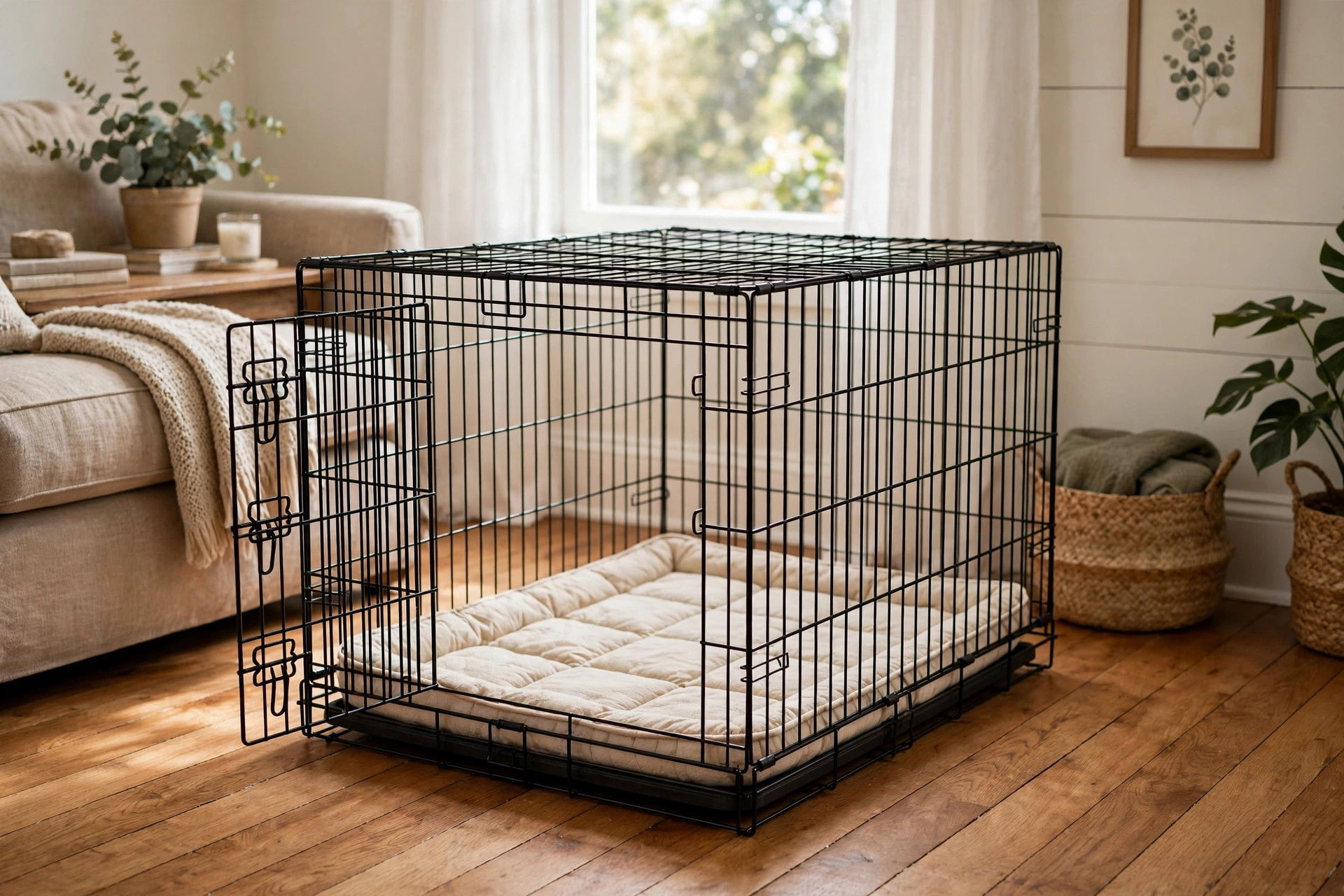

A dog crate is one of the most useful tools a pet owner can own. It gives a dog a safe place to rest, it helps with house training, and it makes travel calmer. But a bare crate floor is hard, cold, and loud. That is why so many owners search for the best dog bed for crate washable insert. The right insert pad turns a metal box into a den that a dog truly enjoys. It cushions old joints, quiets rattling pans, and it can be pulled out and washed when accidents happen. This guide walks through everything you need to know before you buy one.
Why a Crate Pad Matters
Dogs are den animals by nature. In the wild, a dog seeks out a small, sheltered spot to sleep. A crate gives that same feeling of safety. The American Kennel Club notes that a crate can become a dog’s own room when it is set up the right way. A washable insert bed is the layer that makes the room warm.
A plain crate tray has hard plastic or metal. It gives no support for hips and elbows. Older dogs feel this the most. A padded insert spreads the dog’s weight and takes pressure off the joints. For puppies, the insert adds warmth and a soft texture to sleep on, which helps them settle at night.
There is also the matter of noise. A dog that turns in a bare crate makes a clatter against the tray. At three in the morning, that sound travels through a house. A padded insert muffles it. Many owners report that their dog sleeps longer once a soft pad is added.
The washable part matters because crates get dirty. Puppies have accidents. Dogs track in mud. Saliva, shed hair, and spilled water all land on the pad. A machine washable insert lets you clean the whole bed in one load. You pull it out, wash it, dry it, and slide it back in. No scrubbing by hand. No bad smell left behind.
What to Look for in a Washable Crate Insert: Best Dog Bed for Crate Washable Insert
Not all crate pads are built the same. A pad that fits your crate well and survives the washing machine month after month is worth more than a cheap one that lumps up after two washes. Here are the points that matter most.
Size and Fit
Measure the inside of your crate before you shop. Length and width are the key numbers. The insert should sit flat on the tray with no more than an inch of extra space on any side. A pad that is too big will bunch up and create folds that bother a dog. A pad that is too small will slide around. Many brands sell pads in standard crate sizes, such as 24, 30, 36, and 42 inches. Match the pad to the crate size you own. If your dog is still growing, buy for the crate you plan to use long term, and use a divider panel in the meantime.
Fabric and Fill
The cover fabric takes the daily wear. Canvas, twill, and fleece are common choices. Canvas and twill stand up to scratching and digging. Fleece is softer and warmer but wears faster. Look for a tight weave that resists claws. Some pads have a water resistant backing, which keeps spills from soaking into the fill. This is a strong feature for puppies and for dogs that drink a lot of water.
The fill is usually polyester fiber, memory foam, or a mix of both. Fiber fill is light, cheap, and dries fast in the dryer. Memory foam gives better support for large dogs and seniors, but foam pads take longer to dry and can clump if washed poorly. For a washable insert that will be cleaned often, a good quality fiber fill is often the practical choice.
Washability
Read the care label before you buy. The best washable crate pad can go in a home washing machine and a dryer without falling apart. Check whether the pad is one piece or has a removable cover. A removable cover is easier to wash often, because the inner pad only needs washing now and then. Make sure the stitching is quilted or box stitched, which keeps the fill from shifting into one corner during the wash cycle.
Durability
Dogs chew. Puppies especially chew. If your dog is a heavy chewer, look for a pad made with chew resistant materials and double stitching. No pad is truly chew proof, and a determined chewer can destroy any bed. In that case, keep crate time short and give the dog safe chew toys inside the crate. For light chewers, a standard pad will last a long time.
Types of Crate Insert Beds
There are a few main styles on the market. Each has strengths and limits.
Flat quilted pads. These are the simplest and most common. They look like a thick blanket with quilting. They fit well, wash easily, and cost little. They suit puppies and calm adult dogs. Many owners keep two so one can be in the wash while the other is in the crate.
Bolster crate beds. These have raised edges around the sides, like a small couch. The bolsters give a dog a place to rest its head and a feeling of walls. They fit in crates if the crate is roomy, but the bolsters take up floor space, so size the crate one step larger if you want this style.
Orthopedic foam pads. These use thick foam instead of fiber. They support heavy dogs and dogs with arthritis. The foam may come in a waterproof liner with a washable outer cover. They cost more and dry slowly, but the comfort is hard to beat for a senior dog.
Waterproof liners. A thin waterproof liner can sit under any pad. It protects the crate tray and the pad fill from urine and spills. If your puppy is still house training, a liner under a washable pad is a smart pair. For broader home and pet setup ideas, The Spruce covers crates, bedding, and layout tips for pet owners.
Cost and Price
A flat quilted pad for a medium crate often costs between fifteen and thirty dollars. Mid range pads with better fabric and quilting run thirty to fifty dollars. You can compare current pet supply options to get a feel for the market before you decide. Orthopedic foam pads and bolster beds for large crates can cost fifty to one hundred dollars or more.
Price is not the only cost to think about. A cheap pad that needs replacing every six months costs more in the long run than one good pad that lasts two years. Also think about buying two. Two pads mean you always have a clean one ready when an accident happens at night.
How to Choose the Right One for Your Dog
Start with your dog, not with the product. A small terrier has different needs than a large lab. Puppies need washability above all, because accidents are a given. Senior dogs need support and warmth. Dogs that sleep hot need breathable fabric. If your dog shows signs of joint pain, PetMD’s pet health library has clear articles on how bedding affects arthritic joints. Dogs that get cold need fleece or a thicker pad.
Think about your crate, too. A wire crate with wheels for easy transport moves around the house, so a light pad that stays in place matters. If your crate lives in one spot, weight matters less. Some owners use a crate mainly for travel and a different bed, such as a porch lounging bed, for daytime rest. The crate pad only needs to serve crate hours.
Check the chewing habit. If your dog shreds soft things, start with a tough canvas pad and watch closely. The ASPCA’s dog care guidance offers useful background on bedding and crate comfort for new owners. If the dog ignores bedding and lies on bare floors, the pad may be too warm or too thick. Try a thinner pad and see how the dog responds. Let the dog’s behavior guide you.
Care and Upkeep
A washable insert is easy to care for, but a few habits will keep it in good shape for years.
Wash the pad before first use. New fabric can carry dust and a factory smell. A first wash makes it soft and clean.
Set a washing schedule. Once a week works for most dogs. Wash more often for puppies in training or for dogs with skin issues. Shake loose hair off the pad before it goes in the machine. A rubber brush or a lint roller pulls hair off fast.
Use a mild detergent and skip the fabric softener. Softener coats the fibers and can make the pad less absorbent over time. Warm water is enough for routine washes. Hot water is fine now and then for a deep clean, but check the label first.
Dry fully before the pad goes back in the crate. A damp pad grows mildew and smells bad. Tumble dry on medium with a couple of clean tennis balls to fluff the fill. If you line dry, make sure the pad is bone dry through the middle.
Inspect the pad during each wash. Look for torn seams, thin spots, and lumps in the fill. A pad with a torn seam can spill fill that a dog might chew. Guides at The Spruce Pets show what worn bedding looks like and when replacement is due. Fix small tears with a needle and thread, or replace the pad if the damage is wide.
Rotate two pads. While one is in the wash, the other is in the crate. Rotation spreads the wear and means the dog is never without a soft bed. Stores like Petco and PetSmart both stock crate pads in standard sizes if you want to see them in person.
Safety Notes
A crate pad is safe for most dogs, but a few rules keep it that way.
Never leave a young puppy alone for long hours with a new pad until you know the chewing habit. Puppies can tear fabric and swallow pieces. If you must crate a puppy for the workday, come home at midday or use a divider and keep the pad simple.
Remove any pad that is falling apart. Loose threads can wrap around teeth and toes. Exposed foam or fill can be chewed and swallowed. When a pad is past its life, throw it away and buy a new one.
Make sure the crate door and latches work with the pad inside. A thick pad should not press against the door or block the latch. The dog must be able to stand, turn around, and lie down with room to spare.
Keep the crate in a safe spot. Away from heaters, away from direct sun through a window, and away from cords the dog could reach. Home Depot’s pet section and Rover’s care articles both carry tips on setting up a safe crate area at home. A pet gate for stairs with a banister kit can keep a young dog away from a crate that sits near a stairway.
Do not use a heating pad inside a crate unless it is made for pets and has a chew proof cord. Standard human heating pads can burn a dog or be chewed.
Making the Crate a Happy Place
The best dog bed for crate washable insert will not work if the dog fears the crate. Training matters as much as the pad.
Start with the door open. Toss treats inside and let the dog walk in and out on its own. Feed a few meals inside with the door open. Keep sessions short and cheerful. Slowly close the door for a minute, then two, while you sit nearby. Build up time over days, not hours.
Put the new pad in during this training. Let the dog smell it and lie on it with the door open. A familiar scent helps.
Never use the crate as punishment. If the dog is sent to the crate when it is bad, the dog will learn to hate it. The crate should mean rest, safety, and good things.
Frequently Asked Questions
How often should I wash my dog’s crate insert? Once a week is a good routine for most dogs. Wash more often for puppies that are house training, for dogs with allergies, or after any accident. A second pad makes frequent washing easy.
Can I put a crate pad in the dryer? Most fiber filled pads can go in the dryer on medium heat. Check the care label first. Foam pads should be air dried or dried on low, because high heat can break down foam.
What size pad fits a 36 inch crate? A pad made for a 36 inch crate usually measures about 35 by 23 inches. Measure your own crate’s inside floor and compare it to the pad’s listed size before you order. A small gap is fine, but the pad should not bunch.
Is a washable crate insert enough bedding for winter? For most indoor crates, yes. A thick pad plus a blanket gives plenty of warmth. If the crate sits in a cold garage or near a draft, add a fleece blanket and move the crate to a warmer spot. Watch the dog. Shivering means more warmth is needed.
My dog chews every bed. What should I do? Make sure the dog is not bored. A tired dog with chew toys chews less. Try a tough canvas pad and keep crate time short while you watch. If the dog still destroys it, talk to your vet or a trainer about crate training steps.
Can I use a regular pillow or blanket instead of a crate pad? A blanket works for calm dogs, but it bunches up and has no support. A pillow is too thick and can block the door. A pad made for crates fits flat, stays put, and washes well. It is the better tool for the job.
A Short Final Word
The search for the best dog bed for crate washable insert ends with a simple truth. The best pad is the one that fits your crate, survives your washing machine, and makes your dog walk into the crate on its own. Measure the crate. Pick tough, washable fabric. Keep two pads in rotation. Train the crate with patience. Do those things, and the crate will become the quiet corner your dog loves most in the house.
References
American Kennel Club. (n.d.). Dog care and training resources. https://www.akc.org ASPCA. (n.d.). Pet care and animal welfare resources. https://www.aspca.org Chewy. (n.d.). Pet supplies. https://www.chewy.com Petco. (n.d.). Pet supplies and services. https://www.petco.com PetMD. (n.d.). Pet health information. https://www.petmd.com PetSmart. (n.d.). Pet supplies and services. https://www.petsmart.com Rover. (n.d.). Pet sitting and dog walking services. https://www.rover.com The Home Depot. (n.d.). Home improvement products. https://www.homedepot.com The Spruce. (n.d.). Home and garden advice. https://www.thespruce.com The Spruce Pets. (n.d.). Pet care guides and product reviews. https://www.thesprucepets.com
Was this guide helpful?

About Robert Taylor
The My Garden US editorial team writes practical, in-depth home and garden guides for American homeowners — tested advice, no fluff.
You May Also Like
Best Dog Muzzle for Vet Visits and Grooming
June 27, 2026 0 views
Outdoor Dog Bed Raised Cot for Camping: A Practical Guide
March 22, 2026 0 views
The Best Outdoor Pet Bed for Porch Lounging: A Complete Guide
February 24, 2026 0 views