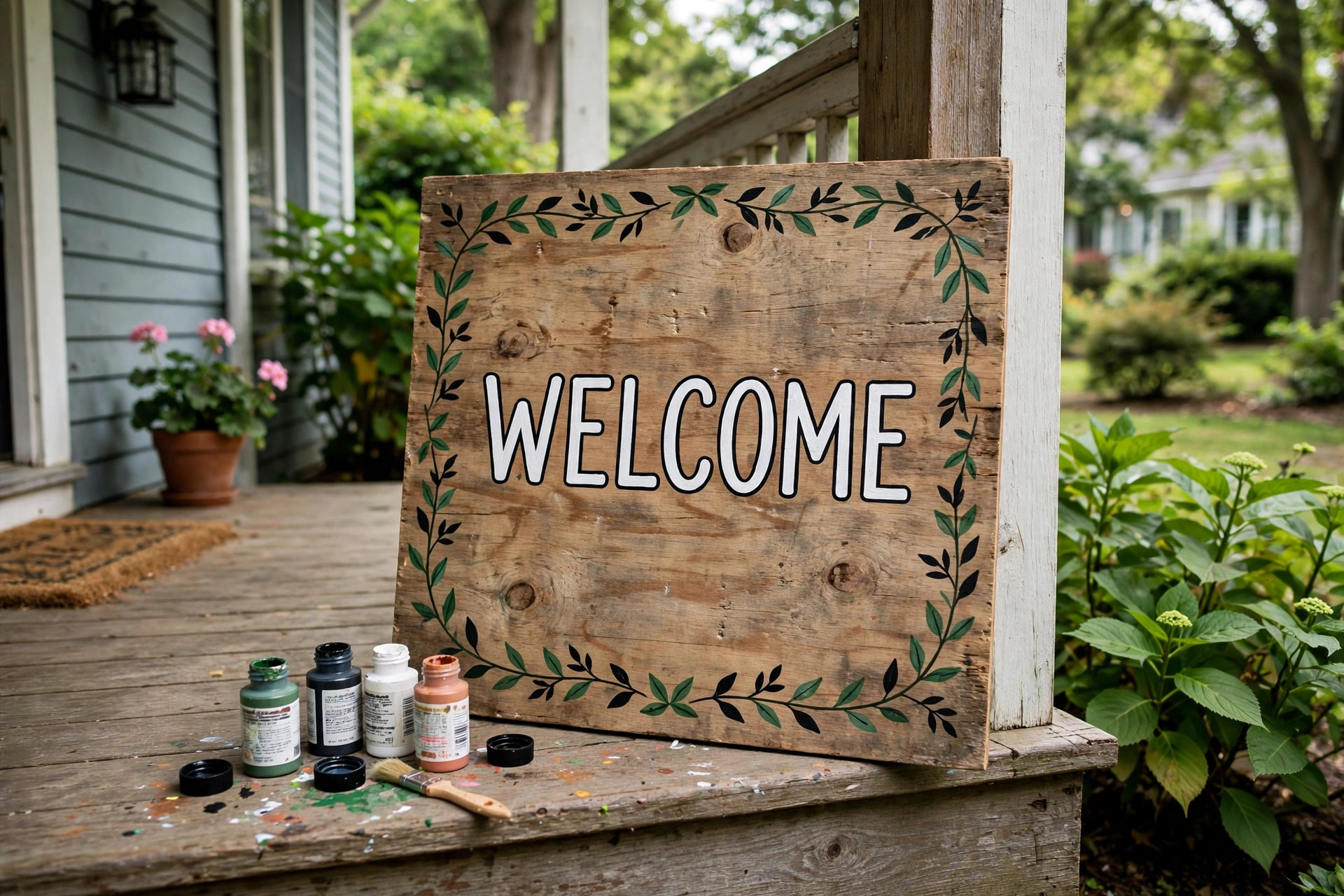

A hand-painted wood sign gives a home a warm and personal touch. It can hang by the front door. It can stand in the garden. It can mark a child’s room. The search for the best craft paint for wood signs diy begins with a simple wish. The paint should flow smooth. It should cover in few coats. It should dry true to color. It should last through sun and rain.
Many new makers buy the first small bottle they see on the shelf. The paint looks rich in the jar. It turns thin on the wood. The letters blur at the edges. The sign fades by summer. This guide helps you avoid that waste. It lays out the paint types, the price points, and the small steps that make a sign look made by hand with care.
Why the Right Paint Matters
Wood is a living surface. It drinks. It moves with damp air. It swells and shrinks as the seasons turn. A thin wall paint peels off it in sheets. A cheap poster paint washes away in the first rain. The right craft paint sinks into the grain just enough. It bonds. It stays bright.
A sign is also read from a distance. The letters must stand out sharp against the wood. If the paint bleeds along the grain, the words turn soft and hard to read. If the paint is too pale, the sign looks tired before it is new. Good paint gives you clean lines and full color with two coats or three. That saves time and it saves money in the long run.
There is another reason. A wood sign is often a gift. It may say a family name. It may carry a date that matters. You want it to last for years, not weeks. Paint choice is the main thing that decides how long the sign keeps its looks. Stores that sell craft supplies, such as Michaels and Joann, stock rows of small paint bottles. Knowing what is inside those bottles is the first skill of the sign maker.
How to Choose: What to Look for Before You Buy: Best Craft Paint for Wood Signs Diy
You do not need to study paint chemistry. You need to check five plain points on the label and in your hand.
Coverage. Read the words “opaque” or “high pigment.” Opaque paint covers the wood in one or two coats. Thin or student-grade paint needs four or five. Those extra coats cost time. They also build up a thick skin that can crack.
Adhesion. The label should name wood as a surface. Paint made for paper or fabric may not hold on pine or cedar. Acrylic craft paint is the usual pick because it grips wood well.
Finish. Matte, satin, and gloss all work on signs. Matte gives a soft country look. Satin gives a mild sheen that reads well in sun. Gloss is bold but shows every brush mark. Pick the finish that fits the room or the porch where the sign will hang.
Lightfastness. Sun is the great enemy of color. Some pigments fade fast in direct light. Labels marked “lightfast” or “archival” hold their color much longer. This matters for any sign that will hang outdoors.
Cleanup. Water-based acrylics wash out of brushes with soap and water. Oil-based paints need strong solvents. For a home workshop, water-based paint is the safer and simpler choice. Large home stores like The Home Depot carry both kinds, and the staff can point you to the water-based shelf.
The Surface Comes First
Paint cannot do its job on a rough board. Sand the wood first. Use medium grit, then fine grit. Wipe the dust away with a damp cloth. A raw pine board feels like silk after good sanding. On that smooth face, paint spreads even and letters hold their edges.
Decide if you will seal the wood. A thin primer or a coat of clear sealer stops the paint from sinking too deep. Some makers skip the primer for a rustic look. Others prime for sharp color. Either way, the board must be dry and clean. Damp wood traps water under the paint. The paint will bubble and peel by winter.
Color, Coverage, and Finish
White paint is the hardest working color in sign making. It is the base for most letters. A good white covers dark wood in two coats. Cheap white turns gray and streaky. Buy a bottle one step up in quality for white alone.
Black is next in importance. A deep black makes thin lettering read clear from the curb. Red, blue, and green follow for trim and borders. Earth tones suit farm and country styles. Bright tones suit a child’s room or a play area. Fine-art suppliers such as Blick sell single colors with high pigment loads, which helps when you need strong color in small amounts.
Test before you commit. Paint a small patch on the back of the board. Let it dry fully. Drying darkens or lightens some paints. The dry patch tells the truth. It also tells you how many coats you will need.
Types of Craft Paint for Wood Signs
Acrylic craft paint. This is the standard. It comes in small bottles of two to eight ounces. It dries fast, often in twenty minutes. It cleans up with water. It works indoors and out if you seal it after. Most lists of the best craft paint for wood signs diy start and end with a good acrylic line. Brands sold at Hobby Lobby and other craft chains have served makers for decades.
Acrylic enamel. This paint is tougher than plain craft acrylic. It levels smooth and resists chips. It costs more per ounce. It suits signs that will hang near a door and take daily knocks. Some enamel lines are made for model work and come in very small jars. They are fine for detail work and thin lines.
Chalk-style paint. This paint gives a soft matte coat with little shine. It sticks to wood with almost no sanding. It is a favorite for farmhouse signs with a worn look. The finish marks easy, so it needs a clear top coat for outdoor use. It costs more than basic acrylics.
Outdoor or patio paint. This is acrylic made for weather. It has extra binders that fight sun and rain. It is the right pick for garden signs and porch boards. You can find it in the craft aisle or the paint department. It usually costs a little more than indoor craft paint, and the extra cost pays off in years of service.
Milk paint. This is an old-style paint made from milk protein and lime. It gives a soft, worn finish that many love for rustic signs. It needs mixing from powder in some brands. It is not as common as acrylic, but it has a loyal following among makers of vintage-style boards.
Spray paint for base coats. Some makers spray the board a base color, then hand-paint the letters. Spray gives a smooth even base in minutes. Use it in a well-aired space and let it cure fully before you paint over it. How-to sites like Family Handyman and Bob Vila carry clear guides on spray technique for wood.
Cost and Price
Craft paint is kind to the budget. A standard two-ounce bottle of acrylic costs about one to four dollars in the United States. A single sign of modest size needs one or two bottles of the main color and small amounts of the lettering colors. Most first signs cost under twenty dollars in paint.
Better paint costs more but covers with fewer coats. A four-dollar bottle that finishes the job in two coats is cheaper than a one-dollar bottle that needs five coats and still looks thin. Buy the good white and the good black. Save on the rare colors you use once.
Sets look like a bargain. A box of twenty-four colors costs less per bottle than buying singles. But many set colors go unused. If you make signs often, a set is worth it. If you make one sign, buy three or four singles instead. Large retailers such as Amazon and Walmart sell both sets and singles, so you can compare per-ounce prices side by side.
Tools add a little to the bill. A set of flat and round brushes costs five to fifteen dollars. Sandpaper costs a few dollars. A small bottle of clear sealer costs six to twelve dollars. All of it lasts for many signs. Craft tutorials on The Spruce Crafts often list full supply lists with honest price notes.
Care and Upkeep of the Paint and the Sign
Paint lasts longest when the tools are clean. Wash brushes right after use. Rinse in warm water. Work soap into the bristles. Rinse until the water runs clear. Lay brushes flat to dry. A brush cared for this way lasts for years.
Close paint bottles tight. Wipe the rim before you cap it. Dried paint on the rim lets air in. Air thickens the paint and forms a skin. If a bottle thickens, add a few drops of water and shake well. Do not flood it. Too much water breaks the binder and weakens the color.
The finished sign needs a top coat if it will live outdoors. A clear outdoor sealer or a few coats of water-based polyurethane guard the paint from sun and rain. Apply it in thin coats. Let each coat dry fully. Recoat a porch sign once a year. This small habit doubles the life of the work.
Store signs out of standing water. A sign that sits in a puddle rots from the bottom up, and no paint can stop that. Hang it with a gap behind it so air can move. This is old carpenter wisdom, and it still holds true.
Safety
Craft paint is made to be safe for home use, but plain care is still wise. Work in a room with fresh air. Keep paint away from food and drink. Wash hands after painting. Keep small bottles out of the reach of small children and pets.
Wear a dust mask when you sand. Wood dust is hard on the lungs. Wear it when you spray paint too, and spray outdoors or in a space with strong air flow. Read the label on every product. The label lists the real risks and the right first aid. When in doubt, the guidance on safe craft practice from a trusted craft retailer or a how-to site is worth a read before you start.
Sign making is a fine family craft. Children can paint with safe non-toxic acrylics. An adult should handle the sanding, the sealer, and any spray work. Set the small ones to the fun part: the color and the letters. Many makers pair sign painting with other small crafts on the same table, from lap stitching with an embroidery hoop stand to simple window decor crafts and yarn crafts for kids.
Frequently Asked Questions
What is the best craft paint for wood signs diy beginners? Water-based acrylic craft paint is the best start. It is cheap. It cleans up with water. It dries fast. It holds well on sanded wood. Pick a name brand from the craft aisle and buy good white and black to begin.
Do I need to prime the wood before painting? Priming helps but is not always needed. A primer or sealer gives sharper color and fewer coats. For a rustic sign where the grain shows through, you can skip it. For bright letters on dark wood, prime first.
How many coats of paint does a wood sign need? Two to three coats is normal with good acrylic. Let each coat dry fully before the next. Thin paint may need four or five. Test on scrap wood first so you know what to expect.
Can I hang a painted wood sign outside? Yes, with the right steps. Use paint made or rated for outdoor use, or seal indoor paint with a clear outdoor top coat. Hang the sign where air moves behind it. Recoat the sealer once a year.
Why is my paint peeling off the wood? The wood was likely damp, dusty, or too smooth from a glossy old finish. Sand it clean. Wipe the dust. Let it dry. Then paint again. Paint cannot grip a dirty or wet surface.
Acrylic or chalk paint for a farmhouse sign? Both work. Acrylic gives bright color and sharp lines. Chalk paint gives a soft matte look with less prep. Seal chalk paint well if the sign goes outdoors. Many makers keep both on the shelf.
A Final Word
The best craft paint for wood signs diy is the paint that fits your board, your budget, and your weather. Start with good acrylics. Sand the wood. Test your colors. Seal the finished work. These four habits matter more than any brand name. Your first sign may wobble a little at the edges. Your fifth will look like the work of a steady hand. Keep the brushes clean, keep the caps tight, and enjoy the quiet hours at the workbench. The sign on the wall will thank you for years.
References
Amazon. (n.d.). Online shopping. https://www.amazon.com Blick Art Materials. (n.d.). Art and craft supplies. https://www.dickblick.com Bob Vila. (n.d.). Home improvement advice. https://www.bobvila.com Family Handyman. (n.d.). DIY home repair and maintenance. https://www.familyhandyman.com Hobby Lobby. (n.d.). Arts, crafts, and home decor. https://www.hobbylobby.com JOANN. (n.d.). Fabric and craft supplies. https://www.joann.com Michaels. (n.d.). Arts and crafts supplies. https://www.michaels.com The Home Depot. (n.d.). Home improvement products. https://www.homedepot.com The Spruce Crafts. (n.d.). Craft projects and tutorials. https://www.thesprucecrafts.com Walmart. (n.d.). Everyday low prices. https://www.walmart.com
Was this guide helpful?

About Lisa Anderson
The My Garden US editorial team writes practical, in-depth home and garden guides for American homeowners — tested advice, no fluff.
You May Also Like
DIY Mirror Frame Kit for Home Decor Crafts: A Plain Guide
May 17, 2026 0 views
Knitting Loom Kit for Hats and Scarves Beginners: A Complete Guide
March 15, 2026 0 views
Resin Art Kit for Beginners Jewelry Making: A Simple Guide to Your First Pendant
August 18, 2026 0 views