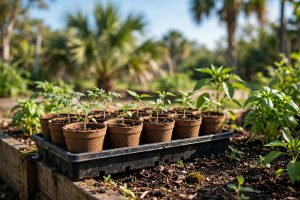
Goumi is the berry bush that pays rent. It fixes nitrogen from the air - feeding itself and the plants around it - thrives in poor soil, shrugs off drought, and produces tart red berries for jam and juice. It is self-fertile, nearly pest-free, and ornamental to boot, with silvery foliage and fragrant spring flowers. If you want to learn how to grow goumi, the good news is there is almost nothing to learn: plant it, water it the first year, and pick berries in year two or three.
Table of Contents
Table of Contents
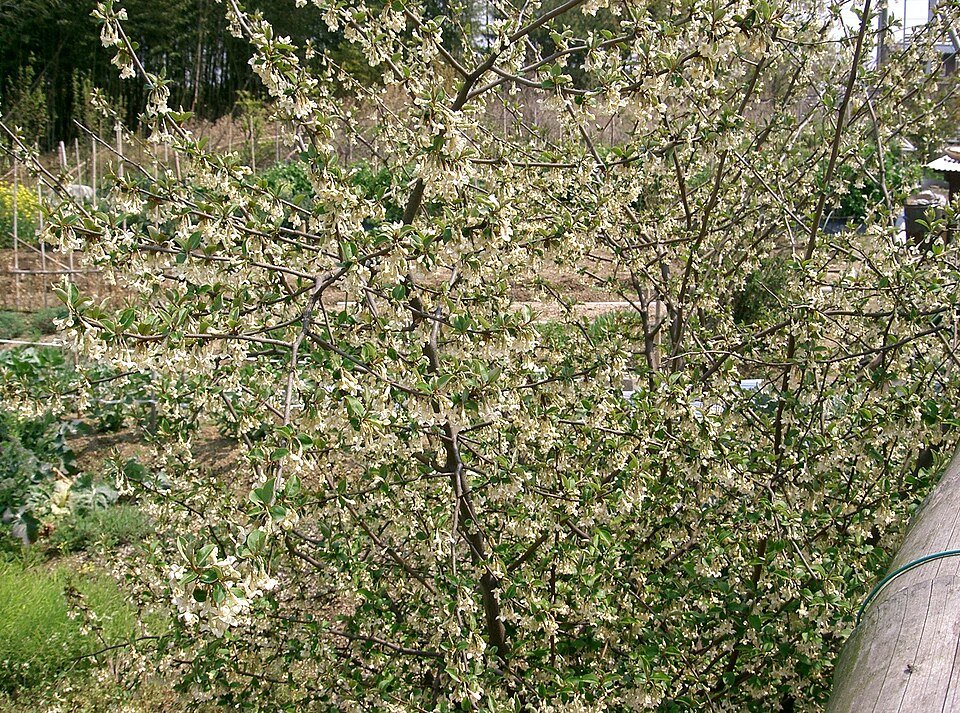
Goumi (Elaeagnus multiflora) is hardy in zones 4 through 8. It fruits young, tolerates poor sandy soil, and handles drought once established. One caution: it is related to autumn olive and can self-seed, so pull volunteers you do not want.

Photo: Wikimedia Commons
Choosing Plants
When it comes to how to grow goumi, getting the details right makes all the difference.

Many homeowners find that how to grow goumi is easier than they expected once they know the basics.
Buy bare-root or potted bushes from a nursery - named selections offer larger, sweeter fruit than seedlings, though even seedling goumi fruits respectably. Goumi is self-fertile, so one bush fruits alone, but planting two bushes gives heavier crops through better pollination. The bushes grow 6 to 10 feet tall and wide with an attractive, slightly wild form and silvery-green leaves that shimmer in the wind.
When you buy, ask about fruit size and flavor - selections vary from mouth-puckering tart to pleasantly sweet-tart. Gardenia.net has variety notes, and the Missouri Botanical Garden plant finder describes the species. A one- or two-year-old plant establishes fastest and fruits within a couple of seasons.
Site it where its nitrogen-fixing pays off: near hungry fruit trees or in a poor corner of the yard that needs improving. Goumi quietly feeds its neighbors through fallen leaves and root associations.
This companion-planting role is one of goumi's best uses. Fruit trees are heavy feeders, and a goumi planted nearby contributes nitrogen year after year with zero effort from you - no fertilizer bags, no measuring, just a living fertilizer factory. Old orchardists planted nitrogen-fixers among their fruit trees as a matter of course, and goumi is one of the prettiest options. Even in a purely ornamental landscape, the bush earns its place: the silvery foliage, fragrant flowers, and red berries give three seasons of interest while it silently improves the ground beneath it.
When and How to Plant
Many homeowners find that how to grow goumi is easier than they expected once they know the basics.
The key to how to grow goumi is choosing the right approach for your space and budget.
Plant bare-root bushes in spring, as soon as the ground can be worked and while plants are still dormant - roughly around your last spring frost date. Potted plants can go in any time the ground is workable, though spring is still best. Check your zone's timing on our planting calendar.
Dig a hole twice as wide as the root spread and just deep enough to set the plant at its nursery depth. Backfill with native soil - goumi does not need pampering, and heavily amended holes discourage roots from exploring outward. Water deeply at planting and mulch with three to four inches of wood chips, keeping mulch back from the stems. Water regularly through the first season; after that, rainfall usually suffices. A newly planted goumi with steady water in year one develops the deep root system that makes it so independent later - this is the one year when your attention pays compound interest for decades.
Space bushes 8 to 10 feet apart. They fill in to make an informal hedge or screen if planted closer, which works well as a windbreak - the silvery foliage looks handsome in a row. For a dedicated fruiting row, the wider spacing gives each bush full sun on all sides and room for harvest access with a ladder or picking from the ground.
Soil and Sun
The key to how to grow goumi is choosing the right approach for your space and budget.
With a little planning, how to grow goumi can fit even a busy schedule.
Full sun gives the heaviest crops, though goumi tolerates part shade. Eight hours of direct sun is ideal for fruit production; in shade, berries are fewer but the bush still grows fine as an ornamental.
Soil: well-drained, and that is nearly the whole requirement. Goumi tolerates poor, sandy soil that defeats other fruits - it fixes its own nitrogen, so fertility is almost irrelevant. It handles drought, salt, and neglect. Truly, this is one of the toughest fruiting shrubs for difficult sites. Avoid only waterlogged ground; even goumi objects to permanently soggy roots. If your soil is heavy clay, plant on a slight mound. For working with poor soils, Clemson Cooperative Extension and University of Minnesota Extension both publish practical advice.
Watering and Feeding: Almost Nothing
With a little planning, how to grow goumi can fit even a busy schedule.
Before you start, it helps to understand how how to grow goumi works in real homes.
Water during the first season to establish roots - about an inch a week when rain falls short. Then leave it. Established goumis are genuinely drought-tolerant; in most climates they thrive on rainfall alone for decades. A deep watering during an extreme drought helps fruit size, but the bush survives without it. If you garden in a region with regular summer rain, you may never water an established goumi at all - it simply does not need you.
Do not fertilize. Goumi fixes nitrogen from the air through root associations - feeding it nitrogen is redundant at best. A yearly mulch of wood chips or compost is the only soil care it ever needs, and even that is optional once established. This is a plant-it-and-forget-it shrub in the truest sense. The Clemson HGIC and the Old Farmer's Almanac both list goumi among the lowest-maintenance fruits for home gardens.
Pruning and Suckers
Before you start, it helps to understand how how to grow goumi works in real homes.
A good plan for how to grow goumi saves time, money, and frustration.
Prune lightly to shape and to remove dead or crossing wood - that is the entire program. Late winter, while dormant, is the time. Thin the center slightly for light and air, cut back any branches dragging on the ground, and remove suckers emerging where you do not want them.
Goumi suckers modestly from the roots. Remove unwanted suckers promptly by cutting them at the base; left alone, they form a thicket. If you want more bushes, transplant suckers in dormancy - they establish easily and give you free plants of the same variety. Keep an eye out for self-sown seedlings under and around the bush; pull the ones you do not want while they are small. This self-seeding is the one management task goumi demands - a few minutes each spring keeps it in bounds.
The silvery foliage is ornamental on its own, so even a lightly pruned, natural-form bush looks good in the landscape. Resist over-pruning into formal shapes; goumi's charm is its slightly wild, shimmering habit.
Goumi fits the low-care fruit planting alongside elderberry and autumn olive - all tough, adaptable shrubs for the easy-care corner of the yard.
Harvest
A good plan for how to grow goumi saves time, money, and frustration.
For most people, how to grow goumi comes down to a few smart choices.
Expect berries two to three years after planting. They ripen in early summer - among the first fruits of the season - turning from silver-dotted to deep red. Pick when fully red and slightly soft; underripe berries are sharply tart, while ripe ones are pleasantly sweet-tart.
Net against birds or pick slightly early and ripen indoors - birds love goumi as much as you do, and a bush can be stripped in days. For jam and juice, the tartness is a virtue; goumi makes a bright, flavorful preserve. Eat fresh out of hand too, when fully ripe. The berries are small with a single ridged seed; pop the whole berry in your mouth and spit the seed, cherry-style.
Harvest over a week or two as berries ripen unevenly. A mature bush yields generously - plenty for fresh eating plus preserving.
For the best jam, pick berries fully ripe but still firm - overripe berries make a softer set. Goumi's natural tartness means it needs less added acid than many fruits, and the flavor is bright and distinctive, somewhere between a cherry and a cranberry. A simple goumi jam - berries, sugar, and patience - is one of the finest preserves in the home orchard repertoire. The juice also makes a refreshing drink when sweetened, and the berries dry reasonably well for winter snacking. Because the bushes fruit so young and so reliably, goumi is often the first home-grown fruit preserve a new gardener ever makes.
The spring flowers deserve mention - small, fragrant, bell-shaped blooms that perfume the whole garden corner in spring. They are a major early nectar source for bees, which is another reason to plant two bushes: more flowers, more pollinators, and heavier fruit set all around.
Troubleshooting
For most people, how to grow goumi comes down to a few smart choices.
If you are new to how to grow goumi, start with the simplest option and build from there.
Few berries: Young bush (allow two to three years), too much shade, or poor pollination. Plant two bushes for heavier crops.
Birds stripping the bush: Net as berries color, or pick slightly underripe and finish ripening indoors.
Suckers and seedlings spreading: Remove promptly; mow around the bush to keep suckers down.
No growth in soggy soil: Improve drainage or plant on a mound - the one condition goumi will not tolerate.
Leggy, sparse bush: Too much shade. Move to full sun if possible, or accept a more ornamental, less fruitful plant. The USDA PLANTS Database documents the species, and the USDA National Agricultural Library indexes goumi references. UF IFAS Gardening Solutions covers it for warm climates.
References
If you are new to how to grow goumi, start with the simplest option and build from there.
When it comes to how to grow goumi, getting the details right makes all the difference.
Missouri Botanical Garden. (n.d.). Elaeagnus multiflora. https://www.missouribotanicalgarden.org/
Clemson University Cooperative Extension Service. (n.d.). Uncommon fruits for the home garden. https://hgic.clemson.edu/
Old Farmer's Almanac. (n.d.). Growing goumi. https://www.almanac.com/
Many homeowners find that how to grow goumi is easier than they expected once they know the basics.
When it comes to how to grow goumi, getting the details right makes all the difference.
Was this guide helpful?

About My Garden US
The My Garden US editorial team writes practical, in-depth home and garden guides for American homeowners — tested advice, no fluff.