
Lettuce is one of the easiest crops to grow inside a house. When you learn how to grow lettuce indoors winter harvests, you can pick fresh leaves all season long. The plant does not ask for much. It needs light, cool air, water, and a little care. This guide explains each step in plain words so even a first-time grower can succeed.
Why Grow Lettuce Indoors During Winter
Winter weather kills most outdoor greens. Frost turns leaves to mush. Short days slow growth to a stop. Store lettuce costs more in cold months, and it often looks tired on the shelf. When you learn how to grow lettuce indoors winter growing becomes a small weekly habit. You cut what you need and the plant keeps making more.
There is also the matter of freshness. A leaf cut an hour before dinner tastes far better than a head shipped across the country. Indoor growing gives you that freshness in January, February, and March. It takes little room. A windowsill or a corner with a lamp can hold enough lettuce for regular salads.
The cost is low too. A packet of seeds, a bag of potting mix, and a few containers cost less than a month of grocery-store salads. After the first setup, each new planting costs almost nothing. Many gardeners start with lettuce because it rewards small effort with fast results. It is a good first indoor crop for anyone new to year-round gardening, and it pairs well with a winter indoor herb garden for salads that always taste fresh.
What Lettuce Needs Indoors: How to Grow Lettuce Indoors Winter
Lettuce is a cool-season crop. It grows best in air between 55 and 70 degrees Fahrenheit. Most homes sit right in that range in winter. That is good news. You do not need a warm greenhouse. Keep the plants away from hot radiators and drafty windows. A steady room temperature works fine.
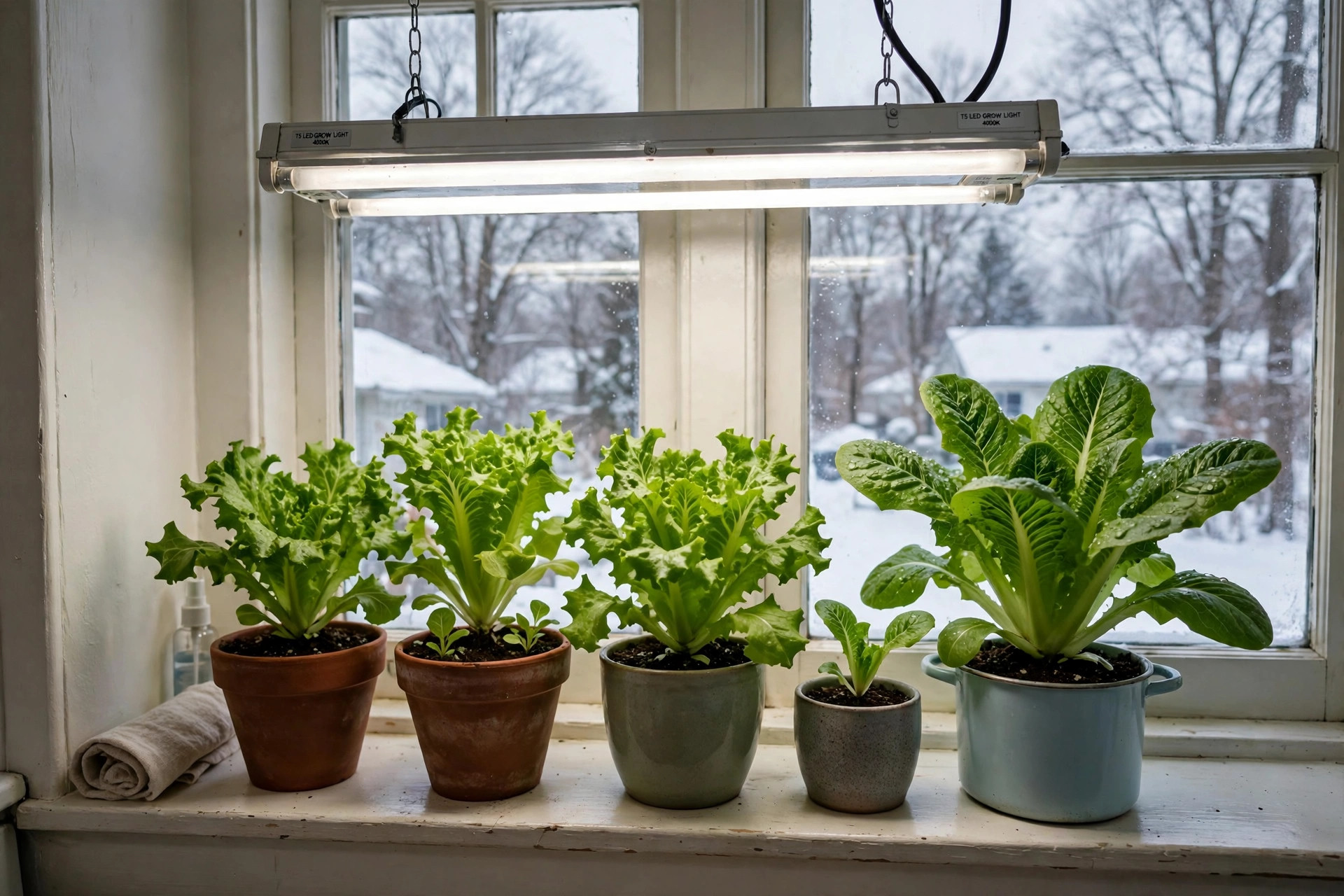
Light is the main need. Lettuce wants 12 to 14 hours of bright light each day. Winter sun through a window is weak and short. A south-facing window may give six hours at best. That is why most indoor growers add a simple light. A basic fluorescent shop light or a small LED grow light works well. Hang it six to ten inches above the plants. Put the light on a timer so the plants get steady hours each day.
Water needs are modest. Lettuce likes soil that stays evenly moist but not wet. Check the top of the soil each day. If the top half inch feels dry, add water. Pots must have drainage holes. Roots that sit in water will rot. A saucer under the pot catches drips and keeps the table dry.
Air flow matters more than people think. Still, damp air can bring mildew. A small fan on low, set to blow gently across the plants for a few hours a day, keeps the leaves dry and strong. It also makes stems grow thicker. This is one of the simplest tricks in learning how to grow lettuce indoors winter months.
How to Choose the Right Variety
Not all lettuce is equal for indoor use. Leaf types beat head types. Loose-leaf varieties grow fast and you can cut the outer leaves while the center keeps growing. Good choices include Black Seeded Simpson, Salad Bowl, and Oakleaf. These types forgive small mistakes.
Butterhead types like Buttercrunch also do well indoors. They grow softer leaves and form small loose heads. Romaine works but grows slower and taller, so it needs more headroom under the light. Head lettuce, such as crisp iceberg types, needs more light and time than most indoor setups can give. Skip it until you have more practice.
Buy seed from a trusted source. Fresh seed from a known seed house sprouts better than old packets found in a drawer. Seed kept cool and dry stays good for several years. Check the pack date when you buy. Burpee seed packets carry clear dates and growing notes, which help new growers start on the right foot.
Containers and Soil Setup
Almost any pot six inches deep will hold lettuce. Shallow trays work too. Plastic containers are cheap and hold moisture well. Clay pots dry out faster but look nice. What matters most is drainage. Drill or punch holes in the bottom if the container has none.
Use potting mix, not garden soil. Garden soil packs down too hard in pots and can carry pests. Bagged potting mix is light and clean. Fill the container to about an inch below the rim. Press the mix down lightly with your hand so it is firm but not hard.
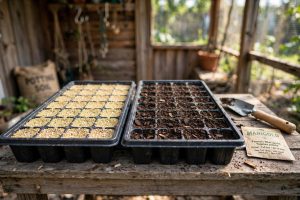
Plant seeds shallow. Sprinkle them on the surface and cover with about a quarter inch of mix. Mist the surface with water from a spray bottle so the seeds stay moist without washing away. Cover the container with a clear plastic dome or a piece of plastic wrap for the first few days. This holds humidity and speeds sprouting. Seeds usually sprout in five to ten days at room temperature.
Once seedlings stand up, remove the cover. Thin them so plants stand two to four inches apart. This feels wasteful the first time, but crowded seedlings grow weak. Keep the strongest ones. The thinnings can go straight into a salad. A basic microgreens growing kit uses the same sprouting skills and gives an even faster harvest while you wait.
Types of Indoor Light Options
A bright south window is the cheapest light. Set pots on the sill and turn them a quarter turn each day so plants grow straight. Expect slower growth than under a lamp, and add light on cloudy weeks if you can.
Fluorescent shop lights are the classic indoor garden tool. A two-tube fixture hung over the plants gives even light across a shelf. These lights run cool, so they can sit close to the leaves. Bulbs marked cool white or daylight suit leafy greens best.
LED grow lights cost more up front but use less power. Small panel lights or screw-in grow bulbs fit in a regular desk lamp. They last for years and give off little heat. Many growers start with fluorescent lights and switch to LED later.
Keep any light six to ten inches above the tops of the plants. Raise it as they grow. Fourteen hours of light each day mimics a long summer day and pushes fast leaf growth. A cheap plug timer keeps the schedule steady without daily thought. Simple seed starting methods without extra gear can also work on the brightest windowsills, though a lamp gives more reliable winter results.
Cost and Price Guide
A winter lettuce setup costs far less than most houseplant hobbies. Here is what a beginner might spend in 2026 prices:
– Seed packet: 3 to 6 dollars. One packet sows many pots. – Bag of potting mix, 8 quarts: 6 to 10 dollars. – Plastic pots or trays: 1 to 3 dollars each, or free from saved food containers. – Fluorescent shop light with tubes: 25 to 40 dollars. LED panels run 30 to 60 dollars. – Plug timer: 10 to 15 dollars. – Small fan: optional, 10 to 20 dollars.
A basic setup with a shop light runs about 50 to 75 dollars the first time. After that, refills are just seed and mix, a few dollars per planting. One pot of cut-and-come-again leaf lettuce can give salads for six to eight weeks. Compare that with store salad prices and the setup pays for itself in the first winter.
You can start even cheaper. Use a sunny window, old yogurt cups with holes poked in the bottom, and one seed packet. Growth will be slower, but the cost drops to under 15 dollars. Add a lamp later when you want faster harvests.
Care and Upkeep Through the Season
Water is the main daily task. Check soil each morning. Lettuce roots are shallow and dry out fast in warm rooms. Water from the top until a little drains from the bottom. Empty the saucer after a half hour so the pot does not sit in water.
Feed lightly. Potting mix holds enough food for the first three to four weeks. After that, give a half-strength liquid houseplant fertilizer every two weeks. Too much food burns leaf tips. Less is better than more with greens you plan to eat.
Harvest with the cut-and-come-again method. When leaves reach four to six inches, cut the outer leaves with clean scissors. Leave the center of the plant alone. New leaves grow from the middle. You can harvest this way for six to eight weeks before the plant slows down. Then pull it, refresh the soil, and sow a new batch.
Watch for pests. Indoor lettuce rarely gets bugs, but fungus gnats love damp soil. Let the top inch of soil dry between waterings to discourage them. If aphids show up on the leaves, rinse the plant under a gentle stream of water and pick off any that remain. Clean tools and fresh mix each season prevent most trouble.
Keep a sowing schedule. Start a new pot every two to three weeks. This gives a steady stream of leaves instead of one big flush and then nothing. A small shelf can hold three or four pots at different stages. In midwinter this rhythm keeps fresh salad on the table every week.
Temperature swings are the quiet killer of winter crops. Keep pots away from windows at night if cold air leaks through the frame. A curtain between the glass and the pots helps. Likewise, move plants away from heat vents that dry the air. Steady, cool room air is ideal.
Safety for You and Your Plants
Food safety starts with clean materials. Wash reused containers with hot soapy water before planting. Use fresh potting mix each season, not soil from outside the house. Outdoor soil can carry germs and weed seeds.
Fertilizer safety is simple. Use plant food made for edible plants or houseplants, and follow the label amount. Never use weed killer or garden sprays near indoor food plants. Store all garden chemicals locked away from children and pets.
Electrical safety matters with grow lights. Keep cords away from water. Do not let drip trays overflow onto plugs or timers. Hang lights with proper chains or brackets, not string that can slip. Turn lights off before working closely with them to avoid burns from hot bulbs.
If you use a fan, keep it stable and out of reach of small children. A clip fan on a shelf works well and stays out of the way. Wipe fan blades now and then so dust does not blow onto wet leaves.
Wash all harvests before eating. Rinse leaves under cool running water even though they grew indoors. This removes dust and any bits of soil. Pat dry or use a salad spinner. Homegrown lettuce carries no spray, but a quick rinse is still good practice.
Frequently Asked Questions
How long does it take to grow lettuce indoors in winter? Leaf lettuce is ready for first harvests in 30 to 45 days from sowing. You can start cutting outer leaves when they reach four inches. Full plants take about six weeks. Sowing a new pot every two to three weeks keeps harvests steady.
Do I need a grow light, or is a window enough? A window can work, but growth is slow in winter. A south-facing window gives only a few hours of weak light. Adding a simple shop light or LED panel speeds growth and gives fuller leaves. Most growers find a basic light worth the small cost.
Why is my indoor lettuce tall and leggy? Leggy growth means the plant is reaching for light. Move the light closer, down to six inches above the leaves, and give 12 to 14 hours of light each day. A gentle fan also helps stems grow stronger and shorter.
Can I grow lettuce in the same pot all winter? One planting gives harvests for six to eight weeks, then it slows down. For all-winter supply, sow a fresh pot every few weeks. This rotation keeps new plants coming as old ones finish.
What temperature is too warm for indoor lettuce? Lettuce bolts and turns bitter above about 75 degrees Fahrenheit. Keep plants in the 55 to 70 degree range. Move them away from radiators and hot lamps. Cool rooms actually suit this crop.
Is indoor winter lettuce safe to eat without pesticides? Yes, when grown with clean potting mix and no sprays. Indoor plants face few pests, so most growers never need chemicals. Wash leaves before eating as you would with any fresh produce.
A Short Final Word
Learning how to grow lettuce indoors winter growing is one of the most rewarding small projects a home can hold. The steps are few. Good seed, loose mix, steady light, and regular water carry the crop. In a month you will cut your first leaves. In two months you will wonder why you ever bought bagged salad in winter. Start one pot this week. By the time the cold is at its worst, your windowsill will be green.
For more background, see Lowe’s, Corona Tools, and The Spruce. For more background, see Bob Vila, Family Handyman, and Consumer Reports.
References
Bob Vila. (n.d.). Home improvement advice. https://www.bobvila.com Burpee. (n.d.). Seeds, plants, and gardening supplies. https://www.burpee.com Consumer Reports. (n.d.). Product reviews and ratings. https://www.consumerreports.org Corona Tools. (n.d.). Garden and landscape tools. https://www.corona-tools.com Family Handyman. (n.d.). DIY home repair and maintenance. https://www.familyhandyman.com Gardener’s Supply Company. (n.d.). Gardening tools and supplies. https://www.gardeners.com Lowe’s. (n.d.). Home improvement products. https://www.lowes.com The Spruce. (n.d.). Home and garden advice. https://www.thespruce.com
Was this guide helpful?

About James Carter
The My Garden US editorial team writes practical, in-depth home and garden guides for American homeowners — tested advice, no fluff.
You May Also Like
Drip Emitter Spacing for Vegetable Gardens: A Complete Guide
February 26, 2026 0 views
Best Garden Soil Test Kit Reviews: What Your Garden Soil Is Telling You
April 12, 2026 1 views
Drip Irrigation for Raised Beds DIY: A Practical Guide for Home Gardeners
February 28, 2026 0 views