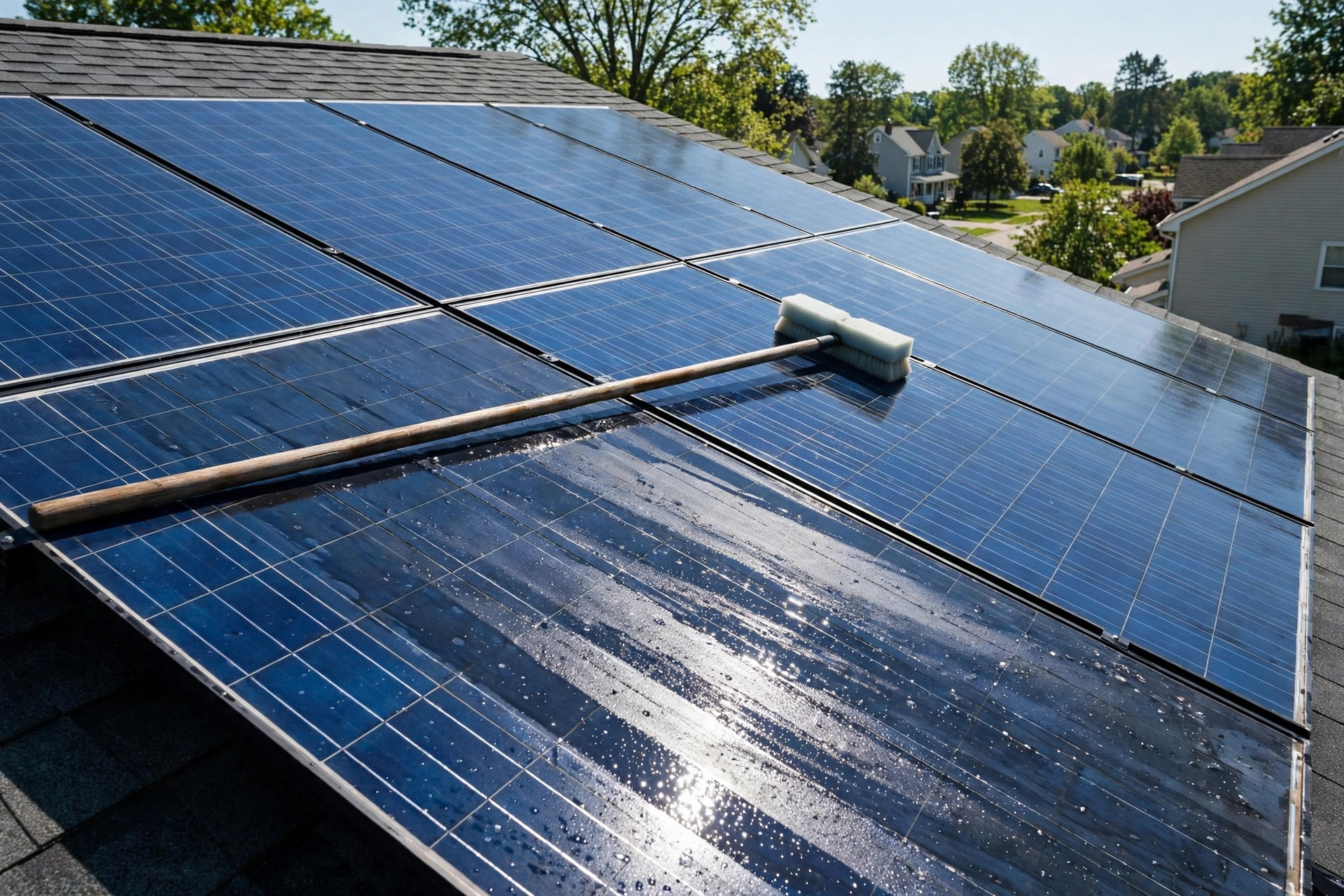

More homes in the United States have rooftop solar panels than ever before. Dirt, dust, pollen, and bird droppings collect on the glass. A dirty panel makes less power. Many owners do not want to climb on the roof with a hose. So they search for solar panel cleaning service cost near me. They want to know what a fair price is before they call anyone.
This guide explains typical prices in plain terms. It covers what drives the cost up or down. It explains what a good service includes. It also covers safety, schedules, and common questions. By the end, you will know how to read a quote and how to pick a reliable cleaner.
Why Clean Solar Panels At All
Solar panels work best when light reaches the glass surface. A thin film of dust cuts output. In dusty areas, losses can reach a large share of daily output. Near farms, airports, and busy roads, grime builds up fast. Bird droppings block whole cells and lower output more than dust.
Rain helps, but rain does not wash everything away. Stuck-on grime stays after rain. In dry states, dust can sit for months. A panel that is never cleaned may lose a meaningful part of its output each year. Over the life of the system, that lost power is money.
A professional cleaning also acts as a visual check. The cleaner can spot cracked glass, loose wiring, or hot spots. Early warning can prevent a small problem from becoming a large repair. Many solar owners treat cleaning as cheap insurance for a costly system.
What A Typical Cleaning Costs: Solar Panel Cleaning Service Cost near Me
Most home systems cost between 150 and 400 dollars per cleaning. A small system on an easy roof may cost 100 to 150 dollars. A large system with two stories and a steep roof may cost 400 dollars or more. Some firms charge by the panel. A common rate is 5 to 15 dollars per panel. A home with 20 panels might then pay 150 to 300 dollars.
Flat fees are common for small systems. Per-panel pricing is common for large systems. Some firms sell yearly plans. A yearly plan may include two cleanings at a lower per-visit rate. A plan can make sense when dust is heavy.
These ranges shift by state. Labor costs are higher in coastal cities than in rural towns. Travel fees appear when the firm is far from the home. Always ask whether the quote includes travel, water use, and tax. A low quote that omits fees is not really low.
What Drives The Price Up Or Down
Size of the system is the main driver. More panels mean more time and more water. A 15-panel system is a short visit. A 50-panel system is half a day of work.
Roof access comes next. A single-story ranch roof is easy. A three-story home with a steep pitch is hard. Steep roofs need safety gear and extra crew. Tile roofs slow the work. Fragile tile can crack underfoot. Flat commercial roofs are simple to walk on but may hold more dust.
The level of dirt matters too. Light dust is a quick job. Heavy bird droppings, tree sap, or mold need scrubbing. Firms may add a surcharge for deep grime. Panels near trees or under flight paths cost more to clean.
Local water rules play a part. Some towns restrict water use in summer. Some firms bring their own purified water. Purified water dries without spots and is better for the glass. Firms that use deionized water may charge more for it.
The firm type also matters. A solo local cleaner often charges less than a national brand. A national firm may offer a warranty on the work. Both can do a fine job. Price alone does not tell you which is better.
What A Good Service Should Include
A real professional does more than spray water. The visit should start with a look at the whole system. The cleaner notes broken glass, loose mounts, or nests under the panels. Some firms take before and after photos. Photos help you see the value of the visit.
The cleaning method matters. Soft brushes and low-pressure water are standard. High-pressure washers can damage seals and coatings. The firm should use clean water and mild soap if soap is needed at all. Some firms use poles with brushes fed by purified water. That method avoids harsh chemicals.
After the wash, the crew should check output. Many firms read the inverter before and after. A gain in output shows the work was worth it. Ask for a simple report. A one-page note with dates and findings is enough.
Some services add extras. Gutter clearing may be added for a fee. Bird guard installation keeps droppings away. Critter guards stop squirrels from nesting under the panels. Do not feel pressured to buy extras. A simple cleaning is enough for most homes.
Do-It-Yourself Versus Hiring A Pro
Cleaning panels yourself saves money. A garden hose and a soft sponge can work. Many owners clean ground-mount systems with ease. Roof work is another story. Falls from roofs cause serious harm each year.
If you clean yourself, use plain water. Work in the cool hours of the morning. Hot glass plus cold water can stress the panel. Never use abrasive pads or strong cleaners. Never stand on the panels. They can crack under weight.
Hiring a pro makes sense for roof systems. Pros carry safety gear and insurance. They know how to walk a roof without damage. They also know local water rules. For most roof owners, the peace of mind is worth the fee.
How Often To Schedule A Cleaning
There is no single rule. Many firms suggest one or two cleanings per year. In dusty regions, three or four may be needed. Near the coast, salt film builds up and needs regular washing. In rainy regions, one yearly visit may be enough.
Watch your output data. Most inverters show daily production. If output drifts down for no clear reason, grime may be the cause. A cleaning often restores the lost output. Some owners clean when the drop reaches a level they can see in the bill.
Seasonal timing helps. Spring cleaning clears winter grime and pollen. Fall cleaning clears summer dust before the low winter sun. Avoid the hottest part of the day. Early morning visits are best for the panels and the crew.
Choosing A Reliable Local Service
Start with local search and review sites. Look for firms that list solar cleaning as their main work. A general handyman may lack the right tools. A firm that does solar every week knows the work.
Ask for proof of insurance. Roof work carries risk. An insured firm protects you if a worker is hurt or a tile breaks. Ask how they clean. The answer should mention soft brushes and low pressure. If they plan to use a pressure washer, walk away.
Get two or three quotes. Compare what each includes. Ask about water type, photo reports, and output checks. Read the fine print on damage policies. A good firm stands behind its work in writing.
Check how long they have been in business. New firms can be fine, but a track record helps. Ask for references from nearby homes. A local firm should have no trouble naming a few past clients.
When you compare prices with other home services, keep context in mind. If you are also pricing smart doorbell installation cost near me, you will see the same pattern. Travel time, skill, and roof or wall access drive the labor charge. The same logic applies to solar panel cleaning.
Safety And Warranty Notes
Safety rules vary by state. The federal safety agency sets general rules for roof work and ladder use, as seen on CPSC. Crews should wear fall protection on steep roofs. Ladders should be tied off and stable. You should not be asked to provide safety gear.
Your panel warranty matters too. Some makers void the warranty if the wrong cleaners are used. Read the maker terms before you hire. Keep the service receipt. If a warranty claim ever comes up, the receipt shows the panels were cared for.
Water quality is a quiet safety issue. Hard water leaves mineral spots. Those spots cut output just like dust. A firm that uses purified water avoids this. Ask what water they use. It is a fair and common question.
Electrical safety is real. Panels are live when the sun is up. A trained crew knows to avoid touching wiring and junction boxes. They should not spray water into open boxes or conduits. If wiring looks damaged, they should stop and tell you.
Where To Research Further
Product and review sites publish buyer guides on solar and smart home gear. Consumer Reports tests home equipment and publishes safety notes. CNET and PCMag cover smart home and energy technology. The Verge follows the smart home market.
Brand and retail sites can help you learn the basics. Ring and SimpliSafe focus on home security, while ADT covers monitored home services. The Google Store lists smart home devices. For energy basics, the U.S. Department of Energy publishes plain guides on solar power.
If your system pairs panels with solar-charged gear, related buying guides can help. Reviews of the best solar security camera show how solar cells behave in real yards. Guides to the best outdoor camera without a subscription explain local power and storage tradeoffs. The same care you give your panels applies to solar-powered devices around the home.
Frequently Asked Questions
How much does a solar panel cleaning service cost near me?
For most homes, 150 to 400 dollars per visit. Small systems on easy roofs may cost near 100 dollars. Large systems on steep roofs may cost more than 400 dollars. Travel fees and deep grime can add to the bill. Get two or three written quotes to compare.
How often should solar panels be cleaned?
One to two times per year suits most homes. Dusty, farm, or coastal areas may need three or four visits. Watch your inverter data. A steady drop in output is a sign that grime is the cause.
Can I clean my solar panels myself?
Yes, if you can reach them safely. Use plain water and a soft sponge. Work in the morning when the glass is cool. Do not use abrasive pads or strong chemicals. Do not stand on the panels. For roof systems, most owners hire a pro for safety.
Does cleaning really raise power output?
Often yes. Studies and field reports show gains after heavy soiling is removed. Light dust gives small gains. Heavy grime gives larger gains. An output check before and after the visit will show the real gain for your system.
Will cleaning void my panel warranty?
It should not, if the method is gentle. Some makers warn against harsh chemicals and pressure washers. Read your warranty terms. Keep the service receipt as proof of proper care.
Should I buy a yearly cleaning plan?
A plan can save money if you need two or more visits per year. Compare the per-visit rate of the plan to single-visit quotes. Make sure the plan spells out what each visit includes. Skip plans that lock you in without a clear service list.
Final Word
A clean panel is a working panel. Dirt steals power a little each day. A professional cleaning costs a few hundred dollars and can restore lost output. Pick a firm that uses soft brushes and low pressure. Check insurance, read reviews, and get clear quotes in writing. Do this once or twice a year, and your system will pay you back in steady, reliable power.
References
ADT. (n.d.). Home security and automation. https://www.adt.com CNET. (n.d.). Technology news and reviews. https://www.cnet.com Consumer Reports. (n.d.). Product reviews and ratings. https://www.consumerreports.org Google Store. (n.d.). Smart home devices. https://store.google.com PCMag. (n.d.). Technology product reviews. https://www.pcmag.com Ring. (n.d.). Smart home security devices. https://www.ring.com SimpliSafe. (n.d.). Home security systems. https://www.simplisafe.com The Verge. (n.d.). Technology news and reviews. https://www.theverge.com U.S. Consumer Product Safety Commission. (n.d.). Product safety information. https://www.cpsc.gov U.S. Department of Energy. (n.d.). Energy efficiency and renewable energy. https://www.energy.gov
Was this guide helpful?

About Emily Rodriguez
The My Garden US editorial team writes practical, in-depth home and garden guides for American homeowners — tested advice, no fluff.
You May Also Like
WiFi 7 Router for Smart Home Reviews USA: A Practical Guide for Buyers
April 24, 2026 0 views
Best Solar Security Camera Reviews 2026 USA: A Plain Guide for Homeowners
February 26, 2026 0 views
Cellular Security Camera No WiFi Reviews USA: A Plain Guide for Homes and Cabins
March 26, 2026 0 views