
Florida homes face a special climate. The air is humid. Rain comes hard. Sandy soil tracks inside on every shoe. These facts shape every floor choice in the Sunshine State. Vinyl plank flooring for Florida homes is now one of the most common answers to that challenge. It looks like real wood. It stands up to water. It costs less than hardwood. This guide walks through why it matters, how to choose it, what it costs, and how to keep it in good shape for years.
Why It Matters in Florida Homes
Flooring in Florida must handle conditions that other states rarely see. Humidity stays high through most of the year. Summer rains soak patios and entryways. Pets and children track sand and salt water indoors. Solid wood can swell, cup, and warp under such pressure. Laminate can bubble when water seeps into its core. Vinyl plank flooring for Florida homes was built to avoid these problems. Its core resists water from top to bottom. That single trait explains much of its rise in the state.
Water resistance is the first reason. Most vinyl planks are fully waterproof, not merely water resistant. Spills from the kitchen sink, muddy boots after a storm, or a leaky refrigerator line do not harm the floor. Homeowners in Florida also face tropical storms. When wind-driven rain finds its way under a door, a vinyl floor dries out without staining or swelling. Hardwood floors would not survive the same event so well.
Comfort is the second reason. Bare feet are the norm in many Florida homes. Tile stays cold, even in summer. Vinyl planks feel warmer and softer underfoot. This makes the floor pleasant in living rooms and bedrooms where families spend the most time. An underlayment with a cork or foam layer adds a bit more cushion and can cut sound between rooms.
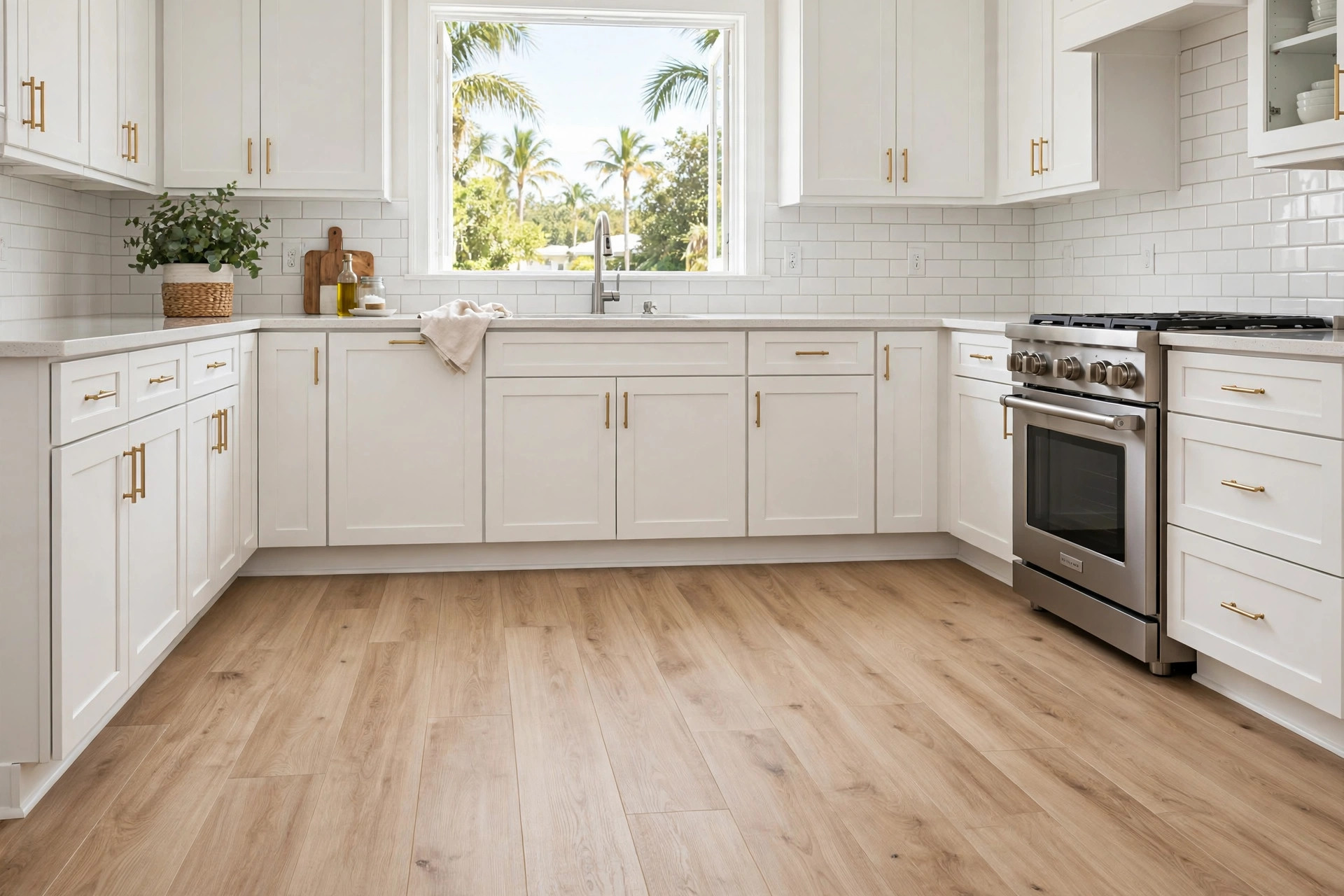
Style is the third reason. Modern printing gives vinyl planks a wood grain that looks close to the real thing. Oak, hickory, and maple patterns are common. Gray and whitewashed tones suit the bright, airy look that many Florida homes favor. Visitors often cannot tell the difference from real wood until they touch it. That blend of looks and strength is why vinyl plank flooring for Florida homes keeps growing in popularity.
How to Choose the Right Planks: Vinyl Plank Flooring Florida Homes Usa
Choice starts with the wear layer. The wear layer is the clear film on top of each plank. It takes all the abuse from shoes, chairs, and pets. Wear layers are measured in mils, which are thousandths of an inch. For most homes, a 12-mil wear layer is fine. Homes with large dogs or heavy traffic do better with 20 mils. Thick wear layers cost more, but they stretch the life of the floor. Consumer Reports tests flooring durability and can help buyers compare options before they shop.
Next comes the core type. Stone plastic composite, often called SPC, has a rigid stone core. It is the most common choice in Florida because it stays stable in heat and humidity. Wood plastic composite, or WPC, has a softer core with a wood feel. It is more comfortable but can cost a bit more. Traditional luxury vinyl tile with a flexible core is thinner and works best on very flat subfloors. For Florida conditions, SPC is usually the safest pick.
Thickness matters too. Total plank thickness ranges from 4 mm to 8 mm. Thicker planks hide small flaws in the subfloor. They also feel more solid when walked on. Most experts suggest 5 mm or more for a main living space. Planks for a small guest room can be thinner without trouble.
Waterproof rating deserves a close look. Almost all vinyl planks claim to be waterproof. The joints between planks matter more than the plank itself. Click-lock systems form tight seams that block water from below. Glue-down planks stay put but depend on the adhesive for moisture protection. For kitchens, bathrooms, and laundry rooms, a tight click-lock system is the better choice.
Color and finish should fit the home. Light tones make rooms feel bigger and cooler, which suits Florida’s bright sun. Dark floors show dust and sand more clearly. A matte or low-gloss finish hides scuffs better than a high shine. Embossed texture adds grip and makes the floor look more like real wood. Take home samples and view them in daylight before you decide. Lowe’s and The Home Depot both sell or lend sample boards for this purpose.
Types and Options Available
The market offers several kinds of vinyl plank flooring for Florida homes. Each kind has its own strength. Knowing the differences helps buyers match the product to the room.
SPC rigid core planks are the top seller. They click together without glue. They hold up under high heat, which matters in homes without heavy air conditioning in every room. They work well over tile and concrete, which are common subfloors in Florida. Most brands offer a lifetime residential warranty.
WPC planks feel softer and warmer. They have a thicker profile, often 6 mm to 8 mm. They are quieter to walk on, which suits upstairs bedrooms and condos. They cost more than SPC in most cases. They are still waterproof and work well in Florida humidity.
Glue-down planks stick directly to the subfloor with adhesive. They create a very stable floor that does not shift. They are a good fit for commercial spaces and high-traffic hallways. Installers can replace a single damaged plank without lifting a whole row. The trade-off is a longer install time and a floor that is harder to remove later.
Loose-lay planks use weight and friction to stay in place. They suit renters and temporary installs. They lift up easily for repairs or a move. They are less common in full-home installs but useful in small rooms.
Waterproof luxury vinyl tile comes in square tiles instead of planks. It mimics stone or ceramic rather than wood. Some homeowners use it in bathrooms and kitchens while they put planks in the living areas. The tile form pairs well with bathroom and kitchen remodels, where a stone look is desired.
Pattern choices have grown. Besides wood looks, some lines offer concrete, marble, and patterned tile prints. Herringbone layouts are possible with special plank sizes. For buyers who want a full guide to shopping, our vinyl plank flooring buying guide covers features in more depth.
Cost and Price in Florida
Price is a major reason vinyl plank flooring for Florida homes has spread so fast. Material cost usually runs from 2 to 5 dollars per square foot for good quality planks. Budget lines start near 1.50 dollars per square foot. Premium lines with thick wear layers can reach 6 dollars or more per square foot.
Professional installation adds 2 to 4 dollars per square foot in most Florida markets. The total installed cost often lands between 5 and 9 dollars per square foot. A 1,000 square foot install then costs roughly 5,000 to 9,000 dollars. Cities like Miami and Tampa may sit at the higher end. Smaller towns may cost less.
Several factors move the price up or down. Removing old carpet or tile adds labor. Fixing an uneven concrete slab adds cost before the new floor goes down. Stairs need special nosing pieces. Large open plans cost less per square foot than small chopped-up rooms because the installer works faster.
Do-it-yourself work cuts the bill. Click-lock planks are friendly to first-time installers. A homeowner with basic tools can lay 300 to 400 square feet in a weekend. That said, Florida homes with moisture issues should get a professional opinion first. A pro can test the slab for moisture and fix problems that a beginner would miss.
Long-term value is strong. Vinyl plank floors last 15 to 25 years in homes. They need no refinishing like hardwood. They resist stains that would ruin carpet. When selling a Florida home, fresh waterproof floors can lift the asking price because buyers value low upkeep. For current pricing and stock, check our vinyl plank flooring for sale page, and pair new floors with a fresh surface in our quartz countertop installation buying guide.
Care and Upkeep
Daily care is simple. Sweep or vacuum with a soft brush to remove sand and grit. Sand is the main enemy of vinyl floors. It acts like sandpaper under shoes and dulls the finish over time. A doormat at every entrance cuts down the sand that reaches the floor.
Mopping is safe. Use a damp mop, not a soaking wet one. A mix of warm water and a mild cleaner made for vinyl floors works well. Skip wax, oil soaps, and harsh chemicals. They leave a film that traps dirt. Steam mops are not advised because high heat can weaken the seams over time.
Spills should be wiped up soon, but they cause no panic. Water, coffee, and juice wipe away without staining. For tough spots, a soft cloth with a bit of rubbing alcohol handles most marks. Avoid steel wool and stiff brushes. They scratch the wear layer.
Furniture needs felt pads under the legs. Heavy pieces like refrigerators and pianos should rest on wide load spreaders to avoid dents. In sunny rooms, close blinds during the harshest midday hours. Long direct sun can fade any floor, even vinyl. Area rugs add comfort and protect high-traffic paths, but choose rugs without rubber backing. Some rubber backings can react with vinyl and leave marks.
Safety in the Home
Vinyl plank flooring for Florida homes is generally safe when buyers pick certified products. Look for floors tested by FloorScore or GREENGUARD. These programs check that the floor gives off low levels of volatile organic compounds. New floors may have a mild smell for a few days. Good ventilation clears it fast.
Slip resistance matters, especially around pools and patios. Many planks carry a slip rating. A higher rating means better grip when wet. Textured surfaces grip better than smooth glossy ones. In homes where elders live, pick a plank with strong slip resistance and avoid high-gloss finishes.
Fire safety is worth a note. Vinyl is a plastic product. It will melt in a fire rather than burn like wood. It should not be placed near open flames or very hot vents. Keep space heaters and fireplaces a safe distance from the floor. The U.S. Consumer Product Safety Commission guidance reminds homeowners to follow maker rules for heat sources near all flooring.
Allergen control is a plus. Vinyl floors hold no dust mites the way carpet does. They do not trap pet dander deep in fibers. For families with asthma or allergies, hard smooth floors are easier to keep clean. Regular sweeping keeps the air in the home fresher.
Frequently Asked Questions
Is vinyl plank flooring truly waterproof? Yes, the plank itself is waterproof in nearly all cases. The seams between planks are the weak point. Tight click-lock joints keep water from reaching the subfloor. Wipe up standing water within a reasonable time to be safe.
Does heat damage vinyl plank floors? Normal indoor heat does not harm them. Long exposure to very high heat, above about 140 degrees Fahrenheit, can warp planks. Keep them away from direct heat sources. Homes with good air conditioning have no issues.
Can I install vinyl planks over tile? Yes, in most cases. The tile must be flat and firmly stuck down. Fill wide grout lines so the planks rest evenly. A thin underlayment can smooth small bumps. This saves the cost and mess of tearing out old tile.
How long does it last in a Florida home? Expect 15 to 25 years with normal care. High-traffic homes may see wear sooner. Thick wear layers stretch the life. Sand control and gentle cleaning make the biggest difference in Florida.
Is it safe for pets? Yes. Vinyl planks resist scratches from claws better than hardwood. They do not absorb pet odors. Accidents wipe up without staining. Choose a 20-mil wear layer if you own large dogs.
Does it increase home value? Fresh, modern floors help a sale. Buyers in Florida like waterproof floors because they fear humidity damage. Vinyl planks cost less than hardwood but still read as an upgrade over old carpet or worn tile.
A Final Word
Vinyl plank flooring for Florida homes earns its place. It stands up to water, heat, and sand. It looks like wood without the high cost or the upkeep. It feels good under bare feet. Pick a rigid core, a thick wear layer, and a light tone that suits the Florida sun. Install it with care, keep sand off it, and it will serve the home for decades. For research on appliance and kitchen upgrades that often go with new floors, ENERGY STAR offers efficiency guides, while GE Appliances, Whirlpool, and Bosch cover the machines that sit on top of them.
References
Bob Vila. (n.d.). Home improvement advice. https://www.bobvila.com Bosch. (n.d.). Home appliances. https://www.bosch-home.com Consumer Reports. (n.d.). Product reviews and ratings. https://www.consumerreports.org ENERGY STAR. (n.d.). Energy efficient products. https://www.energystar.gov GE Appliances. (n.d.). Kitchen and home appliances. https://www.geappliances.com Lowe’s. (n.d.). Home improvement products. https://www.lowes.com The Home Depot. (n.d.). Home improvement products. https://www.homedepot.com This Old House. (n.d.). Home renovation guidance. https://www.thisoldhouse.com U.S. Consumer Product Safety Commission. (n.d.). Product safety information. https://www.cpsc.gov Whirlpool. (n.d.). Home appliances. https://www.whirlpool.com
Was this guide helpful?

About Sarah Mitchell
The My Garden US editorial team writes practical, in-depth home and garden guides for American homeowners — tested advice, no fluff.
You May Also Like

Under Counter Wine Fridges for Florida Homes USA
June 23, 2026 0 views
Kitchen Backsplash Tiles: Where to Buy in the USA
July 16, 2026 0 views
Undermount Stainless Sinks Deals Near Me: A Plain Guide for American Kitchens
April 26, 2026 0 views