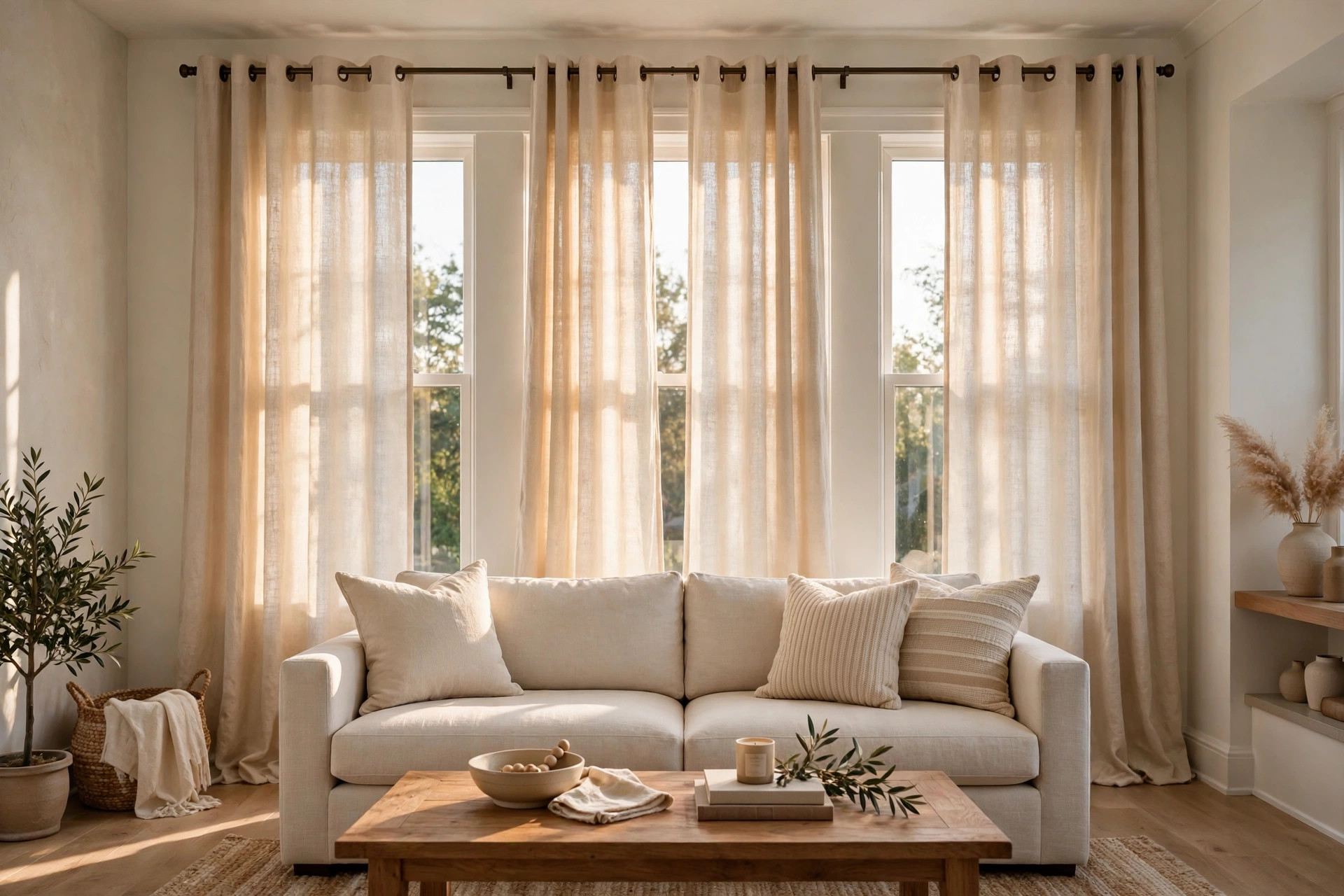

A window curtain panels american homes guide is worth reading before you spend a dollar. Curtains change how a room feels in one afternoon. They add color, soften hard walls, and give a family privacy when the sun goes down. This guide covers styles, fabrics, sizing, cost, and care in plain terms. You will learn what to look for, what to skip, and how to hang panels so they look right the first time.
Why Window Curtains Matter
Few home items do so much for so little money. A bare window shows the world everything inside after dark. A bare window also lets summer heat pour in and winter cold press against the glass. Curtain panels fix both problems at once. They give you privacy on demand. They cut glare on the television. They slow drafts and keep a room quieter when traffic passes outside.
Curtains also show your taste. Guests notice windows first because windows carry the light. Matching panels tell visitors that the room was planned with care. This window curtain panels american homes guide will help you get that result without stress.
What to Look For When You Choose: Window Curtain Panels American Homes Guide
Start with the window itself. Measure the width of the frame, then measure the height from where you plan to hang the rod to where you want the panels to end. Write both numbers down. Shoppers who skip this step buy panels that are too short or too narrow, and the room suffers for it.
Look at the room next. Dark rooms want light fabrics that pass sunshine through. Busy streets want heavier fabrics that block sound and sight. Bedrooms want panels that shut out morning light so sleep lasts longer. Living rooms want panels that frame the view without hiding it. Kitchens want fabrics that wash well, because steam and cooking smells reach every corner.
Check the fabric before you buy. Hold it up to a light in the store. You will see at once how much it lets through. Run a corner of the cloth between your fingers. Rough weaves suit casual rooms. Smooth, heavy cloth suits formal rooms. If the tag lists the fiber content, read it. Cotton and linen breathe well and press easily. Polyester resists wrinkles and costs less. Blends try to offer the best of both.
Look at the top of the panel. This is called the heading, and it decides how the panel hangs. Rod pockets slip onto the rod directly and gather in soft folds. Back tabs hide the rod for a cleaner look. Grommets are metal rings that make the panel slide with one pull. Pinch pleats look tailored and need rings with small clips. Tab tops tie with fabric loops for a relaxed, country feel. Each style changes the mood of the room, so choose the heading to match your furniture.
Types of Curtain Panels for American Homes
Shoppers face a wall of choices. It helps to group panels by what they do.
Sheer panels. These are thin, almost clear fabrics like voile or sheer linen. They soften daylight and blur the view from outside without blocking the sun. Sheers work alone in rooms where privacy is not a worry, or they work under heavier panels for a layered look. Many apartment dwellers love them because they let small rooms stay bright. Writers at home sites note that sheers are the kindest choice for north-facing rooms that get little direct sun, and Apartment Therapy often shows how renters use them to brighten small spaces without darkening the walls.
Light-filtering panels. These sit between sheers and full blackouts. They let a soft, even light through while hiding the view from the street. Cotton sateen and lined linen fall in this group. They are the most popular choice for living rooms and dining rooms across the country because they balance brightness and privacy so well.
Room-darkening and blackout panels. These have a dense weave or a foam backing that stops most light. They are the standard answer for bedrooms, nurseries, and home theaters. Shift workers swear by them. Parents buy them for nap time. Shoppers comparing modern designs often start with retailers known for clean looks, such as Article, to see how dark panels pair with low, simple furniture.
Thermal or insulated panels. These carry extra layers that slow heat loss in winter and block heat gain in summer. Old houses with single-pane windows benefit the most. These panels run heavy, so they need a strong rod and sturdy brackets.
Cafe curtains. These cover only the lower half of the window. They were born in French cafes and became common in American kitchens. They give privacy where it matters while leaving the top open for light. They suit kitchen and bathroom windows that sit near eye level. Home advice writers often point out that cafe curtains are the friendliest option for small windows, and guides on The Spruce walk readers through measuring for them step by step.
Fabric choice crosses all these types. Linen brings a relaxed, natural texture that suits farmhouse and coastal rooms. Velvet brings drama and weight for formal dining rooms. Cotton duck is tough and casual for family rooms. Silk looks rich but fades fast in direct sun and needs lining. When you study current fabric trends, browse collections at places like West Elm for linen and CB2 for bold contemporary prints to see what is common in American stores today.
Cost and Price
Window panels cost more than most people expect, and less than most people fear. The range is wide because fabric, size, and brand vary so much.
Ready-made panels are the cheapest path. A pair of basic polyester panels for a standard window runs about twenty to sixty dollars at large stores. Cotton and linen ready-mades run forty to one hundred and twenty dollars a pair. These prices come from chain stores where thousands of shoppers buy the same sizes. You can compare prices and read reviews before you order, and large marketplaces such as Wayfair list hundreds of pairs side by side so the price range is easy to see.
Mid-range panels cost one hundred to three hundred dollars a pair. You get better fabric, neater stitching, and more size choices. Many homeowners settle here. The panels look good, wash well, and last five to ten years with normal care.
Custom panels start near three hundred dollars a window and climb past a thousand for tall windows or fine fabrics. Custom shops cut the cloth to your exact measurements and sew the heading you choose. Homes with arched windows, extra-tall ceilings, or odd widths need this option. There is no substitute when ready-made sizes will not fit.
Remember the hidden costs. A rod, finials, and brackets add twenty to one hundred dollars per window. Rings and clips add a little more. If you hire help to hang everything, labor adds another fifty to one hundred and fifty dollars per window in most towns. Plan the full budget before you fall in love with a fabric.
If money is tight, start with one room. The living room matters most because guests see it. Then do the master bedroom. Bedrooms reward the spending with better sleep.
How to Hang and Care for Your Panels
Good hanging matters as much as good fabric. A cheap panel hung well beats an expensive panel hung badly.
Hang the rod high. The old rule still holds: place the rod four to six inches above the window frame, or halfway between the frame and the ceiling. This trick makes the window look taller. For clear sizing charts and simple diagrams, IKEA offers guides that show how panels of different widths and lengths behave on real windows. Extend the rod three to six inches past each side of the frame so the panels can stack off the glass when open. When panels cover the wall instead of the glass, the room gets more light and the window looks wider.
Choose the right length. Floor-length panels should just kiss the floor or hover half an inch above it. This is the safest look for living rooms and bedrooms. Panels that puddle on the floor look rich in formal rooms but gather dust and trip small feet. Sill-length panels work in kitchens and bathrooms where long cloth would get in the way. Always measure twice before you order.
Use strong hardware. A heavy velvet panel will pull a weak rod down in the middle. Buy a rod rated for your panel weight. Use wall anchors if your walls are drywall. Check the brackets after a month, because screws can loosen as fabric settles. A falling rod can crack a window or scare a child, so this is safety work, not decoration work.
Care is simple if you follow the tag. Most cotton and polyester panels wash in cold water and dry on low heat. Take them out of the dryer while slightly damp and hang them at once to avoid ironing. Linen likes a cool wash and a warm iron while damp. Velvet and silk usually need dry cleaning, so read the label before you buy and decide if that cost fits your life. Vacuum panels with a brush attachment twice a year to pull out dust. Dust is the slow killer of curtain fabric, and a quick pass in spring and fall adds years of life.
Safety in Homes With Children and Pets
Curtains carry real risks that this window curtain panels american homes guide must mention. Long cords from blinds and tiebacks have hurt children, and loose panels have burned near heaters. Keep these rules in mind.
Keep cords out of reach. If your panels share a window with corded blinds, tie the cords up high with a cleat or choose cordless blinds. Cribs and beds should never sit under a window with hanging cords. Safety groups have warned about this for years, and their guidance is worth reading before you decorate a nursery.
Keep fabric away from heat. Panels should hang at least a foot from space heaters, radiators, and fireplace openings. Long panels near a kitchen range are a fire risk. Short cafe curtains are safer choices in kitchens.
Secure heavy hardware. A loaded rod is a hazard if it falls. Use studs where you can find them. Use proper anchors where you cannot. In earthquake country, this matters even more. Check mounts once a year, the same weekend you check smoke detector batteries.
Choose washable fabrics for pet homes. Dogs rub against low panels. Cats climb them. A cotton duck panel survives claws better than silk. Dark patterns hide paw prints between washes. If your cat treats curtains as a ladder, consider panels that end at the sill instead of the floor.
Frequently Asked Questions
How wide should curtain panels be? The panels should total one and a half to two times the width of the window when measured flat. A sixty-inch window wants ninety to one hundred and twenty inches of panel width across the pair. Skimpy panels that barely cover the glass look cheap. Full panels with generous folds look rich. When in doubt, buy wider.
Do curtains need to touch the floor? They do not need to, but floor length is the most forgiving choice. It works in living rooms, dining rooms, and bedrooms. Sill length works in kitchens and baths. Puddling works in formal rooms where you can tend the fabric. Pick the length that fits the room and your cleaning habits.
Can I mix curtain styles in one house? Yes, and most American homes do. Keep one thread of sameness so the house feels planned. That thread can be a color, a fabric family, or a heading style. A white linen panel in the living room and a white linen cafe curtain in the kitchen feel like cousins. A velvet panel in one room and a beach-print panel in the next feel like strangers. Related decor pieces help tie rooms together, and many shoppers coordinate panels with their wall art and floor coverings; for inspiration, browse rooms at Houzz or classic American looks at Crate and Barrel, and see our related guides on window curtain panels buying guide usa, living room wall art buying guide usa, and luxury area rugs buying guide usa.
How often should I wash curtain panels? Wash them once or twice a year in most rooms. Kitchens need washing every three to four months because grease floats in the air. Homes with smokers or wood stoves need it more often too. Between washes, vacuum with a soft brush and air the room on dry days. Fabric lasts longer when it is not left to soak up a year of dust.
Are blackout curtains worth the extra cost? For bedrooms, yes. Sleep studies keep showing that dark rooms help people fall asleep faster and stay asleep longer. The price gap between light-filtering and blackout panels is usually twenty to forty dollars a pair. If anyone in the house works nights or wakes with the sun, that money buys real rest. For living rooms the answer depends on your habits. Movie lovers gain a lot. Afternoon readers gain nothing.
A Final Word
The best window curtain panels are the ones that fit your windows, your rooms, and your life. Measure first. Choose fabric for the job the room needs. Hang the rod high and wide. Spend where it counts and save where it does not. Good panels block what you want blocked, soften what you want softened, and make a plain room feel finished. Buy once, hang well, and enjoy the view. If you want fresh ideas for the rest of the room, browse the decorating programs and project guides on HGTV for inspiration.
References
Apartment Therapy. (n.d.). Home design ideas and inspiration. https://www.apartmenttherapy.com Article. (n.d.). Modern furniture. https://www.article.com CB2. (n.d.). Modern furniture and decor. https://www.cb2.com Crate and Barrel. (n.d.). Furniture and home decor. https://www.crateandbarrel.com HGTV. (n.d.). Home and garden ideas. https://www.hgtv.com Houzz. (n.d.). Home design and remodeling. https://www.houzz.com IKEA. (n.d.). Home furnishings. https://www.ikea.com The Spruce. (n.d.). Home and garden advice. https://www.thespruce.com Wayfair. (n.d.). Furniture and home goods. https://www.wayfair.com West Elm. (n.d.). Modern furniture and home decor. https://www.westelm.com
Was this guide helpful?

About Sarah Mitchell
The My Garden US editorial team writes practical, in-depth home and garden guides for American homeowners — tested advice, no fluff.
You May Also Like

Mid Century Chairs for Sale USA: A Plain Buyer’s Guide
March 2, 2026 0 views
Dining Room Sets for California Homes: A Practical Buying Guide
March 1, 2026 0 views
Luxury Area Rugs Deals Near Me: A Plain Guide to Finding Fine Rugs at Fair Prices
May 22, 2026 0 views