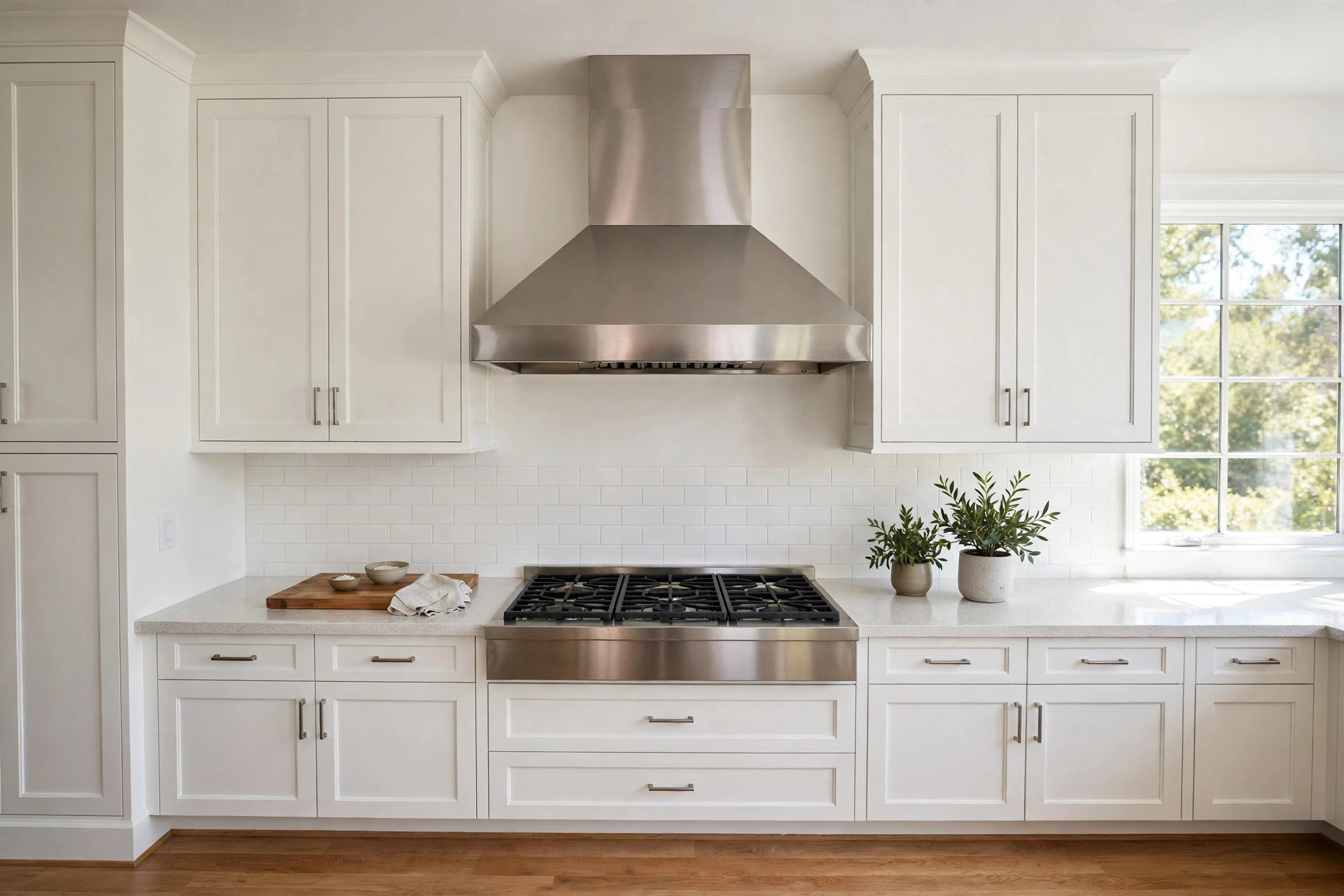

Why Stainless Range Hoods Matter in American Homes
A range hood is a fan with a cover. It hangs above the stove. It pulls smoke, steam, grease, and smells out of the kitchen. This stainless range hoods american homes guide begins with a simple fact. Every American home that cooks needs some way to move that bad air out.
Cooking makes more than good food. Frying fills the air with grease. Boiling pasta fills the air with steam. A gas burner adds heat and small amounts of gas byproducts to the room. A stainless range hood takes all of that away. It sends it outside through a duct, or it cleans it with a filter and sends it back into the room.
Stainless steel is the most common finish. It is strong. It cleans with a wipe. It matches most other appliances. It does not rust. That is why a guide on stainless range hoods american homes finds them in so many kitchens, from small apartments to large farmhouses.
How a Range Hood Works: Stainless Range Hoods American Homes Guide
A range hood has a few simple parts. The fan sits inside the metal shell. It pulls air in from over the stove. The air passes through a filter. The filter traps grease. Then the air leaves.
There are two main paths for the air. A ducted hood sends the air outside the house through a metal duct. This is the best kind. It removes heat, smoke, and smells for good. A ductless hood cleans the air with a charcoal filter and returns it to the kitchen. It catches smells and some grease. If your home allows a duct, choose a ducted hood.
The fan speed matters. Most hoods have two to four speeds. Low speed is quiet and fine for simmering soup. High speed is loud and needed for searing steak.
Types of Stainless Range Hoods
Under-Cabinet Hoods
An under-cabinet hood mounts below the cabinets over the stove. It is the most common type in American homes. It costs less than other types. It fits a standard thirty-inch cooktop. It works well in kitchens with cabinets above the range.
Wall-Mount Chimney Hoods
A wall-mount hood attaches to the wall and rises like a chimney to the ceiling. It suits kitchens without cabinets above the stove. It costs more than an under-cabinet model. It covers a wide area over the cooktop.
Island Hoods
An island hood hangs over a stove set in a kitchen island. It is often larger and more powerful. It suits open kitchens where the cooktop faces the living area.
Insert Hoods
An insert hood hides inside a custom wood cover or a mantel. This type suits a classic or farmhouse kitchen. The homeowner builds the cover to match the room.
Downdraft Vents
A downdraft vent rises from behind the cooktop and pulls air downward. It stays hidden when not in use. It suits island cooktops where a hanging hood would block the view. It is less strong than an overhead hood because heat and smoke rise.
Professional-Style Hoods
A professional-style hood is large, deep, and powerful. It pairs with gas kitchen ranges buying guide usa setups and other pro cooktops. It needs a large duct. It suits cooks who use high heat often. It costs far more than a basic hood.
What Size Hood Do You Need?
Size is the first rule of this stainless range hoods american homes guide. The hood should be as wide as the cooktop, or wider. A thirty-inch cooktop needs a thirty-inch hood at minimum. Many cooks prefer a hood three inches wider on each side. That wider capture area catches more steam and smoke.
Mounting height matters too. For most hoods, the bottom of the hood should sit twenty-four to thirty inches above an electric cooktop. For a gas cooktop, the height is usually thirty to thirty-six inches. Read the manual for your model. Mounting too low risks heat damage. Mounting too high lets smoke escape.
The power of a hood is measured in CFM, which means cubic feet per minute. For a basic electric cooktop, about one hundred CFM for every ten inches of width is a good start. For a gas cooktop, use one hundred CFM for every ten thousand BTU of total burner output. A gas range with sixty thousand BTU needs about six hundred CFM.
Do not buy far more power than you need without a plan. A very strong hood pulls heated and cooled air out of the house. Many building codes now ask for make-up air when a hood exceeds four hundred CFM. Ask a local contractor about this rule before you buy a large hood.
Features Worth Paying For
Baffle Filters
Baffle filters are metal plates shaped to catch grease. They go in the dishwasher. They last for years. Mesh filters catch grease too, but they clog faster and need more cleaning. Baffle filters are worth the extra cost for cooks who fry often.
LED Lights
Most modern hoods have built-in lights. LED lights are best. They are bright and use little power. Good light over the stove helps you see food color and doneness.
Variable Speed and Auto Heat Sensor
A variable speed fan lets you choose low, medium, and high. Some hoods add an auto heat sensor. The sensor raises the fan speed when the cooktop gets hot. It lowers the speed when the cook is done. This feature is handy for cooks who walk away from the stove.
Quiet Operation
Fan noise is measured in sones. A rating of one sone sounds like a quiet refrigerator. Five sones sounds like a normal conversation. Reviews on sites like Consumer Reports often rate noise and give fair, tested numbers.
Easy Controls
Controls should be simple. Push buttons are common. Touch controls look modern. Some hoods have a remote control. You will use these controls every day. They should not fight you.
Ducting and Ventilation Options
The duct is the metal tube that carries air outside. A six-inch round duct is common for most hoods. Use rigid metal duct, not flexible duct. Rigid duct moves air better and is safer.
Keep the duct run short and straight. Every bend slows the air. Try to vent straight up through the roof or straight out through a wall.
The vent cap on the outside wall or roof matters too. It should keep rain and birds out. It should open easily when the fan runs. A stuck flap cuts airflow and makes the fan loud.
If you cannot run a duct, a ductless setup with charcoal filters will help. Charcoal filters soak up smells. They do not last forever. They need replacement every three to six months. Factor that cost into your plan.
Cost and Price
A basic under-cabinet stainless hood costs between one hundred and three hundred dollars. A mid-range chimney hood costs between three hundred and nine hundred dollars.
A pro-style or large island hood costs between nine hundred and three thousand dollars or more. The insert type costs the price of the insert plus the cost of the custom cover.
Installation adds to the cost. A simple swap of an old hood for a new one may cost one hundred to two hundred dollars if the wiring and duct stay the same. A new duct run through a wall or roof may cost five hundred to two thousand dollars.
Plan for filters too. Charcoal filters for ductless use cost twenty to sixty dollars per set. Baffle filters last for years and cost little beyond dishwasher soap.
Retailers like Home Depot and Lowe’s list many models with prices and reviews. Brand sites such as Bosch, GE Appliances, and Whirlpool show full specs and ducting needs.
Matching Your Hood to Your Cooktop
A hood and a cooktop work as a pair. The hood must fit the heat the cooktop makes. For an electric cooktop, a standard hood is fine. For a gas cooktop with strong burners, pick a stronger hood with baffle filters. For a dual fuel ranges buying guide usa kitchen, where gas burners meet an electric oven, plan the hood around the gas burners. Gas is the harder half to vent.
The width rule stays the same for all cooktops. Match or beat the cooktop width. A thirty-six-inch cooktop wants a thirty-six-inch hood, or a forty-two-inch hood if you have the room.
Think about how you cook. Do you sear meat often? Do you stir-fry at high heat? Do you boil big pots for canning? High heat cooking makes more smoke and grease. It asks for a stronger hood. If you mostly reheat and simmer, a modest hood will do the job.
Also look at your other kitchen upgrades. A new pot filler faucets buying guide usa choice does not change the hood size you need. But a full remodel is the best time to add or fix ducting. Opening walls is cheaper during a remodel than after.
Installation Basics
Many homeowners hire a professional for hood installation. That is a wise choice for ducted models. The installer must cut a hole in the wall or roof, run the duct, and wire the hood. Mistakes in ducting hurt performance for years.
If you replace an old under-cabinet hood with a new one of the same size, you may do it yourself. Turn off the power at the breaker first. Mount the new one with the screws in the manual. Connect the wires as the manual shows. Reconnect the duct. Test the fan and the lights.
For a wall-mount or island hood, a pro is worth the money. The hood must hang level and firm. A heavy pro hood can weigh over one hundred pounds. It needs solid mounting.
Check the building code in your town. Some towns need a permit for new duct work. Some need make-up air for strong hoods. Ask before the work starts, not after.
Care and Upkeep
A stainless hood needs regular care to keep working well. Grease builds up on filters and on the metal. Grease is sticky. It also burns. A greasy hood is a fire risk. Clean it on a schedule.
Wash mesh filters every month if you cook daily. Put them in the dishwasher or soak them in hot soapy water. Wash baffle filters every one to three months. They clean up fast in the dishwasher.
Wipe the stainless steel body with a soft cloth and warm soapy water. Dry it after. Wipe with the grain of the steel, not against it. The grain is the faint line pattern in the metal. Wiping with the grain avoids fine scratches.
For fingerprints, a small amount of glass cleaner or a stainless cleaner works. Do not use steel wool or rough pads. They scratch the finish for good.
Replace charcoal filters on schedule if your hood is ductless. Mark the date on your calendar. Old charcoal filters stop catching smells.
Check the duct outside once a year. Make sure the vent flap opens and closes. Clear any nests or leaves. Good airflow keeps the fan quiet and strong.
Safety Notes
Keep the hood at the right height above the cooktop. Too low, and heat can damage the hood. It can also catch grease on fire. Follow the manual’s height range.
Clean grease often. Grease fires start fast. A clean hood is a safer hood.
Make sure the duct goes all the way outside. Never vent a range hood into an attic, a garage, or a wall cavity. That traps moisture and grease inside the house. It can cause mold and fire.
Use a proper vent cap outside. It should block rain and pests but let air out freely.
If your hood is very strong, ask about make-up air. Without it, a strong fan can pull air down a chimney or a water heater vent. That is a real danger with gas appliances. A contractor can add a make-up air inlet that opens when the hood runs.
Guides from This Old House and Bob Vila explain safe venting in plain terms. Safety sheets from Energy Star cover efficient kitchen ventilation.
Frequently Asked Questions
Do I really need a range hood?
Yes. A hood clears smoke, steam, grease, and smells. It protects your cabinets and walls. It keeps the air healthy. Even a simple ductless hood is better than no hood at all.
What is the best CFM for a home kitchen?
For a standard thirty-inch electric cooktop, three hundred CFM is a good start. For a gas cooktop, match about one hundred CFM to every ten thousand BTU of burner output.
How wide should the hood be?
As wide as the cooktop, or wider. A thirty-inch cooktop needs at least a thirty-inch hood. Three extra inches on each side gives better capture. For a thirty-six-inch cooktop, a thirty-six-inch or forty-two-inch hood is best.
Is stainless steel hard to keep clean?
No. Warm soapy water and a soft cloth handle most jobs. Wipe with the grain of the steel. A stainless cleaner helps with fingerprints. Avoid steel wool and rough pads.
Can I vent a hood through the wall instead of the roof?
Yes. A straight run through an outside wall works well. Keep the run short with few bends. Use a good vent cap on the outside. Both roof and wall vents are common in American homes.
How often should I clean the filters?
Wash metal filters every month if you cook daily. Replace charcoal filters in ductless hoods every three to six months.
A Short Final Word
A stainless range hood is one of the hardest workers in the kitchen. Pick the right size and power. Use rigid duct. Keep the filters clean. A little planning now gives you years of fresh air while you cook.
Do your homework before you buy. Read manuals and brand pages. Compare models at stores. Ask a contractor about ducting and make-up air.
References
Bob Vila. (n.d.). Home improvement advice. https://www.bobvila.com Bosch. (n.d.). Home appliances. https://www.bosch-home.com Consumer Reports. (n.d.). Product reviews and ratings. https://www.consumerreports.org ENERGY STAR. (n.d.). Energy efficient products. https://www.energystar.gov GE Appliances. (n.d.). Kitchen and home appliances. https://www.geappliances.com Lowe’s. (n.d.). Home improvement products. https://www.lowes.com The Home Depot. (n.d.). Home improvement products. https://www.homedepot.com This Old House. (n.d.). Home renovation guidance. https://www.thisoldhouse.com Whirlpool. (n.d.). Home appliances. https://www.whirlpool.com
Was this guide helpful?

About Sarah Mitchell
The My Garden US editorial team writes practical, in-depth home and garden guides for American homeowners — tested advice, no fluff.
You May Also Like

Under Counter Wine Fridges for Sale in the USA
August 4, 2026 0 views
Pot Filler Faucets American Homes Guide: A Plain Guide to Choosing One
April 2, 2026 0 views
A Practical Guide to Double Wall Ovens in American Homes
July 22, 2026 0 views