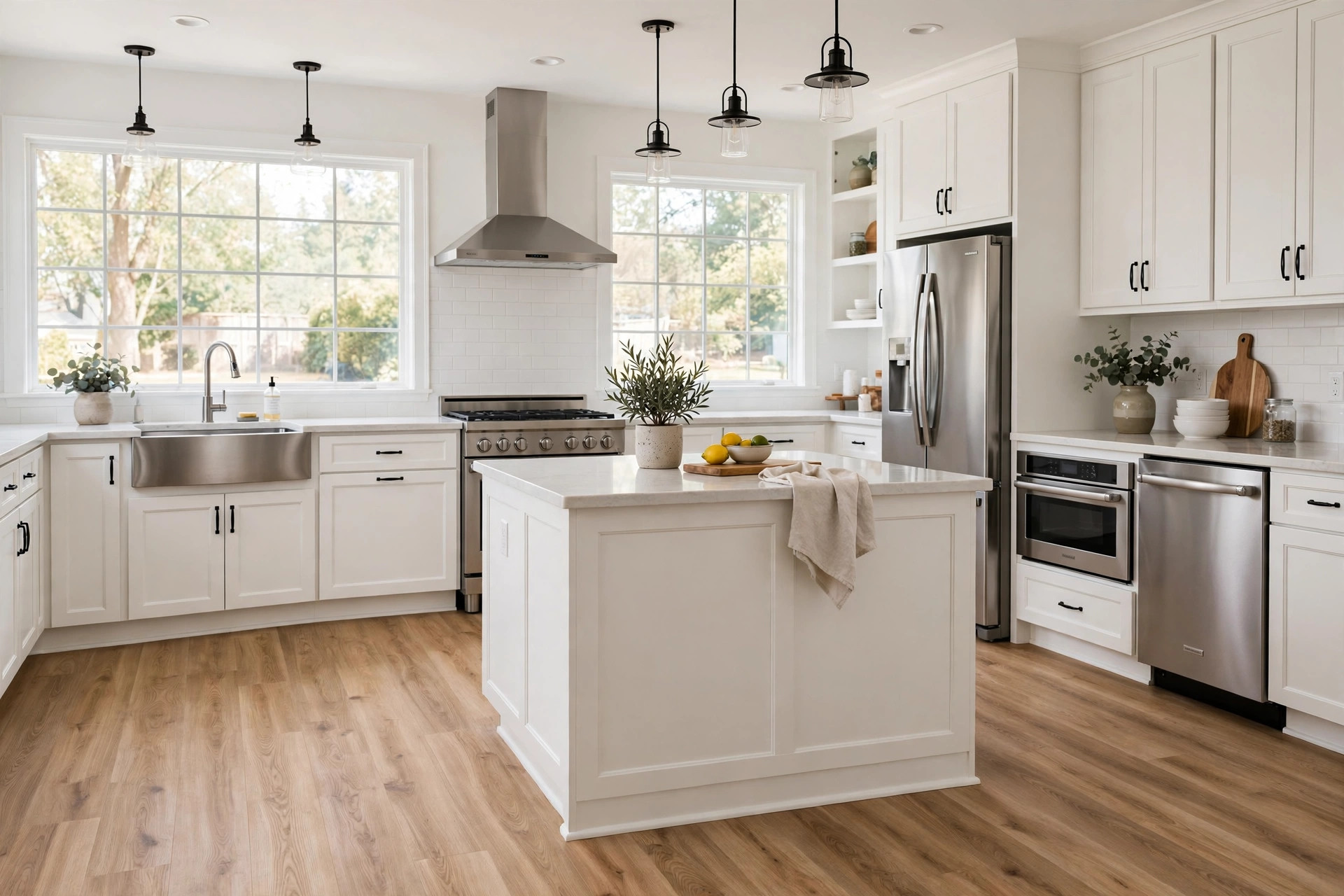
When people search for vinyl plank flooring deals near me, they want one thing: a good floor for a fair price close to home. Vinyl plank flooring has won a wide place in American homes. It looks like wood. It stands up to water. It costs far less than hardwood. This guide will help you find a deal near you, know what to look for, and avoid the traps that turn a bargain into a regret.
Why Vinyl Plank Flooring Matters
A floor takes more wear than any other part of a house. Shoes, pets, chairs, and spilled water all test it daily. For years the choice was simple and dear: hardwood looked fine but cost a lot, and cheap floors wore out fast.
Vinyl plank flooring changed that trade. It is made in long planks that lock together. The top layer shows a print of wood grain. A clear wear layer on top guards against scuffs. The core is waterproof, so kitchen spills and wet boots do less harm. Prices run well below real hardwood and even below many laminates.
That is why the search for vinyl plank flooring deals near me is so common. A small drop in price per square foot adds up fast. On a 500 square foot room, fifty cents a foot saved is 250 dollars back in your pocket.
What to Look For When You Buy: Vinyl Plank Flooring Deals near Me
A low price means little if the floor fails in two years. Learn the few terms that matter.
Wear layer. This is the clear film over the print. It is measured in mils. For most homes, 12 mil is a fair start. Busy rooms with pets do better with 20 mil. Thicker wear layers last longer and cost a little more.
Core type. Most planks use either WPC or SPC cores. WPC feels warmer and softer under foot. SPC is harder and denser, and it handles heat and dents better. Both lock together as floating floors. Either will do for a kitchen or a living room.
Locking system. Click-lock planks fit edge to edge without glue. This makes the work faster and lets you fix one plank if it gets hurt. Glue-down planks stay put under heavy use but take more labor to lay.
Attached pad. Some planks come with an underlayment pad already fixed to the back. This saves you a step and softens the sound of footsteps. If the box has no pad, you may need to buy underlayment by the roll.
Warranty. Read it before you pay. Most makers give a home warranty of 10 to 25 years. Watch for the fine print about water damage and sun fading. A brand that stands behind its floor is worth a small extra price.
A Note on “Near Me” Shopping
Local stores often match or beat online prices when you count shipping. Big boxes may list a low web price, then add freight for a full pallet. A local shop may throw in the trim pieces or lend you a cutter. Always compare the total job cost, not just the price on the tag.
Types and Options
Not every vinyl plank is the same. The main groups are simple to grasp.
Thin glue-down planks. These are 2 to 4 millimeters thick. They cost the least and work well in rental units. They need a smooth, clean floor below them, or every bump will show through.
Standard click-lock planks. These run 4 to 6 millimeters thick with a 12 to 20 mil wear layer. They are the most common choice for homes. They float over the old floor and can be laid in a day by a careful do-it-yourselfer.
Rigid core planks. SPC and WPC planks with thick cores sit at the top of the line. They are stiffer, flatter, and more forgiving of small dips in the subfloor. Dealers discount them less often, so a true sale on rigid core stock is worth a look.
Wide plank looks. Wider planks, five inches or more, look like modern hardwood. They cost a bit more per foot but cover a room with fewer seams.
If your remodel runs past the floor, you may also be pricing quartz countertop installation buying guide usa at the same time. Buying flooring and counters from one shop can bring a bundle discount.
Cost and Price
Prices for vinyl plank flooring in the United States tend to run from about two dollars to about seven dollars per square foot for the material alone. Cheap glue-down stock starts near the low end. Thick rigid core planks with a 20 mil wear layer sit at the high end.
Labor adds more. Professional laying often costs two to five dollars per square foot, depending on your town and the state of the old floor. If you lay the floor yourself, you save that whole cost. Click-lock floors are among the easiest floors a homeowner can lay.
Do not forget the extras. You will need trim or quarter-round at the walls, transition strips at doors, and perhaps underlayment. These small parts can add a dollar or more per foot to the total. A deal that looks cheap on the planks alone may not be cheap once the extras are counted.
Where to Find Vinyl Plank Flooring Deals Near Me
Here is where the search turns practical. Deals hide in the same places in most towns.
Big home improvement stores. National chains run sales on flooring around holiday weekends. You can check stock at Home Depot or Lowes online and pick up at your local store. Watch the clearance rack at the back of the flooring aisle. Boxes with torn labels often sell for half price.
Local flooring shops. Independent dealers buy in truckloads and need to move stock. They will often cut the price on a full-room order, especially at the end of a month. They also carry overstock from past jobs at deep discounts.
Remodeling advice sites. Reading a brand test or a Bob Vila guide can tell you which planks hold up best before you hunt for their price.
Closeout and overstock outlets. Some towns have outlets that sell the last boxes of a color line. The price can drop by half. The risk is simple: you cannot buy more later if you run short. Measure twice and buy ten percent extra.
Seasonal sales. Flooring goes on sale in late winter and around Labor Day. Contractors slow down in the cold months, and stores cut prices to keep stock moving. If your project can wait a month, it can pay to wait.
Factory seconds and mis-tints. A box marked as a second may have a print flaw on one or two planks. For a basement or a laundry room, that hardly matters, and the discount can be steep.
Product research. Before you buy, look up the maker’s site. Whirlpool is not a floor maker, but appliance and home brands like GE Appliances show how large makers list their dealers, a trick you can copy for flooring brands too.
Energy and home guides. Energy Star covers home upgrades, and This Old House walks through remodel steps that pair well with a floor project.
Independent testing. Consumer Reports and The Spruce publish flooring comparisons that can steer you to brands worth hunting for on sale.
When you call a store, ask three questions. What is the price per box and per square foot? Does that price include the pad and trim? Is there a contractor or bulk rate if I buy the whole job at once? Write the answers down. Deals found by phone are often better than deals found online.
Care and Upkeep
Vinyl plank floors ask for little care, but they are not made of iron.
Sweep or vacuum often. Grit is the main enemy. A small stone dragged under a shoe can cut the wear layer.
Mop with a damp mop and a mild cleaner. Do not flood the floor. The planks are waterproof, but the seams are not perfect. Standing water can find its way under the edge.
Put felt pads under chair and table legs. Lift heavy furniture instead of dragging it. A fridge on a dolly can dent even a thick plank.
Keep the room at a steady temperature. Vinyl moves a little with heat and cold. A room that swings from hot to cold can make the seams open.
Sunlight can fade the print over time. In a bright room, close the blinds at midday or lay an area rug where the sun lands. This step also warms up the look of the floor.
Safety
Vinyl plank flooring is safe for most homes when you buy from a known maker.
Check for low VOC labels. New floors give off a mild smell at first. Air the room for a day or two after laying. People with sharp chemical senses should ask the store about low-emission lines.
Wet floors are slick floors. The floor itself may be rated slip-resistant, but water on top of it still slips. Use a bath mat at doors where wet feet come in.
Heavy boxes can off-gas in a hot garage. Store your planks flat in the room where they will be laid for two days before you start. This lets them adjust to the room and cuts the chance of gaps later.
FAQ
How much does vinyl plank flooring cost per square foot? Most stock runs two to seven dollars per square foot for the planks alone. Thin glue-down stock is cheapest. Thick rigid core stock with a heavy wear layer costs the most. Labor adds two to five dollars more if you hire the work out.
Is vinyl plank flooring truly waterproof? The planks themselves do not soak up water. That is why they suit kitchens and baths. But water can still slip down through the seams and sit on the subfloor. Wipe up spills soon, and do not leave standing water for hours.
Can I lay vinyl plank flooring over old tile or wood? In most cases, yes. Click-lock planks float over a flat old floor. The old floor must be flat, dry, and firm. Deep grout lines or loose tiles should be fixed or covered first. Always check the maker’s rules before you start.
How long does vinyl plank flooring last? A good floor with a 12 mil wear layer can last 10 to 15 years in a home. A 20 mil floor in normal use can reach 20 years. Sun, grit, and dragging furniture shorten any floor’s life.
What is the difference between WPC and SPC vinyl plank? WPC has a wood-plastic core that feels softer and warmer. SPC has a stone-plastic core that is harder and more dent-proof. WPC is kind to bare feet. SPC is kind to heavy furniture. Both are fine for most rooms.
How do I find real deals near me instead of fake sales? Call three local stores and ask for the out-the-door price per square foot with pad and trim. Compare that with the big chain price. End-of-month stock, torn-box clearance, and holiday sales are where the true cuts live.
A Final Word
The search for vinyl plank flooring deals near me ends well when you do a little homework first. Know your wear layer. Know your core type. Count the trim and the pad in the price. Then call around, check the clearance racks, and ask for the bulk rate. A floor that looks like wood, shrugs off water, and costs half of hardwood is already a deal. A true local discount on top of that is money you keep.
If your kitchen project is bigger than the floor, pair this guide with a vinyl plank flooring buying guide usa for brand picks, or browse a kitchen backsplash tiles buying guide usa while the floor is on your mind.
References
Bob Vila. (n.d.). Home improvement advice. https://www.bobvila.com Consumer Reports. (n.d.). Product reviews and ratings. https://www.consumerreports.org ENERGY STAR. (n.d.). Energy efficient products. https://www.energystar.gov GE Appliances. (n.d.). Kitchen and home appliances. https://www.geappliances.com Lowe’s. (n.d.). Home improvement products. https://www.lowes.com The Home Depot. (n.d.). Home improvement products. https://www.homedepot.com The Spruce. (n.d.). Home and garden advice. https://www.thespruce.com This Old House. (n.d.). Home renovation guidance. https://www.thisoldhouse.com Whirlpool. (n.d.). Home appliances. https://www.whirlpool.com
Was this guide helpful?

About Michael Thompson
The My Garden US editorial team writes practical, in-depth home and garden guides for American homeowners — tested advice, no fluff.