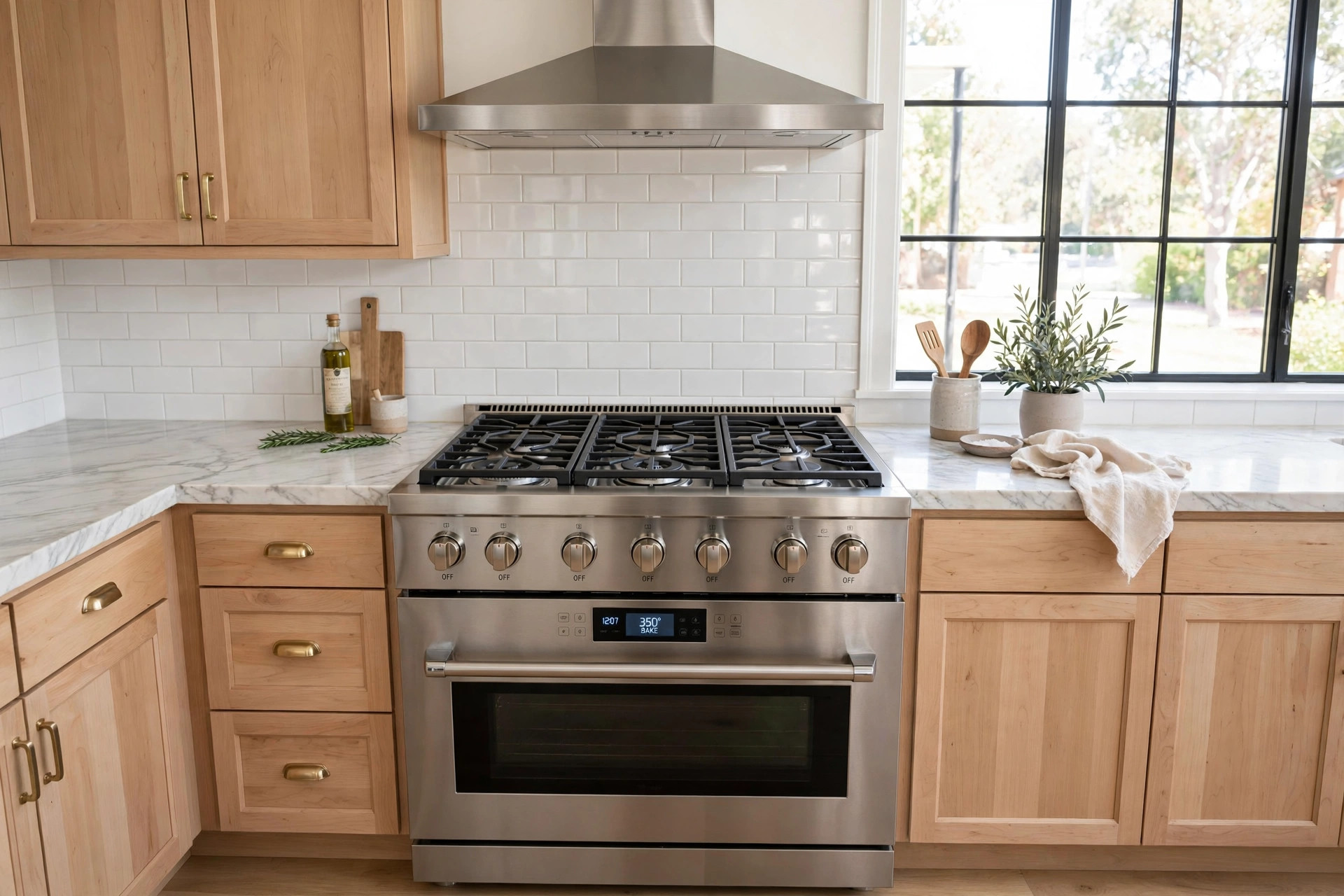

A good range sits at the heart of the kitchen. It cooks breakfast, lunch, and dinner every day for years. Many cooks now ask about dual fuel ranges where to buy usa stores can be trusted. They want the speed of gas on top and the even heat of electric in the oven. This guide walks through the whole subject in plain words. It covers what a dual fuel range is, why cooks like them, what to check before you buy, and where to find them across the United States.
Why Dual Fuel Ranges Are Worth the Money
A dual fuel range gives you the best of two worlds. The cooktop runs on gas. The oven runs on electricity. Gas burners answer at once. You turn the knob and the flame is there. You can see it and judge it. A low flame simmers a sauce without burning it. A high flame boils water fast.
The electric oven is a different story. It heats in a steady way. Hot spots are rare. Cookies bake to the same brown from edge to edge. Cakes rise even. Bread gets a firm crust. Many bakers say an electric oven is easier to trust than a gas one. When both parts sit in one machine, you get quick stove control and steady oven heat.
A dual fuel range also looks strong in a kitchen. Most models come in stainless steel. They give the kitchen a serious, professional feel. For cooks who spend real time at the stove, that matters. If you are still comparing models, our dual fuel ranges buying guide walks through the details side by side.
What a Dual Fuel Range Actually Is: Dual Fuel Ranges Where to Buy Usa
The name tells the story. Two fuels feed one appliance. Natural gas or propane feeds the burners on top. Standard household electric current feeds the oven below. This split design has been around for decades. It became popular when home bakers learned that electric ovens bake more evenly than gas ovens.
The gas cooktop works like any gas stove. Open flame heats pots and pans. The electric oven uses heating elements, often top and bottom. Many newer models add a fan for convection. The fan moves hot air around the food. This cuts bake time and evens out results.
To run one, your kitchen needs both a gas line and a strong electric circuit. The oven circuit is usually 220 volts. This is the same kind of outlet an electric dryer uses. If your kitchen lacks one of these hookups, you will need an electrician or a gas fitter before the range can go in. That cost should be part of your plan from the start.
What to Look for Before You Buy
Buying a large appliance is a slow job. A few checks up front will save trouble later. Take your time with each point below.
Measure Your Space
Ranges come in set widths. The most common is 30 inches. Larger kitchens may fit 36, 48, or even 60 inch models. Measure the opening where the range will sit. Measure twice. Write the numbers down. Also measure the doorways the range must pass through on delivery day. A range that cannot fit through the door is a bad surprise.
Count the Burners
A standard 30 inch model has four or five burners. Wider models can have six or eight. Think about how you cook. A cook who makes big family meals may want more burners. A sealed burner is easy to wipe clean. An open burner gives a stronger flame. Some models add a center oval burner for a griddle. Pick what fits your real habits.
Study the Oven
Look at oven size in cubic feet. Most home models offer between 4 and 6 cubic feet. Check the number of racks and how they slide. Some ovens use high heat to burn off spills. Others use steam for a lighter clean. Both work. High heat cleaning takes longer but needs no scrubbing.
Check the Controls
Knobs are simple and last long. Digital panels look modern and allow exact temperatures. Some models mix both. Think about who will use the range. Simple controls suit every hand in the house.
Compare Warranties
Most brands give one year of full coverage. Some give longer coverage on parts. Read the warranty card before you pay. A clear warranty from a known maker is worth more than a vague promise from a stranger. Review sites like Consumer Reports test ranges and report how brands hold up over time.
Types and Options
Dual fuel ranges come in a few main styles. Each suits a different kitchen and budget.
Slide-in models fit between cabinets. The controls sit on the front. The back has no raised panel. This gives a built-in look for less money.
Freestanding models have a back panel with the controls. They can stand alone or sit between cabinets. They are often the lowest price choice.
Professional-style models are wide and heavy. They look like restaurant equipment. They often have high-BTU burners and big ovens. They cost more but please serious cooks. For a look at pure gas options too, see our gas kitchen ranges buying guide.
Compact models suit small kitchens and apartments. They are narrower than 30 inches. Choices are fewer, but they exist.
Fuel choice matters as well. Most homes use natural gas from a city line. Homes far from city lines use propane from a tank. Many dual fuel ranges can run on either fuel with a change of parts. Ask the seller which fuel the model is set up for. The change should be done by a trained worker, not by hand at home.
Where to Buy Dual Fuel Ranges in the USA
Now to the main question. Where can an American shopper buy a dual fuel range with confidence? The answer depends on how you like to shop.
Big Home Improvement Stores
Lowe’s and Home Depot carry many major brands. You can walk in, open the oven door, and turn the knobs. Floor models let you feel the weight of the racks. Store staff can answer basic questions. Both chains deliver to most of the country. They also haul away the old range for a fee. Prices are clear and sales run often, especially on holiday weekends.
Appliance Specialty Stores
Local appliance stores often give better advice than big chains. The staff sell appliances all day. They know which models come back for service and which do not. Many offer their own delivery and install crews. Prices may be a touch higher, but the service can be worth it. Ask neighbors for the names of shops they trust.
Department and Membership Stores
Some shoppers find good prices at membership clubs and large department stores. Stock is smaller, but the deals can be sharp. Check what delivery and install services come with the price before you decide.
Direct From the Maker
Many brands sell straight from their own websites. GE Appliances and Whirlpool both run online stores with full model lines. Buying direct gives you the full range of colors and options. Delivery times can be longer than store stock. Read the delivery terms with care.
Online Marketplaces
Online shopping gives the widest choice. You can compare ten models in an hour. Read buyer reviews, but read them with a cool head. One angry review means little. A pattern of the same complaint means much. Check the return policy and who handles warranty claims. A low price means less if the seller will not stand behind the machine.
If you want to scan current listings fast, our dual fuel ranges for sale roundup points to places shoppers check first.
No matter where you buy, ask three questions before you pay. What does delivery cost? Who installs the range and connects the gas? What happens if the range arrives damaged? Honest answers to these three questions mark a seller you can trust.
Cost and Price
A dual fuel range costs more than a plain gas or electric range. Two fuel systems in one box cost more to build. Expect entry models to start near one thousand dollars. Mid-range models run from two to four thousand. Professional-style models can pass five thousand and climb higher.
The price on the tag is not the whole cost. Add delivery, often fifty to two hundred dollars. Add installation, which can run a few hundred more if gas and electric work is needed. If your kitchen needs a new 220 volt line, an electrician may charge several hundred dollars. If you need a new gas line, a gas fitter charges for that too. Ask for these numbers before you buy the range itself.
Sales help. The best sale times in the United States are holiday weekends. Memorial Day, Labor Day, and Black Friday bring deep cuts on appliances. New models arrive in the fall, so late summer can bring deals on last year’s stock. Open-box and floor models sell for less and often carry the full warranty. Running costs differ by town, and ENERGY STAR offers plain facts about appliance energy use that help you judge long-term cost.
Delivery, Installation, and Hookups
A range is heavy and it burns gas. Treat delivery day with care. Clear a path from the door to the kitchen. Move rugs and small tables out of the way. Keep pets in another room.
A trained installer should make the gas connection. Gas leaks are no small matter. The installer will test every joint with a leak check. The electric hookup needs the right outlet and breaker size. Do not use extension cords or adapters. They are unsafe with large appliances.
After install, the crew should level the range and test every burner and the oven before they leave. Watch them do it. If your town requires a permit for gas work, get one. The cost is small and the paper trail protects you. This Old House has plain guides on how home gas and appliance work should be done right.
Care and Upkeep
A dual fuel range will serve for fifteen years or more with basic care. Wipe spills on the cooktop before they bake on. Lift off grates and wash them in hot soapy water. Do not pour cold water on a hot burner. The shock can crack parts.
Clean the oven as the maker directs. If it has a self-clean mode, run it when the oven is only mildly dirty. Heavy grease makes more smoke. Wipe the door seal gently. A torn seal lets heat escape and wastes energy. Sites like Bob Vila keep simple upkeep checklists that help you stay on schedule.
Safety
Gas appliances demand respect. A few firm rules keep the house safe.
Never use the oven to heat the room. It is not a heater. The oven makes carbon monoxide, which you cannot see or smell. Long oven use with the door open is unsafe.
Keep flammable things away from the cooktop. Paper towels, curtains, and wooden spoons do not belong near open flame. Turn pot handles inward so they do not catch on sleeves.
Teach children that the range is not a toy. Use back burners for pots when small children are near. Many ranges have a control lock. Learn how yours works and use it.
Install a carbon monoxide detector in the home if you do not have one. Test it each month. Change its battery each year. A working detector is cheap life insurance.
Frequently Asked Questions
Do I need both gas and electricity for a dual fuel range?
Yes. The cooktop needs a gas line, either natural gas or propane. The oven needs a 220 volt electric circuit. Both must be in place before the range can work. A licensed worker should make both connections.
Are dual fuel ranges better than all-gas ranges?
It depends on what you cook. The gas cooktop acts the same in both. The difference is the oven. Electric ovens heat more evenly than gas ovens. If you bake bread, cakes, or cookies often, you will likely notice the difference. If you rarely use the oven, an all-gas range may serve you fine for less money.
How long does a dual fuel range last?
Most last fifteen to twenty years with normal care. Heavy daily use may shorten that span a little. Light use may stretch it. Good brands with strong service networks tend to last longer because parts stay available.
Can I convert my current range to dual fuel?
No. A range is built for its fuel type at the factory. You cannot safely turn an all-gas range into a dual fuel model. Buy the right machine from the start. This is one reason the buying choice deserves care.
What size dual fuel range do most American kitchens fit?
Thirty inches is the standard width in most American homes. It fits the common cabinet opening. Larger kitchens may take 36 inch models. Measure your opening before you shop. Do not trust memory. The Spruce has measuring guides that walk through the steps.
Is installation really that hard?
The range itself slides into place with ease. The hard part is the hookups. Gas lines and 220 volt circuits are jobs for licensed workers. Most sellers offer install service for a fee. Take it. The fee buys safety and peace of mind. Bosch Home and other makers list install needs in their product guides so you can plan ahead.
A Final Word
A dual fuel range is a big buy, but it is a simple one when you break it down. Gas on top for quick control. Electric below for even baking. Measure your space. Pick the size and features that fit your cooking. Buy from a seller who answers hard questions with straight words. Plan for delivery and safe install. Then cook with joy for years. The right range does not just heat food. It makes the kitchen the warm center of the home again.
References
Bob Vila. (n.d.). Home improvement advice. https://www.bobvila.com Bosch. (n.d.). Home appliances. https://www.bosch-home.com Consumer Reports. (n.d.). Product reviews and ratings. https://www.consumerreports.org ENERGY STAR. (n.d.). Energy efficient products. https://www.energystar.gov GE Appliances. (n.d.). Kitchen and home appliances. https://www.geappliances.com Lowe’s. (n.d.). Home improvement products. https://www.lowes.com The Spruce. (n.d.). Home and garden advice. https://www.thespruce.com This Old House. (n.d.). Home renovation guidance. https://www.thisoldhouse.com Whirlpool. (n.d.). Home appliances. https://www.whirlpool.com
Was this guide helpful?

About Sarah Mitchell
The My Garden US editorial team writes practical, in-depth home and garden guides for American homeowners — tested advice, no fluff.
You May Also Like
A Plain Guide to Under Sink Filters for Sale USA
June 28, 2026 0 views
Butcher Block Countertops: Where to Buy in the USA
August 25, 2026 0 views
Double Wall Ovens for Florida Homes USA: A Plain Buyer’s Guide
May 19, 2026 0 views