
When autumn arrives and the swimming season comes to an end, every inground pool owner faces the same task. The pool must be closed for winter. A good cover sits at the center of that job. Choosing the best pool winter cover for inground use is not about brand names or bright labels. It is about fit, material, and the kind of winter your region gets. This guide walks through all of it in plain terms.
An inground pool holds a great deal of water. Without a cover, leaves, snow, ice, and debris will settle into that water for months. By spring, the pool can look more like a pond. A strong winter cover stops most of that damage before it starts. It keeps the water cleaner, guards the liner and the shell, and helps the pump and filter last longer. It also plays a role in safety, which we will cover later.
Why a Winter Cover Matters
A winter cover does more work than many pool owners expect. First, it blocks sunlight. Sunlight feeds algae. When the cover shuts out the light, algae grows far more slowly through the winter months. That means less work when you open the pool in spring.
Second, it keeps debris out. Leaves and twigs carry tannins and acids. These stain liners and vinyl. A cover keeps most of that matter from ever touching the water. The pool water stays clearer, and the liner keeps its color.
Third, it guards against ice damage. In cold regions, ice can push against tile lines, coping stones, and skimmer mouths. A cover does not remove ice risk on its own, but proper winterizing with a cover helps the water level and chemistry stay steady, which lowers the strain on the pool structure.
Fourth, it cuts water loss. Wind moves across an open pool and lifts water away all winter. A cover slows that loss. You will have less to refill in spring, and the chemical balance will not drift as far.
Finally, a good cover gives peace of mind. During long winter months, you may not check the pool often. Knowing it sits under a strong cover lets you rest easier. Retail guides such as those at The Home Depot point out the same basic value: a cover protects the whole investment, not just the water.
What to Look For When You Shop: Best Pool Winter Cover for Inground
Size and Fit
Start with the pool shape. Inground pools come in many forms. Rectangles are the most common. Many yards also have kidney shapes, ovals, and freeform designs. A cover must match the shape or at least overlap it well.
Most standard winter covers come in set sizes for common pool shapes. Measure the pool from inside wall to inside wall. Then add the extra inches the maker suggests for overlap. Covers need a few feet of extra material on each side so they can be anchored past the coping. A cover that barely reaches the edge will shift in wind and let debris slip under.
For odd shapes, you may need a custom cover. It costs more, but it pays off. A custom mesh or solid cover cut to your pool’s lines will sit snug all winter.
Material Strength
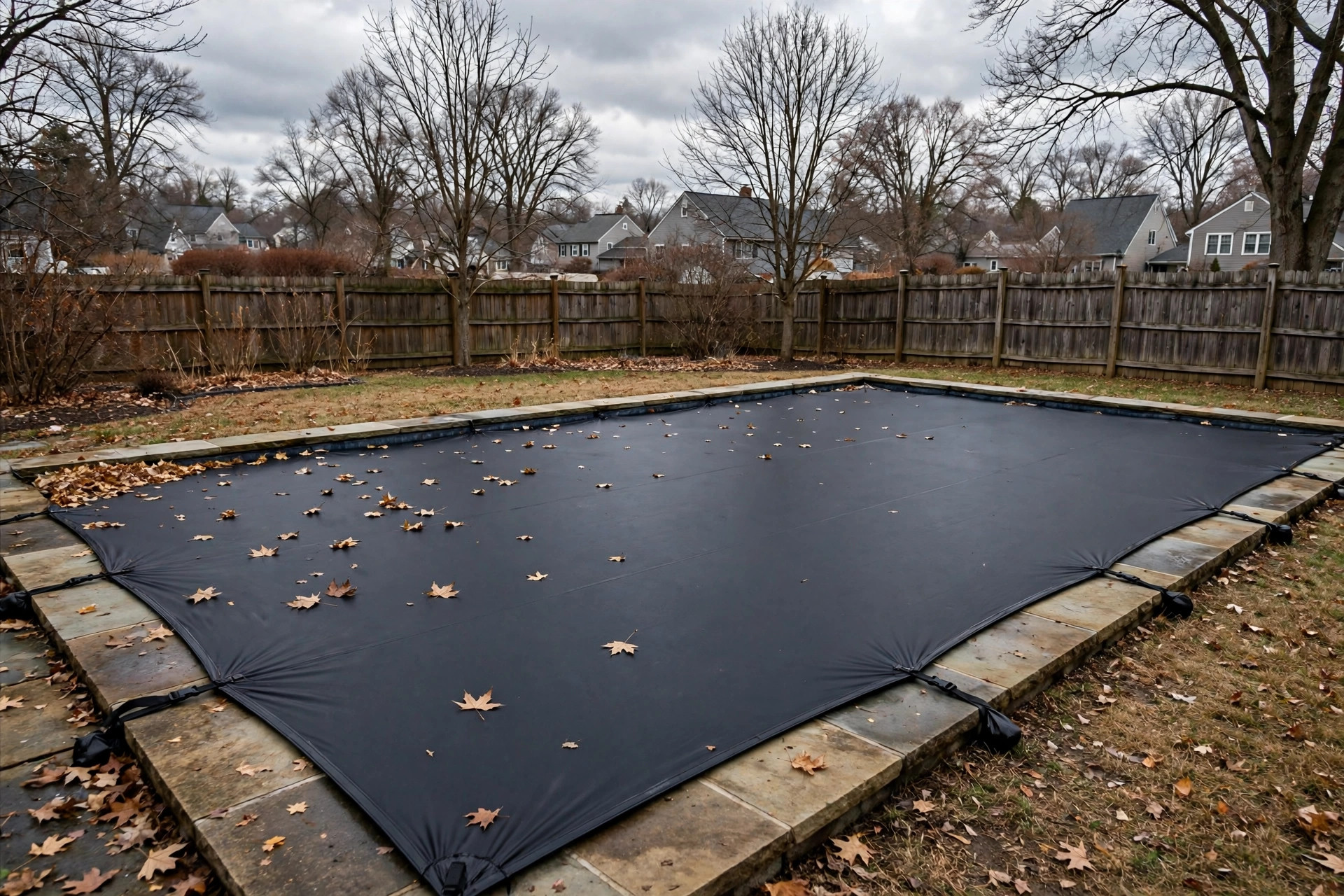
The best covers use heavy woven polyethylene or reinforced vinyl. These fabrics resist tears and hold up under snow load. Cheap thin covers may last one season. A quality cover can last three to eight seasons with care.
Look at the scrim count or weave density when it is listed. A tighter weave means a stronger cover. Seams should be heat sealed or double stitched. Grommets around the edge should be metal, not plastic, and they should sit in reinforced hems.
Mesh Versus Solid
Mesh covers let rain and melting snow pass through into the pool. The fine weave keeps leaves and debris on top. This type works well in regions with heavy rain or snow, because water does not pool on the cover itself. You will not need a cover pump as often.
Solid covers block all light and keep water and debris out. They protect against algae better than mesh. But they need a cover pump to remove standing water. Without one, a solid cover can sag and sink under rain.
Safety covers can be either mesh or solid. They anchor into the pool deck with straps and springs. They sit tight and flat. These are the strongest option and the safest, though they cost more. If you want a pool cover for safety around kids, a safety cover is the right class to shop.
Water Tubes and Anchoring
Standard covers use water tubes around the edge to hold the cover in place. The tubes sit on the cover skirt past the coping. Fill them about two thirds full so they do not burst when they freeze. Check them through winter. Leaking tubes let the cover drift.
Some covers use cable and winch systems instead. These work with round or oval pools. Safety covers use brass anchors set into the deck. Each system has its fans. What matters most is that the cover stays put in wind. Experts at Swim University note that wind damage is one of the top causes of short cover life.
Types of Winter Covers
Standard solid winter covers. These are the most common. They drape over the pool and rest on the water. Water tubes or weights hold the edges down. They are the least costly option. They do a fine job in mild winters and for owners who check the pool through the season.
Mesh winter covers. These allow water through while catching debris. They dry faster in spring because no pump is needed. Many owners in snowy regions like them because snowmelt passes through instead of loading the cover. They let a small amount of light in, so algae control takes a bit more care.
Safety covers. These anchor into the deck with springs and straps. They meet strict standards for strength. A person or pet can walk on many of them without falling in. They cost the most, but they last the longest and give the best protection. The U.S. Consumer Product Safety Commission publishes pool safety pages that stress strong barriers as a key layer of protection.
Automatic covers. These roll on tracks and close at the push of a button. Some serve as both winter covers and daily covers. They are a big investment and need pro installation. Most owners who already have one use it through winter with small extra steps.
Cost and Price
Prices run wide. A basic solid cover for a standard rectangle pool may cost under two hundred dollars. A quality mesh cover may run from three hundred to six hundred dollars. A safety cover often costs from eight hundred to two thousand dollars or more, and custom shapes add to that.
Think of the cover as part of the cost of winterizing an inground pool. Water tubes, a cover pump, winterizing chemicals, and perhaps a pro closing service all add up. The cover is still one of the cheapest ways to guard a pool worth tens of thousands of dollars.
Do not buy on price alone. A cheap cover that tears in its first storm will cost you twice. Read the warranty. Good covers carry warranties of several years. Check what the warranty covers. Many cover only maker defects, not storm damage. Still, a strong warranty signals that the maker trusts its fabric.
You can compare prices across pool supply stores. Sites like Pool Warehouse and Leslie’s Pool list many cover sizes and types, which helps you see the normal price range for your pool shape.
Care and Upkeep Through Winter
A cover needs some care after you put it on. Set a habit of checking it once a month.
First, clear heavy debris from the top. Use a leaf rake or a soft broom. Do not use sharp tools. Leaves left on a mesh cover will break down and push fine matter through the weave.
Second, pump standing water off solid covers. A small cover pump does this job in minutes. Standing water breeds mosquitoes in mild climates and adds heavy load in cold ones. Do not let more than a few inches sit there.
Third, check water tubes. Fill any that leak and replace any that split. A drifting cover invites wind under the edge, and wind is rough on fabric.
Fourth, watch the pool water level. On mesh covers, water passes through, so the level stays fairly steady. On solid covers, keep the level a few inches below the skimmer, as it was at closing.
Fifth, after big storms, take a look. Heavy snow can be swept off with a soft broom. Do not chop at ice with a pick. Let ice melt on its own. Guides at The Spruce give the same advice for winter yard gear in general: gentle handling extends fabric life.
In spring, clean the cover before you store it. Hose it down and let it dry fully. Fold it loosely and keep it in a cool, dry place. A clean, dry cover stores well and opens flat next autumn. When you open the pool, check the skimmer and filter too. A worn skimmer basket is easy to replace, and a fresh skimmer basket replacement helps the filter catch spring debris.
Safety Considerations
A winter cover is not a safety device unless it is made and installed as one. Standard covers that rest on the water cannot hold the weight of a child or pet. They can look like a solid surface, which makes them dangerous. A child who steps onto a standard cover can slip under it and become trapped.
If safety is a concern, buy a real safety cover. It must anchor into the deck and meet safety standards. Even then, keep the yard gated and locked. The cover is one layer of protection, not the whole plan. For hot tub owners, makers such as Hot Spring and Bullfrog Spas stress the same layered approach: covers plus locks plus supervision.
Teach children that pool covers are never for play. Never let anyone walk on a standard or mesh winter cover. Remove ladders and diving boards at closing time so the pool area looks less inviting. These simple steps matter more than any fabric.
Frequently Asked Questions
How do I know which cover size to buy for my inground pool? Measure the pool from inside wall to inside wall at its longest and widest points. Then check the maker’s sizing chart. Most standard covers add several feet for overlap. When in doubt, size up. A little extra fabric is far better than a cover that will not reach the anchors.
Should I pick a mesh or solid winter cover? Pick mesh if your area gets heavy rain or snow. Water passes through, so you will not need to pump the cover. Pick solid if algae is your main worry and you are willing to pump off standing water. Solid covers block all light, which keeps spring algae growth low.
How long should a winter cover last? A quality cover lasts three to eight years with decent care. Standard thin covers may last only one or two seasons. Safety covers often last the longest. Store the cover clean and dry each spring to get the most years from it.
Do I need a cover pump with my winter cover? If you use a solid cover, yes. Standing rain will collect on top and pull the cover down. A small automatic pump clears it with no effort. Mesh covers and safety covers that drain through do not need a pump.
Can I install a winter cover myself? Most standard covers go on fine with two adults. Lay it over the pool, center it, and set the water tubes around the edge. Safety covers need more care. The anchors must sit in the deck at the right points. Many owners hire a pro for the first install and handle the yearly closing themselves after that.
What other covers are worth knowing about? If you also use a solar cover in summer, a pool cover reel for a solar cover makes handling far easier. Solar covers are light and save heat, but they are not winter covers. Do not leave a solar cover on as your winter plan.
A Final Word
The best pool winter cover for inground pools is the one that fits your pool, suits your climate, and stays in place all season. Measure with care. Pick the right type for your weather. Anchor it well. Check it through the winter. Do these simple things, and spring opening will be quick, clean, and far less costly.
A pool is a large investment. A winter cover is a small price for keeping it sound. Take the time to choose well, and your pool will thank you with years of clear water and easy seasons.
References
Bullfrog Spas. (n.d.). Hot tubs and spas. https://www.bullfrogspas.com Hot Spring Spas. (n.d.). Hot tubs and spas. https://www.hotspring.com Leslie’s Pool Supplies. (n.d.). Pool supplies and equipment. https://www.lesliespool.com Pool Warehouse. (n.d.). Pool equipment and supplies. https://www.poolwarehouse.com Swim University. (n.d.). Pool and hot tub care guides. https://www.swimuniversity.com The Home Depot. (n.d.). Home improvement products. https://www.homedepot.com The Spruce. (n.d.). Home and garden advice. https://www.thespruce.com U.S. Consumer Product Safety Commission. (n.d.). Product safety information. https://www.cpsc.gov
Was this guide helpful?

About Jennifer Lee
The My Garden US editorial team writes practical, in-depth home and garden guides for American homeowners — tested advice, no fluff.
You May Also Like
Pool Opening Checklist for Spring Season: A Step-by-Step Guide for Homeowners
April 12, 2026 0 views
Best Pool Thermometer Floating Reviews: A Plain Buyer’s Guide
February 8, 2026 0 views
How to Shock Pool After Rainstorm: A Clear Guide to Safe Water
August 28, 2026 0 views