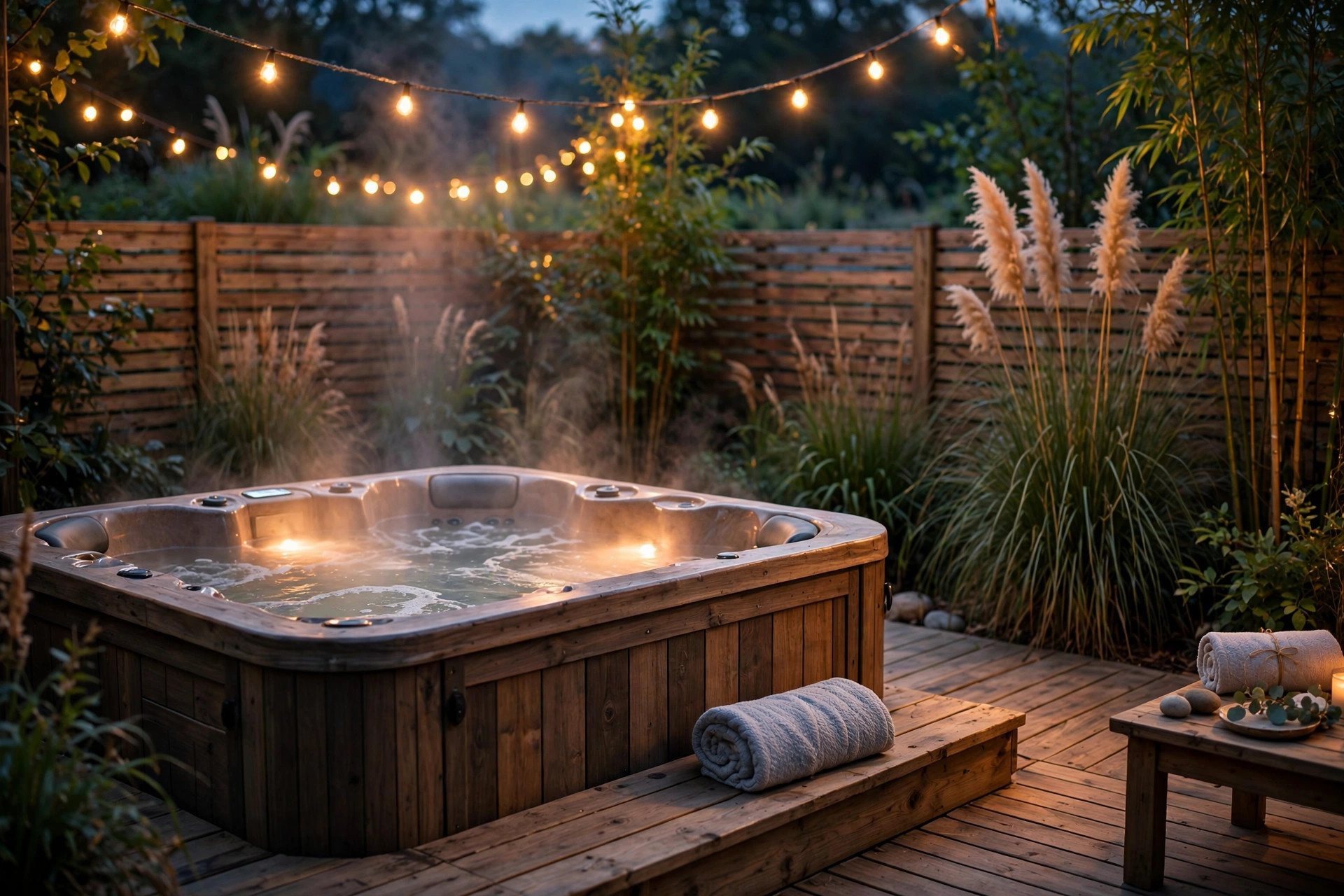

A backyard can become a place of rest. A warm tub under the stars can do what few things do. It slows the day down. When a couple wants the best hot tub for couples retreat, they are not just buying a tub. They are buying time together. They are buying a small escape that sits steps from the back door.
Many buyers feel lost at first. There are small tubs and large tubs. There are cheap tubs and costly tubs. There are tubs with strong jets and tubs with soft bubbles. This guide keeps things simple. It explains what matters, what to look for, what it costs, and how to stay safe. Read it once, and you will shop with a clear mind.
Why a Couples Hot Tub Matters
A hot tub for two is different from a tub for a crowd. A large party tub needs room for six or eight people. A couples tub needs room for two people to sit close and rest. The seats matter more. The jets matter more. The noise level matters more. Two people do not need a loud machine. They need calm water and warm heat.
Warm water eases tired muscles. Many couples use the tub after work. A half hour in warm water can take the edge off a long day. Doctors often note that warm water helps joints feel loose. It is not a cure for anything. But it feels good, and rest is part of good health.
A retreat is also about privacy. A small tub fits in a corner of the deck. A privacy screen or a fence turns that corner into a hideaway. Couples who want the best hot tub for couples retreat often plan the setting as much as the tub. A few lights, a bench for towels, and a quiet path from the house can make the tub feel like a small hotel spa.
How to Choose the Best Hot Tub for Couples Retreat
Start with size. A two person tub is usually five to six feet across. That is enough for two adults to stretch their legs. Some couples prefer a slightly larger tub with a lounge seat. A lounge seat lets one person lie back with feet up. Two lounge seats are rare in a small tub, so check the seat layout before you buy.
Next, look at the shell. The shell is the hard inner body of the tub. Good shells use layered acrylic. The surface should feel smooth. It should not have thin spots. Sit in the tub at the store if you can. Dry tests do not tell you everything, but they show if the seat fits your back.
Jets are the third point. A couples tub does not need forty jets. It needs the right jets in the right spots. Neck jets ease tight shoulders. Back jets run up the spine. Foot jets ease tired feet. Adjustable jets let each person set the flow they like. Some buyers prefer a hot tub built for cold climates with strong insulation and steady heat, since a couple that soaks in winter needs a tub that holds its temperature.
Pumps and heaters come next. A small tub often has one pump. A larger couples tub may have two. The heater should be strong enough to warm the water back up after the cover comes off. Ask the dealer how long the tub takes to rise from 90 to 104 degrees. A good answer is two to four hours.
Controls should be simple. Look for a panel with large buttons. You will use it with wet hands at night. Simple is better. Some tubs have locks on the panel. A lock keeps children from changing the heat. Read consumer product safety guidelines before you buy so you know the rules for covers and drains.
Types and Options for Two
Plug and play tubs are the simple choice. They plug into a normal 110 volt outlet. No electrician is needed. They heat more slowly than hardwired tubs. For many couples they are enough. They cost less and set up in an afternoon.
Hardwired 220 volt tubs heat faster and hold heat better. They need a licensed electrician. They cost more to install. But they suit couples who soak often or live where winters are cold. If you plan to use the tub all year, the stronger heater pays off.
An inflatable hot tub for couples is the budget path. It sets up with a pump that blows air into the walls. It holds heat less well than a hard shell tub. The jets are air bubbles, not water jets. Some couples love the low cost. Others find it feels weak. It is a fair way to test if you enjoy soaking before you spend more.
Rotomolded tubs sit in the middle. They are made from tough plastic in one piece. They are lighter than acrylic tubs. They cost less. They often seat two to four people. They are a solid pick for a first tub.
Salt water systems are another option. They turn salt into chlorine on their own. The water feels softer. Many owners like the gentle feel on skin. You still must test the water. Salt systems do not remove the need for care.
Seat Styles
– Open seating: No fixed seats. You move where you like. – Molded seats: Shaped seats that hold each person in place. – Lounge seats: A long seat for lying back with feet up. – Bench seats: A flat seat for sitting close together.
Jet Styles
– Water jets: Push warm water in a strong stream. Best for sore backs. – Air jets: Push warm air as soft bubbles. Gentle and quiet. – Combo jets: Mix water and air. Many couples prefer this mix.
Cost and Price Guide
Prices vary by type. The table below gives rough ranges in the United States. Prices change with the market, and dealers add delivery and setup.
– Inflatable hot tub: 400 to 900 dollars. – Rotomolded two person tub: 3,000 to 6,000 dollars. – Acrylic two person tub: 5,000 to 10,000 dollars. – Premium couples spa: 10,000 to 16,000 dollars.
Running costs add up too. Expect 20 to 60 dollars a month for power, depending on your rates and how often you heat the tub. Water and chemicals add 10 to 30 dollars a month. A good hot tub chemicals starter kit keeps the first months simple.
Installation can add 500 to 3,000 dollars. A hardwired tub needs an electrician. All tubs need a flat base. A concrete pad is best. Some owners use a reinforced deck. Check the full weight of the tub with water and two people. It can pass 2,500 pounds. Your deck must hold that weight. Big home improvement retailers sell pads, steps, and covers that fit most small tubs.
Warranties matter. Look for at least three years on the shell and one year on parts. Some brands offer longer cover on the structure. Read the fine print. A warranty that excludes the heater is weak. Compare brands side by side. A maker like Hot Spring has sold spas for decades, and Bullfrog Spas is known for its movable jet packs, which let each seat feel different.
Care and Upkeep
Clean water is safe water. Test the water two or three times a week. Use test strips or a liquid kit. Keep chlorine or bromine at the right level. Keep the pH between 7.2 and 7.8. When the pH drifts, the water can sting eyes or dull the shell.
Shock the water once a week. Shocking burns off oils and lotions. It keeps the water clear. Rinse the filter every two weeks. Soak the filter in cleaner once a month. Change the filter once a year, or as the maker says.
Drain and refill the tub every three to four months. Fresh water is easier to balance. Wipe the shell while the tub is empty. Check the jets for grit. Put the cover back on when you are done. A good cover holds heat and keeps dirt out.
Keep a small kit near the tub. Store test strips, shock, and a floating dispenser in a dry box. Swim University posts simple guides on water balance for spa owners. Leslie’s Pool Supplies and Pool Warehouse sell filters and parts for most brands. The Spruce also has home guides on spa care through the seasons.
Winter care is simple but vital. If you keep the tub running, check the water more often. Cold air steals heat when the cover lifts. If you shut the tub down, drain every drop. Blow the lines clear. A frozen pipe can crack and cost hundreds to fix.
Safety Comes First
Never soak alone if you have a health issue. Talk to your doctor first if you are pregnant or have heart trouble. Keep the water at or below 104 degrees. Hotter water can cause dizziness. Soak for 15 to 20 minutes at a time. Drink water before and after.
Keep the cover locked when the tub is not in use. A locked cover stops children and pets from falling in. Never leave a child near an open tub. Keep glass away from the tub. Use plastic cups. Broken glass in water is hard to find and easy to step on.
Mixing alcohol and hot water is risky. Heat and drink both lower blood pressure. Many couples enjoy a glass of wine by the tub. Keep it light, and drink water too. When you feel dizzy, get out and cool down.
Keep the area around the tub dry and lit. A wet deck is slippery. Add a non slip mat at the steps. A small light by the tub helps at night. Check the ground fault breaker each month. Push the test button. If it does not trip, call an electrician.
Frequently Asked Questions
What size hot tub is best for two people?
A tub that is five to six feet across suits most couples. Look for two deep seats with good back support. Some couples like a tub with one lounge seat and one upright seat. Sit in the model before you buy if the store allows it.
How much does it cost to run a small hot tub?
Most couples spend 20 to 60 dollars a month on power. The cost depends on your local rates, the tub size, and how hot you keep the water. A well insulated tub with a tight cover costs less to run. Chemicals add a small monthly cost on top.
Can a hot tub stay outside all winter?
Yes, if it is made for it. A hardwired tub with full foam insulation can run through winter. Keep the water at your set point and do not let it drop. An inflatable tub will struggle in deep cold. Check the maker specs for the lowest safe outside temperature.
How often should the water be changed?
Change the water every three to four months with normal use. If two people soak daily, change it closer to three months. Fresh water is easier to keep clean. You will use fewer chemicals after a refill.
Is a salt water hot tub better for couples?
Many couples like salt water because it feels soft on the skin. It still uses chlorine, made from salt by a small cell. You still must test and balance the water. The cell adds cost up front and needs replacement every few years.
What is the best spot for a couples hot tub?
Pick a flat spot close to the house. A short walk in a robe matters on cold nights. Add privacy with a fence, screen, or tall plants. Keep the tub away from trees that drop leaves. Leave room on all sides for the service panel.
A Short Final Word
The best hot tub for couples retreat is the one that fits your space, your budget, and your habits. A simple tub that you use three nights a week beats a fancy tub that sits empty. Choose the right size. Pick jets that suit your backs. Keep the water clean. Lock the cover. Then step in, lean back, and let the week wash away.
References
Bullfrog Spas. (n.d.). Hot tubs and spas. https://www.bullfrogspas.com Hot Spring Spas. (n.d.). Hot tubs and spas. https://www.hotspring.com Leslie’s Pool Supplies. (n.d.). Pool supplies and equipment. https://www.lesliespool.com Pool Warehouse. (n.d.). Pool equipment and supplies. https://www.poolwarehouse.com Swim University. (n.d.). Pool and hot tub care guides. https://www.swimuniversity.com The Home Depot. (n.d.). Home improvement products. https://www.homedepot.com The Spruce. (n.d.). Home and garden advice. https://www.thespruce.com U.S. Consumer Product Safety Commission. (n.d.). Product safety information. https://www.cpsc.gov
Was this guide helpful?

About Sarah Mitchell
The My Garden US editorial team writes practical, in-depth home and garden guides for American homeowners — tested advice, no fluff.
You May Also Like
Hot Tub Electrical Requirements for Installation: A Plain Guide
July 19, 2026 1 views
Salt Water Pool Test Kit Reviews: What Works and What Does Not
August 10, 2026 0 views
Best Pool Vacuum Hose for Inground Pools: A Complete Buying Guide
June 27, 2026 0 views