
A salt water pool can be a joy to own. The water feels soft on the skin, and the eyes do not sting as much as they do in a pool with harsh chemicals. Still, salt water pool problems troubleshooting is a skill every owner needs. No system runs free of faults. Pumps slow down, salt cells wear out, and water turns green when the balance slips. This guide explains the most common problems, why they happen, and how to fix them with simple steps.
Why It Matters
A salt water pool is not a chemical-free pool. The salt in the water passes through a salt cell, also called a salt chlorine generator. The cell turns the salt into chlorine, and the chlorine keeps the water clean. When any part of this chain fails, the water can turn unsafe in days.
Troubleshooting early saves money. A worn salt cell caught in time can be cleaned instead of replaced. A pH problem caught early can be fixed with a small dose of acid instead of a large one. Waiting too long turns a small fix into a drain and refill. That is why a simple plan for salt water pool problems troubleshooting belongs in every pool owner’s routine.
How the Salt System Works: Salt Water Pool Problems Troubleshooting
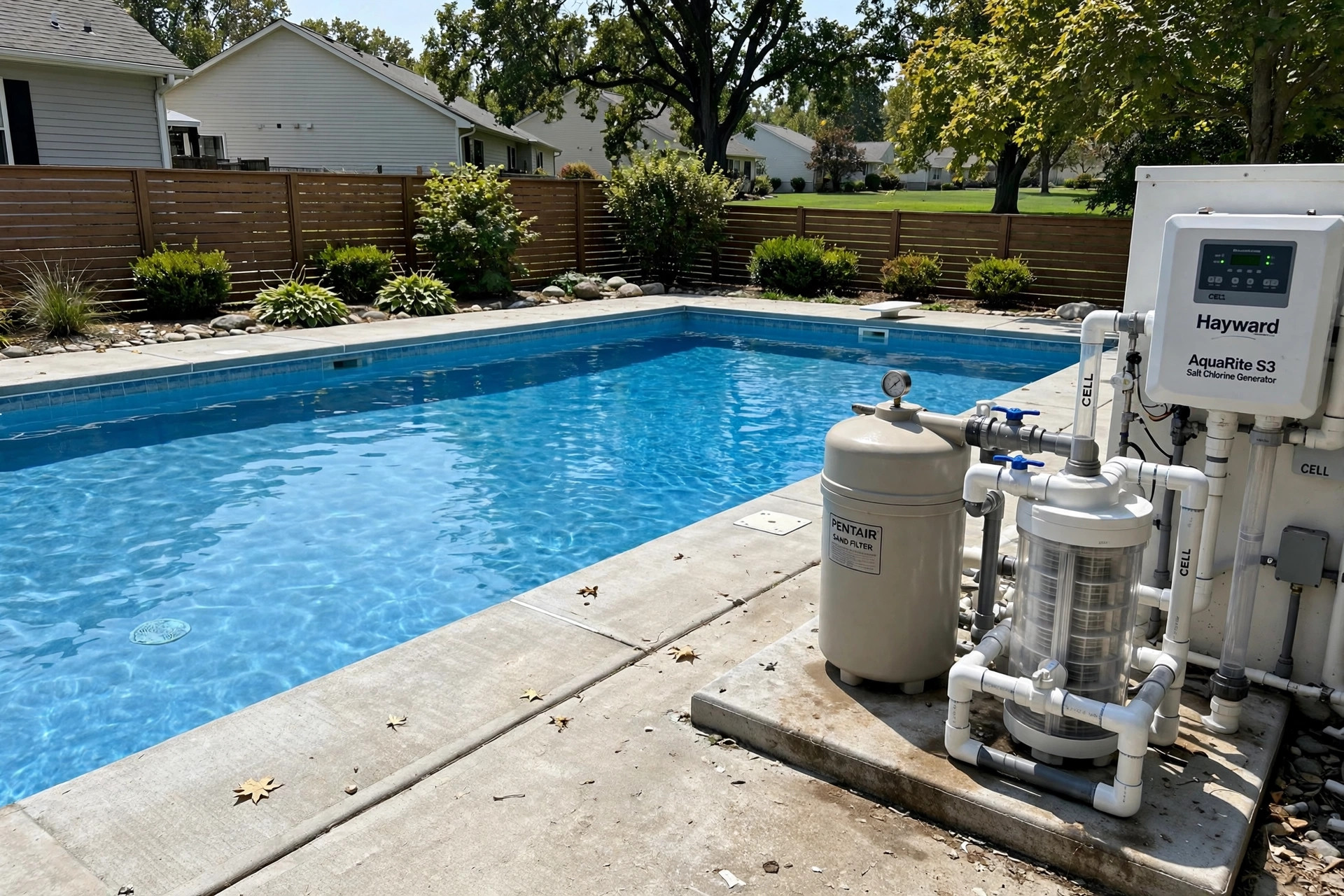
Pool salt dissolves in the water. The pool pump moves the water through the salt cell. Inside the cell, metal plates use a small electric charge to turn salt into chlorine. The chlorine sanitizes the water, then turns back into salt. The loop repeats.
Three parts must all work: the right salt level, a clean working cell, and steady water flow. If one part fails, the other two cannot make up for it. Most problems trace back to one of these three.
Related reading: Salt Water Pool Conversion Cost Guide explains what the system parts cost before you buy.
Common Signs of Trouble
Watch the water and the control box each week. These signs call for action:
– Water turns green, cloudy, or yellow – The control box shows a low salt or check cell light – Chlorine tests read near zero even with the system running – Eyes sting or skin feels itchy after a swim – White crust forms on the salt cell or pool tile – Metal parts near the pool show rust or pitting
Any one of these signs is a reason to test the water and inspect the system.
Green or Cloudy Water
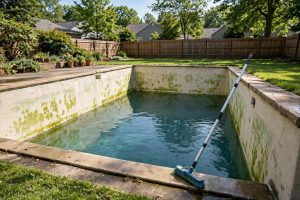
Green or cloudy water is the most common complaint. In a salt water pool, it almost always means the chlorine level fell too low for too long. Algae grew while no one was watching.
First, test the water. Use a good test kit or test strips and check free chlorine, pH, and salt level. If chlorine is near zero, check whether the salt cell is running. Look at the control box. A tripped breaker, a loose plug, or a blown fuse can shut the cell off without a sound.
Next, shock the pool. Add a chlorine shock product to kill the algae. Follow the label dose for your pool size. Run the pump for a full day. Brush the walls and floor so the shock reaches the algae hiding there. For full steps on clearing bad water, see How to Clean Green Pool Water Fast and How to Fix Cloudy Pool Water.
After the water clears, find the cause. Common causes of low chlorine include a dirty cell, low salt, a pump that runs too few hours, or very hot weather. Fix the cause or the green water will return.
Low Chlorine With the System Running
Sometimes the control box shows the cell is working, yet the chlorine test reads low. Start with the salt level. The cell needs salt in a set range, often 2700 to 3400 parts per million. Below that range, it cannot make enough chlorine. Add pool salt slowly and retest the next day.
Check the cell’s run time and output setting. Many owners run the pump too few hours in summer. A salt system needs eight to twelve hours of pump time in hot months to keep up with demand. Raise the cell output percentage if the setting is low.
Inspect the cell itself. White crust on the plates blocks the charge. Remove the cell, soak it in a mild acid wash made for salt cells, and rinse it clean. Never scrape the plates with metal. A cell lasts three to seven years. If it is old and still performs poorly after cleaning, replace it.
Salt Cell Error Lights
Control boxes show lights or codes for low salt, high salt, no flow, and check cell. Each code points to a part of the chain.
A no flow light means water is not moving through the cell. Check the pump basket and skimmer for leaves and trash. A clogged basket starves the pump. Check that all valves are open. If the pump hums but does not move water, it may have lost its prime or failed.
A check cell light means the cell may be dirty or worn. Clean it first. If the light returns within days, the cell is likely at the end of its life.
Low and high salt lights point to the salt level. Test with a proper salt test, not a guess. Test strips made for salt are cheap and close enough. Add salt in small amounts. Lowering a high salt level means draining part of the pool and adding fresh water.
Useful guides for steady water chemistry include How to Lower Pool pH Levels Safely and Best Pool Test Strips Accurate Reviews.
High pH and Alkalinity
Salt systems push pH up over time. The process that makes chlorine also makes the water more basic. Most salt pool owners add acid more often than owners of standard pools.
Test pH weekly. Keep it between 7.2 and 7.6. If it climbs above 7.8, add muriatic acid or dry acid in the dose shown on the label. Add it slowly with the pump running. Retest after a few hours.
High pH does more than irritate eyes. It makes chlorine weak and lets scale form on the cell and tile. Scale on the cell shortens its life. Keeping pH in range is one of the cheapest forms of salt water pool problems troubleshooting.
White Scale on the Cell and Tile
Scale is the white crust that forms where water meets air or where the cell plates get hot. Hard water makes it worse. High pH makes it worse.
Clean the cell when you see buildup. An acid wash made for salt cells dissolves the scale in minutes. Soak the cell plates only, never the cable or the top housing. Rinse well before you reinstall it.
For tile scale at the waterline, use a tile cleaner made for pools. A pumice stone works on tough spots but can scratch some tile, so test a small spot first. Lowering the calcium level in the water helps if scale keeps returning.
Corrosion of Metal Parts
Salt water is hard on metal. Ladders, light housings, heater parts, and nearby railings can corrode faster than in a standard pool. The damage is slow but real.
Keep the salt level in range, never above it. Extra salt speeds corrosion. Bond all metal parts as local codes require. Bonding gives stray current a safe path and cuts down on metal damage.
Rinse pool toys, furniture, and deck items that sit near the water. Wipe down handrails each month. If you plan a conversion, Salt Water vs Chlorine Pool Pros Cons weighs this cost against the softer water.
Stains on Pool Surfaces
Brown or green stains on the walls may come from metals in the water, not algae. Well water often brings iron and copper into the pool. Salt systems do not remove metals.
Test for metals if stains resist brushing and shock. A metal stain remover made for pools can lift fresh stains. A stain that returns after removal means the metal is still in the water. A metal control product used weekly keeps it in check.
Cost and Price
Troubleshooting itself costs little. Test strips cost a few dollars. A salt test kit costs more but lasts years. Muriatic acid is cheap. Pool salt is cheap in large bags.
The big costs come from parts. A replacement salt cell can run several hundred dollars. A failed pump costs more. Keeping the cell clean and the chemistry in range stretches the life of both. Regular care turns a five-hundred-dollar cell into a seven-year cell instead of a three-year cell.
If you are still planning your setup, Salt Water Pool Maintenance Schedule Guide lays out weekly and monthly tasks, and Salt Water Pool Conversion Cost Guide covers the full price of switching.
Care and Upkeep
A simple weekly routine prevents most salt water pool problems. It takes about twenty minutes.
1. Test chlorine, pH, and salt level. 2. Adjust pH if it is high. 3. Empty the skimmer and pump baskets. 4. Brush the walls and steps once a week. 5. Check the control box lights. 6. Look at the cell through its clear housing if it has one.
Once a month, inspect the cell for scale and clean it if needed. Check the salt level with a full test rather than a guess. Once a season, check the bonding wires on metal parts and rinse the deck and furniture near the pool.
Run the pump long enough. In summer, eight to twelve hours a day is normal for a salt pool. In cool months, four to six hours may be enough. Match the cell output to the demand. When in doubt, run longer rather than shorter.
Safety
Pool chemicals demand respect. Store shock, acid, and salt in a dry place away from children and pets. Never mix chemicals. Add chemicals to water, never water to chemicals. Wear gloves and eye protection when handling acid.
Never look into the salt cell while it is powered. Unplug the system before you remove the cell for cleaning. Follow the acid wash label exactly and rinse the cell before you reinstall it.
The U.S. Consumer Product Safety Commission offers pool safety guidance every owner should read. Keep a working fence, a self-latching gate, and an alarm if young children visit the pool.
FAQ
How often should I test a salt water pool?
Test chlorine and pH once a week in the swim season. Test the salt level once a month. Test more often after heavy rain, parties, or very hot spells.
Why is my salt pool green even though the cell is on?
Low chlorine is the usual cause. The cell may be dirty, the salt may be low, or the pump may run too few hours. Test the water, clean the cell, and shock the pool to kill the algae.
How long does a salt cell last?
Most cells last three to seven years. Life depends on run hours, water balance, and cleaning habits. Keeping pH in range and cleaning scale gently will stretch its life.
Can I swim right after adding salt?
Yes, once the salt has dissolved and mixed. Run the pump for a day after adding salt. Brush the pool floor to help it dissolve. Do not add salt to the skimmer.
Why does my salt pool use so much acid?
Salt systems raise pH as they work. This is normal. Weekly acid doses keep pH in range. If the demand is very high, check total alkalinity and lower it to the range shown on the test kit.
Is a salt pool safer for children?
The water is gentler on eyes and skin, but the water still holds chlorine. Supervision, fences, and alarms matter just as much. See the safety resources linked above for full guidance.
A Final Word
Salt water pool problems troubleshooting is mostly a habit of looking and testing. The system tells you what it needs through lights, test results, and the look of the water. Test weekly, clean the cell when scale appears, keep the salt and pH in range, and give the pump enough hours. Do these simple things and the pool stays clear, soft, and safe through the whole season.
For more background, see Bullfrog Spas, The Spruce, and The Home Depot. For more background, see Leslie’s Pool Supplies, Pool Warehouse, and Swim University. See Hot Spring Spas for more detail.
References
Bullfrog Spas. (n.d.). Hot tubs and spas. https://www.bullfrogspas.com Hot Spring Spas. (n.d.). Hot tubs and spas. https://www.hotspring.com Leslie’s Pool Supplies. (n.d.). Pool supplies and equipment. https://www.lesliespool.com Pool Warehouse. (n.d.). Pool equipment and supplies. https://www.poolwarehouse.com Swim University. (n.d.). Pool and hot tub care guides. https://www.swimuniversity.com The Home Depot. (n.d.). Home improvement products. https://www.homedepot.com The Spruce. (n.d.). Home and garden advice. https://www.thespruce.com U.S. Consumer Product Safety Commission. (n.d.). Product safety information. https://www.cpsc.gov
Was this guide helpful?

About Sarah Mitchell
The My Garden US editorial team writes practical, in-depth home and garden guides for American homeowners — tested advice, no fluff.
You May Also Like
How to Fix Pool Pump Making Noise: A Simple Guide for Pool Owners
June 19, 2026 0 views
The Best Pool Heater for Year Round Use
June 7, 2026 0 views
How to Choose the Best Pool Chemical Test Kit Strips
January 2, 2026 0 views