Do not confuse these with the red annual geraniums in window boxes - hardy geraniums are true geraniums, tough perennials that come back year after year and knit bare ground into weed-proof mounds of foliage and flowers. Learning how to grow hardy geraniums is one of the best investments a gardener can make: they ask for little, forgive neglect, and fill the gaps other plants leave behind.
Table of Contents
Table of Contents

Photo: Wikimedia Commons
Hardy geraniums suit zones 3 through 9 and handle both sun and part shade with average soil. They work as groundcover under roses and shrubs, as edging along paths, and as filler in mixed borders. If you are laying out a perennial bed, check your USDA zone planting dates to time spring planting when the soil is workable.
What surprises most gardeners is how quickly one small pot becomes a generous clump. Within two seasons, a single plant can fill a two-foot circle, and divisions from that clump can start a second drift elsewhere in the yard. It is the kind of plant you buy once and share for years.
Choosing a Variety
When it comes to how to grow hardy geraniums, getting the details right makes all the difference.

Many homeowners find that how to grow hardy geraniums is easier than they expected once they know the basics.
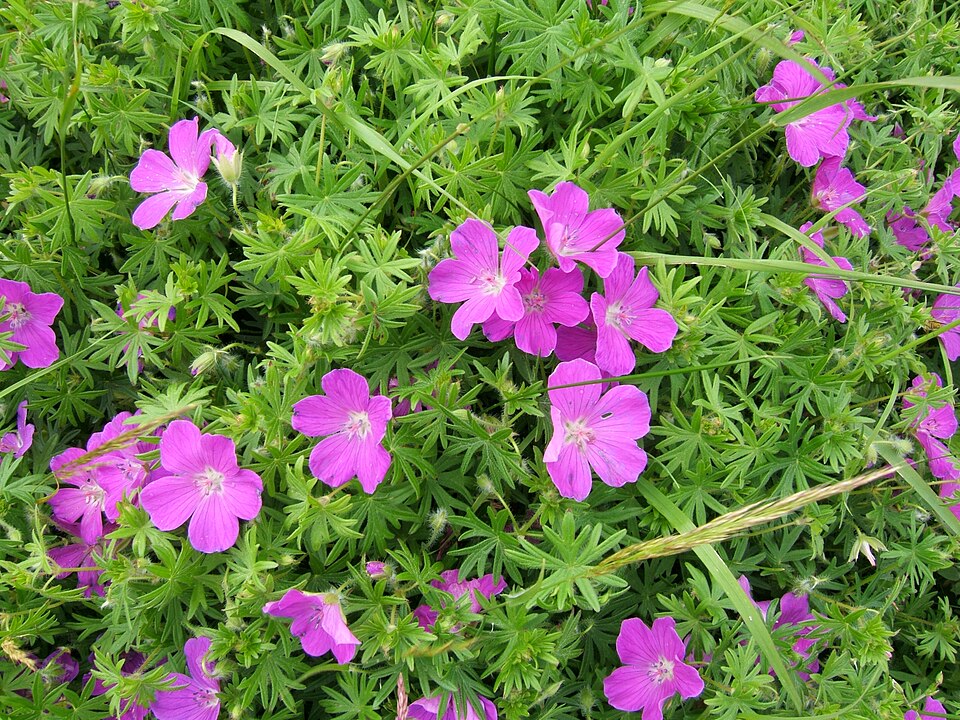
The species Geranium sanguineum - bloody cranesbill - is the classic workhorse, with magenta flowers over neat mounds and fine red fall color. The selection 'Max Frei' stays compact for edging, while 'Rozanne' (a hybrid) blooms from early summer to frost with big violet-blue flowers and sprawls beautifully over walls and path edges. 'Johnson's Blue' and 'Brookside' offer lavender-blue blooms on tidy plants, and 'Biokovo' brings blush-white flowers for shadier spots.
When learning how to grow hardy geraniums, start with one of the famous long-bloomers like 'Rozanne' or 'Brookside' - they deliver the most flowers for the least work. Buy potted plants in spring rather than bare-root divisions; they establish faster and bloom the first year. One plant can eventually cover two to three feet, so resist the urge to plant too many - they fill in quicker than you expect, much like daylilies spreading into a drift. Most garden centers stock the popular varieties, and Gardenia.net's plant profiles can help you compare mature sizes before you buy.
When and How to Plant
Many homeowners find that how to grow hardy geraniums is easier than they expected once they know the basics.
The key to how to grow hardy geraniums is choosing the right approach for your space and budget.
Plant hardy geraniums in spring, after the soil can be worked and about a week or two after your last spring frost - or in early fall, giving roots time to settle before winter. Spring planting establishes fastest. Space plants about 18 inches apart; they will knit together within a season or two into a continuous carpet. The Old Farmer's Almanac lists hardy geranium among the most forgiving perennials for spring planting.
Dig a hole as deep as the pot and twice as wide, set the plant at the same depth it grew in the container, and water well. These are among the most adaptable perennials in the trade - they tolerate sun or shade and almost any average soil - but they sulk in standing water, so avoid low spots where puddles linger.
Soil and Sun
The key to how to grow hardy geraniums is choosing the right approach for your space and budget.
With a little planning, how to grow hardy geraniums can fit even a busy schedule.
Full sun to part shade both work; in hot regions, afternoon shade keeps the foliage fresher through summer. Average, well-drained soil is all they ask. Hardy geraniums are not heavy feeders, and rich soil actually makes some varieties flop. The species' adaptability is well described in the Missouri Botanical Garden's plant finder, which notes its tolerance of a wide range of growing conditions.
A soil pH anywhere near neutral suits them fine. If you are planting under established shrubs where tree roots steal water, dig in some compost to give the geraniums a head start - once established, they compete well. Mulch lightly the first season; after that, their own dense foliage shades the ground and crowds out weeds better than any mulch, a trick shared by coreopsis in sunny borders.
Watering and Feeding
With a little planning, how to grow hardy geraniums can fit even a busy schedule.
Before you start, it helps to understand how how to grow hardy geraniums works in real homes.
Water the first season so roots establish deeply, then back off - established hardy geraniums are quite drought tolerant. In prolonged dry spells a deep soaking revives them, but they bounce back from wilt that would kill fussier perennials. Avoid overhead watering late in the day in humid regions; wet foliage overnight invites leaf spot.
Do not fertilize, or do it only very lightly in truly poor soil. Feeding pushes soft, floppy growth with fewer flowers. A yearly top-dressing of compost is the most they need, and many gardeners skip even that. If leaves yellow in a wet spring, it is usually too much water, not too little food.
Care Through the Season
Before you start, it helps to understand how how to grow hardy geraniums works in real homes.
A good plan for how to grow hardy geraniums saves time, money, and frustration.
The single most useful technique in how to grow hardy geraniums is the midsummer shearing. After the first flush of bloom fades, cut the whole plant back hard - by half or more. It looks brutal, like you have killed it, but within weeks fresh foliage pushes up and a second round of flowers follows. This one haircut keeps plants tidy, prevents flopping, and extends the show for months.
Divide every three to four years if the center thins or flowering declines. Dig the clump in spring or fall, split it into fist-sized pieces with a sharp spade, and replant. The divisions establish quickly and can be shared - hardy geranium is a classic pass-along plant.
Few pests bother them. Slugs may nibble in deep shade, and vine weevils can chew notches in leaves in some regions, but damage is rarely serious. Deadhead individual spent flowers if you like, though shearing handles the job in bulk. Leave the fall foliage in place; many types color up red or bronze, and the winter crown benefits from the cover. In regions with harsh, freeze-thaw winters, a light mulch of shredded leaves over the crowns after the ground freezes prevents heaving - remove it in early spring so new growth is not smothered.
The Groundcover Trick
Use hardy geraniums to carpet bare ground under roses and shrubs where weeds would otherwise rule. Their dense roots and foliage smother weed seedlings, cutting your weeding time sharply. Plant them around the base of coneflowers and taller perennials to hide leggy stems - the geranium mound becomes the perfect foreground while the tall flowers rise behind it.
Companion Planting Ideas
Hardy geraniums shine planted in drifts of three, five, or seven among taller perennials. Try them in front of daylilies, ornamental grasses, and bearded iris, whose sword-like leaves contrast beautifully with the geranium's soft mounds. In shade, pair them with hostas and ferns - the geranium flowers light up spots where little else blooms. Along a sunny path, alternate clumps with catmint for a billowy, cottage-garden edge that needs almost no attention once established.
Bloom and Enjoyment
A good plan for how to grow hardy geraniums saves time, money, and frustration.
For most people, how to grow hardy geraniums comes down to a few smart choices.
This is a workhorse foliage plant with bonus flowers - expect waves of bloom in late spring and again after shearing, with scattered flowers in between on the longest-blooming types. The fall color on many varieties is a fine red that extends the season of interest well past the last flower. Even the seed heads have charm - the distinctive cranesbill capsules that give the genus its common name persist into fall and add texture to the border.
The longest-blooming types sprawl, so give them room to roam or a neighbor to lean on. At a path edge, let them spill onto the walk a little - the soft mounds invite touching, and many varieties release a pleasant scent when brushed. Cut a few stems for small arrangements; they are not long-lived in the vase, but they are charming for a day or two.
Troubleshooting
For most people, how to grow hardy geraniums comes down to a few smart choices.
If you are new to how to grow hardy geraniums, start with the simplest option and build from there.
Plants flopped open in the middle. Too much shade, water, or fertilizer - or the variety is a sprawler. Shear back hard and give it more sun; lean conditions keep plants compact.
No second bloom. You skipped the shearing. Cut back after the first flush and the rebloom follows within weeks.
Foliage looks ratty in late summer heat. Normal for some types in hot regions; the foliage goes dormant and ratty in sustained heat, and the plant needs its winter cold for a strong spring flush. Shear off the tired leaves and wait for fresh growth in cooler weather.
Center of the clump died out. Time to divide. Lift the clump, discard the woody center, and replant the vigorous outer pieces.
Slugs are chewing holes. Common in deep shade with heavy mulch. Pull mulch back from the crowns, water in the morning, and set out traps if damage is heavy.
A last honest note: hardy geraniums are not suited to the sustained heat of zones 10 and warmer, where the foliage stays ratty and the plants never get the winter rest they need. For zones 3 through 9, though, few perennials give this much beauty for this little work. Give them a sunny or partly shaded spot with decent drainage, shear them once in summer, and they will reward you for years.
References
If you are new to how to grow hardy geraniums, start with the simplest option and build from there.
Missouri Botanical Garden. (n.d.). Geranium sanguineum. https://www.missouribotanicalgarden.org/
University of Minnesota Extension. (n.d.). Growing perennials in home gardens. University of Minnesota. https://extension.umn.edu/
Clemson Cooperative Extension. (n.d.). Hardy geranium. Clemson University. https://hgic.clemson.edu/
Gardenia.net. (n.d.). Geranium sanguineum (Bloody Cranesbill). https://www.gardenia.net/
Lady Bird Johnson Wildflower Center. (n.d.). Native plant database. https://www.wildflower.org/plants/
When it comes to how to grow hardy geraniums, getting the details right makes all the difference.
Was this guide helpful?

About My Garden US
The My Garden US editorial team writes practical, in-depth home and garden guides for American homeowners — tested advice, no fluff.