Asparagus is the vegetable garden's great long-term investment: plant once, wait patiently, and harvest tender spears every spring for twenty years or more. No other common vegetable offers that kind of return on a single afternoon's work. Learning how to grow asparagus is mostly about choosing the bed carefully and restraining yourself during the first two years - the plants need that time to build the crowns that will feed you for decades.
Table of Contents
Table of Contents

Photo: Wikimedia Commons
Asparagus suits zones 3 through 9 and needs full sun, deep fertile soil, and winter chill - crowns rot in waterlogged soil and struggle in the sustained heat of the warmest zones. Because the bed is permanent, plan its location with the USDA zone planting dates and your garden's long-term layout in mind.
Choosing Varieties
When it comes to how to grow asparagus, getting the details right makes all the difference.

Many homeowners find that how to grow asparagus is easier than they expected once they know the basics.
Buy one- to two-year-old crowns of an all-male hybrid - male plants outproduce females because they do not waste energy making seeds and berries. Jersey Knight and Jersey Giant are the modern standards: vigorous, disease-resistant, and heavy-yielding. Mary Washington is the old heirloom, still perfectly good though less productive than the Jersey hybrids. Purple Passion offers sweet, tender purple spears that turn green when cooked - a fun choice for fresh eating.
Order crowns from a reputable supplier for spring delivery; they arrive as dormant, spider-like root masses that look unimpressive but spring to life fast. Buy enough for the bed you want - a common recommendation is 10 to 20 crowns per person, since established plants produce generously. Avoid grocery-store impulse crowns of unknown age and variety; named hybrids from a specialist are worth the small premium, just as named varieties matter when you grow rhubarb, asparagus's fellow perennial bed-mate. Gardenia.net compares asparagus varieties for home gardens.
When and How to Plant
Many homeowners find that how to grow asparagus is easier than they expected once they know the basics.
The key to how to grow asparagus is choosing the right approach for your space and budget.
Plant dormant crowns in early spring, as soon as the soil can be worked - about the same time you would plant peas. Dig a trench 6 to 8 inches deep and a foot wide, mounding loose soil into a ridge along the bottom. Spread each crown's roots over the ridge like an octopus, spacing crowns 12 to 18 inches apart, with the buds facing up. Cover with two inches of soil initially, then fill the trench gradually as the shoots grow through the season.
This gradual filling is the traditional method and it works: it lets the young shoots emerge easily while ultimately placing the crowns at the right depth. Water well after planting and keep the bed moist (not soggy) through the first season. Clemson Cooperative Extension details the trench-planting method. Choose the bed carefully - a well-tended asparagus patch produces for 20 years or more, so this is the most permanent decision in the vegetable garden. Like artichokes, asparagus is a perennial vegetable that rewards patience with decades of harvests from a single planting. The Old Farmer's Almanac emphasizes siting the bed where it will not be disturbed, and that advice cannot be overstated.
Planting Cheat Sheet
- Plant 1–2-year crowns in early spring in a permanent bed.
- Trench 6–8 inches deep; spread roots over a ridge, buds up.
- Space crowns 12–18 inches apart; cover gradually as shoots grow.
- Full sun, deep rich soil, and excellent drainage are essential.
Soil and Sun
The key to how to grow asparagus is choosing the right approach for your space and budget.
With a little planning, how to grow asparagus can fit even a busy schedule.
Asparagus demands deep, fertile, well-drained soil - prepare the bed like you mean it, because you get one chance. Dig or till a full 12 to 18 inches deep, working in several inches of compost or well-rotted manure. The bed should drain freely; crowns rot in waterlogged soil, so avoid low spots and consider a raised bed where drainage is doubtful.
Full sun produces the most spears, though asparagus tolerates a little afternoon shade. A pH between 6.5 and 7.0 is ideal - asparagus likes soil a touch more alkaline than most vegetables, and a light liming helps in acidic regions. Because the bed is permanent, take a soil test before planting and correct pH and fertility once, properly, rather than fighting deficiencies for twenty years. The Old Farmer's Almanac advises soil testing before planting permanent beds. Heavy mulch after planting suppresses weeds, which is critical - asparagus hates weed competition, and its shallow feeder roots make hoeing risky.
Watering and Feeding
With a little planning, how to grow asparagus can fit even a busy schedule.
Before you start, it helps to understand how how to grow asparagus works in real homes.
Keep the bed evenly moist the first two years while crowns establish - deep roots are forming, and drought now weakens the planting permanently. After establishment, asparagus is fairly drought-tolerant, but spears are thicker and more tender with steady moisture during the harvest season. Water deeply once a week in dry weather, always at the base.
Feed with compost each spring, top-dressing the bed before spears emerge - this annual feeding is the backbone of a long-lived planting. A balanced fertilizer in early spring helps in poor soil, but compost alone sustains most beds. Stop feeding by midsummer so the ferns harden off properly for winter. Signs of hunger - thin spears, yellowing ferns - usually mean the bed needs its spring compost, not a mid-season rescue.
Care Through the Season
Before you start, it helps to understand how how to grow asparagus works in real homes.
A good plan for how to grow asparagus saves time, money, and frustration.
The hardest part of how to grow asparagus is restraint: do NOT harvest the first year. Let every spear grow into a fern to feed the crowns - those feathery fronds are solar panels building next year's harvest. Take only a light harvest the second year (a week or two), then full harvests from year three onward. Crowns harvested too young never reach their decades-long potential, and no amount of later care makes up for early overpicking.
Mulch heavily and weed meticulously - asparagus roots run shallow, so hand-pull weeds rather than hoeing near the crowns. Watch for asparagus beetles: the spotted adults and gray larvae chew spears and ferns. Handpick them (drop into soapy water) and crush the dark eggs laid on spears. Chickens, if you have them, love asparagus beetles. Rust shows as orange pustules on the ferns; choose resistant varieties like the Jersey hybrids, ensure good air flow, and cut ferns down after they yellow in fall - do not compost rusted foliage.
Let the ferns stand until they yellow fully in fall; they are still feeding the crowns. Then cut them to the ground and clean the bed for winter. In cold regions, a winter mulch of straw protects crowns from freeze-thaw heaving.
The Fern Season
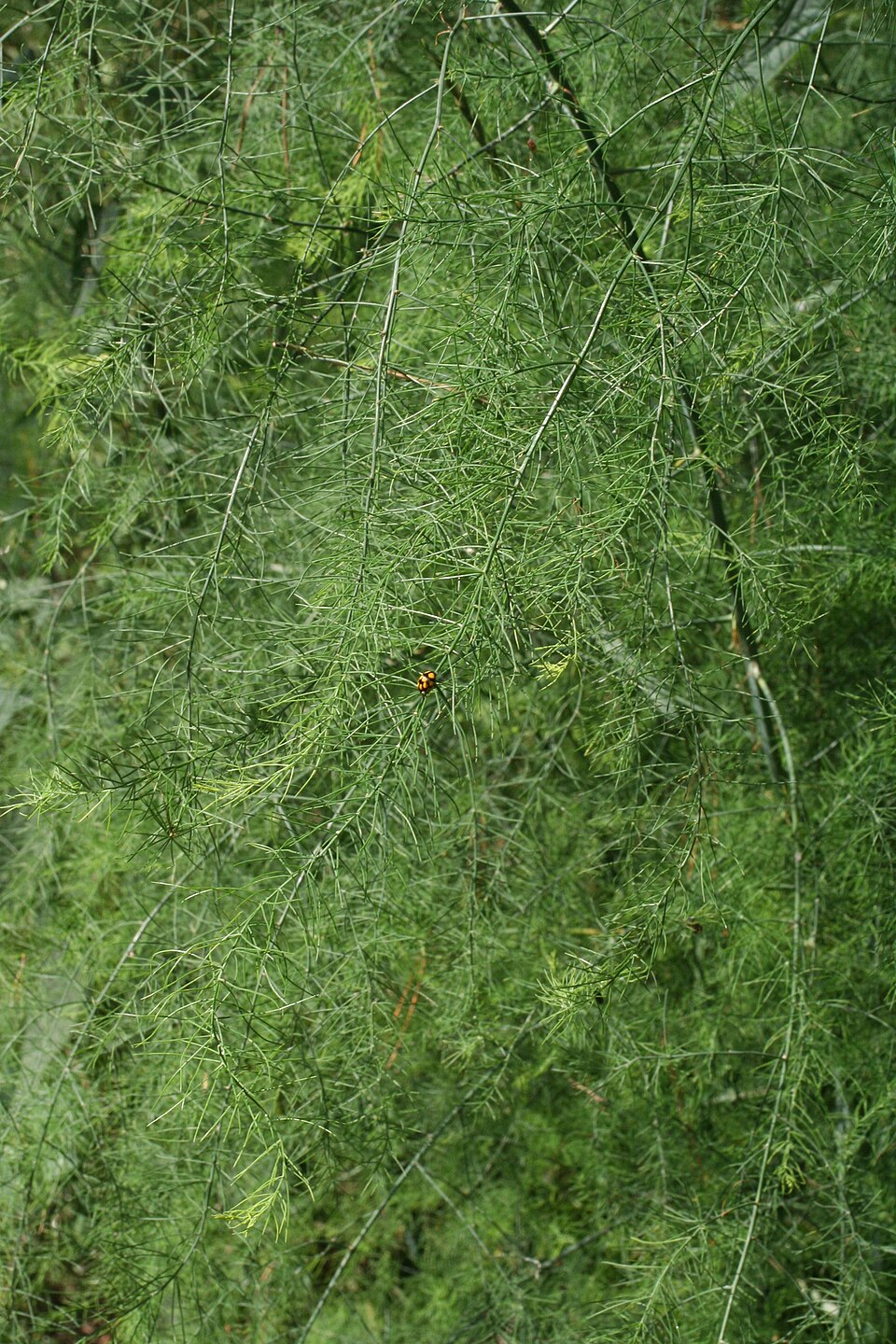
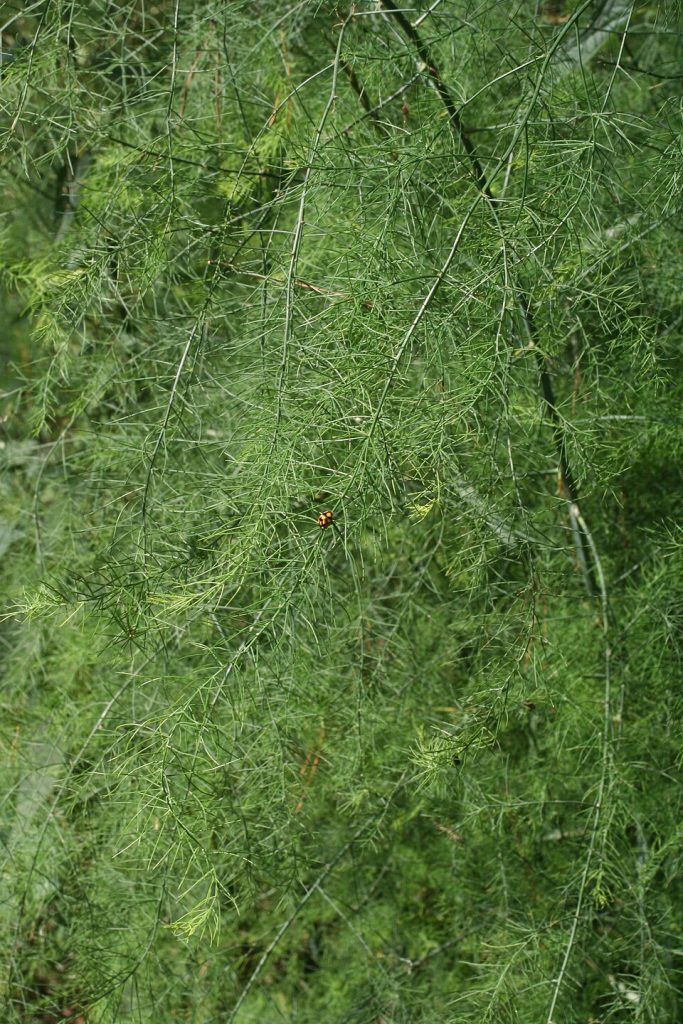
After harvest ends, the bed transforms - spears left to grow become airy six-foot ferns that look more ornamental than vegetable. Many gardeners plant asparagus at the back of the garden partly for this summer display, and the ferny foliage makes a fine backdrop for cutting flowers or a summer sunflower row. Female plants produce red berries in fall - pretty, but mildly toxic, so teach children not to eat them.
Harvest
A good plan for how to grow asparagus saves time, money, and frustration.
For most people, how to grow asparagus comes down to a few smart choices.
Harvest spears at 6 to 8 inches tall, snapping or cutting at ground level - take only spears thicker than a pencil, and let the thin ones grow into ferns. During peak season, check the bed daily; spears can grow several inches in a warm day. Snap rather than cut when possible: grasp near the base and bend, and the spear breaks exactly where tenderness ends.
Stop harvesting when spears thin out to pencil size or when about eight weeks have passed - then let everything fern out to rebuild the crowns for next year. Overharvesting late in the season weakens the following year's crop; the plants tell you when to stop by producing only thin spears.
Refrigerate spears upright in a jar with an inch of water, like flowers - they stay crisp for a week this way. For the sweetest flavor, cook within a day or two of picking; asparagus sugars convert to starch quickly after harvest. Steam, grill, or roast simply - fresh asparagus needs little more than heat, olive oil, and salt. The Missouri Botanical Garden notes asparagus's ornamental fern season as a garden bonus.
Troubleshooting
For most people, how to grow asparagus comes down to a few smart choices.
If you are new to how to grow asparagus, start with the simplest option and build from there.
Spears are thin every year. Overharvesting, or crowns never established properly. Let everything fern for a full season to rebuild, ensure spring feeding, and harvest lightly the following year.
Asparagus beetles everywhere. Handpick adults and larvae into soapy water, crush eggs on spears, and clean up all fern debris in fall where beetles overwinter. Persistent problems may need neem or spinosad, used per label.
Rust on the ferns. Orange pustules in humid weather. Plant resistant Jersey hybrids, space for air flow, and cut and destroy (do not compost) affected ferns in fall.
Crowns rotted. Waterlogged soil - the bed drains poorly. Replant in spring in a raised bed or better-drained spot; there is no saving rotted crowns.
No spears in spring. Crowns may have been planted too deep, damaged by hoeing, or starved by weed competition. Check depth (6–8 inches), weed meticulously, and feed.
Berries on the plants. You have female plants (or a non-all-male variety). The berries are mildly toxic - remove them if children visit the garden, and pull any volunteer seedlings, since females seed themselves into weedy thickets over time.
Patience is the whole crop with asparagus - but it is patient on your behalf, too, returning every spring for decades from that one planting day. Give it a permanent sunny bed, deep rich soil, two years of restraint, and it becomes the most reliable harvest in the garden.
References
If you are new to how to grow asparagus, start with the simplest option and build from there.
When it comes to how to grow asparagus, getting the details right makes all the difference.
University of Minnesota Extension. (n.d.). Growing asparagus in home gardens. University of Minnesota. https://extension.umn.edu/
Clemson Cooperative Extension. (n.d.). Asparagus. Clemson University. https://hgic.clemson.edu/
Old Farmer's Almanac. (n.d.). Growing asparagus. Yankee Publishing. https://www.almanac.com/
USDA National Agricultural Library. (n.d.). Vegetable gardening resources. U.S. Department of Agriculture. https://www.nal.usda.gov/
When it comes to how to grow asparagus, getting the details right makes all the difference.
Was this guide helpful?

About My Garden US
The My Garden US editorial team writes practical, in-depth home and garden guides for American homeowners — tested advice, no fluff.