Introduction
The question of snake plants indoor where to buy usa comes up again and again from new plant owners. The snake plant, also called mother-in-law’s tongue, is one of the toughest houseplants sold in the United States. It tolerates low light. It survives missed waterings. It grows slowly and asks for almost nothing. That is why it sits in offices, living rooms, and bedrooms from Maine to California. But knowing the plant is easy to grow does not tell you where to find a healthy one at a fair price. This guide walks through the real options. You will learn which sellers carry quality plants, how to judge a good specimen, what the common varieties look like, what prices to expect, and how to keep your plant alive after you bring it home.
Why It Matters Where You Buy: Snake Plants Indoor Where to Buy Usa
Not every snake plant on the shelf is worth your money. Big discount racks sometimes hold plants that sat too long in dark stock rooms. Their roots may be soft. Their leaves may carry hidden pests. A weak plant can limp along for months before it fails, and most buyers blame themselves. A strong plant from a careful seller starts well and stays well.
Buying from a trusted source also gives you a fair name for the variety. Snake plants come in many named types. A good nursery labels them correctly. That matters because the varieties differ in size, color, and price. The snake plants indoor for sale usa market is wide, and knowing what to expect keeps you from paying a rare-plant price for a common one.
Where to Buy: Online Nurseries and Seed Houses
Mail-order sellers are a strong choice if your local stores carry only small, tired stock. The plants arrive in pots with proper soil, and the packing has improved a great deal in recent years. Burpee has sold plants and seeds to American gardeners for more than a century, and its houseplant line includes snake plants in several pot sizes. Park Seed is another old name that ships live plants with clear care notes. Gurney’s rounds out the trio of long-standing mail-order houses, and it often lists the classic green varieties at modest prices.
Specialty nurseries ship larger, nursery-grown plants. White Flower Farm is known for careful growing and sturdy packaging, and its indoor plant selection includes snake plants from time to time. Monrovia supplies many independent garden centers across the country, and its branded pots are a mark of consistent quality. Proven Winners is best known for outdoor plants, but its network of growers and retailers also moves indoor tropicals, and its plant finder can point you to a store near you.
When you order online, read the shipping terms. Most sellers will not ship live plants into freezing weather without a heat pack, and some pause plant shipments in the coldest months. A plant that spends a week in a cold truck may arrive with damaged leaves even if the box looks fine. Order in spring or early fall when you can, or choose a seller that adds insulation and heat packs for winter delivery.
Where to Buy: Garden Centers and Home Stores
Local garden centers are the best place to see the plant before you pay. You can lift the pot, check the leaves, and look at the roots through the drainage holes. Ask the staff how long the shipment has been on the floor. A plant that arrived this week is a safer buy than one that has sat under dim shop lights for two months. The snake plants indoor buying guide usa checklist below will help you judge what you see.
Home improvement stores also carry snake plants in nearly every state. The stock turns over fast, which is good, but the plants may have been watered on a rough schedule. Look for firm, upright leaves and dry soil. Avoid pots where the soil is soaked and the leaves are floppy. Sites such as The Spruce publish buying guides that walk through these checks in plain language, and Gardening Know How keeps a library of snake plant articles that cover both buying and care.
Where to Buy: Local Independent Nurseries
Do not overlook the small nursery in your own town. Independent growers often carry varieties the big chains skip, such as the short bird’s nest types or the pale Moonshine. Their prices may run a little higher, but the plants are usually fresh and the advice is personal. The staff can tell you which variety fits a dark hallway and which one wants a bright window. The Old Farmer’s Almanac plant calendar is a useful companion when you shop, since it reminds you of the right season to repot and feed. For general plant science questions, the National Institute of Food and Agriculture offers research-based guidance that backs up what good growers tell you.
What to Look For When You Buy
Leaf and Root Health
Start with the leaves. They should stand upright and feel firm when you press them gently. The color should be even, with the variety’s normal pattern of green, silver, or gold edges. Pass over any plant with soft, yellow, or mushy leaves. Those are signs of rot, and rot is hard to fix. Look at the base of the plant where the leaves meet the soil. It should be dry and solid, not dark or slimy.
Check the roots if you can. Tip the pot and look through the drainage holes. Healthy roots are firm and pale. Dark, mushy roots mean the plant was overwatered. A few roots circling the bottom of the pot are fine. That is normal for a plant that is ready for a larger pot.
Size and Pot
Snake plants are sold in pots from four inches to fourteen inches wide. A four-inch pot holds a young plant with a few leaves. It is cheap and fine for a desk. A six-inch pot is the most common size for a living room plant, with leaves around a foot tall. Larger pots hold mature plants with leaves three or four feet tall. Buy the size that fits your space now. Snake plants grow slowly, so a small plant will not fill a large corner for a long time.
Make sure the pot has drainage holes. Snake plants die from wet feet far more often than from dry soil. If you love a decorative pot with no holes, plan to keep the plant in its nursery pot and set that inside the pretty one.
Variety and Label
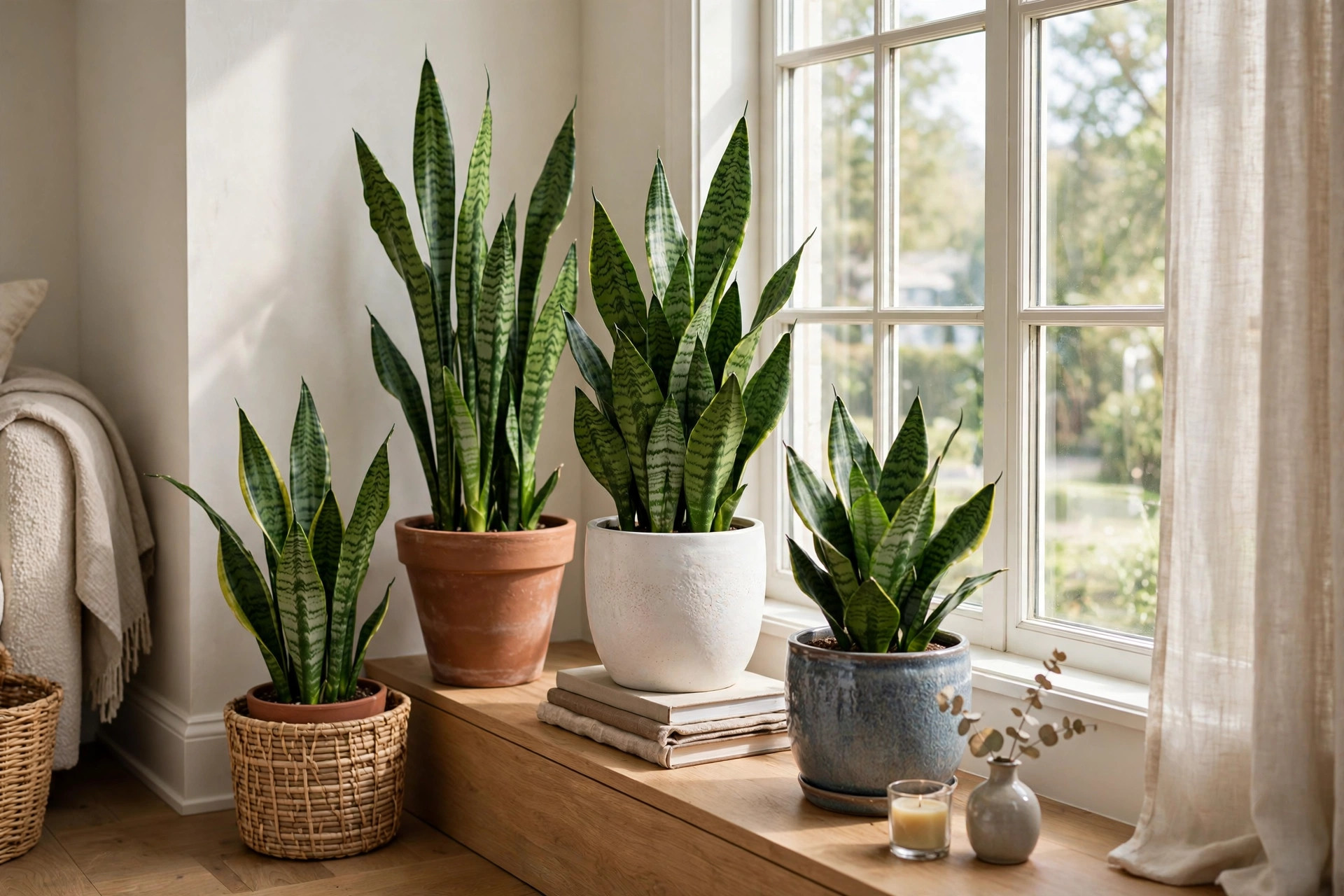
Check that the plant is labeled. Common types include the standard Laurentii with yellow edges, the dark green Zeylanica, the silvery Moonshine, and the short Hahnii bird’s nest. The label tells you what to expect. If a store sells an unlabeled plant at a premium price, treat it as a common variety and pay a common price. Our snake plants indoor american homes guide describes how each variety looks in a real home setting.
Popular Types of Snake Plants
The classic Sansevieria trifasciata Laurentii is the one most people picture. It has tall, stiff leaves with dark green centers and gold-yellow edges. It is the cheapest and the easiest to find. Sansevieria trifasciata Zeylanica is similar but darker, with deep green bands and no yellow. Sansevieria Moonshine has wide, silvery leaves and a softer look. It costs more because it grows more slowly. The Hahnii group, called bird’s nest snake plants, stays short and spreads into a rosette. These suit shelves and small tables. Sansevieria cylindrica grows round, spear-like leaves and often comes braided for looks. Each type needs the same basic care, so choose by the look you like and the space you have.
Cost and Price
Prices in the United States follow size. A four-inch pot usually sells for eight to fifteen dollars. A six-inch pot runs fifteen to thirty dollars. An eight to ten-inch pot costs thirty to sixty dollars. Large floor plants in twelve to fourteen-inch pots can cost sixty to one hundred twenty dollars or more. Rare varieties such as Moonshine or the braided Cylindrica run higher than the common Laurentii at the same size.
Online prices look close to store prices, but add the shipping cost before you compare. A fifteen-dollar plant with twelve dollars of shipping is not a deal. Some online sellers offer free shipping over a set order total, which helps if you are buying several plants. Local nurseries sometimes price-match or discount when you buy three or more. Ask.
Care and Upkeep
Snake plants ask for little, but they still need the basics. Give them bright, indirect light when you can. They will live in low light, but they grow slowly and the leaf color may fade. Water only when the soil is fully dry. In most homes that means every two to three weeks in summer and every four to six weeks in winter. Pour water through the pot until it drains, then empty the saucer. Never let the plant sit in standing water.
Use a loose, sandy potting mix made for cacti or succulents, or add perlite to regular potting soil. Feed once or twice a year with a half-strength houseplant fertilizer in spring or early summer. Repot only when the roots crowd the pot and leaves look cramped. That may be every two to four years. Snake plants like to be slightly tight in their pots.
Wipe the leaves with a damp cloth every few months. Dust blocks light and dulls the color. Watch for mealybugs, small white cottony spots in the leaf joints. Wipe them off with rubbing alcohol on a cotton swab and check again in a week.
Safety Around Pets and Children
Snake plants are mildly toxic if chewed or eaten. They contain saponins, which can cause nausea, vomiting, and stomach pain in cats and dogs. The leaves are tough and bitter, so most pets leave them alone, but kittens and puppies explore with their mouths. Keep the plant on a high shelf or in a room pets cannot reach if your animal is a chewer. If a pet eats part of a leaf, call your veterinarian. For children, the risk is low because the leaves are hard to bite through, but teach small children not to chew houseplants. This is a plant for a safe spot, not the floor next to the dog bed.
FAQ
Where is the cheapest place to buy a snake plant indoors in the USA?
Big home improvement stores and discount chains usually have the lowest prices on small common varieties. Watch the plant’s health, though. A cheap plant with rotten roots costs more in the end. Local garden centers often match prices on standard sizes while selling fresher stock.
Can I buy snake plants online and have them shipped safely?
Yes. Reputable sellers pack plants in snug boxes with soil guards and padding. Many add heat packs in winter. The risk is weather, not the mail itself. Avoid ordering during extreme cold snaps or heat waves, and choose sellers that guarantee live arrival.
How big will my indoor snake plant get?
The common tall types reach two to four feet indoors over several years. The dwarf Hahnii types stay under eight inches. Growth is slow, often only a few new leaves a year, so buy close to the size you want.
Do snake plants need a lot of light?
No. They tolerate low light better than most houseplants. They grow best in bright, indirect light, and a few hours of gentle morning sun is fine. Keep them out of harsh afternoon sun, which can scorch the leaves.
How often should I water my snake plant?
Water only when the soil is completely dry. For most homes that is every two to three weeks in the growing season and monthly in winter. When in doubt, wait. Underwatering rarely kills a snake plant. Overwatering does.
Are snake plants good for bedrooms?
They are fine for bedrooms. They release oxygen at night, unlike most plants, but the amount is too small to change room air in any meaningful way. Choose them for the bedroom because they look good and need little care, not because of air claims.
A Final Word
The search for snake plants indoor where to buy usa ends well when you shop with your eyes open. Pick a seller you trust, check the leaves and roots, and buy the size that fits your home. A healthy snake plant will reward you for years with almost no work. It is one of the few purchases for the home that asks less of you the longer you own it.
References
Burpee. (n.d.). Seeds, plants, and gardening supplies. https://www.burpee.com Gardening Know How. (n.d.). Gardening guides and plant care. https://www.gardeningknowhow.com Gurney’s Seed & Nursery Co. (n.d.). Seeds, plants, and garden supplies. https://www.gurneys.com Monrovia. (n.d.). Plants for home gardens. https://www.monrovia.com National Institute of Food and Agriculture. (n.d.). Agricultural research and extension. https://www.nifa.usda.gov Park Seed. (n.d.). Seeds, plants, and gardening supplies. https://www.parkseed.com Proven Winners. (n.d.). Plants and gardening inspiration. https://www.provenwinners.com The Old Farmer’s Almanac. (n.d.). Gardening calendars and advice. https://www.almanac.com The Spruce. (n.d.). Home and garden advice. https://www.thespruce.com White Flower Farm. (n.d.). Plants, bulbs, and garden supplies. https://www.whiteflowerfarm.com
Was this guide helpful?

About Robert Taylor
The My Garden US editorial team writes practical, in-depth home and garden guides for American homeowners — tested advice, no fluff.