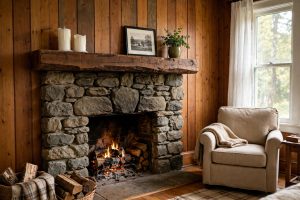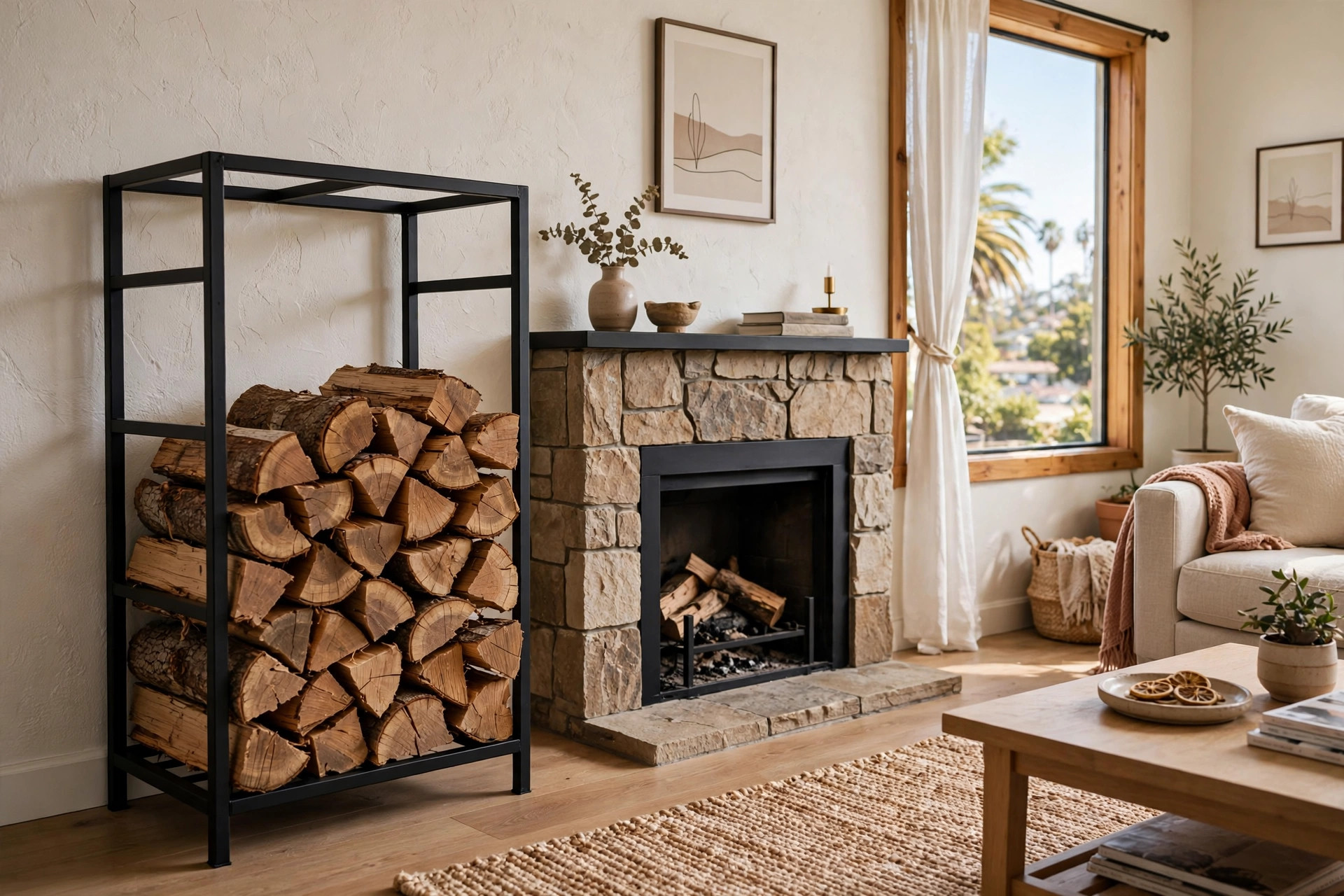

Finding the best firewood storage racks for California apartments is not the same as shopping for a country home. Most renters live with tight rules, thin walls, and very little floor space. Many apartment buildings forbid open burning of real wood. Some allow gas fireplaces. Others permit a small fire pit on a patio. Still, a good rack keeps any wood you do store dry, neat, and off the floor. It keeps your living space tidy. It keeps the wood ready for use.
This guide walks through what to look for. It covers indoor racks and outdoor racks. It covers materials, sizes, and prices. It explains the rules that apply in much of California. It ends with answers to common questions.
Why It Matters
Wood on a bare floor is a problem. It leaves dirt. It leaves bark and splinters. It can scratch a wood or tile floor. Moisture from damp logs can stain carpet and wood. A rack lifts the wood off the ground. Air flows around the logs. The wood dries faster. The mess stays in one place.
In an apartment, space is the main issue. Most units have no garage. There is no wood shed. You may have a small patio or balcony. You may have a closet corner near the fireplace. The best firewood storage racks for California apartments are compact. They fit in a corner. They hold enough wood for one or two weeks of fires. They look neat enough to stay in a living room.
A rack also helps with safety. Stacked logs on the floor can roll. They can block a door or a path. A stable rack with sides holds the logs in place. That matters in a small home where people walk close to the hearth.
Know the Rules First: Best Firewood Storage Racks for California Apartments
Before you buy anything, check the rules that apply to your unit. California has strict air quality laws. Many air districts limit or ban wood burning on certain days. The South Coast district, which covers Los Angeles and Orange County, runs a Check Before You Burn program each winter. The Bay Area district runs a similar winter rule. On no-burn days, you may not burn wood at all.
Many apartment leases also limit open flames. Some landlords allow a gas fireplace only. Some allow a small outdoor fire pit on a patio. A few allow nothing that burns. Read your lease. Ask the property manager in writing. A rack is only useful if you are allowed to burn wood, or if you use the rack for a fire pit, a campfire trip, or stored wood for another home.
Even when burning is allowed, most California renters burn little wood. A small rack that holds one bundle is enough for most people. Do not buy a large outdoor rack if your building does not allow one. Check with the office about patio storage. Some buildings ban items on balconies.
What to Look For
A good rack for an apartment has five traits. Size comes first. It must fit the space you have. Measure the corner or wall before you shop. Leave room to walk past it. A rack that holds half a face cord is far too large for most apartments. A rack that holds one bundle, about a cubic foot of wood, fits most needs.
Strength comes second. Firewood is heavy. A small rack may hold 30 to 60 pounds of wood. The frame must be steel, wrought iron, or strong wood. Thin wire racks bend. They tip over. Look for a wide base and solid joints.
Air flow comes third. Logs dry from the sides. A rack with open bars works better than a solid box. Open sides let air move through the stack. The wood stays dry and burns clean.
Style comes fourth. The rack may sit in your living room. It should look neat. Black iron and dark steel match most rooms. Wood racks with a dark finish suit a warm room. Some racks include a canvas sling. The sling hides the wood and catches bark.
Easy cleaning comes fifth. Bark falls off logs. A rack with a raised floor or a removable tray keeps the mess off your rug. Some racks come with a mat. The mat sits under the rack and catches dirt.
Types of Firewood Racks for Apartments
Indoor Log Racks
Indoor racks sit next to the fireplace or stove. They are small. Most are 16 to 24 inches wide. They hold one armload of wood. Many have curved ends that keep logs from rolling off. Some hold tools such as a poker and a brush. These racks suit a living room with a real fireplace. They keep the wood close to the fire. You do not have to walk outside in the cold.
Log Sling Carriers
A sling is a strip of canvas with handles. It holds a few logs at a time. You carry the wood from the car or patio to the fireplace. It is not a storage rack by itself. But many renters use a sling plus a small indoor rack. The sling moves the wood. The rack stores it. Canvas slings also protect your floor from dirt on the way in.
Outdoor Balcony Racks
Some apartments have a patio or a small yard. An outdoor rack keeps wood outside the living space. Look for racks with a cover. A cover sheds rain and keeps the wood dry. California rain is mild in most years, but winter storms soak wood fast. A covered rack that holds one bundle works well. Check the lease before you put anything on a balcony. Some buildings allow only certain items outside.
Wall-Mounted Racks
A wall rack hangs from brackets. It holds wood off the floor. It saves floor space in a small room. These racks hold less wood than a floor rack. They suit a renter who burns only now and then. You will need to anchor the rack to a stud. Ask your landlord before you drill into a wall. Many leases forbid holes in walls.
Firewood Carts
A cart has wheels. You load the wood on a patio or in the garage. You roll it to the fireplace. The wheels help on hard floors. A cart doubles as storage. It suits a ground-floor unit with a short path to the door.
Materials and Build Quality
Steel tube racks are the most common. They are strong. They are light. Black powder-coated steel resists rust. It looks clean in a modern room. Wrought iron racks cost more. They are heavier. They suit a classic room. They last for many years.
Wood racks look warm. They are often made of pine or rubberwood with a dark stain. They cost less than iron. They hold less weight. Keep wood racks away from sparks. A screen on the fireplace adds safety.
Canvas and fabric slings pair with metal frames. The canvas wears out over time. Sunlight weakens it. Plan to replace a canvas sling every few years if it sits outside.
Avoid thin chrome wire racks. They look nice in the store. They bend under a full load of oak. Oak is dense and heavy. A rack that bends can drop logs on a foot or a floor.
Cost and Price
Prices vary by size and material. Small indoor log racks cost from about 25 to 60 dollars. These hold one bundle. They are often sold with tools. Mid-size racks cost from about 60 to 120 dollars. They hold more wood. They have thicker steel and better welds.
Outdoor racks with covers cost from about 70 to 150 dollars. The cover adds cost. A good cover is worth the money in a wet winter. Wall-mounted racks cost from about 40 to 90 dollars. Firewood carts cost from about 80 to 160 dollars. The wheels and large frame add cost.
Watch for sales in late summer. Stores clear patio and hearth goods before fall. You can save 20 to 30 percent. Shipping adds cost for heavy iron racks. A local store may be cheaper than an online order once freight is added. You can compare racks at large home stores such as Home Depot and Lowe’s, and at online sellers such as Wayfair and Amazon.
Care and Upkeep
A rack needs little care. Wipe steel racks with a damp cloth once a month. Dust collects on the bars. Check the joints twice a year. Tighten any loose bolts. If a rack sits outside, look for rust each fall. Touch up bare spots with spray paint made for metal. This keeps rust from spreading.
Empty the rack once in a while. Shake out bark and dirt. A small hand brush works well. If the rack has a tray, wash it in the sink or with a hose. Replace a worn canvas sling before it tears. A torn sling can drop logs.
Store the wood itself with care. Use dry, seasoned wood. Wet wood smokes. It leaves more soot in the flue. Burn only wood. Do not burn treated lumber, painted wood, or trash. Treated wood gives off harmful fumes. Many fire departments warn against it.
Safety Tips for Apartment Dwellers
Keep the rack at least three feet from the fireplace opening. Sparks can jump. A screen on the fireplace adds a layer of safety. Never store wood against a hot stove. The heat can dry the wood too much. Very dry wood near a hot surface is a fire risk.
Keep a fire extinguisher in the room. Know how to use it. Check the smoke detector and the carbon monoxide detector. Change the batteries each year. Many apartments have these devices. Make sure yours work.
Do not overload the rack. A rack rated for 50 pounds should not hold 80 pounds. Overloaded racks tip. They bend. They can spill burning logs if placed too close to the fire.
Ask the fire marshal’s office if you are unsure about the rules. Local fire codes set limits on open burning. They set rules for outdoor fire pits. The rules differ by city. San Francisco, Los Angeles, and San Diego each have their own codes. What is legal in one city may be banned in another.
Buying in California
California renters face a special mix of rules and climate. The mild winters mean most people burn wood only a few times a year. A small rack is enough. The dry summers raise fire risk. Store wood away from dry brush and wooden fences. The EPA publishes guidance on clean wood burning. It is worth a read before your first fire.
If your building has a gas fireplace, you do not need a wood rack at all. A small basket for pine cones or fake logs may be enough for looks. Some renters buy a rack for a patio fire pit instead. In that case, a covered outdoor rack is the right choice.
Shoppers in California can find racks at fireplace shops, home centers, and online. Fireplace makers such as Napoleon and Heatilator sell hearth goods through dealers. Home guides such as This Old House, Family Handyman, and The Spruce publish buying advice for hearth products. These sources can help you compare styles and prices.
FAQ
How much firewood does an apartment renter need?
Most renters need very little. One bundle, about 0.75 cubic feet, lasts through several fires. A small indoor rack that holds one bundle is enough. Do not stock a full cord. You have nowhere to keep it dry and safe.
Can I store firewood on my balcony in California?
It depends on your lease. Many buildings allow small items on a patio. Some ban all storage on balconies. A covered rack keeps wood dry. But heat and dry brush make outdoor storage a fire concern in summer. Ask your property manager first. Follow the building rules.
What size rack fits a small apartment living room?
A rack 18 to 24 inches wide fits most rooms. It holds one bundle. It tucks beside the fireplace. Measure your space before you buy. Leave at least a foot of clearance around the rack. The room must still be easy to walk through.
Is it legal to burn wood in a California apartment?
It depends on where you live and on the day. Air districts ban wood burning on bad air days. Many cities ban wood burning in new construction. Your lease may ban it too. Check your local air district and your lease before you burn.
Should I buy an indoor rack or an outdoor rack?
Buy indoor if you burn wood in a fireplace each week. The wood stays close and clean. Buy outdoor if you have a fire pit or if you want to keep dirt out of the house. Many renters use both. An outdoor rack holds the main supply. A small indoor rack holds wood for the next fire.
What is the best material for a firewood rack?
Steel is the best all-around choice. It is strong and light. It resists rust when coated. Wrought iron lasts longer but costs more. Wood racks look nice but hold less weight. Pick the material that matches your room and your budget.
A Short Final Word
The best firewood storage racks for California apartments are small, strong, and neat. They fit a corner. They hold one bundle. They keep dirt off the floor. Before you buy, check your lease and your local burn rules. Measure the space. Pick steel for strength or iron for looks. Keep the rack three feet from the fire. With the right rack, a small fire becomes easy to enjoy. And the living room stays clean.
Related guides you may find useful: best direct vent gas fireplaces for california apartments, fireplace glass doors reviews and buying guide, and affordable infrared outdoor heaters buying guide.
References
Amazon. (n.d.). Online shopping. https://www.amazon.com Family Handyman. (n.d.). DIY home repair and maintenance. https://www.familyhandyman.com Heatilator. (n.d.). Fireplaces and fireplace products. https://www.heatilator.com Lowe’s. (n.d.). Home improvement products. https://www.lowes.com Napoleon. (n.d.). Fireplaces, grills, and heating products. https://www.napoleon.com The Home Depot. (n.d.). Home improvement products. https://www.homedepot.com The Spruce. (n.d.). Home and garden advice. https://www.thespruce.com This Old House. (n.d.). Home renovation guidance. https://www.thisoldhouse.com U.S. Environmental Protection Agency. (n.d.). Protecting human health and the environment. https://www.epa.gov Wayfair. (n.d.). Furniture and home goods. https://www.wayfair.com
Was this guide helpful?

About Robert Taylor
The My Garden US editorial team writes practical, in-depth home and garden guides for American homeowners — tested advice, no fluff.
You May Also Like
The Best Fireplace Grates for Southern States: A Buyer’s Guide
August 21, 2026 0 views
Best Fireplace Mantel Shelves for Humid Climates
September 18, 2026 0 views
Premium Outdoor Patio Heaters for Sale: A Simple Buying Guide
March 17, 2026 0 views