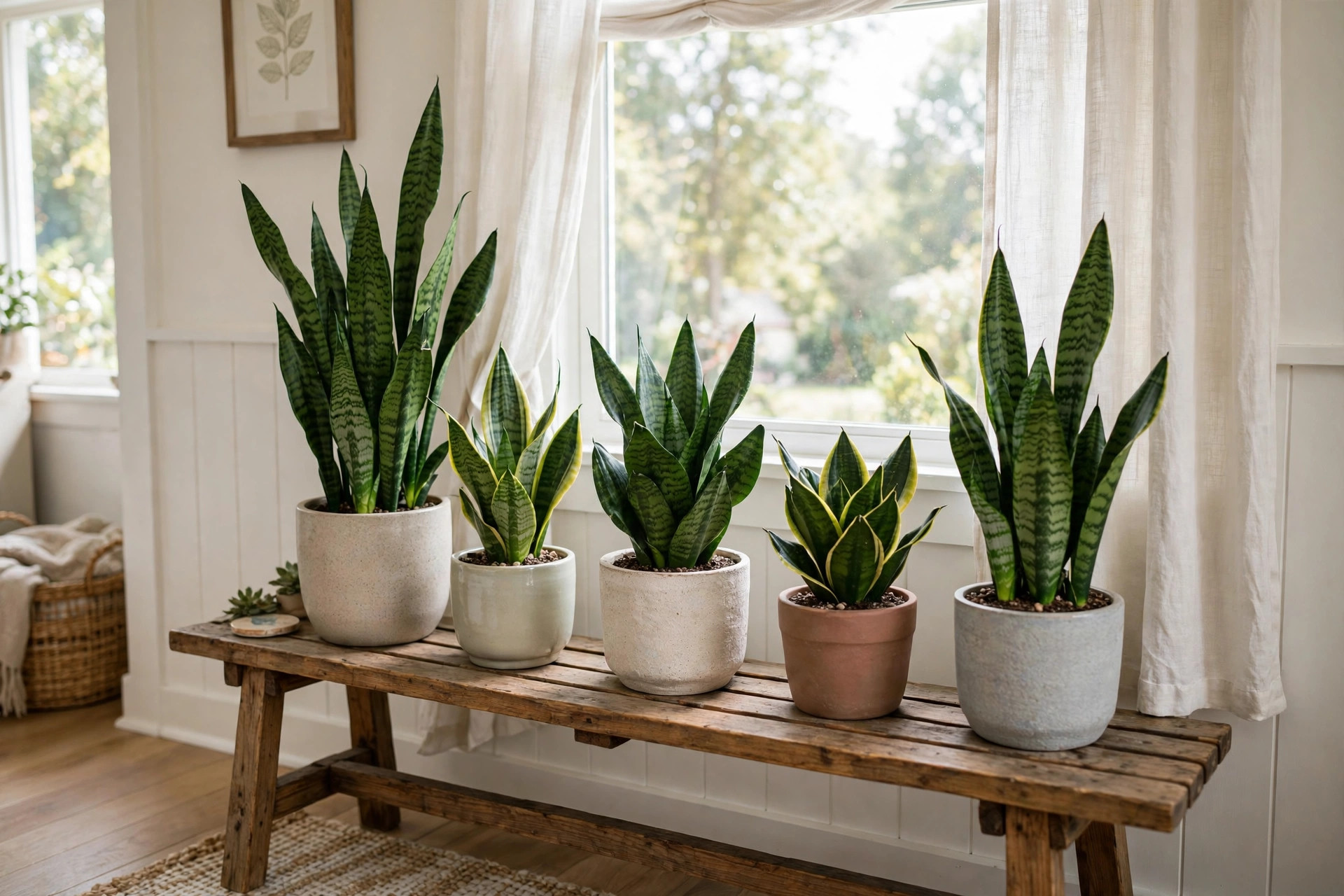

The market for snake plants indoor for sale usa has grown a great deal in recent years. What was once a plant found mainly in offices now sits in living rooms, bedrooms, and hallways across the country. Buyers want a plant that is handsome, hard to kill, and easy to order from home. The snake plant answers all three wants. This guide walks through the purchase from start to finish. It covers what the plant is, why it sells so well, what to check before you pay, the common types, fair prices, and how to keep the plant alive for years.
Why Snake Plants Belong in American Homes
The snake plant, often sold under the name Sansevieria or Dracaena trifasciata, is one of the toughest houseplants sold in the United States. Its leaves stand upright like spears. They come in shades of green with bands of yellow or silver. The plant grows slowly and asks for little. That is why it suits busy people, renters, and first-time plant owners.
One reason the plant sells well is that it tolerates neglect. A snake plant can go two weeks without water and still look fine. It can live in a bright sunroom or a dim corner. It does not drop leaves the way many houseplants do. It keeps its shape for months at a time. For buyers who want indoor plants for sale that do not demand daily care, this plant is a sound choice.
Another reason is looks. The stiff, upright leaves give a room a clean and modern feel. The plant fits well in both old farmhouses and new apartments. It also comes in many sizes. A small plant fits on a desk. A large one can fill an empty corner of a living room. Many growers describe the plant in their catalogs, and gardening guides from The Spruce give clear care notes for new owners.
What to Look for When You Buy: Snake Plants Indoor for Sale Usa
Not every plant on the shelf is worth the price. A few minutes of checking will save you trouble later. The rules below work whether you buy in a store or order by mail.
Leaf Health
Start with the leaves. They should stand firm and upright. The color should be deep green with clear patterns. Avoid plants with soft, mushy spots on the leaves. Mushy spots often mean rot. Also avoid leaves with brown edges or large dry patches. A little dust is fine. A plant that droops all over is not fine.
Look at the base of the plant where the leaves meet the soil. The base should be dry and firm. If it feels wet or smells sour, put the plant back. A rotten base will not recover. Healthy new growth comes from the center. Small leaves rising in the middle are a good sign.
Pot and Soil
Check the pot. Snake plants like pots with holes in the bottom. The holes let extra water drain away. A pot with no holes can drown the roots. If you buy a plant in a plain nursery pot, that is fine. You can move it to a nicer pot later.
Check the soil. It should feel loose and sandy. Snake plants do not like heavy, wet soil. Many sellers use a mix made for cacti or succulents. If the soil looks like wet mud, the roots may be in trouble. Ask the seller what mix they used.
Size and Height
Plants are usually sold by pot size, not by plant height. A 4-inch pot holds a young plant about 8 to 12 inches tall. A 6-inch pot holds a plant about 18 to 24 inches tall. A 10-inch pot or larger holds a full plant that may stand 3 feet tall. Choose the size that fits your room. A small plant grows slowly, so do not expect a desk plant to fill a corner in one year.
If you order by mail, read the shipping notes. Some sellers cut leaves back for safe shipping. Others ship the full plant in a tall box. Check the seller’s policy on damaged plants. Good sellers replace or refund broken plants.
Types of Snake Plants for Sale
There is more than one kind of snake plant. Breeders have made many forms. Here are the ones you will meet most often in American shops.
Sansevieria trifasciata ‘Laurentii’ is the classic type. It has tall green leaves with yellow edges. Most buyers picture this plant when they hear the name. It grows to about 3 feet tall in time.
Sansevieria trifasciata ‘Moonshine’ has broad silver-green leaves. The color is soft and pale. It looks calm and modern. It grows a little shorter than the classic type.
Sansevieria ‘Black Gold’ has dark green leaves with gold edges. The contrast is strong. It makes a bold statement in a plain room.
Sansevieria ‘Whitney’ is a compact type with green leaves edged in cream. It stays small and suits shelves and desks.
Sansevieria cylindrica has round, spear-like leaves instead of flat ones. It is often sold braided or in a fan shape. It looks very different from the flat-leaf types.
Sansevieria ‘Hahnii’ is the bird’s nest type. It grows low and wide, like a rosette. It fits in small spaces where tall plants will not work.
Growers such as Monrovia and Proven Winners carry many of these forms. Seed and plant catalogs at Burpee also list houseplant stock in season. If you want to compare many kinds at once, a snake plants indoor buying guide will help you sort the forms by size and light needs.
Cost and Price
Prices for snake plants indoor for sale usa are fair, but they vary with size and seller. Small plants in 4-inch pots often sell for 8 to 15 dollars. Medium plants in 6-inch pots often sell for 18 to 35 dollars. Large plants in 10-inch or bigger pots often sell for 40 to 90 dollars. Rare forms can cost more.
Local garden centers often give the best value. You can see the plant before you buy. You pay no shipping. Big box stores sell them too, often at the low end of the range. Online sellers may charge more, but they offer more types. Shipping a large plant costs the seller real money, and that cost shows in the price.
Watch for sales in spring. That is when most nurseries restock. Some sellers offer deals on groups of plants. If you want several plants for an office or a large home, ask about bundle prices. Groups of low light houseplants for sale often cost less per plant than single purchases.
Care and Upkeep
Once the plant is home, the work is simple. The snake plant asks for three things: light, little water, and a stable room.
Light
Snake plants accept many light levels. They do best in bright, indirect light. A spot near an east or west window is ideal. They also live in low light, but they grow slower there. In very dark rooms, the leaf patterns may fade. If you want strong color, give the plant more light.
Avoid hot afternoon sun beating straight through glass. The leaves can burn. A sheer curtain fixes the problem. In summer, the plant can sit on a shaded porch. Bring it back inside before the first frost.
Water
Water is where most owners go wrong. The rule is simple: water little and seldom. Let the soil dry out fully between waterings. In most homes, that means watering every two to three weeks. In winter, once a month may be enough.
Use room-temperature water. Pour it over the soil, not over the leaves. Let the extra water drain out. Empty the saucer after ten minutes. Never let the pot sit in standing water. Root rot is the main killer of snake plants, and it comes from too much water.
The Old Farmer’s Almanac carries seasonal notes on houseplant watering that match these rules. Houseplant tips on Gardening Know How give the same advice in plain words.
Temperature and Soil
Snake plants like normal room temperatures, from about 60 to 85 degrees. Keep them away from cold drafts and heating vents. Cold air below 50 degrees can harm the leaves.
The soil should drain fast. A cactus or succulent mix works well. You can also mix regular potting soil with sand or perlite. Repot only when the roots fill the pot. Many snake plants bloom or grow best when slightly root-bound. Repotting every two to three years is enough.
Feed lightly. A half-strength houseplant food once a month in spring and summer is plenty. No food is needed in fall and winter. Too much fertilizer burns the leaf tips.
Safety Around Children and Pets
This part matters. Snake plants are mildly toxic if chewed or eaten. The leaves contain compounds that can upset the stomach. Dogs, cats, and small children should not chew the leaves. Keep plants out of reach of pets that like to bite leaves.
If a pet eats part of a leaf, call your veterinarian. If a child eats part, call your local poison control center. Most cases cause only mild sickness, but it is best to get advice. Many plant buyers pair their snake plants with safer plants in rooms where pets roam. For pet-friendly picks, see our notes on pothos plants in bulk and the monstera buying guide, which cover placement away from pets.
The ASPCA’s plant lists are not in our link set, so check any pet-safety claims with your vet. Government plant research from NIFA covers houseplant studies in broad terms and is worth a look for curious readers.
Where to Shop
You can buy snake plants in many places. Local nurseries let you inspect each plant. Home improvement stores stock them year-round. Grocery stores and big box shops often sell small ones at low prices. Online plant shops offer the widest choice of types.
When you buy online, read reviews of the seller. Look for comments about packaging and plant condition. Check the return policy. A seller that ships live plants should stand behind them. Large growers like White Flower Farm, Park Seed, and Gurney’s have long records in the plant trade and ship across the country.
Common Questions
How long do snake plants live? With basic care, a snake plant can live ten years or more. Some plants pass from one owner to the next. Slow growth and tough leaves give the plant a long life.
Do snake plants clean the air? A well-known study from the 1980s found that some houseplants can remove certain chemicals from the air in closed test rooms. The effect in a normal home with open doors and windows is small. Buy the plant because it looks good and is easy to keep, not because it will purify your air.
How fast do snake plants grow? They grow slowly. A healthy plant may add a few inches of new leaf each year. Bright light and light feeding speed growth a little. Do not expect fast results.
Can snake plants live in a bathroom? Yes, if the bathroom has a window. The plant tolerates humidity well. In a windowless bathroom, the plant will weaken over time. Move it to a brighter spot every few weeks if you keep one there.
Should I mist the leaves? No. Misting does not help snake plants. Water trapped at the base of the leaves can cause rot. Wipe dust off the leaves with a damp cloth once in a while instead.
When should I repot? Repot when roots push through the drainage holes or the pot cracks from pressure. Choose a pot one size larger. Spring is the best time. Handle the thick roots with care.
A Final Word
A snake plant is a plain and honest purchase. It costs little, asks for little, and looks good for years. Take a few minutes to pick a healthy plant. Give it light and let the soil dry between waterings. That is nearly all there is to it. Whether you buy from a corner nursery or order from a grower across the country, the steps in this guide will serve you well. The right plant, bought with care, will reward you with green leaves for a very long time.
References
ASPCA. (n.d.). Pet care and animal welfare resources. https://www.aspca.org Burpee. (n.d.). Seeds, plants, and gardening supplies. https://www.burpee.com Gardening Know How. (n.d.). Gardening guides and plant care. https://www.gardeningknowhow.com Gurney’s Seed & Nursery Co. (n.d.). Seeds, plants, and garden supplies. https://www.gurneys.com Monrovia. (n.d.). Plants for home gardens. https://www.monrovia.com National Institute of Food and Agriculture. (n.d.). Agricultural research and extension. https://www.nifa.usda.gov Park Seed. (n.d.). Seeds, plants, and gardening supplies. https://www.parkseed.com Proven Winners. (n.d.). Plants and gardening inspiration. https://www.provenwinners.com The Old Farmer’s Almanac. (n.d.). Gardening calendars and advice. https://www.almanac.com The Spruce. (n.d.). Home and garden advice. https://www.thespruce.com White Flower Farm. (n.d.). Plants, bulbs, and garden supplies. https://www.whiteflowerfarm.com
Was this guide helpful?

About Emily Rodriguez
The My Garden US editorial team writes practical, in-depth home and garden guides for American homeowners — tested advice, no fluff.
You May Also Like

Organic Herb Seeds Texas Homes USA: A Plain Guide for Texas Growers
June 17, 2026 0 views
Seed Starting Trays for Sale USA: A Plain Guide for American Gardeners
February 15, 2026 0 views
Morning Glory Seeds USA Online Deals: A Plain Guide to Buying Fresh Seed and Growing Bright Blooms
February 5, 2026 0 views