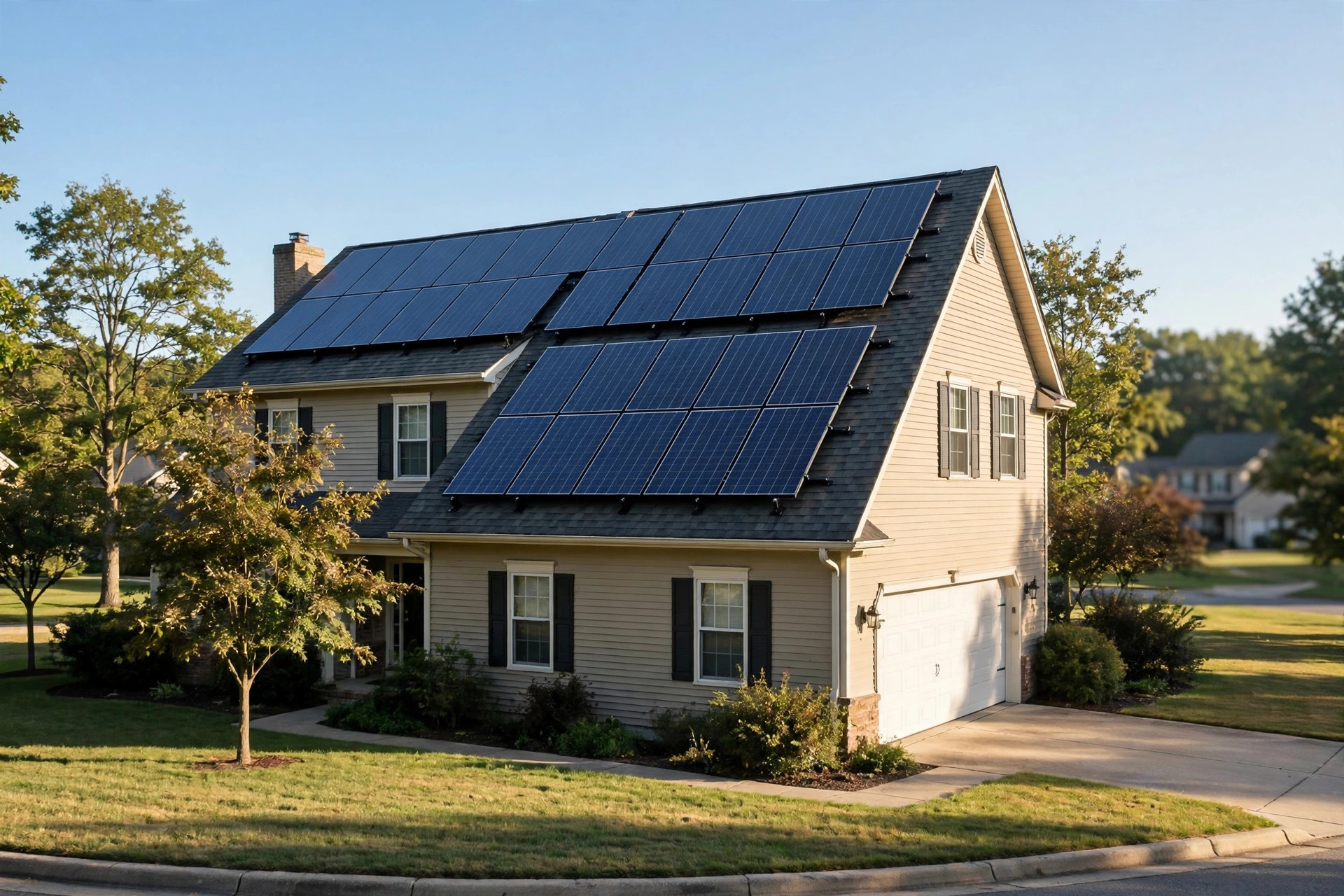

Many American families ask the same question today. What are the best solar panels for home 2026 reviews USA buyers can trust? The market is large. The claims are loud. The prices vary. This guide cuts through the noise. It explains what matters in plain terms. It walks through panel types, costs, care, and safety. It closes with answers to common questions. By the end you will know how to judge any panel on its own merits.
Why Solar Panels Matter for American Homes
Power bills rise year after year. A home solar system turns sunlight into power. It lowers the monthly bill. It gives a measure of freedom from the grid. In some states it can carry a home through short outages when paired with a battery. A battery stores the spare power of the day. It feeds the fridge, the lights, and the router at night. This is the quiet strength of a home system. The house keeps running while the street goes dark.
Solar panels also add value to the house. Buyers in many markets pay more for homes with owned panels. A system can serve for twenty-five years or more. That is a long life for a home upgrade. The panels have no moving parts. They make no noise. They sit on the roof and work in silence.
The environmental gain is real. A home system cuts the share of power drawn from coal and gas. One rooftop will not change the grid. But millions of rooftops change a great deal. For many owners this is reason enough to start.
What to Look for in the Best Solar Panels for Home: Best Solar Panels for Home 2026 Reviews Usa
Reviewers test panels in labs. They measure power output and heat behavior. They track how output fades over time. A few facts matter more than the rest. Read them before you read any star rating.
Efficiency Ratings
Efficiency tells how much sunlight becomes power. Most home panels sit between nineteen and twenty-three percent. A higher number means more power from the same roof space. Roof space is limited on many homes. Small roofs need high-efficiency panels. Large roofs can use mid-range panels and still meet the need.
Do not chase the highest number at any cost. A top panel may cost far more for a gain of one or two percent. Compare the power per dollar, not the rating alone.
Warranties
Two warranties matter. The product warranty covers defects. It runs from ten to twenty-five years on most brands. The performance warranty covers output loss. It usually promises eighty to ninety percent of original output after twenty-five years. Long warranties show maker confidence. Short warranties ask questions.
Temperature Coefficient
Panels lose some power in heat. The temperature coefficient states how much. A lower number is better. Hot states such as Arizona and Texas feel this effect most. Check this figure in the spec sheet. It sits near the efficiency rating. A panel rated at minus 0.26 percent per degree keeps more power than one rated at minus 0.38 percent. Over a long hot summer that gap shows up in the monthly bill.
Degradation Rate
All panels lose output over time. The rate of loss is called degradation. Good panels degrade at about half a percent per year. Weaker panels may lose one percent per year or more. A slow degradation rate keeps the system strong in year twenty and beyond. The spec sheet lists this figure. Compare it across brands. It is one of the most honest numbers a maker can publish.
Reviews and Test Data
Independent reviews carry weight. Read tests from labs and buyer sites. Sites like CNET and PCMag publish panel roundups. Consumer Reports rates gear on hard test data. These pages help you see past marketing claims.
Types of Home Solar Panels
Three main types reach the home market. Each has strengths. Each has a price point.
Monocrystalline Panels
These are the most common choice today. They use single-crystal silicon cells. They show a dark, even face. They lead on efficiency. They last long. Most premium home systems use them. They cost more than the other types. For most roofs they are the best value. Their dark face also wins on looks. Many owners prefer the clean line of a black monocrystalline row. The premium is often worth it on small or shaded roofs where every watt counts.
Polycrystalline Panels
These use many silicon crystals in each cell. They show a blue, marbled face. They cost less than monocrystalline panels. They also give less power per square foot. They suit large roofs with space to spare. They still serve for twenty years or more with proper care.
Thin-Film Panels
These use layers of light-absorbing material on glass or foil. They are light and bendable. They fit curved roofs and boats and sheds. Their efficiency runs lower than crystal panels. They need more area for the same power. They are rare on full home systems but useful in odd spots.
All-Black Panels
All-black panels are a finish style, not a new type. The cells, frame, and backsheet are black. They blend with dark roofs. Many owners choose them for looks. They cost a little more than blue-faced panels of the same class.
Cost and Price of Home Solar Panels in 2026
A full home system costs far more than the panels alone. It needs an inverter, racking, wiring, and labor. It needs permits and inspection. The residential cost per watt in 2026 gives a fair way to compare quotes.
Expect a typical American system to run between fifteen and thirty thousand dollars before incentives. Large homes in high-sun states pay more. Small systems on small roofs pay less. Get three or more quotes. Compare the price per watt, not the headline total.
Federal tax credits lower the net cost. State and local rebates lower it further. Net metering rules shape the payback too. They decide what the utility pays you for spare power. These rules change by state and by year. Check your own utility before you sign.
Do not judge a quote by the brand of panel alone. Two quotes can use the same panel and differ by thousands of dollars. Labor rates, permit fees, and roof work shape the total. A simple flat roof costs less to wire than a steep roof with many faces. Ask each bidder for an itemized list. A firm that hides its line items is a firm to avoid.
Lease or Buy
Many firms offer leases and power purchase deals. The firm owns the panels. You pay a fixed monthly sum. Upfront cost is low or zero. But you miss the tax credit. You also miss the rise in home value that owned systems bring. Our solar lease vs buy comparison lays out the trade in full. Buying with a loan often wins over a twenty-five-year span.
Care and Upkeep
Solar panels need little care. Rain washes most dust away. In dry or dusty areas a yearly rinse helps. Use a soft brush and plain water. Never use harsh soap or a pressure washer. A hard blast can crack glass or scratch the face.
Check the system app now and then. It shows daily power output. A sharp drop may mean a fault or heavy soiling. Most systems run for years with no service call. Inverters may need swap after ten to fifteen years. Plan for that cost from the start.
Trim trees that shade the roof. Shade cuts output more than many owners expect. Even a small shadow across a panel row can drag the whole string down. A yearly look at the roof keeps small issues small.
Safety
Rooftop power gear is safe when installed right. It is risky when installed wrong. Always use a licensed installer. The firm should carry insurance and local permits. The work must meet the National Electrical Code. Your city inspector checks the final job.
Grounding matters. Wiring matters. Proper rail mounts matter in high-wind zones. Ask the installer about wind and snow ratings. The U.S. Consumer Product Safety Commission lists recalls on electrical gear. Check your inverter and panel models there after install.
Home batteries add new safety rules. Lithium units need clear space and proper vents. Keep manuals where the family can find them. Tell your fire department that a solar system sits on the roof. Crews work safer with that knowledge.
Pairing Panels with a Smart Home
Solar fits well with smart home gear. A smart thermostat can run heavy loads when the sun shines. Google smart home devices and other platforms schedule washers and chargers for peak sun hours. This lifts the value of every panel on the roof.
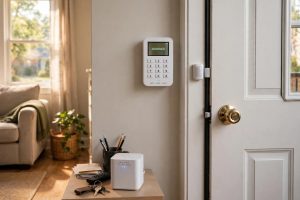
Security gear also draws small steady power. A home battery can keep cameras and alarms alive in an outage. Firms like Ring, SimpliSafe, and ADT sell low-power devices that pair well with solar backup. For whole-home backup, read our solar generator for home backup reviews before you choose a unit.
News sites track panel tech year by year. The Verge covers new cell designs and home battery launches. The U.S. Department of Energy publishes plain guides on home solar, incentives, and grid rules. Both are worth a read before you sign a contract.
Frequently Asked Questions
How many panels does a home need?
Most American homes use fifteen to twenty-five panels. The exact count rests on yearly power use and roof sun hours. An installer reads your power bills and models the roof. The model gives a panel count. Ask for the model in writing.
How long do home solar panels last?
Panels often last twenty-five to thirty-five years. Output fades slowly, about half a percent per year on good panels. The inverter usually fails first. Budget for an inverter swap near year twelve or fifteen.
Do panels work on cloudy days?
Yes, but output falls. Heavy cloud cover may cut output to one quarter of the sunny-day rate. Panels still earn their keep in cloudy regions. They simply need more panels or a longer payback time.
Will panels damage my roof?
A good install does not damage the roof. Rails bolt to rafters through sealed mounts. The mounts carry weather gaskets. A poor install can leak. This is why licensed firms and local permits matter. Ask about the roof warranty before work starts.
What happens during a power outage?
Standard grid-tied systems shut down in an outage. This rule protects line crews. To keep power in an outage you need a battery and an islanding switch. The switch cuts the home from the grid. The battery then feeds the house. Plan this at design time, not after.
Are solar panels worth it in 2026?
For many owners, yes. Power prices keep rising. Panel prices stay low. Tax credits still cut the net cost. The math turns on your state, your roof, and your usage. Run the numbers with three quotes. Trust the math, not the sales pitch.
A Final Word
The best solar panels for home 2026 reviews USA lists are only a starting point. Ratings point to strong makers. They do not replace a site survey, three quotes, and a careful read of the warranty. They also do not replace a talk with neighbors who own systems. Local owners know which firms answer the phone and which fade away. Match the panel to your roof. Match the system to your bills. Choose an installer with a local record and proper licenses. Do those steps well, and the panels will serve your home for decades.
References
ADT. (n.d.). Home security and automation. https://www.adt.com CNET. (n.d.). Technology news and reviews. https://www.cnet.com Consumer Reports. (n.d.). Product reviews and ratings. https://www.consumerreports.org Google Store. (n.d.). Smart home devices. https://store.google.com PCMag. (n.d.). Technology product reviews. https://www.pcmag.com Ring. (n.d.). Smart home security devices. https://www.ring.com SimpliSafe. (n.d.). Home security systems. https://www.simplisafe.com The Verge. (n.d.). Technology news and reviews. https://www.theverge.com U.S. Consumer Product Safety Commission. (n.d.). Product safety information. https://www.cpsc.gov U.S. Department of Energy. (n.d.). Energy efficiency and renewable energy. https://www.energy.gov
Was this guide helpful?

About Sarah Mitchell
The My Garden US editorial team writes practical, in-depth home and garden guides for American homeowners — tested advice, no fluff.
You May Also Like
Home Assistant vs SmartThings Comparison USA: Which Smart Home Platform Wins
April 30, 2026 0 views
Solar Gate Opener Reviews for Driveway USA: A Complete Buyer’s Guide
July 29, 2026 0 views
Home Security System Installation Cost USA: A Plain Guide for Homeowners
January 10, 2026 0 views