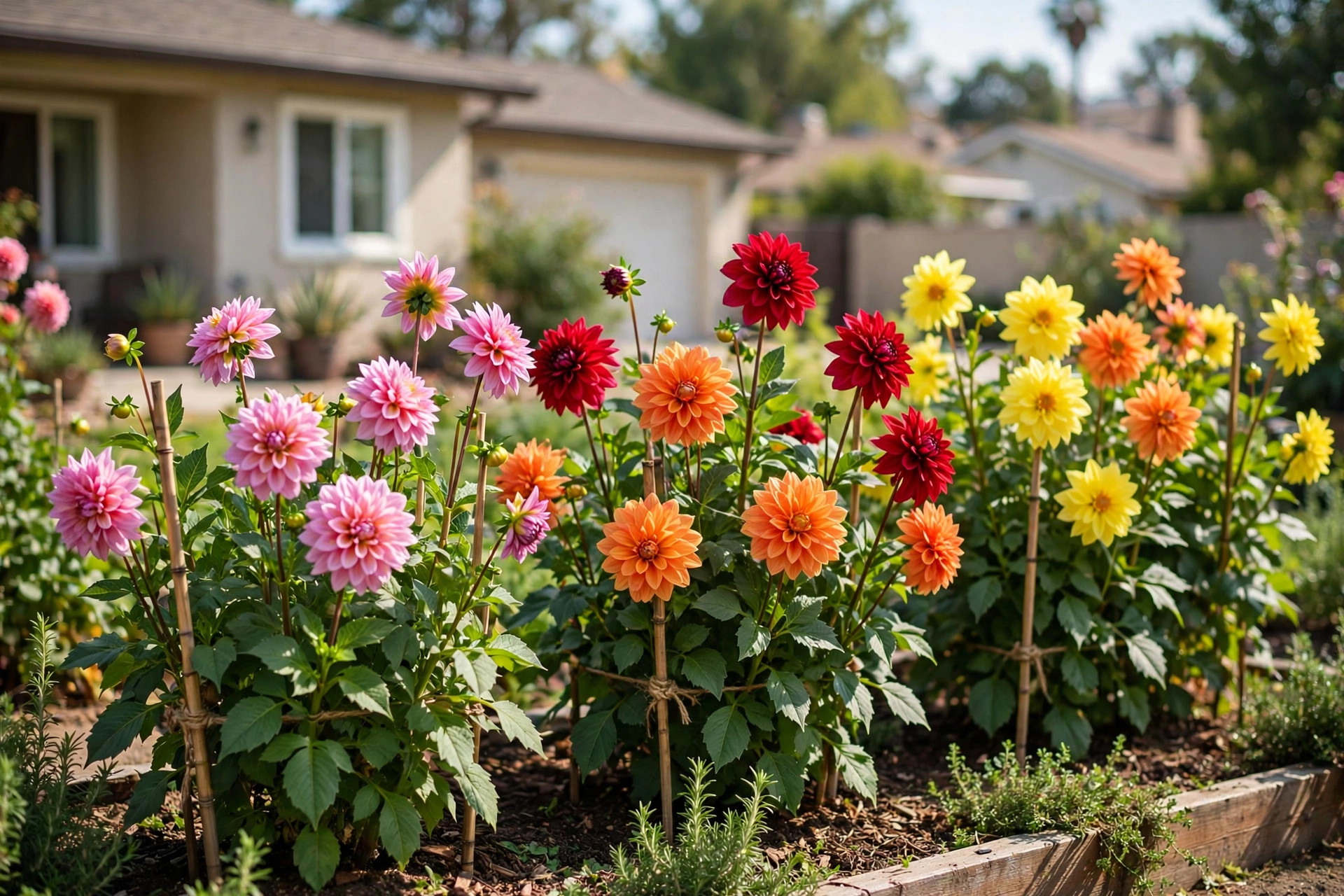

Dahlias give California gardeners more color per dollar than almost any other summer flower. When you buy dahlia bulbs bulk california homes usa suppliers offer, you can fill whole beds, borders, and cutting gardens for a fraction of what single tubers cost at a nursery. This guide explains why bulk buying suits California homes, how to pick good tubers, when to plant in California’s climate, and how to keep the blooms coming from July until frost.
Why It Matters for California Homes
California has long growing seasons. Most parts of the state get warm weather from April through October. Dahlias love that. They bloom from mid-summer until the first frost. In much of California, that means four or five months of flowers.
Bulk buying matters because dahlias look best in groups. One lone dahlia in a corner looks thin. Ten or twenty in a bed make a real show. Buying in bulk drops the price per tuber. Homeowners in California can plant a full border for the cost of a few pots at a garden center. For those comparing ways to stock a yard, a bulk dahlia bulb buying guide for the USA can help you weigh the options before you order.
Dahlias also suit California water habits. Once started, they need steady water, but they do not demand daily soaking in most soils. With mulch and drip lines, they fit well into California’s careful watering culture. Many homeowners already run drip systems for lawns and shrubs. Dahlias plug right into that setup.
Finally, dahlias are fine cut flowers. A bed of twenty plants can fill vases all summer. That alone pays for the bulbs many times over.
What to Look for When Buying in Bulk: Dahlia Bulbs Bulk California Homes Usa
Not all bulk lots are equal. Here is how to judge quality before you spend.
Tuber firmness and size
A good dahlia tuber feels firm, like a potato. It should have at least one eye, which is the small bud where the new stem grows. Soft, shriveled, or moldy tubers are poor bets. They may still sprout, but weak starts make weak plants.
Bulk packs often mix sizes. That is fine. A smaller tuber with a clear eye can outgrow a large one with a weak eye. Ask the seller about the eye count if the listing does not say. Reputable sellers state the number of eyes per clump. Established seed houses like Burpee and Gurney’s list tuber grades in their catalogs, which gives you a baseline for judging quality.
Variety mix or single variety
Some bulk lots sell one variety. Others sell a mix. Single-variety lots give a uniform look. That suits formal borders. Mixed lots give more color range. That suits cottage gardens and cutting beds. Read the listing to learn which you are buying.
Dinnerplate dahlias make huge blooms. Border dahlias stay short and neat. Cactus dahlias have spiky petals. Pompon types make round balls of color. Guides from Park Seed and White Flower Farm describe each form with photos, which helps when a bulk lot lists only form names. For California homes, mid-size decorative types do well. They handle heat better than the giant dinnerplates.
Count and shipping
Bulk usually means ten, twenty-five, fifty, or one hundred tubers. Larger counts lower the price per tuber. But tubers store poorly in heat. Do not order one hundred if you only have room for twenty. Unplanted tubers in a warm California garage may dry out before you use them.
Order so the tubers arrive near planting time. In most of California, that is late March through May. Spring shipping beats fall shipping for dahlias. Fall-ordered tubers must be stored all winter, which adds risk.
Types of Dahlia Bulbs Sold in Bulk
Sellers group dahlias in a few common ways. Knowing the terms helps you buy the right type.
Mixed color collections are the most common bulk product. They promise a range of colors at a low price. Quality varies. Cheap mixes may skew toward common pinks and reds. Better mixes include named variety blends.
Single color lots sell many tubers of one color, often red, white, or yellow. They suit events and formal plantings. They also suit cutting gardens where one color is wanted.
Named variety assortments list each variety in the mix. These cost more per tuber. They suit gardeners who want to know exactly what will grow.
Decorative, cactus, and pompon types describe flower form. Bulk lots may include one form or a blend. If form matters to your design, read the fine print.
Height classes range from dwarf types at twelve inches to tall types at five feet. Tall types need staking. Dwarf types suit pots and edging. For bulk planting in a California yard, medium heights of two to three feet are the easiest to manage.
Planting Dahlias in California
California is not one climate. Planting dates shift by region. The rules below cover the main zones.
Southern California
Coastal and inland Southern California warms early. Soil reaches safe planting temperature by late March or April. Frost risk ends early. Plant after nights stay above fifty degrees. Dahlias planted in April bloom by July.
Central Valley
The Valley warms fast in spring but can still see late frost into March. Wait until mid-April in most years. Summer heat runs high. Give dahlias afternoon shade if you can. Mulch well to hold soil moisture.
Bay Area and coast
The Bay Area stays mild. Plant in April or May. Fog and cool nights slow early growth, but plants catch up by summer. The Old Farmer’s Almanac publishes frost-date tables by zip code, which helps coastal gardeners pick the right week. Choose varieties known for strong stems. Wind can snap tall blooms.
Foothills and northern inland
Higher ground cools at night and warms later. Plant in May after frost danger passes. The shorter season still gives three to four months of bloom. Start tubers indoors in pots in March for an earlier start.
How to plant
Dig a hole four to six inches deep. Lay the tuber flat with the eye pointing up. Cover with soil. Space tubers twelve to eighteen inches apart. Water once after planting. Then hold back on water until green shoots appear. Step-by-step how-to pages from Gardening Know How and The Spruce walk through the same method with diagrams. Wet soil before sprouting can rot the tuber. After shoots show, water deeply once or twice a week, depending on heat.
Stake tall types at planting time. Push the stake in beside the tuber, not through it. Tie stems loosely as they grow.
Cost and Price
Bulk dahlia tubers in the United States often cost between two and six dollars each in bulk, depending on variety and count. A twenty-five tuber lot of mixed varieties may run fifty to one hundred dollars. Named varieties in bulk cost more.
Compare that with single tubers at nurseries, which often sell for eight to fifteen dollars each. The bulk savings are real. But factor in shipping. Some sellers charge high freight for heavy bags. A lot that looks cheap can lose its edge once shipping is added.
Also budget for supports, mulch, and fertilizer. These cost less than the bulbs in most cases. A twenty-plant bed needs about three bags of mulch and a box of stakes. Keep those costs in mind when you plan.
Care and Upkeep
Dahlias are not hard plants, but they reward steady care.
Watering
Give deep water two or three times a week in summer. In the hottest parts of California, daily watering may be needed in August. Drip lines or soaker hoses work best. They keep leaves dry and put water at the roots. Wet leaves invite mildew.
Feeding
Dahlias are heavy feeders. Work compost into the bed at planting. Then feed every three to four weeks with a low-nitrogen fertilizer. Too much nitrogen grows leaves at the cost of flowers. A balanced bloom food made for flowering plants suits them well. Monrovia and Proven Winners both publish feeding schedules for dahlias that match this rhythm.
Deadheading
Cut spent flowers as soon as they fade. This keeps plants making new buds. If you want cut flowers for the house, pick blooms in the morning when stems are firm. Cut deep into the plant. That pushes longer stems for the next round.
Pests
Slugs and snails chew young shoots. Set traps or use bait early in the season. Earwigs hide in blooms. Shake flowers before bringing them inside. Aphids gather on buds. A strong spray of water knocks most off. Spider mites appear in hot, dry weather. Hose the undersides of leaves to keep them down.
Staking and support
Tall varieties flop in wind. Tie stems to stakes every foot of growth. A ring of netting around a whole bed also works. Install supports before plants reach knee height. Late staking breaks stems.
Lifting and storage
Most of California is mild enough to leave tubers in the ground. In zones where frost is light, cut stems to the ground after the first frost and mulch thickly. In colder pockets, lift tubers after frost blackens the tops. Let them dry a few days. Store in a cool, dark place in peat or vermiculite. Check monthly for rot.
Safety
Dahlias are not food. All parts of the plant can upset the stomach if eaten. Keep tubers away from small children and pets who chew things. Wear gloves when handling dusty potting mixes.
Some people get skin rashes from dahlia sap. If your skin reddens after handling cut stems, wash well and wear gloves next time.
When buying in bulk, store tubers where pets cannot reach them. A bag of fifty tubers in the garage tempts a curious dog. Keep bags sealed and off the floor.
Frequently Asked Questions
How many dahlia bulbs should I buy for a California yard?
It depends on the bed size. For a border six feet long and two feet wide, twelve to eighteen tubers fill it well. For a cutting bed four feet by eight feet, thirty to forty tubers work. Measure your bed, then divide the square footage by two to get a rough tuber count.
When is the best time to buy bulk dahlia bulbs in California?
Buy in winter or very early spring. Sellers list their best stock from December through February. Order by March so tubers arrive before planting season. Late orders may get picked-over stock.
Can I plant dahlias from bulk lots in pots?
Yes. Dwarf and medium varieties suit pots twelve inches or wider. Use good potting soil. Water pots daily in summer heat. One tuber per pot gives the best results. Pots dry fast in California sun, so check them morning and evening.
Do dahlias come back every year in California?
In most of California, yes. The climate is mild enough for tubers to rest in the ground over winter. Mulch them after the first frost. In the coldest inland valleys, lift and store them to be safe.
What is the difference between a dahlia bulb and a dahlia tuber?
Strictly, dahlias grow from tubers, not true bulbs. But sellers and gardeners call them bulbs all the time. It is the same plant either way. The care and planting rules do not change with the name.
Are bulk dahlia bulbs lower quality than nursery tubers?
Not always. Bulk sellers move large volumes, so prices drop. Quality varies by seller, not by lot size. Read reviews. Look for sellers who state eye counts and variety names. A trusted seller’s bulk lot can match or beat nursery stock. University extension research indexed by the National Institute of Food and Agriculture covers tuber quality standards that apply to bulk buying as well. For fall-planted color that pairs well with summer dahlias, many California gardeners also shop tulip bulbs for fall planting and daffodil bulb packs for spring sale to stretch the bloom season.
A Final Word
Dahlias repay bulk buyers with months of bold color. California’s long season is made for them. Buy firm tubers with clear eyes. Plant after the soil warms. Water deep, feed light, and cut flowers often. Do that, and a single bulk order will fill your yard with blooms from July to frost. For many California homes, that is the best garden bargain of the year.
References
Burpee. (n.d.). Seeds, plants, and gardening supplies. https://www.burpee.com Gardening Know How. (n.d.). Gardening guides and plant care. https://www.gardeningknowhow.com Gurney’s Seed & Nursery Co. (n.d.). Seeds, plants, and garden supplies. https://www.gurneys.com Monrovia. (n.d.). Plants for home gardens. https://www.monrovia.com National Institute of Food and Agriculture. (n.d.). Agricultural research and extension. https://www.nifa.usda.gov Park Seed. (n.d.). Seeds, plants, and gardening supplies. https://www.parkseed.com Proven Winners. (n.d.). Plants and gardening inspiration. https://www.provenwinners.com The Old Farmer’s Almanac. (n.d.). Gardening calendars and advice. https://www.almanac.com The Spruce. (n.d.). Home and garden advice. https://www.thespruce.com White Flower Farm. (n.d.). Plants, bulbs, and garden supplies. https://www.whiteflowerfarm.com
Was this guide helpful?

About David Wilson
The My Garden US editorial team writes practical, in-depth home and garden guides for American homeowners — tested advice, no fluff.
You May Also Like
Organic Herb Seeds Where to Buy USA: A Plain Guide for the Home Gardener
August 19, 2026 0 views
Morning Glory Seeds: American Homes Guide
June 8, 2026 0 views
Where to Buy Wildflower Seed Mixes in the USA
March 10, 2026 1 views