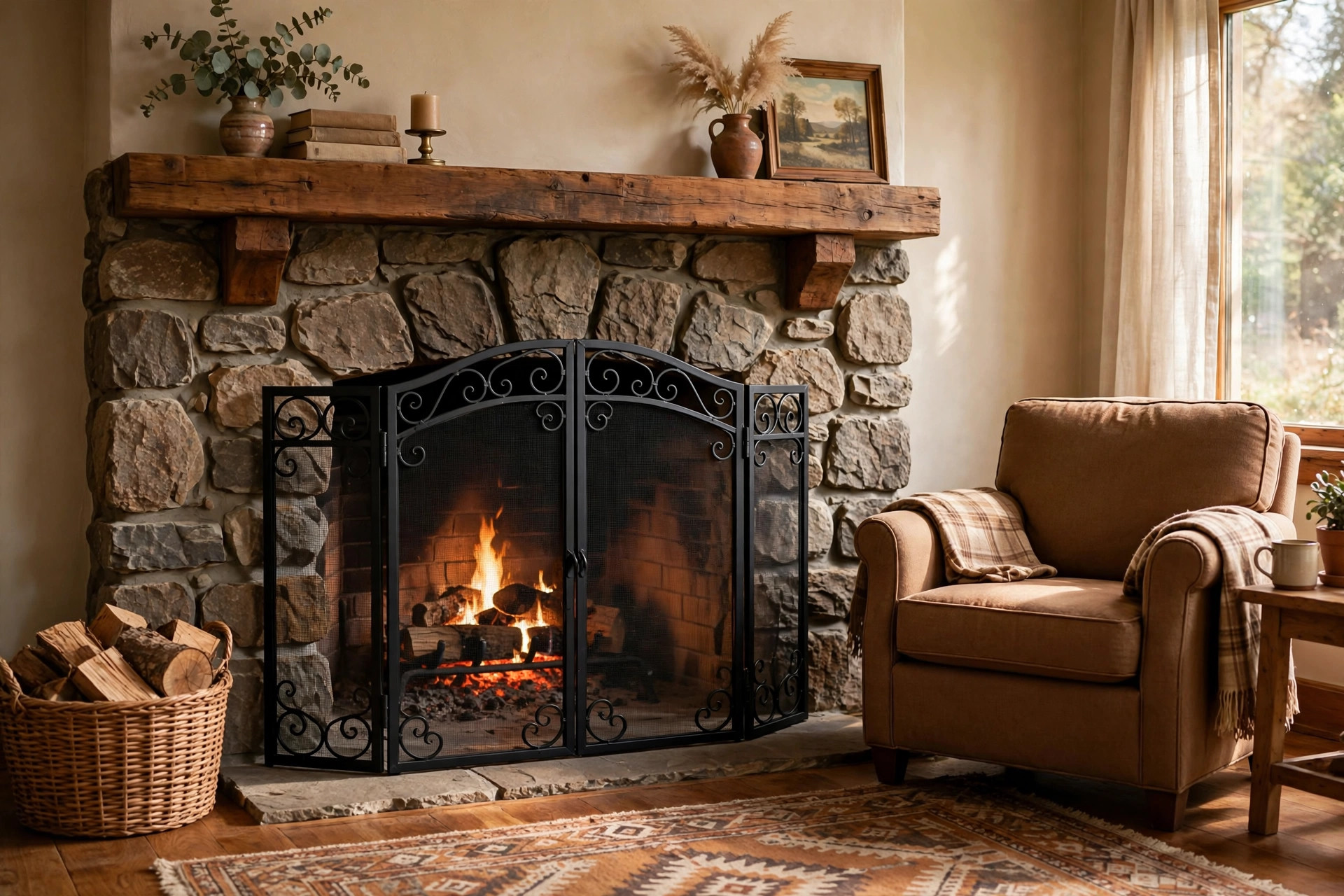

A fire in the hearth is one of the great comforts of an American winter. A good screen keeps sparks and embers where they belong. Screens with doors go a step further. They let you tend the fire without lifting the whole screen away. They also give a finished look to the fireplace. This guide offers a full fireplace screens with doors price comparison usa shoppers can use before they buy.
Prices vary a great deal. A simple screen may cost less than fifty dollars. A hand-forged iron screen with doors can cost more than a thousand. The gap comes down to material, size, glass, finish, and brand. Once you know what drives the price, you can shop with care and avoid paying for features you do not need.
Why a Screen with Doors Is Worth the Cost
An open fireplace is safe only when it is covered. Sparks can jump several feet. They can land on a rug, a wood floor, or a chair. A mesh screen stops most sparks. Doors add a second layer of protection. When the doors are closed, the fire is held inside the firebox. When you want to add a log, you open a door instead of moving the screen.
Doors also help with draft control. An open chimney pulls warm room air up the flue. A closed screen with doors slows that loss. The room stays warmer. The furnace runs less. Over one winter, the savings add up.
There is also the matter of looks. A screen with doors frames the fire like a picture. It gives the hearth a tidy, built-in feel.
Price Ranges Across the USA: Fireplace Screens with Doors Price Comparison Usa
The market breaks into four broad bands. These are typical 2026 prices seen at major retailers and specialty shops across the country.
Budget screens, $40 to $90. These are usually flat steel frames with simple mesh and two small doors. The finish is often a black powder coat. They fit standard fireplace openings. They work well, but the steel is thin and the hinges may loosen after a few seasons.
Mid-range screens, $90 to $250. This is the sweet spot for most buyers. The frames are thicker. Many have glass panels in the doors. Handles stay cool to the touch. Finishes include bronze, pewter, and brushed nickel. Fit and finish are much better here than in the budget band.
Upper mid-range screens, $250 to $500. Screens in this band often have full glass doors with mesh backing. The glass lets you watch the fire with the doors shut. Many models are made for larger or arched openings. Brands in this range pay close attention to hinges, latches, and edge detail.
Premium and custom screens, $500 to $1,200 or more. These are hand-forged iron, heavy brass, or custom-fit pieces. Some are made to order for stone or masonry openings that are not standard. The weight alone tells the story. A premium screen may weigh forty pounds or more.
A practical fireplace glass doors reviews and buying guide can help if you want to go beyond a screen to full glass doors. That step costs more but seals the firebox tighter.
What Sets the Price
Several factors decide where a screen falls in the range above.
Material. Steel is the most common and the least costly. Wrought iron costs more and lasts longer. Solid brass is the most costly of the common metals. It shines beautifully but needs polish.
Size. Larger openings need larger screens. A screen for a forty-inch opening uses more metal and more glass than one for a twenty-eight-inch opening. Custom sizes add cost fast.
Glass versus mesh. Mesh panels are cheap and light. Tempered glass costs more but lets you see the fire. Some screens mix the two. Glass doors with mesh backing give both views and spark protection.
Doors and hardware. Two doors need four hinges and a latch. Better hardware costs more. Cheap hinges sag. Good ones swing true for years. Cool-touch handles and magnetic latches sit at the top end.
Finish. A plain black finish is the least costly. Oil-rubbed bronze, antique brass, and powder-coated colors add to the price. Hand-applied finishes cost the most.
Brand and source. Big-box stores keep prices low through volume. Specialty fireplace shops charge more but offer fitting help and better brands. Online marketplaces show both ends of the range side by side.
Types of Fireplace Screens with Doors
Flat screens with doors. The most common type. A flat frame stands on the hearth in front of the opening. Two doors swing open for tending the fire. They suit most standard fireplaces.
Three-panel folding screens. A center panel with two side wings. The doors sit in the center panel. These cover wide openings and fold flat for storage in summer.
Arched screens. Made for arched fireplace openings. The top of the screen follows the curve of the arch. They cost more because the shape is harder to build.
Freestanding versus fixed. Most screens with doors are freestanding. They stand on feet in front of the firebox. Some can be fastened to the fireplace face for extra steadiness, which helps in homes with small children.
Spark guards with doors. These are low screens, often only a foot tall. They sit inside the opening. They are less costly but offer less coverage.
Homeowners who heat mainly with gas may want to compare screens against high efficiency gas log sets for sale to decide which upgrade gives more value.
How to Choose the Right Screen
Start with the opening. Measure the width and the height of the fireplace opening. Write the numbers down. A screen should be at least as wide as the opening and a few inches taller. For freestanding screens, add six inches to the width so sparks cannot slip past the sides.
Next, think about how you use the fire. If you burn wood often, choose steel or wrought iron. The heat is strong and constant. Thin frames can warp over time. If the fireplace is mostly for show, a lighter screen with glass doors works well.
Check the clearance. The screen must stand far enough from the fire that the finish does not scorch. Most makers print a minimum distance on the box. Follow it.
Look at the doors. They should swing open wide enough to load logs. They should latch shut with a firm click. Lift the screen in the store if you can. A good screen feels solid, not flimsy.
Match the finish to the room. Black goes with almost everything. Bronze suits traditional rooms. Nickel and pewter suit modern rooms. Brass suits formal rooms. The screen will be in view all winter, so choose well.
Consider the weight. A heavy screen stays put. A light screen may tip if bumped. If you have children or pets, weight is a safety feature.
Cost Comparison by Store Type
Where you buy matters as much as what you buy. Chains such as The Home Depot and Lowe’s carry screens from about $40 to $300. Local hearth shops carry brands like Napoleon and Heatilator, priced $150 to $800 and up, with expert fitting and strong warranties. Online stores often run ten to twenty percent below store prices, but you cannot test the doors before the screen arrives. Used iron screens can be fine buys, since iron lasts for decades, but check the hinges and mesh before you pay.
Installation and Fit
Most freestanding screens need no tools. You set them in front of the opening and adjust the feet. That is all. This is one reason they are popular. A full glass door set needs screws and a frame, which is more work.
Measure twice. The most common mistake is buying a screen that is too small. Sparks can pass around a short screen. A screen that is too large looks awkward and may block the mantel.
For masonry fireplaces, check that the hearth is level. An uneven hearth makes the screen rock. Small shims under the feet fix it.
If the fireplace has a raised hearth, measure from the hearth surface, not the floor. If it has a flush hearth, make sure the screen feet sit flat on the floor.
Care and Upkeep
A fireplace screen needs little care, but a little goes a long way.
Wipe the frame with a dry cloth each month during burning season. A damp cloth with mild soap removes heavier grime. Dry the metal after wiping to stop rust. Check the mesh once a year for thin spots or holes. Oil the hinges once a year with a drop of high-heat oil.
Glass panels need more care. Let the glass cool fully before you clean it. Use a cleaner made for fireplace glass. Clean glass shows the fire better and helps you spot cracks early. Store the screen in a dry place in summer if you take it down.
Safety Rules
A screen reduces risk. It does not remove it. Follow these rules every time you burn.
Keep the doors closed when the fire is burning and you are not tending it. Open them only to add wood or adjust logs. Close them again right away.
Keep all flammable items at least three feet from the fireplace. That includes furniture, curtains, rugs, and firewood stacks. Sparks are not the only danger. Radiant heat can dry out wood and cloth over time.
Never leave a fire burning when you go to bed or leave the house. Let it burn down first. Spread the coals thin so they cool faster.
Use a screen with every wood fire, even a small one. A single spark can start a house fire. The U.S. Fire Administration guidance on home fire safety and local fire codes both stress barriers between open flame and the room. For official burn and emissions guidance, the EPA burn wise program explains how to burn wood cleanly and safely.
Teach children that the screen is hot. The metal can burn skin even when the fire looks low. A fixed screen or a safety gate adds a layer of protection for toddlers.
Install smoke alarms and a carbon monoxide alarm on every floor. Test them each month. A screen is one part of a safe fireplace system, not the whole system.
Fireplace Screens with Doors Versus Alternatives
A screen with doors is not the only option. Here is how it compares.
Simple mesh screens. These cost $20 to $60. They stop sparks but have no doors. You lift the whole screen to tend the fire. They are fine for light use.
Glass door sets. These mount to the fireplace face. They seal the opening better and cut drafts more. They cost $200 to $900 installed. If you want maximum efficiency, glass doors win. For simple spark control, a screen with doors is enough.
Electric inserts. A freestanding electric stoves reviews and buying guide is worth reading if you want heat without wood, smoke, or ash. Electric stoves cost $100 to $600 and need only an outlet.
Many owners pair a screen with doors and a good set of fireplace tools. Together they make tending the fire safe and easy.
Shopping Tips for American Buyers
Buy in spring or summer when prices drop. Stores clear fireplace gear after winter, and you can save twenty to thirty percent. Compare the total cost, not just the sticker price. A $60 screen that lasts two years costs more per year than a $180 screen that lasts ten. Check the return policy before you order online. If you are unsure of the size, buy a little large rather than a little small. Home improvement guides at This Old House, Family Handyman, and The Spruce offer solid advice on measuring fireplaces and choosing hearth gear.
Frequently Asked Questions
How much should I pay for a fireplace screen with doors? Most American buyers pay between $90 and $250. Budget screens start near $40. Premium hand-forged screens run $500 and up.
Do I need doors, or is a plain screen enough? A plain screen stops sparks. Doors add convenience and better draft control. If you burn wood often, doors are worth the extra cost. You can tend the fire without moving the whole screen.
Will a screen with doors fit my fireplace? Measure your opening first. Standard openings are 28 to 42 inches wide. Most screens cover that range. Arched or extra-wide openings may need a custom screen.
Is glass or mesh better for the doors? Mesh is lighter and cheaper. Glass shows the fire better and blocks more heat loss. Glass doors with mesh backing give you both. Glass costs more and needs regular cleaning.
Can I use a screen with doors on a gas fireplace? Yes, in most cases. Check the fireplace manual first. Some gas units need specific clearances. The screen must not block vents or the pilot area.
How long does a fireplace screen last? A good steel or iron screen lasts ten to twenty years with basic care. Budget screens may last three to five years of heavy use. Rust and sagging hinges are the usual signs of age.
A Final Word
A fireplace screen with doors is a small purchase that pays off every winter. Prices in the United States range from under fifty dollars to over a thousand. For most homes, the $90 to $250 band is the right place to shop. Measure your opening, choose a sturdy frame, and pick a finish that suits your room. Do that, and the screen will serve you well for many winters to come.
References
Family Handyman. (n.d.). DIY home repair and maintenance. https://www.familyhandyman.com Heatilator. (n.d.). Fireplaces and fireplace products. https://www.heatilator.com Lowe’s. (n.d.). Home improvement products. https://www.lowes.com Napoleon. (n.d.). Fireplaces, grills, and heating products. https://www.napoleon.com The Home Depot. (n.d.). Home improvement products. https://www.homedepot.com The Spruce. (n.d.). Home and garden advice. https://www.thespruce.com This Old House. (n.d.). Home renovation guidance. https://www.thisoldhouse.com U.S. Environmental Protection Agency. (n.d.). Protecting human health and the environment. https://www.epa.gov
Was this guide helpful?

About Lisa Anderson
The My Garden US editorial team writes practical, in-depth home and garden guides for American homeowners — tested advice, no fluff.
You May Also Like
Best Electric Patio Heaters for Sale
January 29, 2026 0 views
Top Rated Chimney Inspection Services Reviews: A Homeowner’s Guide
May 13, 2026 0 views
Top Rated Reclaimed Wood Mantels for California Apartments
February 22, 2026 0 views