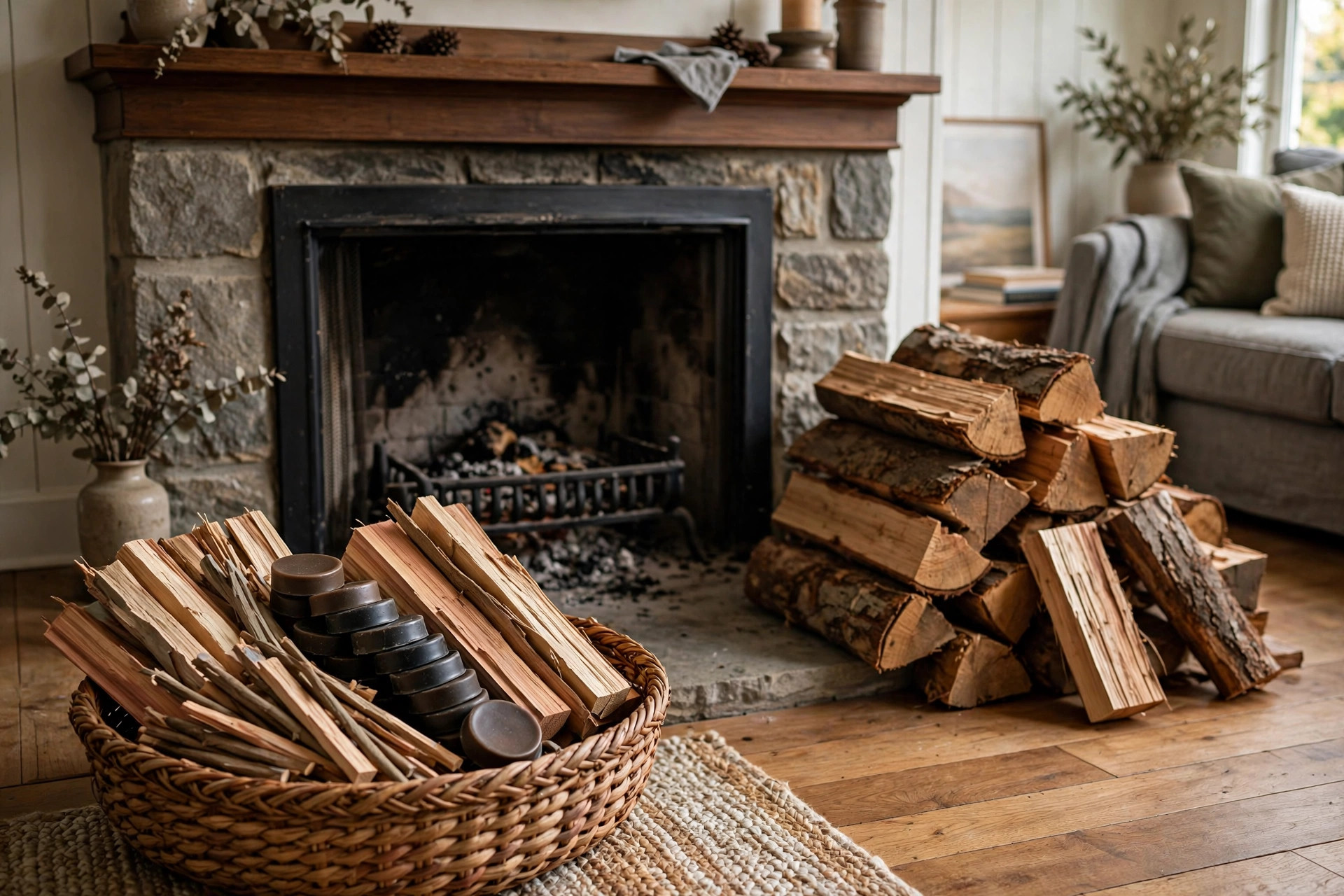
Lighting a fire in damp air can test the patience of any home owner. Wood swells with water. Paper curls and smokes. A match sputters and dies before the flame takes hold. This is why premium fire starters and kindling for humid climates exist. They are made to catch fast and burn long even when the air is thick with moisture. With the right products and a few sound habits, you can start a steady fire on the wettest evening of the year.
Why It Matters
Humid air changes the way a fire starts. Dry wood needs a strong, hot flame before it will catch. In dry country, a handful of newspaper and a match may be enough. In a humid climate, that same newspaper has soaked up moisture from the air. It smolders. It makes smoke. It gives little heat.
A premium fire starter gives you a hot, reliable flame that lasts several minutes. That window of heat is what drives moisture out of the surface of the wood. Once the outer layer dries, the wood catches. The fire grows from there. Kindling plays the same role one step further along. It is small, dry wood that bridges the gap between the starter flame and the full-size logs.
People who heat with wood in places like Florida, Louisiana, and coastal Texas learn this quickly. A cold snap arrives with rain. The power flickers. The family wants the fireplace going. Cheap fire starters from the bargain shelf fail again and again. Premium products cost a little more, but they work the first time. Over one winter, the saved matches and the saved frustration add up.
Types of Fire Starters: Premium Fire Starters and Kindling for Humid Climates
Fire starters come in several common forms. Each has strengths in humid air.
Wax-Coated Wood Shavings and Chips
These are small blocks or pucks made of wood shavings bound with wax. The wax repels water. It also burns hot and slow. A single puck can burn for ten to fifteen minutes. That is plenty of time to light even damp kindling. Many brands wrap each puck in its own foil or film so the wax stays dry in storage. Reviewers at Consumer Reports have long pointed to simple burn-time tests as the best way to judge these products.
Sawdust and Wax Bricks
Larger bricks press sawdust together with wax or paraffin. They are the heavy lifters of fire starting. One brick burns for twenty minutes or more. They work well under big, wet logs. The drawback is size. You may need to break a brick into pieces for a small fireplace or a patio chiminea.
Fatwood Sticks
Fatwood is resin-soaked pine wood, taken from the heart of old stumps. It catches with a single match and burns with a hot, steady flame. In humid climates it is prized because the resin keeps working even when the air is damp. It is a natural product with no added chemicals. Store it dry and it lasts for years.
Fire Starter Gels and Pastes
Gels squeeze from a tube onto the wood. They light with a match and burn hot. They are easy to carry on camping trips. In a home fireplace they are less common, because gels can flare fast and give off strong fumes. Keep them away from children and follow the label.
Compressed Wood Fiber Cubes
These cubes blend wood fiber with a small amount of wax or oil. They are odorless and leave little ash. Many are sold as all-natural. They burn for about eight to ten minutes. They are a good middle choice for daily fireplace use.
Kindling Choices for Damp Weather
Kindling is the next rung of the ladder. Starters light the kindling. Kindling lights the logs. Good kindling for humid climates shares two traits: it is thin, and it is kept dry.
Cedar kindling is a favorite. Cedar is light and resinous. Thin cedar splits catch quickly. Pine kindling works much the same way. Oak kindling burns longer once it catches, but it is harder to light in damp air.
Some stores sell kiln-dried kindling in sealed bags. The kiln drying drives moisture far below what air-dried wood holds. The sealed bag keeps humid air out until you are ready to burn. This is the most reliable store-bought kindling for wet climates.
You can also split your own kindling from dry logs. A small hatchet and a chopping block are all you need. Split kindling exposes fresh, dry faces that catch fast. Store the splits in a covered wood box by the hearth.
How to Choose
Start with your fireplace. A big open hearth takes full bricks or fatwood sticks without fuss. A small stove or insert needs smaller cubes or broken pieces. Measure your firebox before you buy in bulk.
Check the burn time on the label. In humid air, look for at least eight minutes of flame. Longer is better when your logs are damp. Products that promise two or three minutes are made for dry climates.
Read the ingredient list. Natural options use wood, wax, and resin. Some starters use kerosene or petroleum blends. Those may burn well, but they can smell and they add chemicals to your chimney. The Environmental Protection Agency advises home owners to burn only clean, dry fuel and to keep chimneys in good shape.
Consider ease of use. Wax pucks wrapped in foil are the simplest. You place one, light the corner, and stack kindling over it. Gels take more care. Bricks may need breaking.
Think about storage life. Wax and fatwood keep for years. Some chemical starters lose strength after one season. In a humid house, buy what you will use in one winter.
Cost and Price
Prices vary with type and pack size. A bag of twenty-four wax pucks often sells for eight to fifteen dollars. Fatwood sticks run ten to twenty dollars for a box, depending on weight. Large sawdust bricks are the best value per minute of burn, often under a dollar each in bulk packs. Kiln-dried kindling bags cost five to twelve dollars.
Buying in bulk saves money. A winter supply for a family that burns fires three nights a week might be two large bags of pucks and one bag of kindling. That is often under fifty dollars for the season. Compare that to the cost of wasted matches, ruined evenings, and smoke-filled rooms.
Watch for sales at the end of winter. Stores clear stock in spring. Buy then for next year, and store the goods in a dry place. Sealed bags keep the moisture out through the summer.
Building the Fire in Humid Air
Method matters as much as material. Use this simple order.
First, open the flue and the air vents. A cold chimney in damp weather needs a strong draft. Warm the flue with a rolled newspaper torch for a minute if the room has been cold.
Second, place two fire starters on the grate, a few inches apart. If you burn in a fire pit outdoors, set them on dry ground or a stone base.
Third, build a small teepee of kindling over the starters. Leave gaps for air. Air flow is the secret. A tight pile smothers the flame.
Fourth, lean two or three small logs against the kindling teepee. Do not add big logs yet. Let the kindling catch fully first.
Fifth, light the starters. Step back and watch. Resist the urge to poke the fire for the first five minutes. Add one larger log only when the kindling is burning bright.
This method works in the worst damp air. The long burn of premium starters gives the chimney time to warm and the draft time to build.
Storage and Care
Even the best products fail if they soak up water. Store fire starters in their original sealed packaging. Once a bag is open, move the contents to a plastic bin with a tight lid. Keep the bin near the fireplace but not so close that heat reaches it.
Keep kindling off the floor. A raised rack or a wood box with feet lets air move underneath. In very humid homes, a small dehumidifier near the hearth makes a real difference. Check your supply once a month through the burning season.
Fatwood keeps almost forever in a dry box. Wax pucks keep for years if sealed. Replace any starter that smells of mildew or feels soft and damp. It is not worth a failed fire on a cold night.
Rotate your stock. Use last year’s open bags first. Mark new bags with the month you bought them. This Old House and Family Handyman both stress that dry storage is the single biggest factor in reliable fire starting.
Safety First
Fire safety rules do not change with the weather. Keep a working smoke detector and carbon monoxide detector on every floor. The Consumer Product Safety Commission reminds home owners to test detectors each month.
Never use gasoline, lighter fluid, or any liquid fuel to start a home fireplace. Use only products made for that purpose. Keep a fire extinguisher within reach of the hearth.
Let ashes cool fully before you move them. Store cool ashes in a metal can with a lid, away from the house. Have your chimney swept once a year. Damp-weather burning makes more creosote, so do not skip this step.
Keep children and pets at least three feet from the fire. Use a sturdy screen or glass doors. Teach older children how the starters work, and keep all fire products locked away from small hands.
Fireplaces and Related Gear
Good starters work best with good equipment. A strong grate lifts the wood so air flows under the flames. If your grate is worn or rusted, look at top rated fireplace grates for texas homes for ideas that suit warm, humid regions.
Outdoor burning follows the same rules. A propane unit lights at the push of a button on damp evenings, as explained in our best propane fire pits buying guide. For wood-burning patios, our guide to top rated chimineas for patios for cold climates covers vessels that shield the fire from rain and wet air.
Stove and fireplace makers such as Napoleon and Heatilator publish clear manuals on fuel and lighting. Read yours. A few pages of reading can save a season of trouble.
FAQ
How long should a fire starter burn in humid air?
Aim for at least eight minutes. Ten to fifteen minutes is ideal. Short-burn starters made for dry climates often fail when logs are damp.
Are natural fire starters better than chemical ones?
For most home fireplaces, yes. Natural starters made of wood, wax, and resin burn clean and store well. Chemical starters may light fast but can smell and add soot to the chimney.
Can I make my own fire starters for damp weather?
You can. Dryer lint packed in cardboard egg cups and topped with melted wax is a classic home recipe. Pine cones dipped in wax work too. Store home-made starters sealed and dry, and use them within one season.
Why does my kindling smoke but not catch?
The kindling is too damp, or the air flow is too weak. Open the vents wider. Warm the flue first. Switch to kiln-dried kindling and a longer-burning starter.
How much should I spend per winter?
A typical family that burns fires a few nights a week spends thirty to sixty dollars a season on starters and kindling. Bulk packs at The Home Depot or Lowe’s cut the cost per fire.
Is fatwood safe for indoor fireplaces?
Yes, when used as directed. Fatwood is natural resin-rich pine. It burns hot and clean in open hearths and stoves. Do not use it in a fireplace that the maker says is wood-pellet only.
A Final Word
Premium fire starters and kindling for humid climates turn a chore into a pleasure. The fire lights on the first try. The room warms fast. The evening goes as planned. Choose a long-burning starter, keep everything dry, build the fire with room for air, and respect basic safety. Damp air does not have to win.
References
Consumer Reports. (n.d.). Product reviews and ratings. https://www.consumerreports.org Family Handyman. (n.d.). DIY home repair and maintenance. https://www.familyhandyman.com Heatilator. (n.d.). Fireplaces and fireplace products. https://www.heatilator.com Lowe’s. (n.d.). Home improvement products. https://www.lowes.com Napoleon. (n.d.). Fireplaces, grills, and heating products. https://www.napoleon.com The Home Depot. (n.d.). Home improvement products. https://www.homedepot.com The Spruce. (n.d.). Home and garden advice. https://www.thespruce.com This Old House. (n.d.). Home renovation guidance. https://www.thisoldhouse.com U.S. Consumer Product Safety Commission. (n.d.). Product safety information. https://www.cpsc.gov U.S. Environmental Protection Agency. (n.d.). Protecting human health and the environment. https://www.epa.gov
Was this guide helpful?

About Lisa Anderson
The My Garden US editorial team writes practical, in-depth home and garden guides for American homeowners — tested advice, no fluff.