
When winter comes early and stays late, many families find that their patio sits empty for months. A chiminea can change that. The top rated chimineas for patios for cold climates are built to stand up to freezing air, heavy snow, and wind. They burn wood, throw real heat, and turn a dead winter porch into a place where people gather. This guide explains what a chiminea is, how it works in cold weather, what to look for when you buy one, what you will pay, how to care for it, and how to use it with care.
What a Chiminea Is and Why It Matters
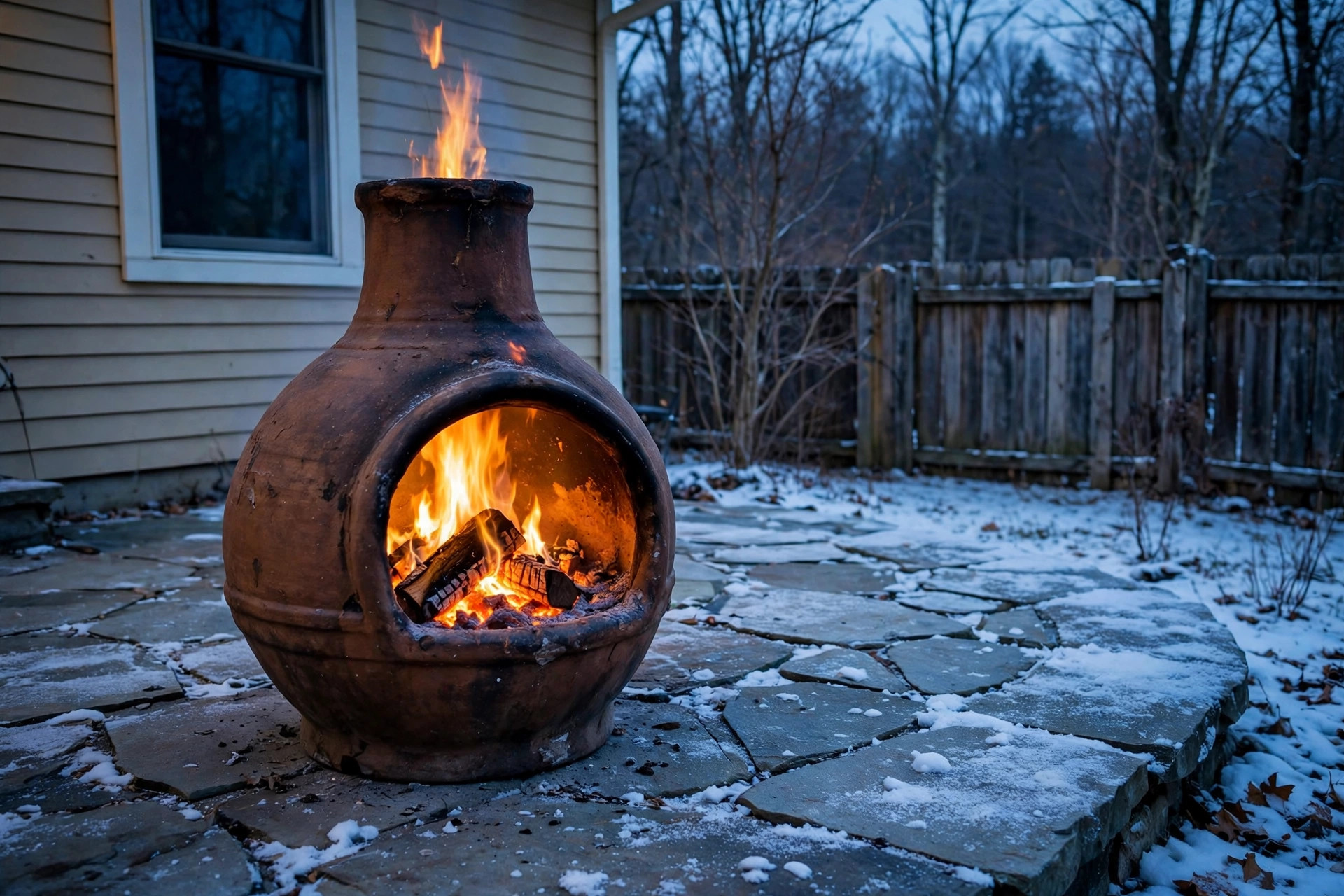
A chiminea is a freestanding outdoor fireplace with a round fire chamber and a tall chimney neck. The design comes from Mexico, where clay fire pits were used for cooking and warmth for hundreds of years. The fire sits low in the belly of the unit, and the smoke rises through the stack. The shape directs heat out of the front mouth toward anyone seated nearby, while the smoke is carried up and away from faces.
In a cold climate, this matters for a simple reason. An open fire pit loses much of its heat to the air above it. A chiminea holds heat in its body and sends a warm stream forward. You can sit close to it on a January night in Minnesota or Maine and feel a real difference. Models with thick walls, whether clay or cast iron, store heat during the burn and keep giving it off after the fire dies down. That is the main reason buyers in northern states rate these units so well.
The top rated chimineas for patios for cold climates also earn their marks for one more reason. They survive. Cheap outdoor fireplaces crack when ice forms on them or when the body is heated and then hit with sleet. Good ones are made of materials that take that punishment year after year.
What to Look For When You Buy: Top Rated Chimineas for Patios for Cold Climates
Body Material
The material is the first thing to get right in a cold region.
Cast iron chimineas are the strongest choice for hard winters. Cast iron takes high heat without cracking and does not care about frost. It is heavy, which is a point in its favor on windy patios. The weak point of cast iron is rust, so look for a unit that is sealed or painted with heat-proof paint, and be ready to touch it up each year.
Steel chimineas are lighter and cost less than cast iron. Thick steel holds up well, but thin steel can warp after many hot fires. If you buy steel, look for plate steel at least one eighth of an inch thick and a good powder-coat finish. Steel units also need rust care.
Clay chimineas look the nicest and throw a soft, even heat. But clay is fragile in cold climates. Water seeps into clay, freezes, and cracks it. If you choose clay for a cold state, you must keep it covered and move it under a roof for winter. For year-round use in a place with real winters, metal is the safer buy.
Size and Heat Output
Chimineas are usually measured by height and by the size of the fire chamber. A small unit, about 40 inches tall, suits a small porch. A large one, 55 inches or more, heats a wider circle and holds logs longer. For cold climates, most buyers prefer medium to large. A bigger fire chamber means you can burn standard split firewood instead of tiny cut pieces, and the fire will run longer between feedings.
The Chimney Stack
The stack should be tall enough to lift smoke above seated heads. Look for a unit where the stack is at least as tall as the fire chamber. Some models come with a rain cap or spark screen at the top. In a cold climate, a rain cap is worth having. Snow and freezing rain can drop straight into an open stack, and a cap keeps the fire bed dry.
Air Vents and Doors
A front mouth with a mesh door helps in two ways. It keeps sparks in and small children out, and it lets you control the air. Some models add side vents. Good air control means a steadier burn on a windy night, which is exactly what you want when the air is twenty degrees and moving.
Types and Options
Traditional Clay Chimineas
These are the classic round pots with hand-shaped bodies, often in rust or sand colors. They cost less than metal units and they look good on a patio. In warm states they last for years. In cold states they are a summer and fall unit only, unless you bring them inside for winter. Read the guide on top rated chimineas for patios for American homes if you want a broader look at styles for milder regions too.
Cast Iron Chimineas
Cast iron is the workhorse of the top rated chimineas for patios for cold climates lists. These units weigh eighty to two hundred pounds. They come in black, bronze, or dark green finishes, often with decorative cut work on the door. They heat up slowly and then stay hot for a long time. A cast iron body will not crack in frost, and with yearly paint care it will last a decade or more.
Steel Chimineas
Steel models sit between clay and cast iron on price and weight. Many have modern looks, clean lines, and log-storage racks built in. They heat fast and cool fast. For a family that wants a unit they can move around the patio without help, steel is a fair trade. Just check the gauge of the steel before you buy, as thin walls are the weak point.
Gas and Propane Options
A few makers sell chimineas that burn propane from a hidden tank. They light with a switch and need no wood. In a cold climate this is tempting on a night when you do not want to haul logs through snow. The heat is less fierce than wood, and you lose the wood smoke smell, but the ease is real. If you go this way, you may also like the notes on energy efficient propane fire pits for Texas homes, which cover gas hookup and safety basics that apply in any state.
Cost and Price
Chimineas for cold climates cover a wide price range, and the price tells you a lot about the material and the build.
Budget units cost forty to one hundred fifty dollars. These are usually thin steel or small clay pots. They can work for a season or two, but they rarely survive several hard winters. In a cold state, a budget unit is often a short-term buy.
Mid-range units cost one hundred fifty to four hundred dollars. This is where most of the top rated chimineas for patios for cold climates sit. You get thicker steel, good cast iron models, rain caps, spark screens, and solid stands. This range gives the best value for a family that plans to use the unit through fall and winter.
Premium units cost four hundred to over a thousand dollars. These are heavy cast iron or artist-made pieces with detailed finishes. They are built to last ten years or more and to look good doing it. For a large patio that is used all winter, a premium unit is worth a look.
Do not forget the running costs. A winter of regular fires will use a cord or more of split hardwood. Plan for wood storage too. A simple shed keeps logs dry and close to the patio, and the notes on outdoor firewood storage sheds reviews and buying guide can help you pick one. Add a cover for the chiminea itself, a spark screen if one is not built in, and a bag of sand or lava rock for the fire bed. These small items often add fifty to one hundred dollars to the first-year cost.
Care and Upkeep in Cold Weather
A chiminea in a cold climate needs more care than the same unit in a warm one. The enemy is water. Rain, sleet, and snow get into cracks and joints, freeze, expand, and do real damage. These steps will keep your unit alive through winter.
First, cure a new clay unit if you bought one. Light small fires for the first few burns so the clay warms slowly. A big hot fire in a cold clay pot is the fastest way to crack it.
Second, keep the unit covered when it is not in use. A fitted waterproof cover costs little and does the most work of any care item. Shake snow off the cover rather than letting it pile deep.
Third, treat metal every year. Wire-brush any rust spots on cast iron or steel, then repaint with high-heat paint. Do this in late summer so the paint cures before the first cold snap.
Fourth, never move a hot chiminea, and never let water sit in the fire bowl. After a burn, let the ash cool fully, scoop it out, and check that the drain or base is clear. Wet ash turns to a paste that holds moisture against the metal all winter.
Fifth, store the unit under cover if you can. A garage, shed, or covered porch is best. If the chiminea must stay out all winter, a heavy cover and a raised stand that keeps the base off wet ground will carry it through. Homeowners who follow basic winter care routines for outdoor heaters find that most damage comes from standing water, not from the cold itself.
If you live where winters are long and wet, check the fire grate and door hinges each spring. These small parts wear first. Replacing a grate is cheap. Letting a worn grate drop hot coals onto the fire bed is not.
Safety
A chiminea is a real fire, and it needs real rules. Place it on a flat, non-flammable surface such as stone, brick, or concrete. Keep it at least ten feet from the house, fences, and overhanging trees. Never use it on a wood deck without a heat-proof pad rated for the job, and never under a low roof or awning.
Burn only dry, seasoned hardwood. Wet wood smokes, sparks, and builds creosote in the stack. Never burn trash, painted wood, or treated lumber. Start the fire with dry kindling and paper, not with gasoline or lighter fluid.
Keep a spark screen on the mouth when children or pets are near, and keep a bucket of sand or a garden hose within reach. Let the fire die down fully before you leave it. The body stays hot long after the flames are gone, so warn guests not to touch it. The safety notes on wood-burning appliances from the federal environmental office are worth a read before your first winter burn, since they cover smoke, air rules, and burn bans that apply in many areas.
Check your town rules. Some cities limit outdoor wood burning on bad air days. A quick check with the fire department in the fall can save you a fine in January.
Frequently Asked Questions
Can a chiminea stay outside all winter?
A cast iron or thick steel unit can, if it is covered and set on a dry base. A clay unit should come under a roof for the coldest months. No unit should sit uncovered in freezing rain and snow.
How far should a chiminea sit from the house?
Ten feet is the common rule. Heat and sparks travel farther on a windy night, and cold air makes people sit close, so give the unit room on all sides.
What wood burns best in a chiminea?
Dry hardwoods such as oak, maple, and ash burn hot and long with little smoke. The wood should be split and dried for at least six months. Softwoods like pine burn fast and throw sparks, so save them for kindling.
Will a chiminea heat a whole patio in deep cold?
It will heat the seating circle around it, not the whole yard. On a night below twenty degrees, plan seats within six to eight feet of the mouth. A windbreak, such as a fence or a row of shrubs, helps the heat stay where you sit.
Is a cast iron chiminea worth the extra cost in a cold climate?
For most northern buyers, yes. Cast iron stands up to frost, throws steady heat, and lasts years longer than thin steel. The extra weight is a fair trade for that strength. Retailers such as Lowe’s and The Home Depot carry a range of cast iron models you can compare side by side.
Do I need a permit to use a chiminea?
Most towns do not require a permit for a small chiminea, but burn bans and air-quality rules vary by place. Check with your local fire department before the season starts.
A Short Final Word
The top rated chimineas for patios for cold climates share a few plain traits. They are built of heavy material, they have a tall stack with a rain cap, and they come from makers with a name to protect. Pick the size that fits your patio, buy the cover at the same time, and plan your wood supply before the first snow. Do that, and a winter patio stops being a place you look at through the window. It becomes a place you use.
For more ideas on outdoor heat, the buying guides at Napoleon, Heatilator, Family Handyman, The Spruce, and Consumer Reports cover fireplaces, stoves, and patio heaters in depth and can help you weigh a chiminea against other choices.
References
Consumer Reports. (n.d.). Product reviews and ratings. https://www.consumerreports.org Family Handyman. (n.d.). DIY home repair and maintenance. https://www.familyhandyman.com Heatilator. (n.d.). Fireplaces and fireplace products. https://www.heatilator.com Lowe’s. (n.d.). Home improvement products. https://www.lowes.com Napoleon. (n.d.). Fireplaces, grills, and heating products. https://www.napoleon.com The Home Depot. (n.d.). Home improvement products. https://www.homedepot.com The Spruce. (n.d.). Home and garden advice. https://www.thespruce.com This Old House. (n.d.). Home renovation guidance. https://www.thisoldhouse.com U.S. Environmental Protection Agency. (n.d.). Protecting human health and the environment. https://www.epa.gov
Was this guide helpful?

About David Wilson
The My Garden US editorial team writes practical, in-depth home and garden guides for American homeowners — tested advice, no fluff.
You May Also Like
Buy Ventless Gas Fireplaces Online in Arizona
June 16, 2026 0 views
High Efficiency Fireplace Safety Gates for Sale: A Plain Buyer’s Guide
August 1, 2026 0 views
Smart Smart Electric Fireplaces Buying Guide
January 28, 2026 0 views