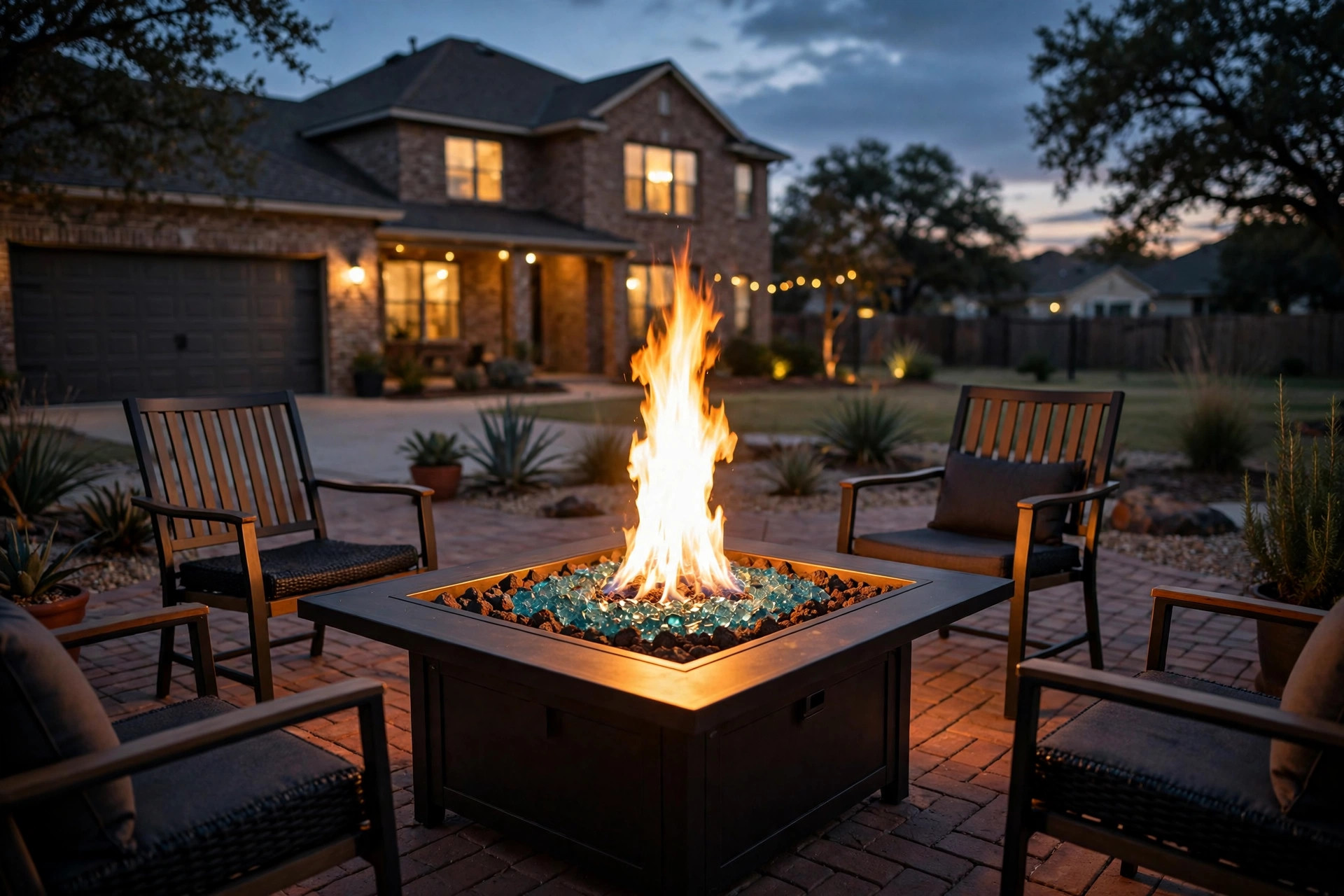
The search for energy efficient propane fire pits for texas homes starts with a simple wish. Evenings in the Lone Star State can feel mild at dusk, then turn cool once the sun drops. Families want to sit outside. They want warmth without waste. A propane fire pit answers that call. It gives heat on demand, with no smoke and no ash. The best models burn clean. They use each pound of fuel with care. This guide explains how to pick one, what it costs, and how to keep it safe for years.
Why It Matters
Texas weather has a rhythm all its own. Winters are short. Springs come early. Falls arrive late. Outdoor living stretches across many months of the year. Patios stay in use long after the north has packed its furniture away. A fire pit extends the season even further. It turns a chilly evening into a comfortable one.
Propane suits Texas homes for plain reasons. Wood fire pits throw smoke. Smoke bothers neighbors. It bothers lungs. Many towns set rules against open wood fires. Propane burns clean. The flame appears with a turn of a knob. It dies with the same ease. There is no wood to buy, stack, or haul. There is no ash to sweep.
Efficiency matters because fuel costs money. A standard fire pit can burn through a tank of propane in a single long night. An efficient model stretches that same tank across several evenings. Better burners mix gas and air in a careful way. The flame grows taller and brighter while the fuel use stays low. Wind guards shield the flame. Glass windscreens keep heat close to the seats. These small design choices add up to real savings over a season.
Comfort matters too. A weak fire pit looks pretty but warms no one. The goal is real heat you can feel in your chair. High efficiency units push more warmth outward. Less heat escapes into the night sky. More of it reaches your knees and hands.
What to Look For When You Choose One: Energy Efficient Propane Fire Pits for Texas Homes
Shopping for a fire pit is easier when you know the key points. Focus on heat output, fuel use, build quality, and safety features. A model that scores well on all four will serve you well.
Heat Output and BTU Ratings
BTU stands for British Thermal Unit. It measures heat output. Most home fire pits range from 30,000 to 60,000 BTU. A higher number means a bigger flame and more warmth. But bigger is not always better. A very high BTU unit will drink fuel fast. Look for a middle ground. A range of 40,000 to 55,000 BTU suits most Texas patios. It gives strong heat without emptying the tank in one night.
Some makers now list fuel use in pounds per hour. This helps you compare. A 20-pound propane tank holds about 4.6 gallons of fuel. A unit that burns one pound per hour will run for about 20 hours on one tank. That is several evenings of use.
Burner Design and Air Mix
The burner is the heart of the fire pit. Ring burners are common and simple. H-shaped or U-shaped burners spread the flame wider. Stainless steel burners last longer than cast iron in damp air. They resist rust. They keep their shape.
Good air mix matters for efficiency. Some burners blend gas and air before ignition. The result is a fuller flame with less waste. Look for terms like “clean burn” or “high efficiency” in the specs. Check reviews for notes about flame height at low settings. A unit that stays tall on low gas is a good sign.
Materials and Build
Texas sun is hard on outdoor goods. Steel frames need a strong powder coat. Aluminum resists rust on its own. Stone and concrete tops hold heat well and look fine for years. Wicker sides can fade and crack under strong sun. If you buy wicker, choose a set with a weather cover.
Wind is another Texas fact. Gulf breezes can bend a flame sideways. A glass wind guard or a deep fire bowl helps. Some models include the guard. Others sell it apart. Factor that cost into your budget.
Ignition and Controls
Match light models are cheap. You light them with a long match or lighter. They work, but they are basic. Push button spark ignition costs a bit more and adds ease. Electronic ignition with a knob lets you set flame height with care. Some high end units pair with a remote or a phone app. Pick the level that fits your comfort.
A flame control knob is worth having. It lets you turn the heat down on mild nights. That saves fuel. It keeps the patio from feeling like an oven in September.
Safety Features
Look for a thermocouple. This small device shuts off gas if the flame goes out. It is a must. A wind guard counts as a safety feature too. It keeps sparks and heat from drifting. Check that the base stays cool to the touch. A hot base can scorch a wood deck.
Types and Options
Fire pits come in several shapes. Each suits a different patio.
Bowl fire pits are the classic shape. A round basin holds the burner and lava rock or fire glass. They sit low. They fit small patios. They are easy to move.
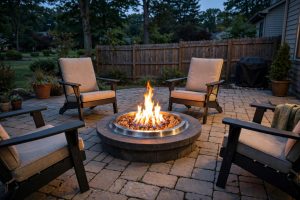
Fire tables are the most popular pick for Texas homes. The burner sits in the middle of a table top. You set drinks around the edge. Many models hide the propane tank inside the base. They look neat. They serve as both a table and a heater. A propane fire pit table for patio use is a common search for good reason. It is the most social shape.
Column fire pits are tall and narrow. They suit corners and small decks. They use less floor space. They give less outward heat, but they make a fine accent.
Insert burners fit into a custom stone surround. Some Texas homeowners build a brick or stone ring into a patio project. A drop in burner kit turns it into a gas fire pit. This route costs more up front but looks built in.
Fuel choices deserve a note. Most units run on a 20-pound tank, the same size used for gas grills. Some can link to a home propane line for endless run time. That needs a plumber or gas fitter. Portable tanks keep the unit movable.
Cost and Price
Prices span a wide range. Small bowl models start near 100 dollars. Mid range fire tables run from 300 to 700 dollars. High end units with electronic ignition and stone tops can pass 1,500 dollars. The pattern for energy efficient propane fire pits for sale shows most buyers land in the 400 to 800 dollar band.
Running cost is the other half of the story. A 20-pound tank refill costs about 15 to 25 dollars, based on local prices. An efficient 50,000 BTU unit burns about one pound of propane per hour at full flame. That means one tank gives roughly 20 hours of use. Turned to a medium setting, the same tank can last 30 hours or more. That works out to about 75 cents to a dollar per hour of warmth. This propane fire pit installation cost thinking should include the tank, a cover, and perhaps a wind guard.
Natural gas hookup changes the math. If your home has a gas line near the patio, a fitter can connect the fire pit. Fuel then costs less per hour. But the install may run 200 to 500 dollars. For most Texas homeowners, the portable tank is simpler.
Check the advice at This Old House for cost breakdowns of patio projects. The shopping guides at The Home Depot and Lowe’s show current price ranges across brands.
Care and Upkeep
A propane fire pit asks for little care. A few habits will keep it running for many years.
Cover it when not in use. Rain and dust wear down burners. A fitted cover costs 30 to 60 dollars. It pays for itself fast. Keep the cover on through the wet spring months.
Clean the burner ports once a season. Spiders love small holes. A blocked port makes the flame uneven. Brush the ports with a soft brush. Blow out dust with a short burst of air.
Check the hose and fittings each spring. Look for cracks or worn spots. Sniff for gas when the tank is on but the flame is off. A soapy water test on fittings will show leaks as bubbles. Replace any worn hose at once.
Store tanks upright in a shaded spot. Never store a tank inside the home. Keep spare tanks away from the fire pit when it runs. Wipe down the table top with mild soap. Skip harsh cleaners on stone or metal finishes.
The guides at Family Handyman and The Spruce offer step by step seasonal checklists for outdoor heaters.
Safety
Gas brings comfort, but it asks for respect. Keep the fire pit at least 10 feet from the house, walls, and low tree limbs. Never place it under a covered porch unless the maker states it is safe for that use. Most are not.
Keep children and pets at a clear distance. The metal edge can grow hot. Teach kids that the pit is not a toy. Have a plan for wind. Gusts can push heat sideways. If winds pick up, turn the flame low or off.
Know the signs of trouble. A yellow, sputtering flame can mean a blocked burner or low fuel. A gas smell with no flame means a leak or an unlit burner. Turn off the tank. Wait. Find the cause before you light again.
Check local rules. Some Texas towns limit open flames during dry spells. Burn bans can apply to gas fire pits in some counties. A quick check with your county office keeps you on the right side of the law. The EPA offers plain guidance on clean outdoor burning and air quality.
Frequently Asked Questions
How long will a 20-pound propane tank last?
At full flame on a 50,000 BTU unit, expect about 20 hours. On a medium setting, the tank can stretch to 30 hours or more. Mild Texas nights often need only a low flame, so one tank can cover many evenings.
Is a propane fire pit safe on a wood deck?
Many are, but check the maker first. Look for a unit with a cool touch base and a heat shield. Keep a mat rated for heat under the pit. Never leave it running without an adult nearby. A smokeless fire pit for backyard use should still follow deck weight and clearance rules.
Can I convert a wood fire pit to propane?
Yes, with a burner kit made for the purpose. The kit includes a burner, hose, and controls. A gas fitter can connect it to a tank or line. Make sure the bowl or surround is rated for gas heat. Do not improvise with parts that were not made for fire pits.
Do propane fire pits work in humid Texas air?
They do. Propane burns clean in any humidity. Coastal air can speed rust on cheap steel, so choose stainless or aluminum parts near the Gulf. Wipe the unit down after storms and keep it covered.
What is the most efficient setting?
The medium setting gives the best mix of heat and fuel use. Full flame looks grand but burns fast. Low flame sips fuel but may not warm a wide circle of chairs. Start at medium and adjust to the night.
Should I choose propane or natural gas?
Propane is portable and needs no install. Natural gas costs less per hour and never runs out, but it needs a pro to hook up. If your patio sits near a gas line, natural gas is worth pricing. If not, propane keeps things simple.
A Short Final Word
An efficient propane fire pit is a small joy done right. It warms the patio. It saves fuel. It asks for little care. Pick a solid build, mind the BTU, and keep up with basic safety. Then invite the family out. Texas evenings are made for it.
For deeper reading on outdoor heating design, see the buying guides at Napoleon, Heatilator, ENERGY STAR, and Consumer Reports.
References
Consumer Reports. (n.d.). Product reviews and ratings. https://www.consumerreports.org ENERGY STAR. (n.d.). Energy efficient products. https://www.energystar.gov Family Handyman. (n.d.). DIY home repair and maintenance. https://www.familyhandyman.com Heatilator. (n.d.). Fireplaces and fireplace products. https://www.heatilator.com Lowe’s. (n.d.). Home improvement products. https://www.lowes.com Napoleon. (n.d.). Fireplaces, grills, and heating products. https://www.napoleon.com The Home Depot. (n.d.). Home improvement products. https://www.homedepot.com The Spruce. (n.d.). Home and garden advice. https://www.thespruce.com This Old House. (n.d.). Home renovation guidance. https://www.thisoldhouse.com U.S. Environmental Protection Agency. (n.d.). Protecting human health and the environment. https://www.epa.gov
Was this guide helpful?

About Sarah Mitchell
The My Garden US editorial team writes practical, in-depth home and garden guides for American homeowners — tested advice, no fluff.