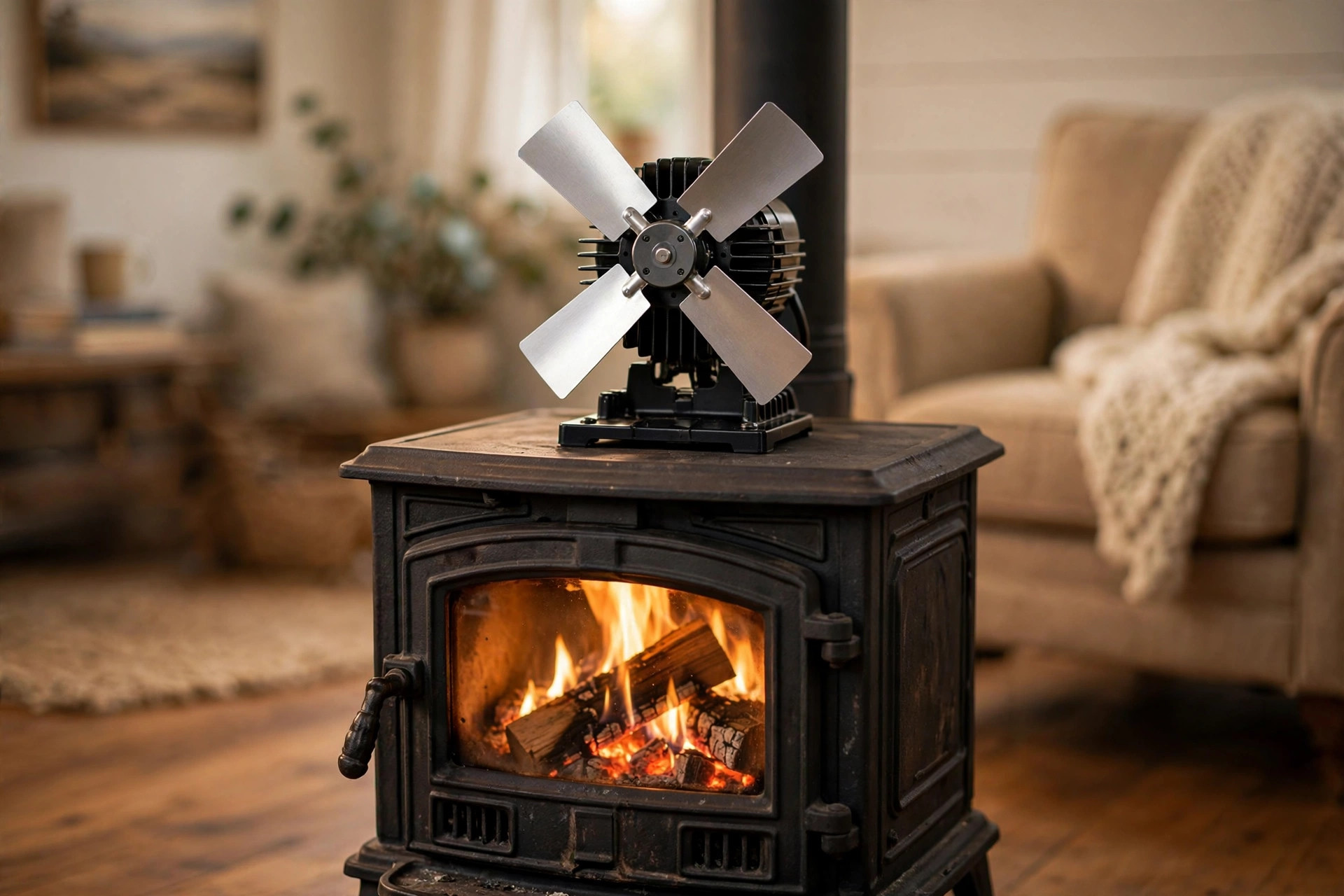

A wood stove can warm a whole room, but the heat often stays near the ceiling right above the stove. That is where affordable heat powered stove fans with free shipping come in. These small fans sit on top of a wood stove and push warm air out into the room. They need no batteries and no power cord. The heat of the stove itself makes them turn.
Why a Stove Fan Matters
Hot air rises. Anyone who has stood near a wood stove knows this. The air near the ceiling may be eighty degrees while the air near the floor is barely sixty. A stove fan mixes that air. It takes heat that would sit uselessly at the top of the room and moves it down to where people sit. Rooms feel warmer and more even, and fuel can last longer because the room reaches a comfortable level sooner.
How a Heat Powered Stove Fan Works: Affordable Heat Powered Stove Fans with Free Shipping
The secret of a heat powered stove fan is a part called a thermoelectric module. It sits in the base of the fan. One side rests against the hot stove top, and the other side is kept cooler by a set of metal fins on top. When one side is hot and the other is cool, the module makes a small electric current that turns the fan motor.
No one has to plug anything in. There is no switch on most models. When the stove top reaches about one hundred and fifty degrees, the fan starts to turn on its own. As the stove gets hotter, the fan spins faster. When the fire dies down and the stove cools, the fan slows and stops. It is a simple loop, and there is very little to break.
Some fans have a built-in thermometer strip on the base. The strip shows the surface temperature of the stove. That helps you place the fan where the heat is strong enough to run it but not so hot that it could harm the motor. Most makers say to keep the base below about six hundred and fifty degrees.
What to Look For When You Shop
Blade Count and Size
Stove fans come with two, three, or four blades. More blades usually move more air. A two-blade fan is small and quiet, and it suits a small stove in a bedroom or cabin. A three-blade fan is the most common size and fits most living room stoves. A four-blade fan moves the most air and suits large stoves in open floor plans. Match the fan to the size of your stove and your room. Many sellers list the cubic feet of air per minute, called CFM. A rating of one hundred to two hundred CFM suits most rooms.
Base and Build Quality
The base should be heavy and flat. A heavy base sits steady on the stove top and passes heat well to the thermoelectric module. Cheap fans with light, thin bases may wobble or rock as the stove heats and cools. Look for anodized aluminum or steel, which handle heat and rust far better than painted plastic.
Blades should be balanced. A fan that wobbles at high speed is loud and will wear out fast. Reviews often mention noise, so read them before you buy. Most good fans run at a soft hum.
Overheat Protection
Heat is the enemy of the motor. A good fan has a safety strip or spring in the base that lifts the base slightly off the surface when the stove top gets too hot. That small gap cools the thermoelectric module and protects the motor. Cheaper models may lack this feature. If you tend to run your stove hot, pay for a model with overheat protection. It can double the life of the fan.
Free Shipping and the True Price
The word affordable only counts if the final price at checkout is low. Shipping can add ten or twenty dollars to a small item. Compare the total price, not just the list price, and watch for stores that raise the fan’s price and then call the shipping free. A fair price for a good heat powered stove fan has been between thirty and seventy dollars.
Types of Heat Powered Stove Fans
Standard Base Fans
The standard fan sits flat on the stove top with its blades facing out over the room. This is the most common type, and it works well on most wood stoves with a flat top. It is also the least costly type.
Mini Fans
Mini fans are about half the size of a standard fan. They suit small stoves, pellet stoves, and stoves in tight spaces like a workshop corner. They move less air, but they start at lower temperatures and they fit where a big fan would crowd the kettle.
Fans With Thermometer Strips
These fans carry a magnetic thermometer on the side of the base. The strip shows the stove top temperature at a glance. This helps new stove owners learn where to place the fan and how hot their stove runs. The thermometer costs only a few dollars more and is worth it for a first-time buyer.
If you are still shopping for the stove itself, guides on wood burning stoves and pellet stoves can help you compare heating choices.
Cost and Price Ranges
Most heat powered stove fans fall into three price bands. The budget band, around twenty to thirty dollars, includes small two-blade fans. They work, but they are louder and shorter-lived than better models. The middle band, around thirty to fifty dollars, is where most buyers should shop. Fans in this range usually have three or four blades, a solid base, and overheat protection. The top band, fifty to eighty dollars, includes large four-blade fans from known brands with longer warranties.
Free shipping changes the math. A forty-dollar fan with free shipping beats a thirty-five-dollar fan with a ten-dollar shipping charge. Before you order, check the return policy too. A fan that arrives with a bent blade should be easy to send back.
Set a budget, then read reviews. The cheapest fan is not always the worst, but a fan with fifty one-star reviews about noise is not a bargain at any price. Many consumer review sites publish guidance on home heating products that can help you judge a brand.
Care and Upkeep
A stove fan works best with a clean stove top. When the fan is cool, wipe the blades and the cooling fins with a soft dry cloth every few weeks during the heating season. Dust on the fins keeps them from cooling the top of the thermoelectric module, and that makes the fan run slower.
If the fan slows down over time, check the placement first. Soot and ash on the stove top can form a layer that blocks heat from the base. Clean the spot where the fan sits. If the fan still runs slow on a hot stove, the thermoelectric module may be worn out. On many models the module can be replaced for a few dollars, which is cheaper than a new fan.
Safety Tips
A stove fan is safe when used as directed, but heat demands respect. Place the fan toward the back of the stove top, away from the edge where someone might brush it. Keep the blades clear of anything that could fall on them, such as a tea kettle, a log, or a newspaper.
Teach children that the fan is hot. The blades look like a toy, but the base can burn skin. A simple rule works well: never touch the stove or anything on it. A fireplace screen or a child gate around the stove adds a second layer of safety in homes with small children.
Never leave a roaring fire unattended for long stretches. The stove fan will keep working, but an overheated stove is a danger with or without a fan. Keep a working smoke alarm and a carbon monoxide alarm in any room with a wood stove. Guidance from the U.S. Environmental Protection Agency on wood heating covers burn practices and stove standards worth reading.
Also check your home insurance. Some policies ask about wood stoves and may want proof of a proper chimney and clearances. A fan does not change those rules. Keep the area around the stove clear of paper, cloth, and fuel for at least three feet.
Where the Air Goes: Placing Your Fan Right
Placement makes a big difference. The best spot is near the back of the stove top, with the blades facing into the room. Hot air should flow out over the room, not into a wall. In a long room, aim the fan down the length of the room so the warm air travels farther. In a room with a doorway, aim it toward the doorway so heat drifts into the hall. Stores such as Home Depot and Lowe’s carry a wide range of fans and stove parts for comparing models in person. Give the fan room to breathe. Do not box it in with pots, kettles, or wood. The cooling fins on top need open air to do their job.
Troubleshooting Common Problems
If the fan does not start, the stove top may be too cool. Most fans need about one hundred and fifty degrees at the base to begin turning. Build the fire up and wait. If the fan still will not turn, check that it sits on a flat, clean spot free of ash.
If the fan starts but turns slowly, dust on the cooling fins is the usual cause. Wipe them clean. Check the placement too. A fan sitting too close to the flue pipe may be starved of heat at its base while the top of the fan bakes. Move it to a cooler, flatter part of the stove top.
If the fan is noisy, one blade may be bent. Turn the fan off, let it cool, and look at the blades from the side. They should all sit at the same angle. A gentle bend back into line often fixes a wobble. If the noise stays, the bearing may be worn, and a replacement is in order.
If the fan stops at high heat, the overheat strip may be doing its job. It lifts the base to protect the motor. This is normal. Let the fire burn down a little. If the fan never restarts when the stove cools, the module may have failed from too many overheat cycles. Detailed wood stove care guides appear at This Old House and Family Handyman.
Buying Online With Confidence
Online shopping is how most people now buy stove fans, and free shipping offers make it easy. A few habits keep the purchase safe. Buy from a seller with a clear return policy of at least thirty days. Read the reviews, but read the middle ones, not just the five-star and one-star extremes. The three-star reviews often tell the plain truth about noise and life span.
Check the listing photos. A real photo of the fan shows the base, the blades, and the thermometer strip if there is one. Stock drawings hide flaws. Compare the CFM rating and the blade count across listings. If a seller will not state the CFM, move on.
Keep the box and the receipt until the fan has run for a month. Problems usually show up in the first few weeks. For a wider view of hearth products and brands, maker sites like Napoleon and Heatilator show what the larger hearth industry offers, and home advice from The Spruce can help with room layout and heat flow ideas.
Frequently Asked Questions
Do stove fans really work without electricity?
Yes. The heat of the stove makes a small electric current inside the fan, and that current turns the motor. There are no batteries to change and no cords to plug in. The fan starts on its own when the stove top gets hot enough.
How much air does a typical stove fan move?
A common three-blade fan moves about one hundred to one hundred and fifty cubic feet of air per minute. Larger four-blade models can move close to two hundred. That is enough to mix the air in most living rooms.
Will a stove fan fit on my wood stove?
Most fans fit any wood stove with a flat top of at least eight inches across. They also work on many pellet stoves and coal stoves. Measure your stove top before you order, and check the fan’s base size in the listing.
Is free shipping really free?
On honest listings, yes. The seller folds the shipping cost into the price. Compare the total at checkout across two or three stores. The lowest total price wins, whether the shipping line says free or not.
How long does a stove fan last?
A well-made fan lasts three to five heating seasons with light care. Overheating shortens its life, so fans with overheat protection tend to last longer. Dusting the fins and keeping the stove at sane temperatures will stretch the life of any fan.
Can I use a stove fan on a gas stove or an electric heater?
No. These fans need the high surface heat of a wood, pellet, or coal stove to run. A gas stove top or an electric heater does not get hot enough in the right way, and the fan may not start at all.
A Final Word
Affordable heat powered stove fans with free shipping are one of the simplest upgrades a wood stove owner can make. They cost little, they need no power, and they make a warm room warmer and more even. Pick a solid model with enough blades for your room, place it well, keep it clean, and it will serve you for many winters. When the first cold night comes, you will be glad the warm air reaches your chair and not just your ceiling.
References
Consumer Reports. (n.d.). Product reviews and ratings. https://www.consumerreports.org Family Handyman. (n.d.). DIY home repair and maintenance. https://www.familyhandyman.com Heatilator. (n.d.). Fireplaces and fireplace products. https://www.heatilator.com Lowe’s. (n.d.). Home improvement products. https://www.lowes.com Napoleon. (n.d.). Fireplaces, grills, and heating products. https://www.napoleon.com The Home Depot. (n.d.). Home improvement products. https://www.homedepot.com The Spruce. (n.d.). Home and garden advice. https://www.thespruce.com This Old House. (n.d.). Home renovation guidance. https://www.thisoldhouse.com U.S. Environmental Protection Agency. (n.d.). Protecting human health and the environment. https://www.epa.gov
Was this guide helpful?

About David Wilson
The My Garden US editorial team writes practical, in-depth home and garden guides for American homeowners — tested advice, no fluff.
You May Also Like
Fireplace Safety Gates Price Comparison USA: A Guide for Parents and Homeowners
January 15, 2026 0 views
Fireplace Grates Price Comparison USA: A Buyer’s Guide to Costs
April 27, 2026 0 views
A Practical Guide to Smart Indoor Firewood Holders for Southern States
January 7, 2026 0 views