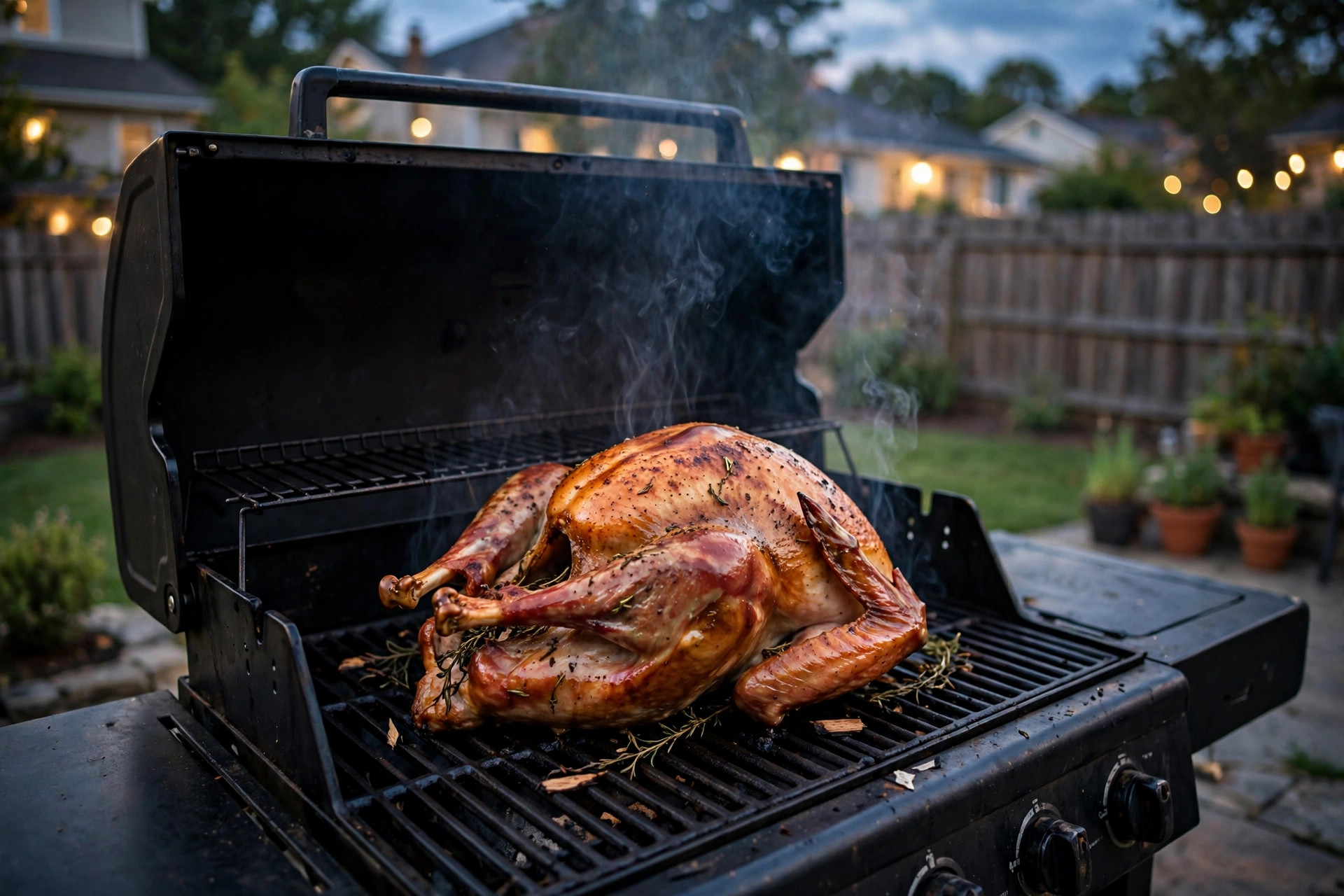
Many home cooks believe a gas grill cannot make real smoke flavor. They think only a charcoal pit or a large offset smoker can do the job. That belief is wrong. With a few simple tools and the right method, you can learn how to smoke turkey on gas grill equipment you already own. The result is a moist bird with crisp, amber skin and a gentle smoke taste. Here is how to do it, step by step.
Why Smoke a Turkey on a Gas Grill
Smoke adds depth that an oven cannot give. It paints the skin a rich golden brown and flavors the meat all the way to the bone. It turns an ordinary holiday bird into the dish guests talk about for months.
A gas grill gives you control that many smokers lack. You can set the burners and hold a steady low temperature for hours, without feeding a fire or fighting flare-ups. Add wood chips in a smoker box and you get real smoke on top of that steady heat.
There is also the matter of cost and space. A good smoker costs hundreds of dollars and takes up room on the patio all year. Your gas grill is already there. A smoker box costs about twenty dollars, and wood chips cost even less.
What You Need Before You Start: How to Smoke Turkey on Gas Grill
The Grill
You need a gas grill with at least two burners. Three or four burners are better, since more burners give you more room to create zones of heat. A lid that closes tight is a must. Smoke has to stay inside the grill to flavor the meat.
A Smoker Box or Foil Packet
A smoker box is a small metal box with holes in the lid. You fill it with wood chips and set it over a lit burner. The chips smolder and send smoke through the grill. Cast-iron boxes hold heat well and last for years. If you do not own one, a heavy foil packet with holes poked in the top works in a pinch. See our roundup of the smoker box for gas grill options to pick the right one for your model.
Wood Chips
Wood chips are the source of the smoke flavor. Fruit woods like apple and cherry give a mild, sweet smoke that suits poultry. Hickory gives a stronger, classic barbecue taste. Buy chips, not chunks, for a gas grill. Chunks are made for charcoal fires and smolder too slowly over a gas burner. You can find bags of chips at The Home Depot or any large hardware store.
A Good Thermometer
Do not trust the dial on the grill hood. It can read fifty degrees off the truth. A probe thermometer tells you the real temperature of the meat. A wireless model is best because you can watch the temperature from inside the house. See our best bbq thermometer wireless for grilling guide for models that hold up on long cooks.
Choosing the Right Turkey
Buy a turkey between twelve and sixteen pounds. Birds in this range smoke evenly. If you must feed a crowd, smoke two medium birds instead of one giant.
Fresh turkeys give the best result. Frozen turkeys work fine too, but they must thaw fully before they go on the grill. Thaw a frozen turkey in the refrigerator, allowing one day for every four pounds. A fourteen-pound bird needs about four days.
Read the label. Many turkeys are sold pre-brined or injected with a salt solution. These are called enhanced or basted birds. They are fine to smoke, but skip the brine step or the meat will taste too salty.
Brine and Season the Bird
Brine is salt water that the turkey soaks in before cooking. It adds moisture and flavor deep into the meat. For a smoked turkey, brine is worth the effort, since smoke can dry the surface of the bird.
A basic wet brine uses one cup of kosher salt and one-half cup of sugar per gallon of cold water. Add bay leaves and peppercorns if you like. Submerge the turkey fully and refrigerate for twelve to twenty-four hours. A large stockpot or a clean five-gallon bucket works well.
A dry brine is simpler. Rub the turkey all over with kosher salt, about one tablespoon per five pounds of bird. Set it uncovered on a tray in the refrigerator for one to two days. The skin dries out in the process, which helps it crisp on the grill. Many cooks prefer dry brining for smoked birds for this reason.
After brining, rinse the bird if you used a wet brine, then pat it fully dry with paper towels. Dry skin is the secret to crisp skin. Rub the outside with a thin coat of oil. Season with black pepper, garlic powder, paprika, and a little thyme. Do not add more salt if the bird was brined.
Setting Up the Grill for Indirect Heat
Indirect heat is the heart of this method. The turkey must not sit over a live flame. It should cook in the warm air around the flame, like food in an oven. Light the outer burners and leave the center burner off, set to low. Place a drip pan with a little water under the turkey on the unlit side.
Close the lid and let the grill warm up for fifteen minutes. Aim for a grill temperature between 225 and 275 degrees. This range is the sweet spot for smoking poultry. Most cooks settle near 250 degrees and stay there.
Put the smoker box with wood chips over one of the lit burners. Give it ten minutes to start smoking before the turkey goes on. You should see thin blue smoke, not thick white clouds. Thin blue smoke is clean and sweet, while thick white smoke tastes bitter. Meathead Goldwyn, who runs AmazingRibs, has written at length about why thin blue smoke makes better barbecue, and the lesson applies to turkey as well.
Most major grill makers, including Napoleon and Broil King, publish guides on setting up indirect heat on their gas models. Char-Broil also offers clear diagrams for two-zone cooking.
Wood Chips: Types and Flavor Options
The wood you choose shapes the final taste. Apple wood gives a light, fruity smoke and is the safest choice for a first turkey. Cherry wood adds a mild sweetness and paints the skin a deep mahogany color. Many holiday cooks mix apple and cherry for both flavor and looks.
Hickory is the classic barbecue wood. It gives a strong, bacon-like smoke. Use it with care on turkey. Too much hickory can overpower the mild meat, so mix it half and half with apple if you like hickory.
Soak or not? Cooks argue about this. Some soak chips in water for thirty minutes, believing it makes them smolder longer. In a smoker box over a gas burner, dry chips catch faster and make cleaner smoke. If your chips burn up too fast, try a light soak or mix dry and soaked chips. Replace the chips every forty-five to sixty minutes. The turkey picks up most of its smoke flavor in the first two to three hours, so steady fresh smoke early in the cook matters most.
Smoking the Turkey, Step by Step
Set the turkey breast-side up on the grill grate over the unlit burners, above the drip pan. Tuck the wing tips under the body so they do not burn. Close the lid and do not open it for the first hour. Every time you lift the lid, heat and smoke escape, and the cook takes longer.
Place a probe thermometer in the thickest part of the thigh, without touching the bone. After the first hour, check the smoker box and add chips if the smoke has faded. Do this fast and close the lid again. Plan to check the chips once an hour.
Keep the grill temperature steady between 225 and 275 degrees. If the temperature climbs, turn a burner down. If it falls, turn one up slightly. Small moves are best.
Once you master turkey, the same method works for smaller birds. See our guide on how to smoke chicken on gas grill for times and temperatures for whole chickens and parts.
Temperature, Time, and Doneness
A smoked turkey takes about thirty to forty minutes per pound at 250 degrees. A fourteen-pound bird needs roughly six to seven hours. This is only a guide. Every grill runs a little different, and wind or cold air adds time. Trust the thermometer, not the clock.
The turkey is done when the thickest part of the thigh reads 175 degrees and the breast reads 165 degrees. The thigh needs a higher finish because it holds more connective tissue. Pull the bird when the breast hits 160 to 162 degrees. The temperature will rise a few degrees as the turkey rests.
Check the juices too. Pierce the thigh with a skewer. The juices should run clear, not pink. If you see pink, give the bird more time.
Resting and Carving
Rest the turkey for thirty to forty-five minutes before carving. Tent it loosely with foil. Do not wrap it tight. Tight foil traps steam and softens the crisp skin. Resting lets the juices settle back into the meat.
Carve on a large board with a groove to catch juice. Remove the legs first, then the thighs, then slice the breast meat across the grain. Thick slices hold moisture better than thin shavings.
Cost and Price
Smoking a turkey on a gas grill is one of the cheapest ways to feed a crowd well. A natural turkey costs about one to two dollars per pound on sale near the holidays. A fourteen-pound bird runs fifteen to twenty-five dollars. A bag of wood chips costs five to ten dollars and holds enough for several cooks. A cast-iron smoker box costs fifteen to twenty-five dollars and lasts for years.
The gas for a six-hour cook costs only a few dollars. All told, a smoked holiday turkey costs about thirty to forty dollars including the wood and fuel, and it feeds ten to twelve people.
Independent testers such as Consumer Reports rate gas grills for heat control and evenness, which are the two traits that matter most for smoking. If you are shopping for a grill with smoking in mind, their ratings are a useful starting point. Weber sells smoker boxes sized for its gas grills, and the editors at The Spruce Eats test turkey brines and rubs each holiday season if you want a recipe to follow.
Care and Upkeep for Your Grill
A long smoke leaves grease and soot in the grill. Clean it after every turkey. While the grill is still warm, brush the grates with a stiff grill brush. Remove the drip pan and wash it with hot soapy water.
Empty and clean the smoker box after it cools. Ash left in the box can block the holes and choke the smoke on your next cook. Check the burner tubes for clogs once a season.
Cover the grill when it is not in use. A good cover keeps rain off the burners and the igniter.
Safety Rules
Hot grills and long cooks demand respect. Keep these rules in mind.
Never leave a lit grill fully alone for hours. Check it at least once an hour. Keep children and pets away from the grill while it cooks. The outside of the lid gets hot enough to burn.
Place the grill at least ten feet from the house, the garage, and any overhang. Never use a gas grill in a garage or under a covered porch. Gas grills make carbon monoxide, which has no smell and can kill.
Keep a fire extinguisher near the grill. Know how to shut off the propane tank valve fast.
Food safety matters as much as fire safety. Keep the raw turkey cold until it goes on the grill. Use clean tools for the cooked bird, not the ones that touched raw meat.
Frequently Asked Questions
Can I smoke a turkey from frozen?
No. Thaw the turkey fully first. A frozen or partly frozen bird cooks unevenly. The outside may look done while the deep meat near the bone stays raw. Thaw in the refrigerator, one day for every four pounds.
Do I need to soak the wood chips?
No, soaking is not required. Dry chips make smoke faster and cleaner in a smoker box. If your chips burn up in less than thirty minutes, try a short soak or mix soaked and dry chips together.
How long does it take to smoke a turkey on a gas grill?
Plan on thirty to forty minutes per pound at 250 degrees. A twelve-pound turkey takes about five to six hours. Always finish by temperature, not by time.
Why did my turkey skin turn out rubbery?
Rubbery skin comes from too much moisture and too little heat. Pat the bird fully dry before it goes on. In the last thirty minutes, raise the grill to 325 degrees to crisp the skin, but watch the breast temperature so it does not overcook.
Can I stuff a smoked turkey?
It is safer not to. Stuffing inside a smoked bird cooks slowly and may stay in the danger zone too long. Cook the stuffing in a separate pan in the oven.
What is the best wood for smoking turkey?
Apple and cherry are the best woods for most cooks. They give a mild, sweet smoke that suits poultry. Mix them for good flavor and color. Use hickory only in small amounts, mixed with a fruit wood, so it does not overpower the meat.
A Final Word
Smoking a turkey on a gas grill is not hard. It takes a smoker box, a bag of wood chips, a good thermometer, and a free afternoon. The grill holds the heat. The chips make the smoke. You check in once an hour and let time do the rest. What comes off the grill is worth every minute.
References
AmazingRibs.com. (n.d.). Barbecue and grilling science. https://www.amazingribs.com Broil King. (n.d.). Gas and charcoal grills. https://www.broilkingbbq.com Char-Broil. (n.d.). Gas and charcoal grills. https://www.charbroil.com Consumer Reports. (n.d.). Product reviews and ratings. https://www.consumerreports.org Napoleon. (n.d.). Fireplaces, grills, and heating products. https://www.napoleon.com The Home Depot. (n.d.). Home improvement products. https://www.homedepot.com The Spruce Eats. (n.d.). Recipes and cooking guides. https://www.thespruceeats.com Weber. (n.d.). Grills and outdoor cooking. https://www.weber.com
Was this guide helpful?

About David Wilson
The My Garden US editorial team writes practical, in-depth home and garden guides for American homeowners — tested advice, no fluff.