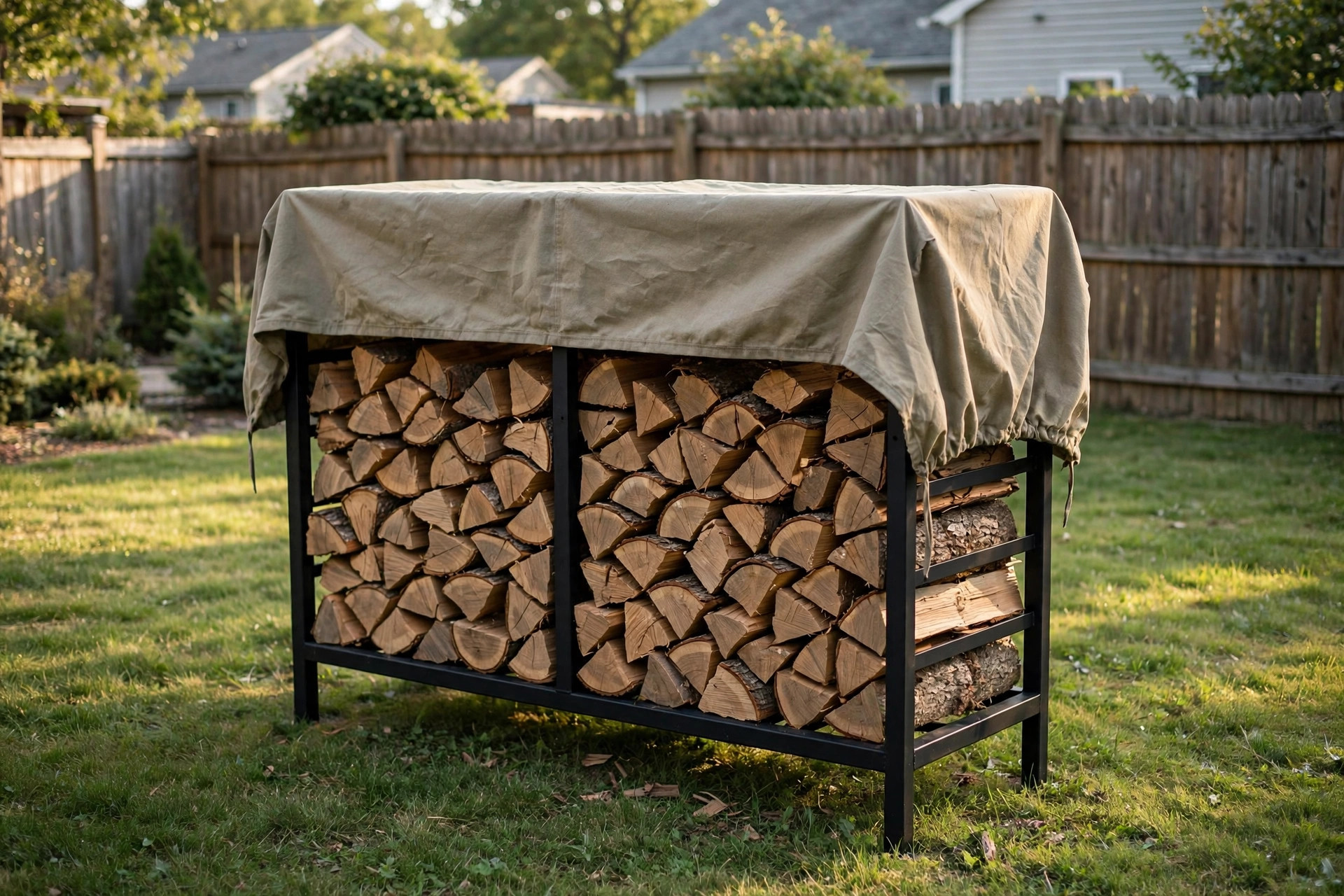

Why a Good Rack Matters
A fire that burns well starts long before the match is struck. It starts with dry wood. Wet wood smokes. It hisses. It gives little heat and leaves thick creosote in the chimney. Dry wood lights fast, burns hot, and keeps the house warm through cold nights. That is why so many homeowners look for the best firewood storage rack outdoor models before the cold season begins.
A good rack does three simple jobs. It lifts the wood off the ground, so damp soil cannot soak into the bottom logs. It holds the pile steady, so logs do not roll or fall. And it lets air move around each piece, which keeps the wood dry and ready to burn. Without a rack, a wood pile sits on dirt or grass. The bottom logs turn soft and rot. Bugs move in. Mold grows. The wood that took hours to cut and split goes to waste.
A rack also keeps the yard neat. A loose pile of logs looks rough and can spread across the lawn. A rack lines the wood up in a clean row. It marks a clear place for wood and makes it easy to see how much is left. For homes with a fireplace or a wood stove, this small bit of order makes a real difference each day of winter.
Good storage even protects the chimney. Dry wood burns cleaner and leaves less soot. Less soot means a lower risk of chimney fires. So the choice of a rack is not only about tidiness. It is about safety and heat for the whole house.
What to Look For When You Choose: Best Firewood Storage Rack Outdoor
Size comes first. Racks are sold by length, and most fit standard log lengths of sixteen to twenty-four inches. A four-foot rack holds enough wood for occasional fireplace use. An eight-foot rack suits a family that burns wood every day. Measure the spot where the rack will stand before you buy. Leave a few inches on each side for air flow.
The frame material is next. Most racks are made of steel tubes. Powder-coated steel is common and resists rust for a good while. Some racks use wood or resin parts. Wood frames look warm and natural, but they can rot in wet climates. Resin frames will not rust, yet they may crack in deep cold. For most buyers, a coated steel frame is the safest bet.
Check how the rack holds weight. Firewood is heavy. A full cord of oak can weigh more than two tons. A rack does not need to hold a full cord, but it must hold its own full load without bending. Look for thick tubes, firm joints, and feet that sit flat on the ground. Some racks include ground anchors or stakes for windy places.
A cover is worth the extra cost. An open rack lets rain fall straight through the top of the pile. A fitted cover sheds water and snow while still letting air move in from the sides. A weatherproof cover for patio furniture works on the same idea, and buyers who study heavy-duty covers often make a better choice for their wood pile too. Pick a cover made of thick canvas or treated polyester, not thin plastic that tears in one season.
Look at how the rack goes together. Some models need only a few bolts and an Allen wrench. Others ask for a full toolbox and a helper. If you plan to move the rack between seasons, choose one that comes apart fast. Read the product listing for the word “tool-free” if easy assembly matters to you.
Finally, think about looks. A rack stands in the yard all year. Black steel fades into the background. Wooden log sheds look like small barns and suit country homes. A tidy rack can even add charm to a patio corner near a fire pit.
Types and Options
Open Steel Racks
The open steel rack is the most common type. It has two end frames and two long bars that form a cradle. Logs stack between the bars. These racks are light, cheap, and simple. They come in lengths from two to eight feet. They do their best work under a roof overhang or with a separate cover. Online stores such as Wayfair list many of these models with buyer reviews that show how they hold up over time.
Racks With Built-In Covers
These racks come with a fitted cover that matches the frame. The cover drapes over the top and often ties down at the corners. This type is the best choice for wood that sits in the open all year. The cover keeps rain and snow off the pile while the open sides let wind pass through. Prices run higher than open racks, but the wood stays drier, and dry wood is the whole point.
Log Sheds and Log Stores
A log shed is a small wooden or metal shelter with a sloped roof. It looks like a tiny barn. Log sheds hold more wood than a simple rack, often a half cord or more. They suit rural homes and anyone who heats mostly with wood. They cost more and need more space, but they keep wood dry for years and last a long time themselves.
Wall-Mounted and Lean-To Racks
For small yards, a rack that leans against a wall saves space. These hold one neat row of logs against the house or garage. They are fine for a few evenings of fires but not for a full winter of heating. Keep a small gap between the rack and the wall so air can move and damp wood does not stain the siding.
Cost and Price
Prices vary by size and build. A small two-foot open rack can cost as little as twenty dollars. A four-foot rack with a cover often sells for forty to eighty dollars. Large eight-foot models with thick steel and fitted covers can run one hundred to two hundred dollars. Log sheds start near one hundred fifty dollars and climb past four hundred for large cedar models.
The cover adds to the price, but it pays for itself. Wood that stays dry burns better and needs no replacing. A cheap rack that tips over in the first windstorm costs more in the end than a sturdy one bought once. Independent tests from groups like Consumer Reports remind buyers that a low price is only a bargain if the product lasts.
Watch for sales in late winter and early spring. Stores clear out seasonal stock, and racks often drop in price. Buying the rack in the off-season also gives the wood months to season before the next winter.
Care and Upkeep
A steel rack asks for little care. Once a year, check the bolts and tighten any that have worked loose. Look for chips in the coating. Bare metal spots can rust, so touch them up with outdoor spray paint. A light coat of paint each spring stops rust before it starts. Readers who want a fuller guide can find metal patio furniture rust prevention tips that work just as well on a firewood rack.
Covers need care too. Brush off leaves and snow so water does not pool on the fabric. If the cover gets moldy, wash it with mild soap and water and let it dry in the sun. Replace a cover that has torn. A torn cover lets water pour into the heart of the pile.
Rotate the wood pile through the season. Burn the oldest wood first and stack new wood at the back. This keeps every log moving and stops any piece from sitting damp for years. Sweep around the rack now and then to keep bark and dirt from piling up.
If you keep kindling, matches, or fire starters near the rack, store them in a sealed bin. The same tidy-storage idea that makes an outdoor loveseat with storage box popular for blankets works beside a wood pile: dry tools close at hand, safe from rain and curious animals.
Safety
Place the rack on level ground. A full rack is heavy, and soft or sloped ground can let it tip. Keep the rack at least a few feet from the house wall so air moves and stray sparks from the chimney cannot reach the wood.
Stack logs with care. Place the largest, heaviest logs at the bottom. Do not stack higher than the end frames. A pile stacked too high can shift and fall, and a falling log can hurt a foot or a leg badly.
Keep children and pets clear of tall stacks. Teach children that the wood pile is not a climbing frame. In windy areas, stake the rack to the ground or place it where a fence breaks the wind.
Large home stores such as IKEA and many outdoor retailers sell racks that meet common safety standards. Still, the buyer should check that the model lists a clear weight limit and follows the assembly steps exactly. A rack put together wrong is a rack that may fail.
Frequently Asked Questions
How much wood does a four-foot rack hold?
A four-foot rack usually holds about one-quarter of a cord, which is a stack four feet long, four feet high, and about one foot deep. For a family that uses the fireplace on weekends, that is several weeks of fires. Daily wood-stove users will want a longer rack or more than one.
Should the cover touch the wood?
The cover should sit just above the top of the pile, not press hard against the wood. A small gap lets air flow and stops damp air from getting trapped. Most fitted covers are shaped to leave this gap on their own.
Can I leave the rack out all winter?
Yes. A good steel rack with a cover is made for winter. Brush heavy snow off the cover so the weight does not bend the frame. In places with very high winds, anchor the feet to the ground.
Does the rack need to be in the sun?
Sun helps dry the wood, but it is not required. Air flow matters more. A spot with a light breeze and a cover on top dries wood well even in shade. Avoid low spots where water collects after rain.
What size logs fit a standard rack?
Most racks fit logs cut to sixteen inches, which is the common length for fireplaces and stoves. Some wide racks take twenty-four-inch logs. Check the depth of the rack before you cut or buy wood.
Is pressure-treated wood safe for a rack frame?
A rack frame made of pressure-treated lumber will last outdoors, but it should not touch the firewood you plan to burn. Modern treated wood is safer than old formulas, yet it is best to keep treated lumber for the frame and posts only, never for fuel.
A Final Word
The best firewood storage rack outdoor buyers choose is the one that fits their space, holds their wood steady, and keeps rain off the pile. It does not need to be fancy. It needs to be strong, sized right, and covered. With a good rack in place, the wood stays dry, the fire burns hot, and winter feels a little easier. Measure the spot, pick a sturdy frame, add a solid cover, and the rack will serve the house for many winters to come.
References
Consumer Reports. (n.d.). Product reviews and ratings. https://www.consumerreports.org IKEA. (n.d.). Home furnishings and outdoor storage. https://www.ikea.com Wayfair. (n.d.). Furniture and home goods. https://www.wayfair.com
Was this guide helpful?

About Lisa Anderson
The My Garden US editorial team writes practical, in-depth home and garden guides for American homeowners — tested advice, no fluff.
You May Also Like

Best Fire Pit Chat Set for Backyard: A Plain Guide to Choosing the Right One
July 10, 2026 0 views
Outdoor Storage Cabinet Waterproof for Patio: A Plain Buying Guide
April 9, 2026 0 views
How to Hang String Lights on Patio: A Simple Guide
March 4, 2026 0 views