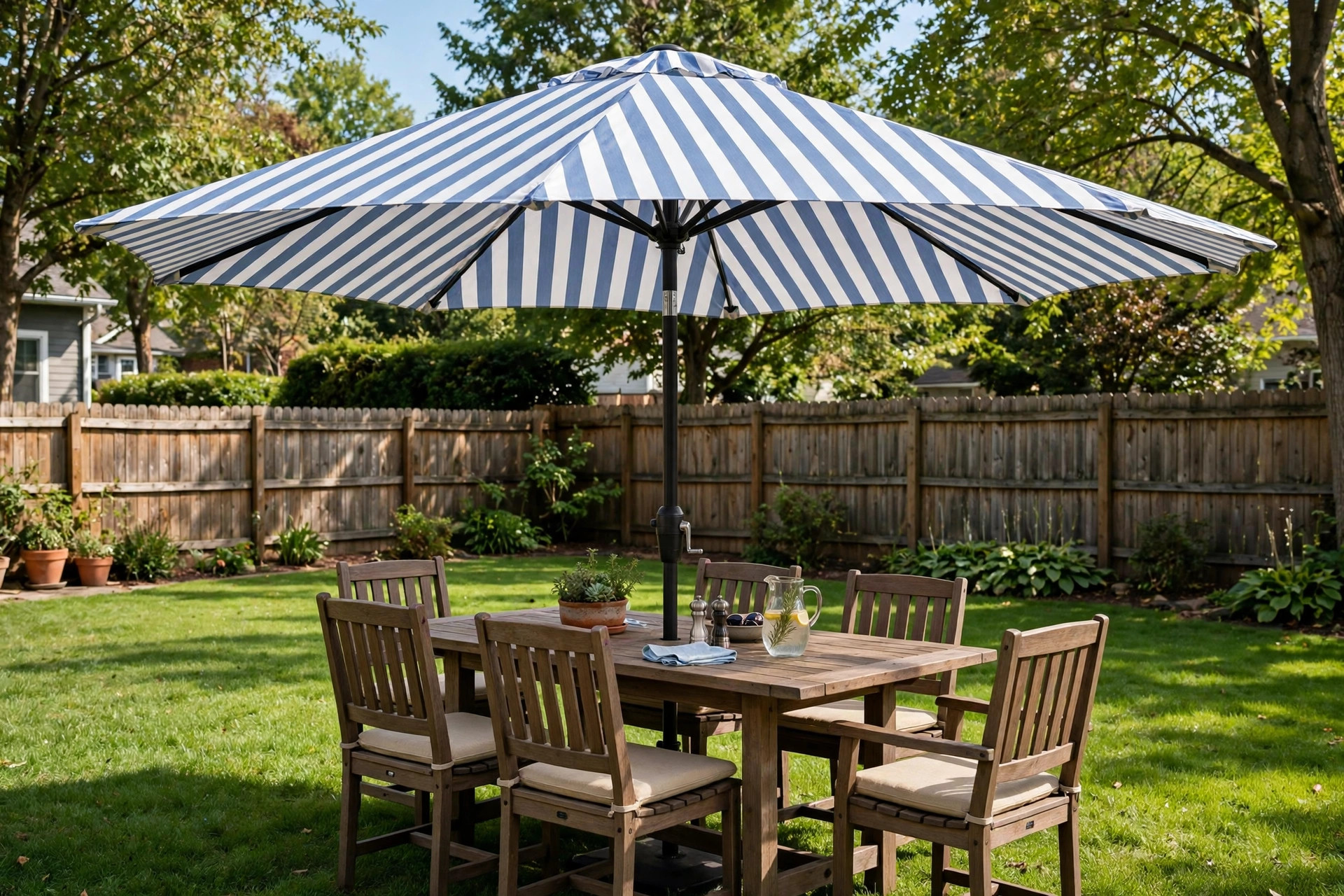
An old umbrella frame can still have years of life left. The fabric is the part that fails first. Sun, rain, and wind break down the cloth long before the pole and ribs give out. A patio umbrella replacement canopy 11ft is the simple answer. You keep the frame. You replace only the cover. The result looks like a new umbrella at a small part of the price.
Many owners throw away a whole umbrella when the top tears or fades. That is a waste. The metal or wood frame often stands strong. The canopy is made to be replaced. The 11-foot size fits many backyard tables and poolside setups.
This guide explains how to pick the right cover. It covers how to measure your frame, how to choose fabric, what the work costs, and how to install the new top. It also covers care, safety, and common questions. Read it once and the whole job will feel easy.
Why It Matters
Shade is the whole point of a patio umbrella. A faded canopy still gives shade, but it lets through more heat than it should. Old cloth loses its tight weave and lets ultraviolet rays pass. A fresh cover restores the block the umbrella was built to give.
Looks matter too. A torn or bleached top drags down the whole patio. Neighbors see it. Guests see it. New cushions will not fix it. A clean new canopy changes the look in one afternoon. The patio feels cared for again.
There is also the matter of money. A full 11-foot umbrella can cost several hundred dollars. A replacement canopy often costs far less. When the frame is sound, buying a new top is the smart move.
Finally, a good canopy keeps rain off the table. A worn cover soaks through. Water drips onto food and laps. New water-resistant fabric sheds light rain and lets you enjoy the patio longer.
What to Look For When You Choose: Patio Umbrella Replacement Canopy 11ft
The Right Size
Size is the first test. An 11-foot canopy fits an 11-foot frame, but frames vary a little. Measure from the top of one rib end, over the top, to the opposite rib end. Do it with the umbrella open. Write down the number. Most replacement canopies list the size they fit. Buy the size that matches your frame, not the size you wish you had.
Also count the ribs. Most 11-foot umbrellas have 8 ribs. Some have 10. The canopy must match the rib count. The cloth ties or slides onto each rib. If the count is wrong, the cover will not sit right.
The Fabric
Three fabrics rule this market. Olefin is light and cheap. It resists mildew and holds color well. Polyester is the most common choice. It costs little and comes in many colors. It needs a coating to resist water. Acrylic canvas is the top grade. It breathes, holds dye deep in the fiber, and stands up to sun for years. It costs more but lasts longer. Big home stores such as IKEA and Wayfair stock canopies in all three fabrics, so you can compare cloth and color side by side.
Check the fabric weight. Heavier cloth, measured in grams per square meter or ounces per yard, tends to last longer. A weight of 180 grams per square meter or more is a good sign for daily use.
Look for a UV rating. A rating of UPF 50 or close to it means the cloth blocks nearly all ultraviolet light. That is what you want for skin and for cool shade.
Water and Fade Resistance
Most covers have a water-repellent finish. It makes rain bead and roll off. The finish wears down over time. You can renew it with a spray made for outdoor fabric. Start with a cover that is labeled water resistant or waterproof.
Fade resistance decides how the color looks in year three. Solution-dyed acrylic holds color best. The dye runs through the fiber, not just on the surface. Polyester with a good UV coating comes next. Plain polyester without treatment will bleach in one hard summer.
Color and Style
Color is not just taste. Dark colors block more light. They feel cooler under the noon sun. Light colors look fresh and bright but let a little more glare through. Medium tones split the difference.
Think about your patio. A solid color looks calm and classic. Stripes look lively and coastal. Pick a shade that matches your cushions and chairs. Remember that a new canopy is a chance to change the mood of the whole space.
The Opening at the Top
Most market umbrellas have a small vent at the top. The vent lets wind escape and heat rise. Your replacement canopy should have a matching vent. Some covers close the vent. That is fine in calm spots but risky in wind. A vented top lasts longer in gusts.
Hardware and Fit Details
Check how the cover attaches. Most canopies tie to the rib ends with short cords. Some use pockets that slide over the rib tips. Others use a mix of ties and Velcro. Match the style to your frame if you can. Ties are the easiest to fit on most frames.
Look at the finial hole at the top. The canopy needs a hole or a reinforced ring where the top pin or finial passes through. Make sure the cover you buy includes it.
Types and Options
Standard Octagon Canopies
The most common 11-foot canopy is the octagon with 8 ribs. It fits the classic market umbrella over a dining table. These covers are easy to find in many colors and tie on in minutes.
Ten-Rib Canopies
Some large umbrellas use 10 ribs for extra strength. Do not fit an 8-panel cover on a 10-rib frame. The seams will pull and tear. Count your ribs before you order.
Cantilever and Offset Umbrella Covers
Offset umbrellas hang the canopy from a side arm. Their covers are shaped differently. A standard market-umbrella cover will not fit them. If you own an offset model, buy a cover made for that shape. You may also want to read an umbrella base weight guide so the whole unit stays stable once the new top is on.
Valance or No Valance
A valance is the short skirt that hangs from the edge of the canopy. It adds style and a little extra shade low in the sky. It also catches more wind. If your patio gets gusts, a cover without a valance will stress the frame less. Many owners of patio umbrellas built for wind choose the plainer edge.
Vented Versus Closed Top
A vented top has a small second cap above the main vent opening. Air passes through and lifts heat out. A closed top is a single layer. Vented tops are the better pick for breezy yards. Closed tops look sleeker and cost a bit less.
Cost and Price
A patio umbrella replacement canopy 11ft usually sells between 40 and 150 dollars. The range is wide because fabric and brand matter. A simple polyester cover sits at the low end. A solution-dyed acrylic cover sits at the high end.
Shipping can add to the cost. Covers ship flat and light, so freight is modest. Buying during end-of-season sales can cut the price by a third.
Compare that to a new 11-foot umbrella, which often runs 200 to 600 dollars. The canopy alone saves you most of that. If the frame is sound, the math is clear. Before you buy, it helps to read independent product tests at Consumer Reports so you know which fabrics truly hold up.
Watch for extra costs. Some covers need new tie cords, though most come with them. A can of fabric guard spray costs about 10 to 15 dollars and extends the life of the cover.
Price is not the whole story. A cheap cover that fades in one season costs more per year than a good one that lasts five. Divide the price by the years you expect, and buy the best cloth you can afford.
How to Install the New Canopy
You can do this job alone, but a helper makes it faster. Plan for about 30 to 45 minutes the first time. Start by opening the old umbrella and looking at how the old cover attaches. Take a photo with your phone.
Untie or unhook the old canopy from each rib end. Slide it off the top. Note where the top pin or finial went through. Keep any screws or caps in a small cup so they do not roll away.
Lay the new canopy flat and find the top opening. Slip the top of the frame through the opening. Pull the cloth down over the ribs. Work from the top down and smooth the fabric as you go.
Attach the cover to each rib end. If it uses ties, knot them snug but not tight. Tight knots pull the seams and can tear the cloth in wind. If it uses pockets, slide each rib tip fully into its pocket.
Replace the finial or top cap. Close and open the umbrella once to check the fit. The cloth should be smooth with no big wrinkles. Small wrinkles will settle in the sun.
Stand back and look at the edges. Every rib should carry its share of the cloth. If one panel sags, loosen and retie that rib. A balanced fit keeps wind stress even.
Care and Upkeep
A little care doubles the life of a canopy. Brush off leaves and dirt once a week with a soft brush. Dirt holds moisture, and moisture feeds mildew.
Wash the canopy once or twice a season. Use cool water and a mild soap. Rinse fully. Let the umbrella dry in the open air before you close it. Closing a wet canopy traps moisture and grows mildew.
Treat stains fast. Bird droppings and tree sap stain if they sit. Wipe them with soapy water as soon as you see them. Do not use bleach. It weakens outdoor fabric and ruins water-repellent finishes.
Reapply a water-repellent spray once a year. Clean the canopy first, let it dry, then spray evenly. This step matters most for polyester covers.
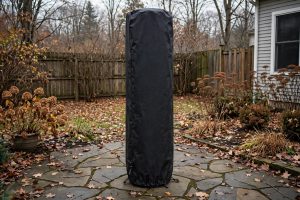
In winter, store the canopy indoors. Fold it loosely. Do not cram it into a tight bag while damp. A dry garage or shed shelf is fine. The frame can stay outside if it is covered.
These habits also help you protect patio furniture from the sun. Shade cloth, covers, and closed umbrellas all cut the damage that ultraviolet light does to cushions, wood, and plastic.
Safety
Umbrellas and wind are a bad pair. An 11-foot canopy catches a lot of air. Never leave the umbrella open when you leave the house. A sudden gust can tip the table or snap a rib. It can also send the whole unit flying.
Use a heavy base. The base should weigh at least 75 pounds for an 11-foot umbrella. Heavier is better in open yards. Check the base each spring for cracks.
Keep the umbrella away from grills and fire pits. Fabric burns. Sparks from a grill can land on the canopy and start a fire. Keep at least 10 feet between an open flame and the umbrella edge.
Check the frame each season. Look for bent ribs, loose joints, and rust. A weak frame can fail under a new, heavier canopy. Fix bad parts before you hang new cloth.
Teach children not to hang on the umbrella or spin it fast. The ribs are not built for that weight. A fall from a tipping umbrella can hurt.
When lightning threatens, close the umbrella and go inside. A tall metal pole on a patio is not a safe place in a storm.
Frequently Asked Questions
Will an 11ft replacement canopy fit any 11-foot umbrella? Not always. The rib count must match, and the frame shape must match. Measure your frame and count the ribs. Most 11-foot market umbrellas use 8 ribs, but some use 10. Buy the cover that matches your count.
Can I replace the canopy myself? Yes. Most owners do it in under an hour. You need no special tools. A helper is nice but not required. Follow the steps above and the job is simple.
How long does a replacement canopy last? A good acrylic canopy lasts 5 to 8 years with care. Polyester lasts 2 to 4 years. Sun and wind decide the real number. Storing the cover in winter adds years.
What is the best fabric for a replacement canopy? Solution-dyed acrylic is the best all-around pick. It resists fading, breathes, and stands up to sun. Olefin is a good budget pick. Coated polyester is fine if you renew the water repellent each year.
My old canopy faded but did not tear. Should I still replace it? Yes, if the color loss bothers you or the shade feels hot. Faded cloth lets more ultraviolet light through. A new cover restores both looks and protection.
Can I wash the canopy in a washing machine? No. Machine washing can tear seams and strip coatings. Wash by hand with mild soap and cool water. Rinse well and air dry.
A Final Word
A patio umbrella replacement canopy 11ft is one of the best small upgrades a patio can get. It costs little, takes an afternoon, and makes the whole yard look cared for. Measure your frame, count your ribs, and pick a strong fabric. Then keep it clean, close it in wind, and store it dry in winter.
References
IKEA. (n.d.). Outdoor furniture. https://www.ikea.com Wayfair. (n.d.). Patio furniture and outdoor decor. https://www.wayfair.com Consumer Reports. (n.d.). Product reviews and buying guides. https://www.consumerreports.org
Was this guide helpful?

About David Wilson
The My Garden US editorial team writes practical, in-depth home and garden guides for American homeowners — tested advice, no fluff.