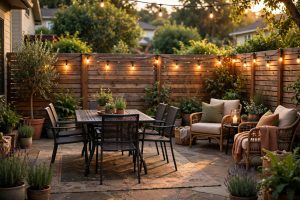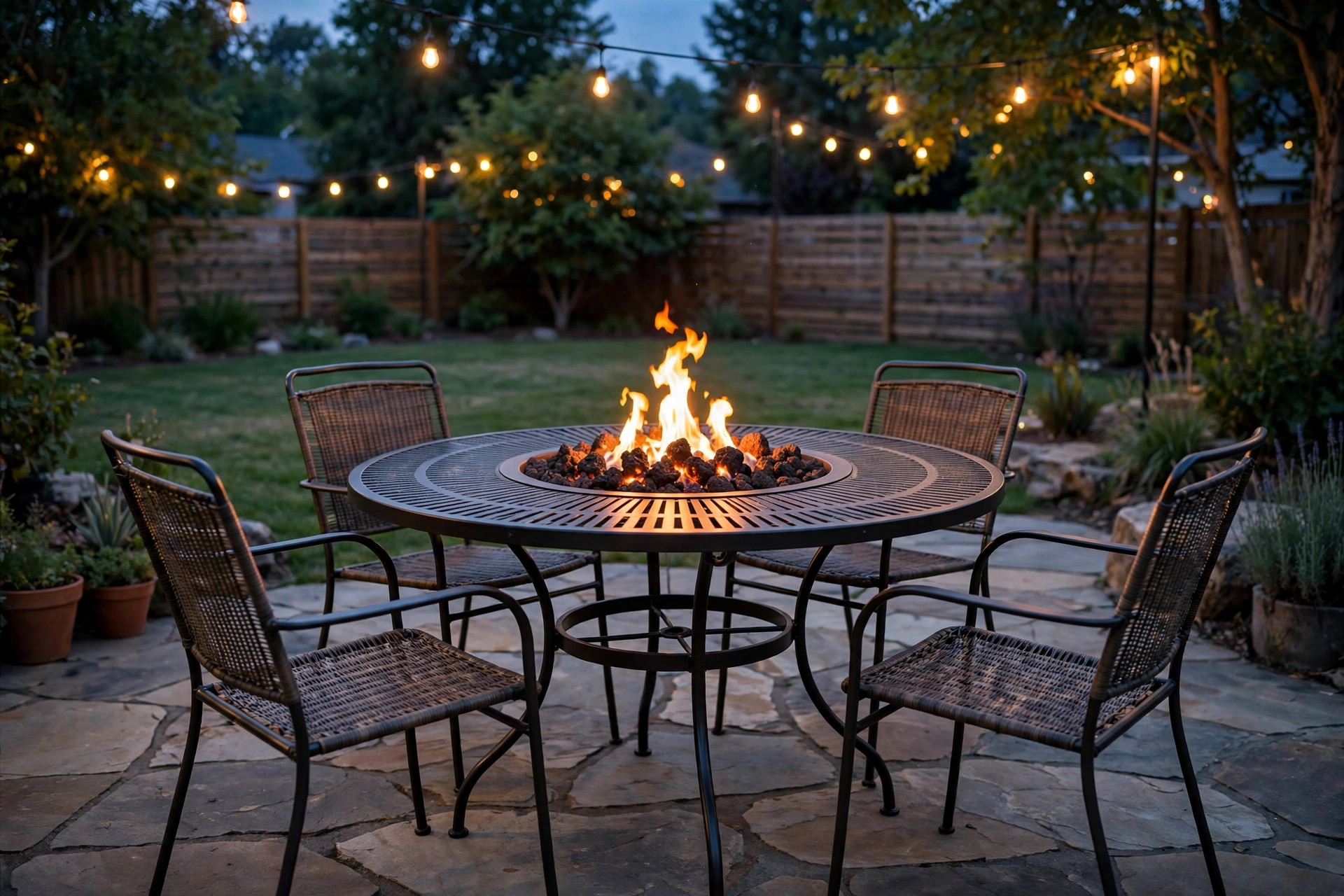

The best patio table with fire pit brings dinner and a campfire to the same piece of furniture. You can set plates on the table, light the fire, and talk long into the night. It sounds simple, but there is a lot to think about before you buy. Fuel type, size, material, and safety all matter. This guide walks through each one in plain words so you can pick with confidence.
Why a Patio Table with a Fire Pit Makes Sense
A regular patio table holds food and drinks. A fire pit holds heat and light. A table that does both saves space and saves money. You do not need a separate fire pit area and a separate dining area. One piece serves both jobs.
This matters most on small patios. A patio table with built-in fire pit lets four or six people eat, then stay warm without moving chairs. On larger yards, a fire pit table becomes the center of the evening. Guests gather around it. Children roast marshmallows. Parents rest their feet.
There is also the season question. A plain patio table sits unused from October to March in much of the country. A fire pit table stretches the season. With heat, you can sit outside on cool spring and fall nights. Some families use theirs from March to November.
What to Look for Before You Buy: Best Patio Table with Fire Pit
Start with size. Measure your patio. A fire pit table needs more room than a dining table because chairs must sit farther back from the heat. Leave at least three feet between the table edge and any wall or railing. Leave at least seven feet between the fire and anything above it, like a roof, tree branch, or umbrella.
Next, think about fuel. Most fire pit tables burn propane or natural gas. Wood burning is rare in table designs. Propane is easy. You use a standard 20-pound tank, the same kind a gas grill uses. Natural gas is cheaper to run but needs a gas line run to the patio by a licensed plumber. Propane tanks fit inside the table base, so nothing shows.
Heat output is measured in BTUs. Most tables put out between 40,000 and 60,000 BTUs. That is enough to warm people sitting within four or five feet. A higher number means more heat and more fuel use. For a table that seats four, 40,000 BTUs is enough. For a large table that seats eight, look for 50,000 BTUs or more.
Look at the table top. Fire pit tables have a burner in the center and table space around it. The burner is often covered by a lid when not in use, turning the whole top into a flat table. Check that the lid fits well and is easy to lift. Some lids are heavy. If older family members will use the table, test the lid weight.
The igniter matters more than people think. Most tables use a push-button spark igniter. Better models use an electronic ignition with a battery. Electronic ignitions light faster and fail less often. Ask about replacement parts before you buy. Igniters wear out. A good brand sells spare parts for years.
Types of Patio Tables with Fire Pits
There are three main types. Each suits a different kind of household.
Propane fire pit tables are the most common. They run on a 20-pound propane tank that hides inside the base. You can move the table anywhere on the patio. There is no gas line to worry about. The tank usually lasts eight to ten hours of steady use at a medium flame. Refills cost about what a grill tank costs. Big retailers like Lowe’s and The Home Depot carry many propane models, which makes shopping and comparing easy.
Natural gas fire pit tables connect to your home gas line. You never refill a tank. Fuel costs less over time. But the table cannot move once the line is set, and running the line costs extra. This type suits people who own their home and plan to keep the table in one spot for many years.
Fire pit chat sets are a cousin of the fire pit table. They pair a lower, smaller fire feature with deep seating chairs instead of dining chairs. If your goal is talk and rest rather than meals, read a guide to the best fire pit chat set for backyard use and compare it with a dining-height table before you decide.
Frame materials vary too. Aluminum is light and resists rust. It is the most common choice and the easiest to move. Steel is stronger but can rust if the finish chips, so check the coating. Cast aluminum is thick, heavy, and strong; it costs more but lasts a long time. Wicker-style resin over aluminum gives a classic look without the care real wicker needs.
Cost and Price: What You Should Expect to Pay
Prices run wide. A small propane fire pit table starts around 250 to 400 dollars. Mid-range tables, the kind most families buy, cost 600 to 1,200 dollars. Large natural gas tables with stone tops can cost 1,500 to 3,000 dollars or more.
What drives the price? Size, material, and brand drive it most. Cast aluminum costs more than thin steel. A stone or tile top costs more than a metal top. A well-known maker with a five-year warranty costs more than a no-name import with a one-year warranty. The warranty is worth real money. Fire and weather wear parts out. A long warranty means the maker stands behind the burner and frame.
Do not forget the extras. A propane tank, if not included, costs about 50 dollars plus the gas. A fitted cover costs 30 to 80 dollars and is worth it. Glass wind guards cost 40 to 100 dollars and make a real difference on windy patios. Lava rocks or fire glass to dress the burner may cost 20 to 50 dollars. Add these up when you compare prices, because a cheap table with expensive extras can cost more than a mid-range table that includes them.
If you are furnishing a whole patio, compare the table with the rest of your seating plan. Shoppers often look at outdoor coffee table with fire pit designs too, since a lower table can sit in a seating area while a dining-height table serves meals. Buying both pieces in one style line can save money on sets.
Care and Upkeep Through the Year
A fire pit table needs regular care, but none of it is hard. Clean the burner area each month during use season. Leaves, dust, and spider webs can block gas holes. A soft brush and a dry cloth are enough. Never pour water into the burner pan unless the manual says it is safe.
Cover the table when you are not using it. A weatherproof cover keeps rain off the burner and igniter. The igniter is the part most likely to fail from moisture. If your table sits uncovered for a whole rainy month, the igniter may stop working. A good weatherproof patio furniture cover made for fire pit tables costs little and adds years to the table’s life. Retailers such as Wayfair and IKEA sell covers in many sizes, so measure your table first.
Check gas connections each spring. Brush soapy water on the hose fittings and look for bubbles. Bubbles mean a leak. Tighten the fitting or replace the hose. Never light the table if you smell gas. Turn the tank off, step away, and call the gas company or fire department from a safe distance.
Store propane tanks outside, never in a garage or shed. Keep the tank upright. tank and store the tank upright outside, never in a garage.
Safety Rules for Every Household
Fire safety comes first with any open flame. Keep the table on a flat, non-burnable surface. Stone, brick, and concrete are best. Never place a fire pit table on a wood deck unless the maker says it is safe and you use a proper heat barrier. Check your local fire code. Some cities and counties limit open flames on decks and balconies.
Keep children and pets back. The table rim stays cool, but the center burner and any glass rocks get very hot. Set a rule that no one touches the center. Teach children early. A glass wind guard helps by blocking little hands.
Never leave the fire burning alone. Turn it off when you go inside, even for a few minutes. Keep a fire extinguisher or a bucket of sand near the patio. Water can crack hot stone and spread some fires, so sand or an extinguisher is the better backup.
Watch the wind. Strong wind can blow flames sideways and push heat toward people. Most makers say not to use the table in winds above about ten miles per hour. If the flame dances hard, turn the table off and wait for calm weather.
Read the manual before the first light. Every table has its own steps for lighting, and some need the gas on for a few seconds before the spark. Home advice sites such as Bob Vila and HGTV publish fire pit safety checklists that match what makers print in their manuals. Independent reviewers like Consumer Reports also test patio fire products and note safety weak points, which is worth reading before you buy.
How to Choose: A Simple Step by Step
If the choices feel big, walk through these steps in order.
First, count your seats. How many people eat at the table on a normal night? Buy for that number, not for the big party that happens once a year. A 48-inch round table seats four. A 60-inch table seats six. Long rectangular tables seat six to eight.
Second, pick your fuel. If you rent, choose propane so you can move the table later. If you own and have a gas line near the patio, get a quote from a plumber and compare the line cost with years of propane refills. For most families, propane wins on ease.
Third, pick your material. Aluminum is the safe pick for most yards. Cast aluminum is the long-term pick if the budget allows. If you love the look of wicker, choose resin wicker over aluminum, never natural wicker near a flame.
Fourth, check the details. Sit in the chairs you will use. Make sure the table height feels right. Lift the burner lid. Press the igniter. Ask how to buy spare parts. Read the warranty paper, not just the price tag. Design-focused sellers like Article and Frontgate often show full part lists, which is a good sign. Makers that build for long outdoor life, such as Polywood, publish detailed care guides worth reading even if you buy another brand.
Fifth, plan the layout. Sketch your patio. Mark the table, the chairs, the walkway, and the tank door. Make sure the tank door opens freely. Make sure no chair sits over a heat vent. Leave room for the cover to go on and off.
Frequently Asked Questions
Can I use a patio table with fire pit on a wood deck? It depends on the table and your local code. Some makers allow it with a heat barrier mat. Many do not. Check the manual and your city fire code first. A stone or concrete patio is always the safer choice.
How long does a propane tank last in a fire pit table? A standard 20-pound tank lasts about eight to ten hours at a medium flame. High flames use gas faster and can empty a tank in five or six hours. Keep a spare tank if you host often.
Do fire pit tables give enough heat to sit outside in fall? Yes, for cool evenings. A 50,000 BTU table warms people within four or five feet. It will not heat a whole yard. Sit close, and it takes the edge off a 50-degree night. Below 40 degrees, most people still feel cold.
Can the fire pit table be used as a regular table? Yes. Almost all models include a burner lid. Put the lid on, and the top is flat for dining. Take the lid off and light the burner when you want fire. Some owners keep the lid on all summer and use the fire only in spring and fall.
Is natural gas or propane better for a fire pit table? Propane is easier and the table can move. Natural gas costs less per hour and never runs out mid-evening. Choose propane if you rent or may move. Choose natural gas if you own the home and want the lowest running cost.
What should I do if the igniter stops working? First change the battery if it uses one. Check that the gas is on and the tank is not empty. Clean spider webs from the burner holes. If it still fails, you can light most tables with a long lighter as a backup, following the manual’s steps. Then order a spare igniter from the maker.
A Final Word
The best patio table with fire pit is the one that fits your patio, your family, and your habits. A small propane table on a stone patio can give a family of four five extra months of evenings outside. A large natural gas table can anchor a backyard for a decade. Measure first, pick the right fuel, buy for real daily use, and keep up with small care tasks. Do that, and the table will pay you back in warm nights.
References
Article. (n.d.). Modern furniture. https://www.article.com Bob Vila. (n.d.). Home improvement advice. https://www.bobvila.com Consumer Reports. (n.d.). Product reviews and ratings. https://www.consumerreports.org Frontgate. (n.d.). Outdoor furniture and decor. https://www.frontgate.com HGTV. (n.d.). Home and garden ideas. https://www.hgtv.com IKEA. (n.d.). Home furnishings. https://www.ikea.com Lowe’s. (n.d.). Home improvement products. https://www.lowes.com Polywood. (n.d.). Outdoor furniture. https://www.polywood.com The Home Depot. (n.d.). Home improvement products. https://www.homedepot.com Wayfair. (n.d.). Furniture and home goods. https://www.wayfair.com
Was this guide helpful?

About James Carter
The My Garden US editorial team writes practical, in-depth home and garden guides for American homeowners — tested advice, no fluff.
You May Also Like
Outdoor Bar for Backyard Entertaining Reviews: A Practical Buying Guide
January 5, 2026 0 views
Patio Misting System for Cooling Reviews: What Buyers Should Know
January 6, 2026 0 views
How to Paint Metal Patio Furniture and Make It Look New
September 21, 2026 0 views