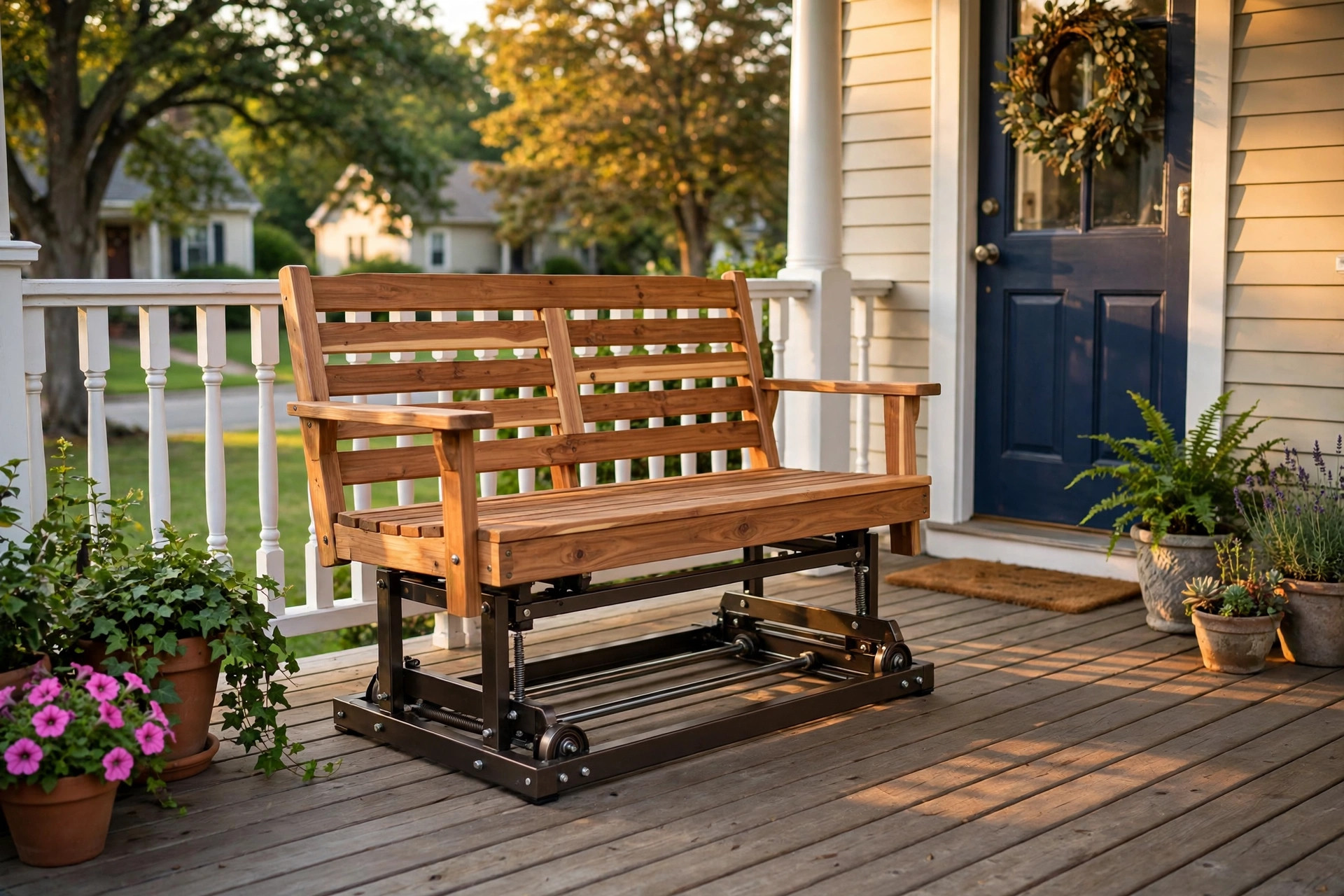

The best outdoor glider bench for porch use is not always the most costly one. It is the one that fits your porch, holds the weight it must hold, and moves in a smooth, quiet glide. A glider bench looks much like a garden bench, but it rides on a track or on short swing arms. The seat moves back and forth while the base stays still. You get the calm motion of a swing without chains, and without the need for a strong overhead beam. That is why the glider bench has become a favorite seat on porches across the United States. It suits a front porch, a back porch, and a screened porch alike.
People buy glider benches for rest, for talk, and for the simple pleasure of rocking in the open air. Older buyers like them because the glide is soft on the back. Parents like them because children can sit safely with both feet near the floor. But not every bench is built well. Some rust in one season. Some squeak with every push. Some pinch fingers in the moving joints. This guide walks you through the whole choice in plain terms, so you can pick a bench you will keep for years.
Why a Glider Bench Matters on a Porch
A porch is a room without walls. It is where neighbors stop to talk, where the mail gets read, and where summer nights slow down. The seat you put there sets the tone. A glider bench invites people to sit a while. It moves gently, and that motion seems to ease the mind. Doctors have long noted that slow rocking motion can calm the nerves and lower stress. You do not need a study to feel it. Sit in a glider for ten minutes on a warm evening and you will understand.
The glider bench also solves a practical problem. A hanging swing needs a beam or a free-standing frame, and it needs room to swing. A rocking chair rocks in place but seats only one person. A glider bench seats two or three, glides in place, and asks nothing of the porch above it. If your porch is small, a two-seat glider can give you the comfort of a swing in half the space. If you already own the best porch swing for two people, a glider bench can sit beside it and match its motion.
Good porch furniture also protects your money. A bench that lasts ten years costs less per year than a cheap one you replace three times. The best outdoor glider bench for porch use is therefore an investment, not just a purchase. Choose well once, and you stop thinking about it for a decade.
What to Look for When You Choose: Best Outdoor Glider Bench for Porch
The Frame
The frame carries everything. Look for thick, joined wood or welded metal. On a wooden bench, check that the joints are bolted through, not just glued or stapled. On a metal bench, look for welded corners rather than folded sheet metal. The frame should feel heavy when you lift one end. Light frames wobble. Heavy frames glide smoothly because their own weight steadies the motion.
The Seat and Back
Comfort lives in the seat. Slats should be wide and smooth, with small gaps that do not pinch. A slight curve in the seat and a tilt in the back make long sitting easy. Many buyers add cushions, and most glider benches accept standard porch cushions. Check the seat depth. A depth of about twenty inches suits most adults. If the bench will serve tall family members, look for a higher back.
The Glide Motion
Push the seat before you buy, or read reviews that describe the motion. A good glider moves with a light push and stops without a hard jolt. It should not squeak. Squeaks often come from cheap bearings or from metal arms rubbing on metal brackets. Quality benches use sealed ball bearings or smooth nylon bushings. Ask the seller what kind of bearing the bench uses. If the answer is vague, keep shopping.
Size and Weight Limit
Measure your porch before you order. A two-seat glider bench is usually about four feet wide. A three-seat bench runs closer to five feet. Leave at least two feet of clear space in front and behind the bench so it can glide without hitting a wall or a rail. Check the weight limit in the product details. Most quality benches carry between four hundred and six hundred pounds. If two large adults will use it daily, choose the higher end.
Types of Porch Glider Benches
Wood Glider Benches
Wood is the classic choice. Cedar, teak, and cypress resist rot and insects. Pressure-treated pine costs less but needs regular sealing. A wooden glider bench warms a porch with natural color and grain. Teak is the king of outdoor woods. It holds up to rain and sun with little care, though it will silver with age unless you oil it. Cedar smells sweet and resists bugs on its own. Wood benches are heavy, which is good for the glide, but heavy to move.
Metal Glider Benches
Steel and aluminum benches suit modern porches. Steel is strong and steady but must be powder-coated to fight rust. Check the coating for chips before each season. Aluminum will not rust, and it is lighter to move, but it can feel less solid in strong wind. Wrought-iron style benches look elegant and last for decades if the paint is kept up. Metal frames often pair with mesh or sling seats that dry fast after rain.
Wicker and Resin Wicker Benches
Woven looks invite you to sit. Natural wicker cannot stand weather and belongs only on a fully covered porch. Resin wicker, woven over an aluminum frame, stands up to rain and sun far better. It looks much like natural wicker but needs no oiling. If your porch is screened and you want a soft look, the best wicker loveseat for screened porch and a matching resin wicker glider make a fine pair.
Poly Lumber Benches
Poly lumber is plastic made to look like painted wood. It will not rot, crack, or splinter, and it never needs paint. It is heavy, which helps the glide. Colors run through the material, so scratches barely show. The price is higher than pine but lower than teak over the long run, because you never buy stain or sealer. For a porch that faces driving rain, poly lumber is hard to beat.
Cost and Price
Prices for porch glider benches run wide. A simple pine glider bench can cost between one hundred and two hundred dollars. A mid-range cedar or steel bench usually sells for between two hundred fifty and five hundred dollars. Teak, poly lumber, and high-end resin wicker benches run from five hundred to over one thousand dollars.
Do not judge by price alone. A two-hundred-dollar bench with a welded steel frame and sealed bearings may outlast a four-hundred-dollar bench with stapled joints. Read the details. Look at the weight limit, the bearing type, and the warranty. A three-year warranty says more about quality than any sales copy. Big furniture stores like IKEA and Wayfair carry wide ranges, so you can compare many models side by side. Independent test labs such as Consumer Reports also publish outdoor furniture reviews that are worth reading before you spend.
Remember the hidden costs. Cushions, covers, and wood sealer add to the first-year price. A bench that needs a forty-dollar cover and yearly sealing costs more over time than it first seems. Add it all up before you choose.
Care and Upkeep
Every glider bench lasts longer with a little care. Sweep leaves and dirt off the seat each week. Leaves trap moisture, and moisture feeds rot and rust. Once a month, wipe the frame with a damp cloth and check the bolts. Outdoor bolts loosen with motion. A loose bolt makes the glide rough and can crack a wooden joint. Tighten what is loose, and replace any bolt that shows rust.
Wood benches need sealing. Apply a water-repellent sealer once a year, or oil a teak bench if you want to keep its warm color. Sand any rough spot before it becomes a splinter. Metal benches need a look for chipped paint. Touch up chips with outdoor metal paint before rust starts. Resin wicker and poly lumber need the least care. A wash with mild soap and water each spring is usually enough.
Buy a cover if your porch is open to the sky. A breathable cover keeps rain off while letting damp air escape. Cheap plastic tarps trap moisture and do more harm than good. In winter, store cushions indoors and, if you can, move the bench under cover. Snow and ice test every joint.
Safety on the Porch
A glider bench is safe when it is built well and used with sense. Keep fingers clear of the moving joints, and teach children the same. Never let a child stand on the seat while it glides. Place the bench where it cannot tip over a rail. The glide moves the seat, not the frame, so allow clearance on all sides.
Check the weight limit and respect it. Overloading strains the bearings and can snap a wooden arm. If the bench starts to lean, squeak loudly, or glide unevenly, stop using it until you find the cause. Often the fix is a tightened bolt or a drop of outdoor lubricant on the bearing. Never use cooking oil on bearings. It gums up in heat. Use a silicone or dry lubricant made for outdoor use.
If anyone in the home uses a walker or has trouble standing, place the bench against a wall so it cannot drift. Some buyers lock the glide with a simple wedge when the bench is not in use. Ask the maker if a locking option exists for your model.
Frequently Asked Questions
How much room does a glider bench need? Measure the bench, then add two feet of clear space in front and behind. The seat travels several inches each way. Walls, rails, and planters must stay clear of that path.
Can a glider bench stay outside all winter? Teak, poly lumber, and powder-coated aluminum can winter outside with a cover. Pine and natural wicker do better under a roof or in storage. When in doubt, cover it or move it.
Do glider benches need cushions? They do not need them, but most people prefer them. Cushions add comfort and color. Choose outdoor cushions with water-resistant covers, and store them indoors during storms.
How is a glider different from a rocking chair? A rocking chair rocks on curved runners and seats one person. A glider bench slides on a track or arms and seats two or three. The glider moves in place, so it needs less floor room than a swing. If you are torn between the two, compare notes with the best outdoor rocking chair for porch guide as well.
Why does my glider squeak, and how do I stop it? Squeaks come from dry bearings, loose bolts, or metal rubbing on metal. Tighten every bolt first. Then apply a dry outdoor lubricant to the moving joints. If the squeak stays, a bearing may be worn and need replacement.
What is the best material for a rainy climate? Poly lumber and resin wicker handle constant rain best. Teak handles it well too. Pine and steel need more care in wet weather, so choose them only if you will keep up with sealing and paint.
A Final Word
The best outdoor glider bench for porch use is the one that fits your space, your climate, and your habits. Start with a strong frame and a smooth glide. Pick a material you are willing to care for. Measure twice, read the warranty once, and buy the best quality your budget allows. Then sit down, push gently with your feet, and enjoy the slow rhythm that makes porch sitting one of the great simple pleasures.
References
IKEA. (n.d.). Outdoor furniture. https://www.ikea.com Wayfair. (n.d.). Patio and outdoor furniture. https://www.wayfair.com Consumer Reports. (n.d.). Product ratings and reviews. https://www.consumerreports.org
Was this guide helpful?

About Robert Taylor
The My Garden US editorial team writes practical, in-depth home and garden guides for American homeowners — tested advice, no fluff.
You May Also Like
The Best Adirondack Chair for Tall People: A Complete Buying Guide
September 14, 2026 0 views
The Best Outdoor Table Lamp for Patio: A Plain Buyer’s Guide
July 13, 2026 0 views
How to Build an Outdoor Sectional Sofa
August 21, 2026 0 views