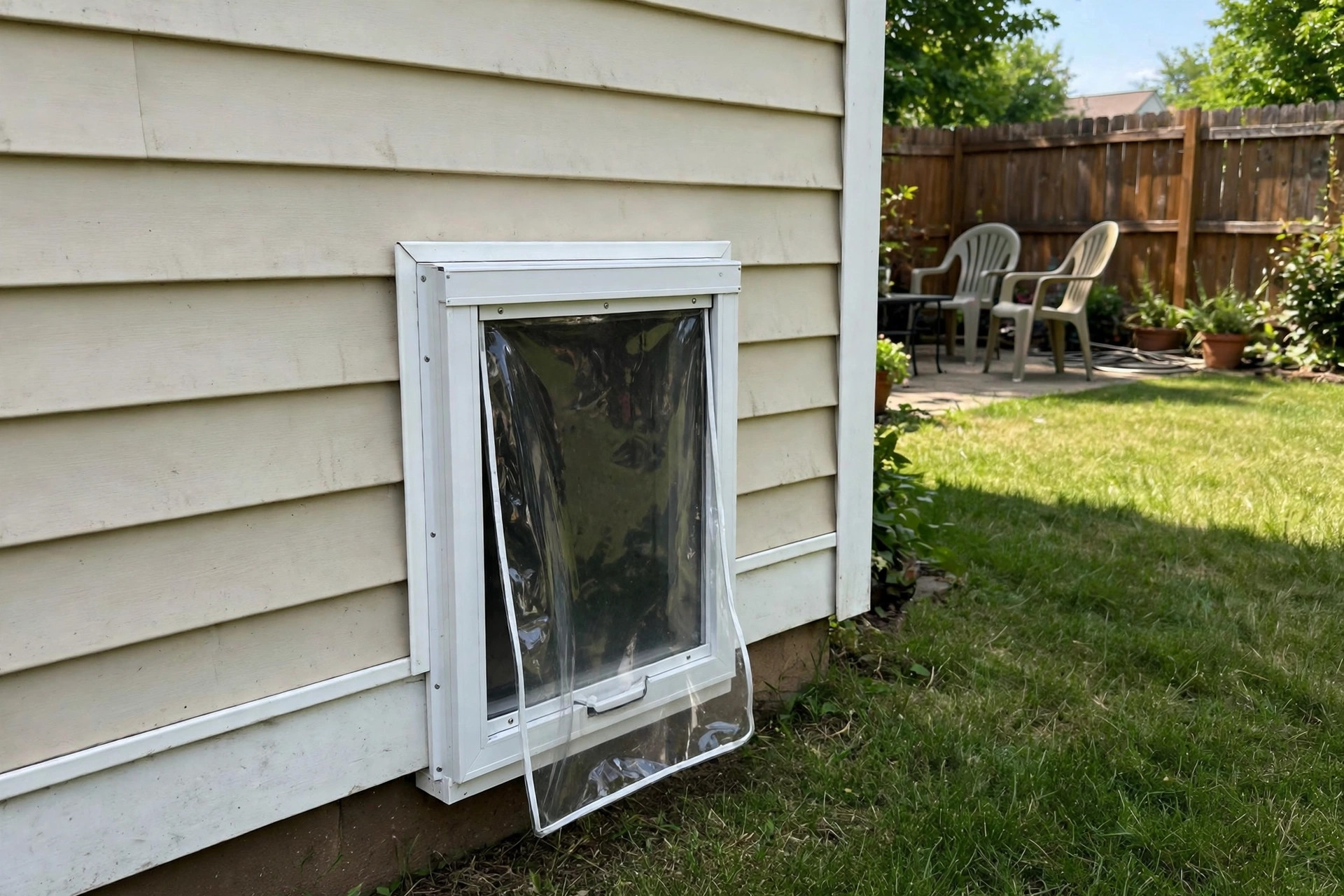

A large dog needs to go out at night, in the rain, and early in the morning. You cannot always be at the door. The best pet door for wall installation large dogs solves this daily problem. It gives your dog a private way in and out through an outside wall. This guide explains how to choose one, how to fit it, and how to keep it safe for your pet.
Why It Matters for Large Dogs
A big dog is heavy and strong. A small flap will not do. When the door is too small, the dog pushes hard, bends the frame, or refuses to use it. Many owners buy a door meant for a medium dog and find it breaks within months. The best pet door for wall installation large dogs starts with the right size. Your dog should pass through without ducking low or squeezing the shoulders.
Large dogs also need more room to feel safe. A narrow opening can make a timid dog avoid the door. A wide flap lets the dog walk through in a natural way. Measure your dog at the shoulder and at the widest point of the chest. Add at least two inches to each number. That gives you the minimum flap opening.
Wall installation has a clear advantage for big dogs. A door in a wall can sit lower and wider than most doors allow. It also keeps your main doors intact. Many home doors are too thin or too styled to cut. A wall gives you freedom of placement. You can place the flap near the yard where your dog already waits.
What to Look For When You Choose: Best Pet Door for Wall Installation Large Dogs
Choosing the best pet door for wall installation large dogs takes care. Here are the points that matter most.
Flap Material
The flap should be flexible but tough. Soft vinyl works well because it swings back into place and seals against wind. For cold places, a double flap system keeps warm air inside. Some doors use a rigid panel that locks at night. Think about your weather before you decide.
Frame Strength
A large dog will use the door hundreds of times each year. Cheap plastic frames can crack under daily force. Look for a strong aluminum or reinforced frame. The tunnel through the wall should be solid. Thin plastic tunnels can bend and let the flap fall out of line.
Tunnel Length
Walls are thicker than doors. A good wall kit includes a tunnel that spans the full width of your wall. Some kits allow you to add tunnel pieces for very thick walls. Check your wall thickness first. Measure from the inside surface to the outside surface.
Insulation
A hole in your wall lets heat out and cold air in. The best pet door for wall installation large dogs has weather seals around the flap and brushes or magnets along the edges. In winter, this makes a real difference to your heating bill. For more ideas on keeping your pet area in order, see our guide on the best pet food mat for messy eaters floor which keeps feeding zones tidy near the door.
Locking Options
You may want to lock the door at night or when you are away. Some doors have a sliding panel that blocks the flap. Others use a rotating lock on the frame. Electronic models open only for a tag on your dog collar. This keeps out stray animals.
Types of Wall Pet Doors for Big Dogs
There are several types on the market. Each suits a different home.
Single flap doors. These are simple and low in cost. One flap swings both ways. They suit mild climates. The seal is basic.
Double flap doors. Two flaps sit one behind the other. Air must pass through both. This type cuts drafts well. It is the common choice for homes with cold winters.
Electronic doors. A sensor on the collar opens the flap. Only your dog can enter. This stops raccoons and neighborhood cats. The price is higher, and the flap needs power or batteries.
Panel doors. These fit into sliding glass doors, not walls, but some owners use them when wall cutting is not allowed. They are worth a look if you rent your home.
For large breeds, the flap size often ranges from extra large to giant. Breeds like Labradors, German Shepherds, and Golden Retrievers need the extra large size. Giant breeds like Great Danes need the largest size made. If you share your yard with an outdoor cat as well as a dog, you may also enjoy our article on the best outdoor cat tree weatherproof for patio.
Cost and Price
Prices vary with size, material, and features.
A basic single flap door for a large dog may cost between forty and ninety dollars. The kit usually includes a tunnel for standard wall thickness. A double flap model with better insulation may cost between one hundred and two hundred dollars. Electronic doors for large dogs can cost two hundred to five hundred dollars, plus the cost of collar tags.
Fitting costs are separate. If you cut the hole yourself, you need a jigsaw, a level, a tape measure, and sealant. Many owners do this in an afternoon. If you hire a handyman, expect to pay one hundred to three hundred dollars for labor, depending on the wall type. Brick and concrete walls cost more to cut than wood frame walls.
Do not forget the small extras. You may need extra tunnel pieces for thick walls. You may need foam sealant to fill gaps. You may want a step or ramp on each side so your dog steps through with ease.
How to Fit a Pet Door in a Wall
Follow these steps for a safe and clean job.
Step one: pick the spot. Choose a spot low enough for your dog to step through with ease. The bottom of the flap should sit at about the height of your dog belly. Keep the spot away from pipes, wires, and load bearing studs. Use a stud finder on the inside wall.
Step two: mark the opening. Use the template that comes with the door. Tape it to the inside wall. Check that it is level. Mark the corners and the full outline with a pencil.
Step three: cut the inside wall. Drill a starter hole inside the outline. Cut along the line with a jigsaw. Set the cut piece aside.
Step four: cut the outside wall. Measure through from the inside opening and mark the same outline on the outside wall. Cut in the same way. For brick, use a masonry blade and work slowly.
Step five: fit the tunnel. Slide the tunnel pieces through the wall. Trim them to fit flush on both sides. Many kits snap together with no screws.
Step six: mount the frames. Screw the inside and outside frames to the wall. Check that the flap swings free in both directions. Add foam or sealant around the tunnel to close gaps.
Step seven: train your dog. Hold the flap open and let your dog walk through for a treat. Lower the flap a little each time. Most dogs learn in a day or two. Never force the dog through. Patience works better than pressure.
Pet experts at the American Kennel Club note that large breeds do best with wide, low openings that let them move through in a natural walk, and animal welfare groups like the ASPCA remind owners to place the door where the dog already spends time outdoors. If your yard also serves as your dog play area, keep it healthy with the tips in our guide to the best pet safe lawn fertilizer for dog owners.
Care and Upkeep
A wall pet door needs simple care to last for years.
Clean the flap once a month with warm water and mild soap. Dirt on the seal lets air leak through. Check the frame screws twice a year. A large dog can loosen screws over time. Tighten them with care so you do not crack the frame.
In winter, check the weather seal before the cold arrives. Replace worn brushes or magnets. A small gap can let in a strong draft. In summer, make sure the flap still swings free. Heat can warp cheap plastic.
If the flap tears, buy a replacement flap from the maker. Most makers sell spare flaps that fit their frames. Replacing a flap takes ten minutes and costs far less than a new door.
Safety
Safety comes first with a large opening in your wall.
Size the hole right. The hole should fit the tunnel with no large gaps. Fill any gap with foam sealant. Gaps let in insects and mice.
Watch for wires and pipes. Always check the wall before you cut. A stud finder with wire detection helps. If you are not sure, call a professional.
Keep the yard secure. A dog door leads to the yard. Make sure your fence is high and strong enough for a large dog. A gate latch should be out of reach of clever paws.
Lock at night if needed. If stray animals visit at night, use the locking panel. Many owners lock the door when they leave for the day and open it when they return.
Check the flap edges. Rough edges from cutting can scratch your dog. Sand the tunnel edges smooth before you mount the frame.
Animal safety groups and consumer test sites both stress that a well fitted door with smooth edges and a solid lock gives owners peace of mind. Pet health sites like PetMD also remind owners that easy outdoor access helps large dogs get the exercise they need for joint health. Home project sites such as The Spruce carry step by step guides for cutting clean wall openings, while family handyman resources cover jigsaw and masonry blade work in plain terms. Retailers like Lowe’s stock jigsaws, sealant, and pet door kits in one trip, and Bob Vila’s site offers clear advice on sealing wall openings against drafts.
Frequently Asked Questions
What size pet door do I need for a large dog? Measure your dog shoulder height and chest width. Add two inches to each. For most large breeds, an extra large flap works well. Giant breeds need the largest size made.
Can I fit a pet door in a brick wall? Yes. Use a masonry blade and cut slowly. Brick dust is heavy, so wear a mask. The tunnel and frames fit the same way as in a wood wall.
Will a wall pet door let cold air into my home? A little air will pass, but a double flap door with good seals keeps drafts low. Seal the tunnel well and the loss is small.
Are electronic pet doors worth the cost for large dogs? They are worth it if stray animals enter through the flap. The collar tag opens the door only for your dog. The cost is higher, but the peace of mind is real.
How do I train a timid large dog to use the flap? Start with the flap held fully open. Let the dog walk through for treats. Lower the flap a bit each day. Never push the dog. Most dogs learn within a week.
Do wall pet doors work for rental homes? Most landlords do not allow wall cutting. Check your lease first. A sliding door panel may be a better choice for a rental.
A Short Final Word
The best pet door for wall installation large dogs is the one that fits your dog, your wall, and your weather. Measure with care. Choose a strong frame and a good seal. Fit it with patience or hire a professional. Your large dog will thank you with every easy trip through that flap, day and night, rain or shine.
See The Spruce Pets for more detail.
References
American Kennel Club. (n.d.). Dog care and training resources. https://www.akc.org ASPCA. (n.d.). Pet care and animal welfare resources. https://www.aspca.org Bob Vila. (n.d.). Home improvement advice. https://www.bobvila.com Family Handyman. (n.d.). DIY home repair and maintenance. https://www.familyhandyman.com Lowe’s. (n.d.). Home improvement products. https://www.lowes.com PetMD. (n.d.). Pet health information. https://www.petmd.com The Spruce. (n.d.). Home and garden advice. https://www.thespruce.com The Spruce Pets. (n.d.). Pet care guides and product reviews. https://www.thesprucepets.com
Was this guide helpful?

About Jennifer Lee
The My Garden US editorial team writes practical, in-depth home and garden guides for American homeowners — tested advice, no fluff.
You May Also Like
Outdoor Rabbit Hutch for Cold Weather Climates: A Plain Guide
February 3, 2026 0 views
Dog Poop Bag Holder for Leash Walks USA: A Practical Guide
May 3, 2026 0 views
Dog Water Dispenser for Crate Attachment Travel: A Complete Guide
May 10, 2026 0 views