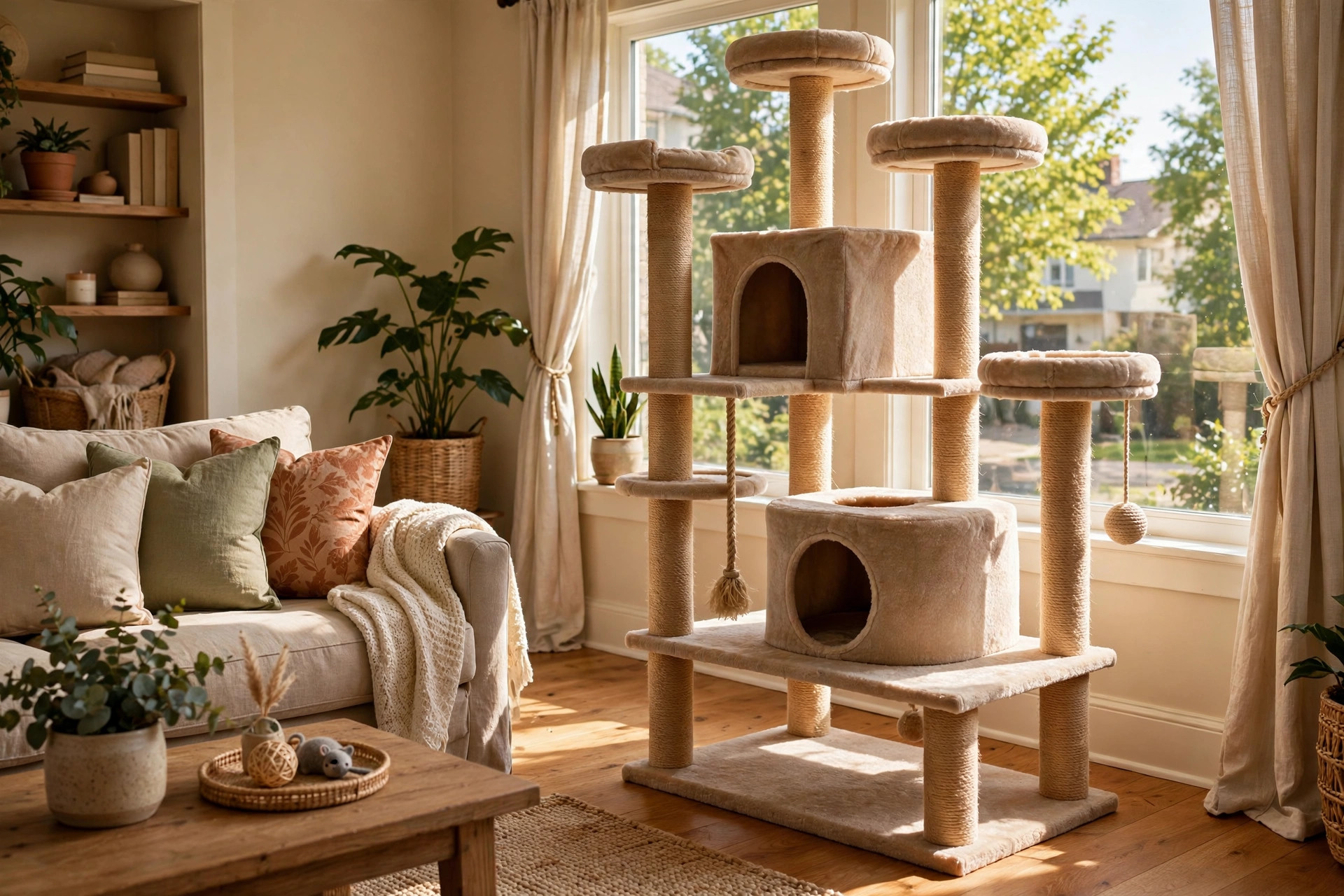

A house with two or three cats feels alive. The cats chase each other in the morning and nap in the sun by noon. But every cat in the house wants a place of its own. When cats must share one small bed or one short scratching post, small fights start. A cat tree condo for multiple cats large enough for the whole group solves this problem. It gives each cat a perch up high and a den down low. It lets cats play, scratch, and rest without getting in each other’s way.
In this guide you will learn why size matters for a multi-cat tree, what features to look for, what the main types are, what you should expect to pay, and how to keep the tree clean and safe for years.
Why a Large Cat Tree Condo Matters for Multiple Cats
Cats are territorial animals. In the wild, each cat holds its own ground. In a house, the ground is the living room, the hall, and the bedroom. When several cats share one home, they work out a pecking order. The bold cat takes the best seat. The shy cat hides under the bed. This order is normal, but a small space makes it tense.
A large cat tree adds vertical space to the home. Vertical space is like extra floor space for cats. One cat can sit on the top perch while another sleeps in a condo below. A third cat can rest on a middle platform. Each cat has its own spot, and the need to fight over one chair drops away.
Scratching is another reason. Cats scratch to mark territory, to stretch, and to keep their claws in shape. A tree with several sisal posts gives each cat a legal place to scratch. Without it, the cats turn to the sofa, the rug, or the door frame. A multi-cat home without enough scratching posts wears out fast.
Exercise matters too. Indoor cats do not hunt. They need play to stay fit. A tall tree with steps, perches, and hanging toys invites climbing and jumping. Cats that climb each day keep lean muscle and burn off energy. A tired cat is a calm cat, and calm cats fight less.
Finally, a large tree gives shy cats a refuge. Some cats need a hideout when the house gets loud. An enclosed condo at the base of the tree is a quiet cave. If you share your home with a timid rescue, you may also want to read our guide to a cat tree with hiding spots for shy cats for more den-style options.
What to Look for When You Choose One: Cat Tree Condo for Multiple Cats Large
Not every tall cat tree suits a house with several cats. A tree made for one small cat will wobble, wear out, and cause fights. Look for these points before you buy.
Size and Weight Capacity
Check the listed weight limit for each perch and condo. A large tree should hold at least 15 pounds per perch, and the whole frame should carry 40 pounds or more. Houses with big breeds like Maine Coons need even more. If the maker does not list a weight limit, treat that as a warning sign.
Measure your ceiling too. Many large trees stand 60 to 80 inches tall. They need a full foot of clearance below the ceiling so cats can jump onto the top perch with ease. Measure the floor space as well. A wide base is good for balance, but it must fit in the room you have in mind.
Materials
Most trees use one of three coverings: carpet, faux fur, or sisal. Carpet is soft and warm, and cats like to knead it. Faux fur looks clean and is easy to brush off. Sisal rope is the best surface for scratching posts because it holds up to claws.
The frame under the covering matters most. Solid wood and thick engineered wood hold weight and last for years. Thin particle board crumbles. Press the sides of the condos and the posts. They should feel firm, not hollow. A furniture seller with clear material listings makes this check easy before you order.
Number of Condos, Perches, and Scratching Posts
Count the resting spots. A good rule is one spot per cat, plus one extra. For three cats, look for four perches or condos. Each cat can then claim a favorite without crowding the others.
Scratching posts should run the full height of at least one column. Cats like to stretch tall when they scratch. Short posts do not give a full stretch, so cats ignore them. Look for posts wrapped in natural sisal, not carpet, since sisal lasts longer under many claws.
Stability and Base Design
A tall tree with several cats on it must not tip. The base should be wide and heavy. Some trees come with a wall anchor strap. Use it. A tree that rocks when a cat jumps on it will scare the cats, and a scared cat will never use the tree again. You can find wall anchors and mounting hardware at a home improvement store if the tree does not include them.
Types and Options
Large cat trees come in several shapes. Each suits a different home.
Tower trees. These are tall and narrow, with stacked perches and one or two condos. They fit well in corners and small rooms. They suit cats that love height.
Condo trees. These are wider, with two or three enclosed dens at the base and perches on top. They suit multi-cat homes because each cat gets a private den. A cat tree condo for multiple cats large enough to hold three dens is the classic pick for a busy household.
Activity centers. These add ramps, tunnels, and hanging toys to the tower shape. They suit young, playful cats that need motion.
Wall-mounted systems. These bolt to the wall and use shelves, steps, and perches. They take no floor space, but they need solid wall studs. They work well in small apartments with two cats.
Luxury wood trees. These use real wood branches or logs with a natural look. They cost more, but they last longer and look like furniture. They suit owners who want the tree to blend into the living room.
For a house with both cats and dogs, think about the whole layout. A pet gate extra wide for open floor plans can give cats a dog-free zone around their tree, which helps timid cats relax.
Cost and Price
Prices run wide. A basic large tree with two condos and three perches costs about 80 to 150 dollars. A mid-range tree with thicker posts, better carpet, and a wall anchor costs about 150 to 300 dollars. A premium tree made of solid wood with replaceable parts costs 300 to 600 dollars or more.
Three things drive the price. First is size. Taller trees with more levels use more material. Second is build quality. Solid wood frames and dense sisal cost more than thin board and carpet scraps. Third is brand and warranty. Known makers charge more, but they also answer the phone when a part breaks.
For a multi-cat home, the mid-range is the sweet spot. Cheap trees wear out in a year under three sets of claws. Premium trees are fine if the budget allows, but a well-built mid-range tree lasts three to five years. Watch for sales at an online pet supply store or a national pet shop, where large trees often drop in price during holiday sales.
Care and Upkeep
A cat tree in a multi-cat home takes a beating. Regular care keeps it safe and clean.
Vacuum the tree every week. Cat hair packs into carpet and faux fur fast, and three cats shed a lot. Use the brush head on your vacuum to lift hair from the condos and perches. Wipe the perches with a damp cloth once a month to lift dust.
Check the screws every two or three months. Jumping cats loosen bolts over time. A loose post wobbles, and a wobbling post is unsafe. Tighten every bolt with the tool that came in the box. If a bolt is lost, contact the maker for a spare before a cat climbs that section again.
Replace worn scratching posts when the sisal frays down to the wood. Many makers sell spare posts. Swapping a post takes ten minutes and gives the tree a new life. If the whole carpet covering is worn thin, some owners re-wrap the tree with fresh carpet or sisal from a home improvement store. It is a simple weekend job.
Wash removable pads and hammocks in the machine on a gentle cycle. Clean bedding cuts down on odor and keeps the cats willing to use the tree. A dirty tree is a tree the cats avoid.
Safety
A large tree is furniture, and furniture with cats on it needs care.
Anchor tall trees to the wall. This is the single most important safety step. A tree over five feet tall can tip when two cats wrestle on the top perch. A simple L-bracket or the strap that comes in the box stops this. If you rent, ask your landlord about small wall anchors. Most allow them.
Keep the tree away from blind cords, curtain cords, and lamp cords. Cats bat at hanging cords, and a cord near a perch is a strangling hazard. Move lamps and secure cords behind furniture.
Check the weight limit and honor it. If two large cats sleep on one perch rated for one, the perch can snap. Place the tree on a level floor, not on a thick rug that makes it rock.
Look at the tree once a month for damage. Frayed rope can trap a claw. Exposed staples can cut a paw. Loose carpet can snag a nail. Fix small problems the day you see them. For general pet safety guidance in the home, an animal welfare group and a humane group both publish free checklists worth reading.
New cats need a slow start. Let each cat sniff the tree at floor level first. Rub a little catnip on the perches to invite a climb. Never force a cat onto the tree. Let the boldest cat claim the top, and the rest will follow in their own time. A cat care site notes that forced introductions are a common cause of lasting fear, so patience pays off.
Frequently Asked Questions
How many resting spots do I need for three cats? Plan for four spots. One per cat, plus one extra. This gives each cat a choice and cuts down on guarding. A large tree with two condos and two or three perches meets this need for most three-cat homes.
Will a large cat tree hold a big cat like a Maine Coon? It will if you buy for the weight. Look for perches rated at 20 pounds or more and a frame of solid or thick engineered wood. Check reviews from owners of large breeds. A tree that holds a 20-pound cat with ease will hold two average cats at once.
Do I still need separate food bowls and litter boxes with a big tree? Yes. A tree solves the perch problem, not the food and litter problem. Keep one litter box per cat, plus one extra, in quiet spots around the house. Feed cats in separate bowls so no cat guards the food. A best slow feeder bowl for cats whisker friendly can also slow down a fast eater in a multi-cat home.
How do I get a shy cat to use the tree? Start low. Put treats in the bottom condo and let the cat explore on its own. Add catnip to a middle perch once the cat is calm. Keep dogs and loud noise away from the tree during the first week. Most shy cats claim a den within a few days when they feel safe. Pet care guides suggest the same slow method for any new piece of cat furniture.
How often should I replace a cat tree? A well-built tree lasts three to five years in a multi-cat home. Replace it when posts wobble after tightening, when sisal is worn to the wood on every post, or when condos sag. You can extend the life by replacing scratching posts and re-tightening bolts on schedule.
Is it better to buy one large tree or two small ones? One large tree is usually better. It gives cats the shared vertical territory they need to sort out their order. Two small trees in different rooms also work, and they suit homes where one cat guards a single tree. If guarding is a problem, place the trees in separate rooms so the guarded cat cannot watch both at once. A veterinary college publishes behavior notes that explain why vertical space calms multi-cat tension.
A Final Word
A cat tree condo for multiple cats large enough for every cat in the house is one of the best buys a multi-cat owner can make. It adds territory without adding rooms. It gives each cat a perch, a scratch post, and a den. It cuts down on fights and saves the furniture. Measure your space, check the weight limits, anchor the tree to the wall, and let the cats sort out who gets the top. Even the American Kennel Club, known for dogs, notes that peaceful multi-pet homes start with giving each animal its own space.
References
American Humane. (n.d.). Animal welfare and pet care resources. https://www.americanhumane.org American Kennel Club. (n.d.). Dog care and training resources. https://www.akc.org ASPCA. (n.d.). Pet care and animal welfare resources. https://www.aspca.org Cats.com. (n.d.). Cat breeds, care, and behavior guides. https://www.cats.com Chewy. (n.d.). Pet supplies. https://www.chewy.com Cornell University College of Veterinary Medicine. (n.d.). Veterinary education and animal health. https://www.vet.cornell.edu PetSmart. (n.d.). Pet supplies and services. https://www.petsmart.com The Home Depot. (n.d.). Home improvement products. https://www.homedepot.com The Spruce Pets. (n.d.). Pet care guides and product reviews. https://www.thesprucepets.com Wayfair. (n.d.). Furniture and home goods. https://www.wayfair.com
Was this guide helpful?

About James Carter
The My Garden US editorial team writes practical, in-depth home and garden guides for American homeowners — tested advice, no fluff.
You May Also Like

Cat Harness and Leash Set for Outdoor Walks: A Complete Guide
September 7, 2026 0 views
Bird Cage Large for Parrots and Conures: A Complete Buyer Guide
March 3, 2026 0 views
Best Pet Grooming Table for Home Use Dogs
March 10, 2026 0 views