
Introduction
The top rated fireplace safety gates for cold climates do more than keep small children away from the fire. In a cold climate, the fireplace may burn for five or six months of the year. A gate that is used every single day must be strong, heat resistant, and easy to open and close. This guide explains what to look for, what types are sold, what they cost, and how to keep them safe through a long winter.
Families in cold states burn wood, gas, or pellets from October through April. The hearth becomes the warmest place in the house, and children are drawn to it. Pets curl up near it. A good safety gate creates a clear buffer zone around the hot surfaces. It also gives parents peace of mind during the busiest weeks of the season.
Why a Safety Gate Matters in a Cold Climate: Top Rated Fireplace Safety Gates for Cold Climates
In mild regions, a fireplace may be used a few dozen evenings per year. In a cold climate, it may be used two hundred evenings per year. Every part of the gate gets more wear. Hinges loosen. Latches wear. Metal panels absorb heat day after day.
A cheap gate may look fine in October and fail by January. That is why the top rated fireplace safety gates for cold climates are built from heavier steel and tested for longer burn cycles. They are made for homes where the fire is a daily tool, not an occasional luxury.
The cold also changes how the family uses the room. Windows stay shut. Everyone gathers near the hearth. Children play closer to the fire because the rest of the house feels chilly. A gate that stands a few inches from the hearth is not enough in these homes. It needs to give the full recommended clearance, which is three feet from hot surfaces.
What to Look for in a Fireplace Safety Gate
Heat Resistance
The gate must stand near high heat for hours at a time. Steel is the best choice. It does not melt, and it does not give off fumes when warm. Look for steel gates with heat resistant powder coating. The coating should not blister or peel after a full winter of use.
Mesh panels are common on budget gates. Fine metal mesh works well, but fabric mesh does not belong near a fireplace. It can scorch. Plastic parts are also a risk. A latch made of cheap plastic can soften when the fire is hot. The best gates use metal latches and metal hardware throughout.
Check the gate for a stated heat rating or a burn test. Good makers publish this data. Home improvement guides such as Family Handyman explain how heat moves through metal and why clearance matters around hot appliances.
Size and Coverage
Measure the front and sides of your hearth before you shop. Many cold climate homes have wide stone or brick hearths. A narrow gate leaves the corners open, and a child can reach around it.
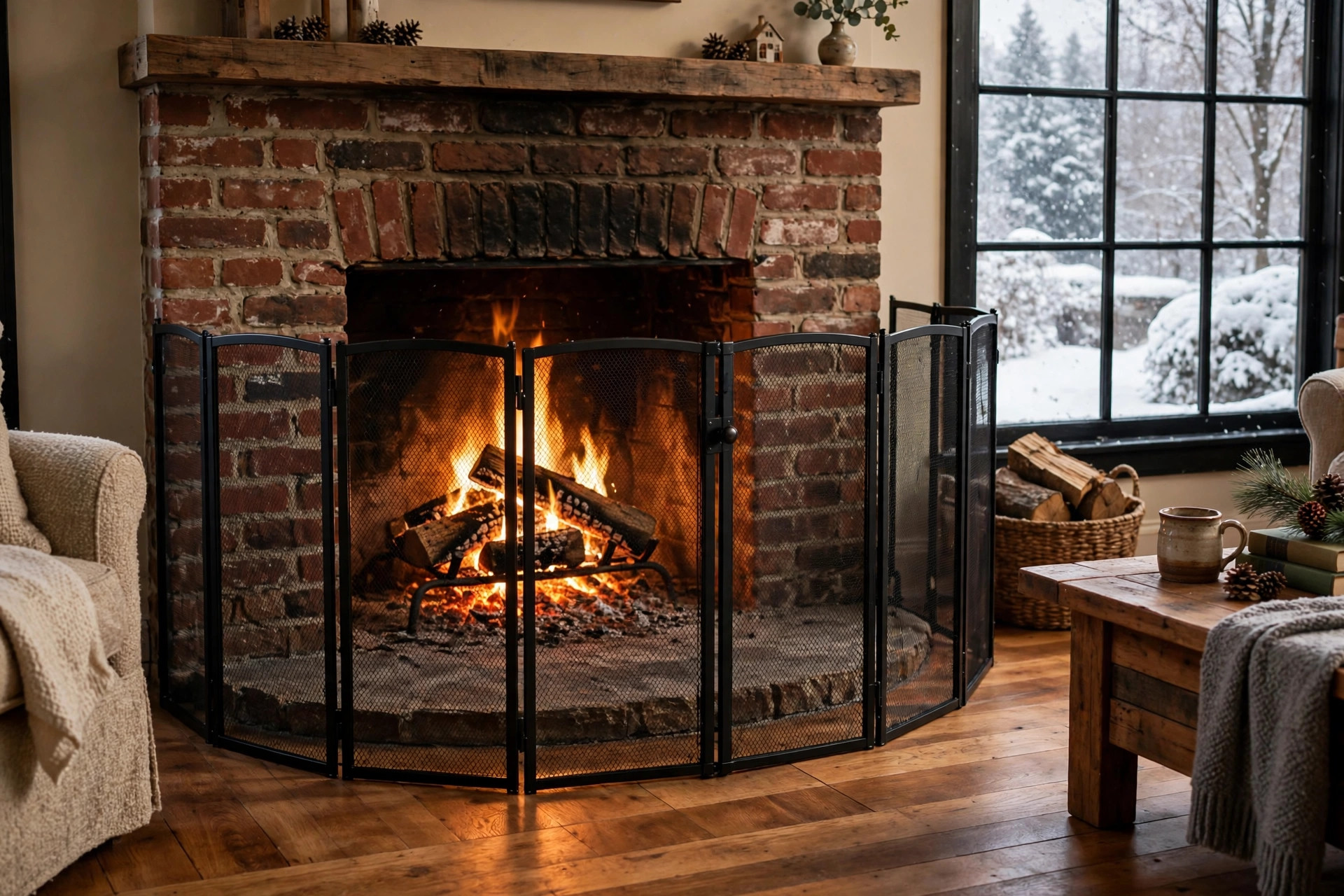
The top rated fireplace safety gates for cold climates are usually five panel or six panel models that stretch six to ten feet wide. They wrap around the hearth in a curve or a wide angle. Corner fireplaces need a gate that can bend at sharp angles. Freestanding models adjust best.
Make sure the gate is tall enough. A height of thirty inches works for toddlers. If you have a climbing child or a large dog, look for thirty six inches or more. The gate should be tall enough that no one can lean over it and touch the hot glass or the firebox door.
Locking and Latching
You will open this gate hundreds of times per season. Each time you load wood or tend the fire, you pass through it. The latch must work with one hand, because your other hand may hold logs or a poker.
Look for a double locking latch. The first action lifts or slides a safety catch. The second action opens the door. Two steps keep a smart toddler out. Avoid latches that stick in cold dry air. Metal on metal latches last longest.
The walk through door is the most used part of the gate. On a cheap gate, this door sags after one season. On a top rated gate, the door has a strong frame and an adjustable hinge. Test the door in the store if you can. It should swing shut on its own and click into the locked position.
Types of Fireplace Safety Gates
Freestanding Hearth Gates
Freestanding gates are the most popular type for cold climate homes. They stand on their own feet and need no screws in the wall. Five or six panels join with hinges. You fold them into a curve around the hearth.
The feet must be heavy. A gate that tips is worse than no gate at all. Look for wide flat feet with rubber pads. Some models let you bolt the feet to the floor for extra hold. This is a good idea if the gate sits on a smooth tile hearth.
Freestanding gates are easy to move when the season ends. You can fold them flat and store them in the garage. This matters in cold climates, where the gate may sit unused for four months in summer.
Wall Mounted Gates
Wall mounted gates screw into the studs on each side of the fireplace. They give the firmest hold of any type. Once mounted, they do not shift, tip, or slide.
The drawback is the holes in the wall. If you rent your home, this may not be allowed. Wall mounted gates also fit only one fireplace. You cannot move them to another room.
For a house you own, with one main fireplace, a wall mounted gate is an excellent long term choice. It survives many winters without loosening. Retail guides at Lowe’s and The Home Depot show mounting kits and explain how to find studs behind drywall or paneling.
Configurable Play Yard Gates
Some families use large configurable play yards as fireplace gates. These have six to eight panels and can form a wide circle or a long run. They work well for very wide hearths and for corner setups.
Make sure any play yard you use near a fire is rated for heat. Many play yards are made for open floors and have plastic joints. Plastic joints do not belong near a fireplace. Choose an all metal model with steel hinges.
A related option is a fixed fireplace glass door paired with a gate. Glass doors cut radiant heat and block sparks, which takes some strain off the gate. For homes with small children, combining a childproof fireplace screen with a gate adds a second layer of protection.
Cost and Price
Prices for the top rated fireplace safety gates for cold climates run from about sixty dollars to three hundred dollars. The range is wide because size and build quality differ a great deal.
Simple three panel steel gates cost sixty to one hundred dollars. They suit small hearths and mild use. Mid range five panel gates with walk through doors cost one hundred to two hundred dollars. This is the sweet spot for most cold climate families.
Heavy duty six panel gates with all metal hardware cost two hundred to three hundred dollars. These are the models that last five winters or more. If you burn every day, the extra cost pays for itself. A gate that fails midwinter must be replaced in a hurry, often at a higher price.
Watch for winter sales. Prices often drop in March and April when stores clear heating stock. Buying off season can save twenty to thirty percent. Keep the gate boxed until fall.
Care and Upkeep
A gate that faces a fire all winter needs regular care. Soot and ash settle on every surface. Wipe the gate with a damp cloth once a week during the burning season. This keeps the finish clean and lets you spot rust or loose screws early.
Check the hinges and latches once a month. Tighten any loose bolts. Cold dry air shrinks wood floors, and a gate that stood firm in October may wobble in February. Adjust the feet or the wall mounts as needed.
Look at the powder coating each spring. Chips in the coating let rust start. Touch up small chips with high heat paint. If large areas are peeling, it may be time for a new gate. Do not use a gate with sharp peeling edges where a child could cut a hand.
Store the gate in a dry place over the summer. A damp basement will rust steel in a few months. Fold freestanding gates flat and lean them against a wall in the garage. Cover them with a sheet to keep dust off.
If your home also uses a high efficiency childproof fireplace screen, clean it on the same schedule. Screens and gates work as a team, and both need the same monthly check.
Safety Tips for Cold Climate Homes
Keep the three foot rule. No furniture, toys, blankets, or curtains within three feet of the fireplace opening. The gate should stand at or beyond this line. In a small room this feels like a lot of space, but it is the standard that fire safety groups teach.
Never hang stockings or decorations on the gate. The gate is a safety device, not a mantel. Extra weight can tip a freestanding gate. Fabric near heat is a fire risk.
Teach children that the gate is not a toy. Do not let them climb it or swing on the door. A gate that is climbed daily will loosen at the hinges. Explain the rule in simple words and repeat it often.
Install a smoke detector and a carbon monoxide detector in the room with the fireplace. Test both when the heating season starts. The U.S. Environmental Protection Agency publishes burn wise guidance on clean and safe wood heating, including how to choose dry seasoned wood that burns with less smoke.
Keep a fire extinguisher near the room but not inside the gated area. Every adult in the house should know where it is and how to use it. A small kitchen style extinguisher works for most fireplace mishaps.
Never leave a fire burning with no adult in the room, even with a gate in place. Gates slow children down. They do not replace watching. This rule matters most on the coldest nights, when the fire is large and the house is full of guests.
Frequently Asked Questions
How far should a fireplace safety gate stand from the fire?
Three feet is the standard clearance. Measure from the fireplace opening, not from the hearth edge. In cold climates where fires burn hot and long, more distance is better. A five panel gate usually gives enough width to hold this line around a standard hearth.
Can I use a baby gate as a fireplace safety gate?
A standard pressure mounted baby gate is not made for heat. The plastic parts can soften, and the narrow width leaves gaps around a wide hearth. Use a gate built and rated for fireplace use. Hearth gates have heat resistant finishes and wider panel spans.
Do fireplace safety gates work with corner fireplaces?
Yes. Freestanding multi panel gates fold into sharp angles and wrap around corner hearths. Measure both walls of the corner and count the panels you need. Some makers sell extra panels separately so you can widen the gate.
Will a safety gate damage my floors?
Freestanding gates rest on padded feet and should not scratch sealed floors. On soft wood, place felt pads under the feet. Wall mounted gates need screws, so they leave small holes. If you rent, choose freestanding and check your lease first.
How long does a good fireplace safety gate last?
A well built steel gate lasts five to ten years in a cold climate with daily winter use. Cheaper gates last one to three seasons. Monthly checks and off season storage stretch the life of any gate. Replace the gate if the latch no longer locks with a firm click.
Are electric fireplaces safer without a gate?
Electric fireplaces stay cooler than wood or gas, but the glass front still gets warm. Makers such as Napoleon and Heatilator note that any heated surface deserves caution around small children. A gate is still wise in a home with toddlers, even with an electric unit.
A Final Word
The top rated fireplace safety gates for cold climates earn their rating through long winters of daily use. They are made of steel, they lock with a firm click, and they stand three feet from the heat. Measure your hearth, choose a gate wide enough to hold the line, and check it once a month while the fire burns. Home guides at This Old House and The Spruce offer more detail on hearth safety and winter fireplace care. A good gate is a small price for a safe warm home.
References
Family Handyman. (n.d.). DIY home repair and maintenance. https://www.familyhandyman.com Heatilator. (n.d.). Fireplaces and fireplace products. https://www.heatilator.com Lowe’s. (n.d.). Home improvement products. https://www.lowes.com Napoleon. (n.d.). Fireplaces, grills, and heating products. https://www.napoleon.com The Home Depot. (n.d.). Home improvement products. https://www.homedepot.com The Spruce. (n.d.). Home and garden advice. https://www.thespruce.com This Old House. (n.d.). Home renovation guidance. https://www.thisoldhouse.com U.S. Environmental Protection Agency. (n.d.). Protecting human health and the environment. https://www.epa.gov
Was this guide helpful?

About James Carter
The My Garden US editorial team writes practical, in-depth home and garden guides for American homeowners — tested advice, no fluff.
You May Also Like
Affordable Outdoor Patio Heaters for Sale: A Practical Buying Guide
September 14, 2026 0 views
EPA Certified Freestanding Electric Stoves with Free Shipping: A Full Buying Guide
September 29, 2026 0 views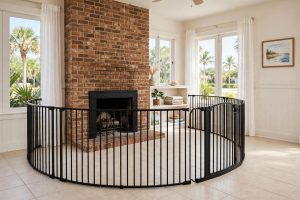
Top Rated Fireplace Safety Gates for Florida Homes
September 12, 2026 0 views