Good low voltage landscape lighting transformer reviews can save you money and trouble. A transformer is the heart of any low voltage yard lighting system. It takes standard house current and steps it down to 12 volts. That low voltage then runs your path lights, spotlights, and deck lights. If the transformer is weak or poor in build, your whole system will fail early. This guide walks you through what matters, how to choose, what to pay, and how to keep the unit safe and strong for years.
Why the Transformer Matters
Every low voltage landscape lighting system starts at the transformer. Without it, you cannot run 12 volt lights from a standard outlet. The transformer sets the limit on how many lights you can run. It also sets how bright they will be. A unit that is too small will overheat. A unit that is too large costs more than you need.
The transformer also decides how much control you have. Basic units switch on and off with a simple timer. Better units have light sensors that turn lights on at dusk. Some models link to smart home apps and voice control. Your choice here shapes how the whole yard looks and feels at night.
Many buyers read low voltage landscape lighting transformer reviews before they shop. That is a sound move. Real world tests show which units run cool and quiet, and which ones fail after one season. A good review can warn you about weak cases, loose terminals, and timers that drift out of time.
How a Low Voltage Transformer Works: Low Voltage Landscape Lighting Transformer Reviews
The idea is simple. Your home outlet gives 120 volts. That is too much for garden lights, and it can be a shock risk in wet soil. The transformer lowers the voltage to 12 volts. Twelve volts is far safer outdoors. It will still give a shock in rare cases, but it is far less dangerous than line voltage.
Inside the box there is a coil. It takes the high voltage in and sends low voltage out. A timer or light sensor sits between the coil and the output terminals. When the timer says it is night, power flows to the wire runs. The lights come on. When morning comes, power stops.
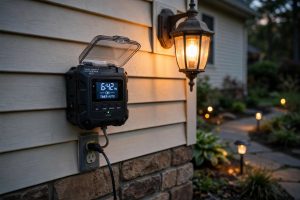
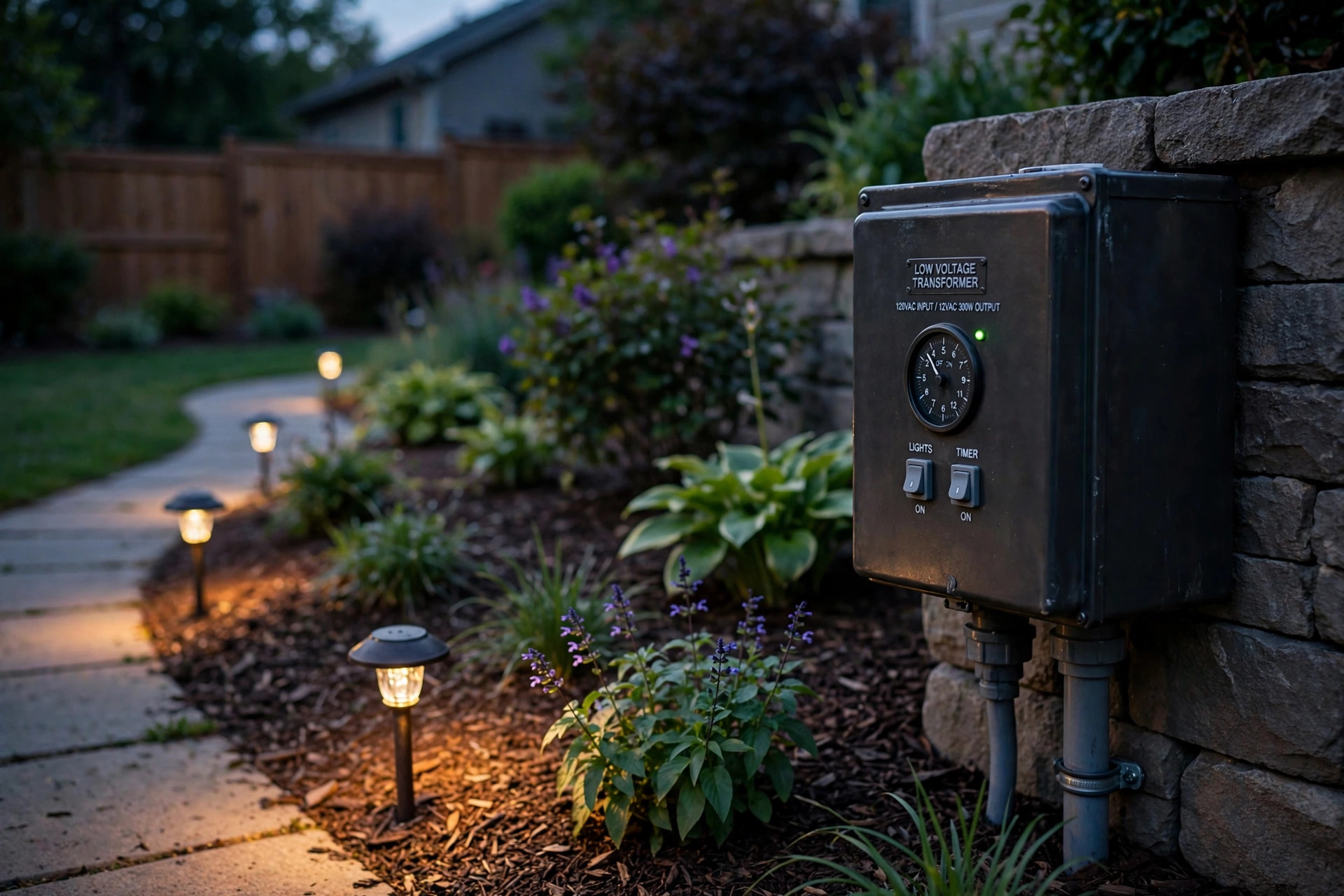
Most transformers mount on a wall near an outdoor outlet. A few models sit on the ground on feet or stakes. The case should keep rain and snow out. Good cases are made of steel or heavy plastic with sealed doors. Cheap cases let water in, and water kills the unit fast.
What to Look for in Low Voltage Landscape Lighting Transformer Reviews
When you read reviews, look for a few key facts. First is wattage. Second is voltage output. Third is build quality. Fourth is the timer or control system. Each of these points shapes how well the unit will serve your yard.
Get the Wattage Right
Add up the watts of every light you plan to run. Do not guess. Read the label on each light. A path light may use 4 watts. A spot light may use 7 watts. Add them all together. Then pick a transformer rated at least 20 percent above that total. This headroom keeps the unit cool and lets you add one or two lights later.
For example, if your lights total 120 watts, do not buy a 150 watt unit at the edge of its range. A 200 watt unit will run with ease. Reviews often note which units run hot at full load. Heat is the enemy of long life. A unit that runs cool will last many more years.
Check the Voltage Taps
Long wire runs lose voltage. A light at the far end of a 100 foot run may glow dim if the voltage drops too far. Good transformers offer multi taps, such as 12, 13, 14, and 15 volt output terminals. You can hook the long run to a higher tap to make up for the loss. Cheap units give only 12 volts. That works fine for short runs near the house, but it fails for large yards.
Look at Build Quality
The case should feel solid. Stainless steel and powder coated steel resist rust. The door should close tight and latch firm. Terminal blocks should be wide and accept thick wire with ease. Small cheap terminals crack or strip under normal use. Reviews that show close up photos of the terminals are worth more than star ratings alone.
Study the Timer and Controls
A basic timer turns lights on and off at set times. A photocell turns them on at dusk and off at dawn. Some units combine both, so lights come on at dusk and shut off at midnight. Smart models add app control and schedules that shift with the seasons. Think about what you need. A simple timer suits a small yard. A large yard with zones may need a unit with two or three timed outputs.
Types of Landscape Lighting Transformers
Transformers fall into a few broad groups. Knowing the groups helps you narrow the field fast.
Plug in units are the most common. They plug into a standard outdoor outlet and mount on the wall. They come in sizes from 60 watts to 900 watts. Most home yards need 200 to 600 watts. These units are easy to install and easy to replace.
Hardwired units connect straight to the house wiring through a junction box. An electrician should install these. They suit large estates and commercial sites where the load is high and the unit must sit far from an outlet.
Single tap units give one output voltage, usually 12 volts. They cost less and suit small systems with short wire runs. If all your lights sit within 40 feet of the transformer, a single tap unit can work well.
Multi tap units give several output voltages. They suit larger yards and long runs. They cost more, but they give you the power to balance brightness across the whole yard. Most strong landscape lighting reviews point buyers toward multi tap units for yards over half an acre.
Smart transformers link to Wi Fi or a smart home hub. You can set schedules from a phone, dim zones, and link lights to motion events. They cost the most. They pair well with other smart yard gear, such as a smart floodlight for the backyard or a camera system that records only when motion trips the lights.
Cost and Price: What You Should Pay
Prices run wide. Small 60 to 120 watt units cost 40 to 90 dollars. Mid size 200 to 300 watt units cost 90 to 200 dollars. Large 600 to 900 watt multi tap units cost 200 to 500 dollars or more. Smart units add 50 to 150 dollars over a plain unit of the same size.
Do not shop on price alone. A 60 dollar unit that dies in two years costs more than a 150 dollar unit that lasts ten. Look at the warranty. Good makers offer three to five years. Cheap units often offer one year or less. That short warranty tells you what the maker thinks of its own product.
Buy from a store with a clear return policy. A large home center lets you return a unit that hums too loud or runs too hot. Online market reviews can also show price trends, so you know when a model is marked up too high.
Care and Upkeep
A transformer needs little care, but what it needs matters. Keep the vents clear. Do not stack bags, boxes, or garden tools against the unit. Air must move through the case to carry heat away. Once a year, open the door and look inside. Check for nests, spider webs, and dirt. Blow out dust with a dry cloth or a soft brush.
Check the wire connections each spring. Copper wire can loosen as it heats and cools through the seasons. A loose terminal runs hot and can melt the wire coating. Tighten each screw with a firm hand. Do not over tighten and strip the screw.
Watch for signs of trouble. A loud hum, a burnt smell, or lights that flicker all point to a failing unit. Cut power and inspect the box right away. If the case is cracked or the gasket is gone, replace the unit. Water and electricity do not mix, even at 12 volts.
Keep the timer or photocell clean. A dirty photocell may think it is dark at noon and leave lights on all day. Wipe the sensor lens with a soft cloth twice a year. If your unit uses a backup battery for the timer, change it when the maker advises.
Safety
Low voltage is safer than line voltage, but it still needs care. The transformer itself plugs into 120 volts. That side of the box is full line voltage and can kill. Never open the high voltage side unless you know what you are doing. Let an electrician handle hardwired installs.
Mount the unit at least one foot above the ground. This keeps it out of standing water. Keep it away from sprinklers that spray the case day after day. Do not bury the transformer. Burying traps heat and moisture and voids most warranties.
Follow local codes. Many towns require an outdoor rated outlet with a ground fault breaker for landscape lighting. The consumer product safety agency warns that wet location wiring must be rated for outdoor use. Use cable made for direct burial. Indoor wire will rot in the soil within a year.
Do not overload the unit. Running past the rated watts will trip the thermal fuse again and again. Each trip wears the fuse down. In the end the unit will fail open and your lights will stay dark. Size the unit right the first time and you will avoid this pain.
Teach kids and yard workers where the unit is. A mower or trimmer can cut low voltage cable with ease. Mark cable paths with small flags for the first month after install. Once grass grows over the lines, the risk drops, but it never goes to zero.
How Low Voltage Lighting Fits a Smart Home
Many yards now mix lights with security gear. A well lit yard deters intruders. Motion lights that snap on when a floodlight camera with no subscription wakes up can scare off a prowler. Some owners link their transformer to the same app that runs their doorbell and locks.
If you run a smart doorbell, you already know about transformers. The small doorbell transformer for a smart doorbell does the same job on a smaller scale. It steps house voltage down for the chime and camera. Learning how one transformer works makes the other easier to grasp.
Smart home brands now sell outdoor gear that ties together. You can find starter kits through a smart home store or read smart home news to see what is new. A home security firm can also advise on how lighting fits a full security plan. The goal is the same in each case: a yard that is bright, safe, and easy to control.
Frequently Asked Questions
How many lights can one transformer run? Count the total watts of your lights. The transformer must be rated above that total. Leave 20 percent headroom. A 300 watt unit can run 240 watts of lights with ease. Never run a unit at its full rated load for long.
Do I need an electrician to install a transformer? Plug in units need no electrician. You mount the box, plug it in, and connect the low voltage wires. Hardwired units need an electrician. If your town code calls for a new outdoor outlet, hire a pro for that part too.
Can I add more lights later? Yes, if you left headroom in the wattage. That is why reviews stress buying a bit more capacity than you need today. Check the total watts again before you add. If you are near the limit, add a second transformer instead of straining the first.
Why do my lights dim at the far end of the yard? Voltage drops along long wire runs. Use a multi tap transformer and hook the long run to a higher tap. You can also use thicker cable or split the yard into two shorter runs. Each fix brings the far lights back to full brightness.
How long does a transformer last? A well made unit lasts eight to fifteen years. Cheap units may fail in two to three years. Heat, water, and overload are the main killers. Mount the unit in a dry spot, size it right, and check it once a year.
Are smart transformers worth the extra cost? They are worth it if you want app control, dusk to dawn plus late night shutoff, and links to other smart gear. If you only need lights on at dusk and off at dawn, a plain photocell unit will do the job for less money.
A Short Final Word
A transformer is a small box with a big job. Buy enough watts. Pick multi taps for a large yard. Choose a solid case with a strong warranty. Read low voltage landscape lighting transformer reviews from trusted test labs and how to guides before you spend. Then install with care and check the unit each year. Your lights will burn bright, your yard will look its best, and you will not think about the box on the wall again for a decade. For more on energy smart yard gear, keep reading our guides.
References
ADT. (n.d.). Home security and automation. https://www.adt.com CNET. (n.d.). Technology news and reviews. https://www.cnet.com Consumer Reports. (n.d.). Product reviews and ratings. https://www.consumerreports.org Google Store. (n.d.). Smart home devices. https://store.google.com Lowe’s. (n.d.). Home improvement products. https://www.lowes.com The Spruce. (n.d.). Home and garden advice. https://www.thespruce.com The Verge. (n.d.). Technology news and reviews. https://www.theverge.com This Old House. (n.d.). Home renovation guidance. https://www.thisoldhouse.com U.S. Consumer Product Safety Commission. (n.d.). Product safety information. https://www.cpsc.gov U.S. Department of Energy. (n.d.). Energy efficiency and renewable energy. https://www.energy.gov
Was this guide helpful?

About Robert Taylor
The My Garden US editorial team writes practical, in-depth home and garden guides for American homeowners — tested advice, no fluff.