---
Table of Contents
Table of Contents
- Test Smoke Detectors without Test Button: Why the Test Button Matters (and What It Actually Tests)
- Before You Start: The Safety Rules
- Method 1: Canned Smoke Test Spray
- Method 2: The Match Smoke Test (Carefully)
- Method 3: Check the Power and the LED
- Method 4: Listen for the Low-Battery Chirp Pattern
- Method 5: Clean the Sensor Chamber
- Method 6: The App or Panel Test (Smart and Monitored Detectors)
- Method 7: Check the Manufacture Date
- What If the Detector Fails Every Test?
- Special Cases
- A Simple Monthly Routine (No Test Button Needed)
- When to Call for Help
- The Bottom Line
- References
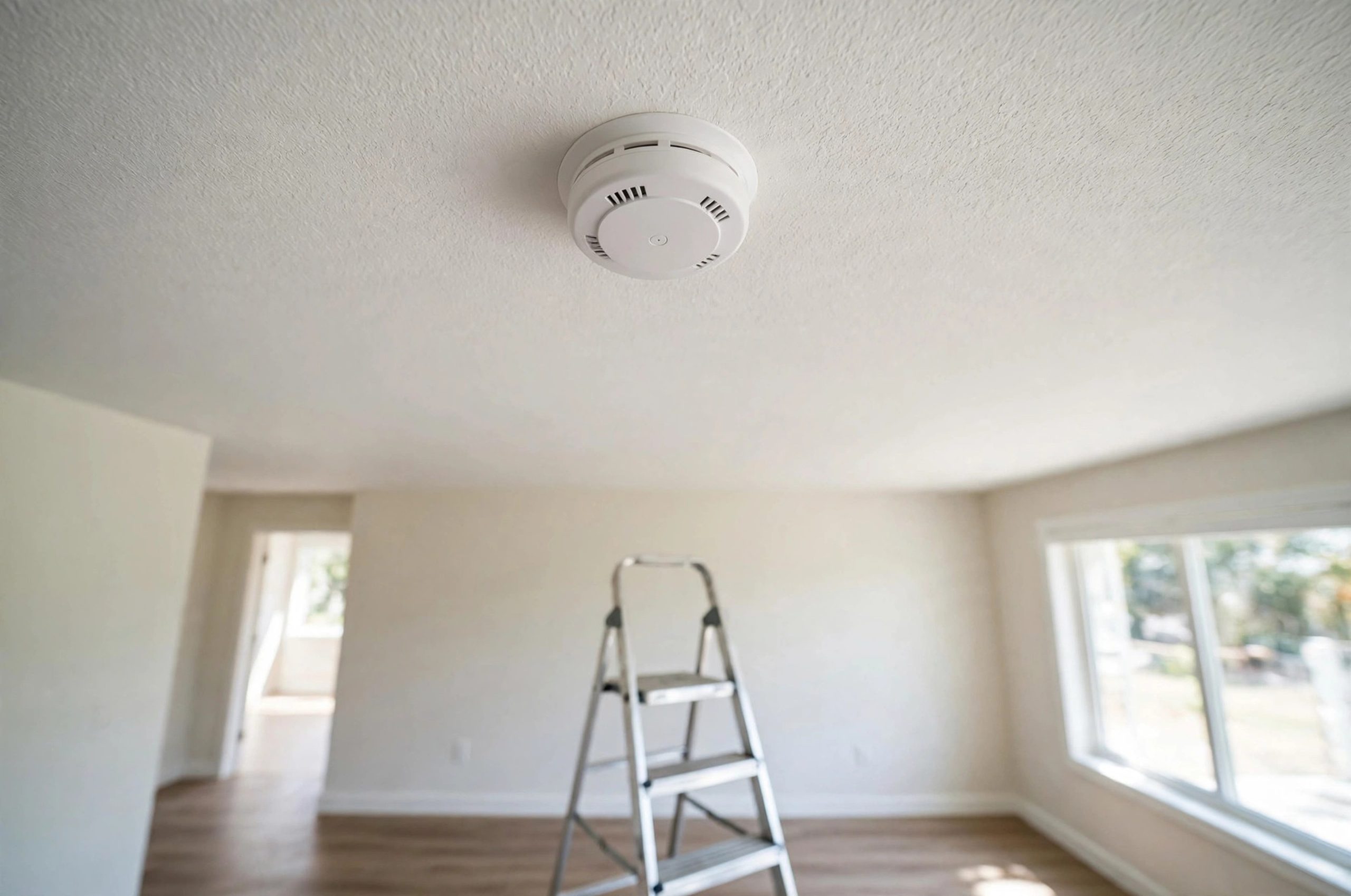
Most smoke detectors have a test button. Press it, the alarm screams, and you know it works. But some units do not. The button may be broken. The paint crew may have painted over it. Or you may own an older model where the button only tests the battery, not the sensor. This guide shows how to test smoke detectors without the test button, safely and in the right order. Here is how to test smoke detectors without test button without fuss.
Test Smoke Detectors without Test Button: Why the Test Button Matters (and What It Actually Tests)
When it comes to test smoke detectors without test button, getting the details right makes all the difference.
Many homeowners find that test smoke detectors without test button is easier than they expected once they know the basics.
First, a quick reality check. The test button on most smoke detectors tests the horn and the battery circuit. It does not always test the smoke sensor itself. That surprises many homeowners. A unit can pass the button test and still fail to sense smoke if the sensor chamber is clogged with dust or dead from age.
So testing "without the test button" is not just a workaround. The methods below test the parts of the detector that matter most: the sensor, the power, and the wiring. The U.S. Fire Administration says to test alarms monthly and replace the whole unit at ten years, and it walks through maintenance for battery, long-life, and hardwired models (USFA smoke alarm guidance).
Before You Start: The Safety Rules
Many homeowners find that test smoke detectors without test button is easier than they expected once they know the basics.
The key to test smoke detectors without test button is choosing the right approach for your space and budget.
Smoke detector testing involves ladders, and sometimes real smoke. Follow these rules.
Tell everyone in the house. A full alarm test is loud, about as loud as a rock concert. Warn family members and pets so nobody panics. If your alarms connect to a monitored security system, call the monitoring company first and put the system in test mode.
Use a stable ladder. Most detectors sit on the ceiling. Use a step ladder on flat ground, not a chair. Have someone spot you if the ceiling is high.
Never use an open flame near the detector. This is the big one. Do not hold a lighter or a lit candle up to a smoke detector. You can scorch the plastic, melt the sensor, or start a fire. The safe smoke tests below use controlled methods only.
Work in daylight if you can. You will need to read small labels on the back of the unit, like the manufacture date. Good light helps.
Method 1: Canned Smoke Test Spray
The key to test smoke detectors without test button is choosing the right approach for your space and budget.
With a little planning, test smoke detectors without test button can fit even a busy schedule.
The closest thing to a real fire test is a can of smoke detector test spray. It is sold at hardware stores and online. The can sprays a fine mist that mimics smoke particles. The detector should sound within a few seconds.
How to use it:
1. Shake the can. 2. Stand on your ladder and hold the can about two feet below the detector. Some cans come with a long straw or a cup that fits over the detector. 3. Spray a short burst toward the vents on the side of the unit. 4. Wait. The alarm should sound. If it does not sound within half a minute, try once more. 5. Fan the air with a towel to clear the test smoke so the alarm stops.
This method tests the actual sensor, which is what you want. It works on both ionization and photoelectric detectors. Keep a can in the house and use it when you do your monthly checks. Restoration and fire safety writers describe this as the most direct way to confirm the sensor still responds (how to test smoke alarms).
Method 2: The Match Smoke Test (Carefully)
With a little planning, test smoke detectors without test button can fit even a busy schedule.
Before you start, it helps to understand how test smoke detectors without test button works in real homes.
If you do not have test spray, you can use smoke from a blown-out match or a stick of incense. This is the old-school method, and it works, but it needs care.
Light two or three long matches. Blow them out. Hold the smoking matches about two feet below the detector. Let the thin smoke drift up into the vents. Do not bring the flame anywhere near the unit. If the detector is working, it will sound.
Incense sticks work even better because they make steady smoke for several minutes. Light one, blow out the flame so it smolders, and hold it below the detector. The same two-foot rule applies.
After the test, wave a towel to clear the smoke. If the alarm keeps sounding, press the hush button if your model has one, or fan the unit until the air clears.
Method 3: Check the Power and the LED
Before you start, it helps to understand how test smoke detectors without test button works in real homes.
A good plan for test smoke detectors without test button saves time, money, and frustration.
Every smoke detector has a small LED light. On most models, it blinks every 30 to 60 seconds to show the unit has power. No blink means no power, and a dead detector protects nobody.
Stand where you can see the detector and watch for one full minute. If the LED blinks, the power circuit works. If it does not, the battery is dead, the unit is unplugged from its base, or the breaker for a hardwired unit is off.
For battery models, pull the unit down and check the battery. For hardwired models, check the breaker panel first. A tripped breaker is a common reason a hardwired detector goes dark. Fire officials stress that a detector with a dead or missing battery is the same as having no detector at all, and they recommend monthly testing for every type (fire service smoke alarm guidance).
Method 4: Listen for the Low-Battery Chirp Pattern
A good plan for test smoke detectors without test button saves time, money, and frustration.
For most people, test smoke detectors without test button comes down to a few smart choices.
A detector that chirps every 30 to 60 seconds is telling you the battery is low. This is not a test method exactly, but it is a built-in signal you can use. If you hear the chirp, the horn works. That tells you the speaker circuit is alive.
Replace the battery and watch for the LED blink to return. If the chirp continues with a fresh battery, the unit may be at the end of its life or have a dirty sensor. Clean it (Method 5) and check the manufacture date. Guidance on low-battery beep patterns explains what each sound means and when a fresh battery will not fix it (how long a smoke detector beeps for low battery).
Method 5: Clean the Sensor Chamber
For most people, test smoke detectors without test button comes down to a few smart choices.
If you are new to test smoke detectors without test button, start with the simplest option and build from there.
Dust is the quiet killer of smoke detectors. It builds up inside the sensor chamber and blocks smoke from reaching the sensor. A dusty detector can pass an electronic self-test and still fail in a real fire.
Here is how to clean it:
1. Turn the detector counterclockwise and lift it off its base. 2. If it is hardwired, unplug the wiring harness. If it is battery-only, remove the battery. 3. Use a vacuum with a soft brush attachment. Gently vacuum the outside vents and slots. 4. Use a can of compressed air to blow out the inside chamber. Short bursts only. 5. Wipe the outside with a slightly damp cloth. 6. Reinstall the battery, plug it back in, and remount the unit.
Do this twice a year. If you have shedding pets, a wood stove, or a dusty workshop nearby, clean more often. Battery and maintenance guides note that dust-blocked sensors are a top cause of silent failures (smoke detector battery and maintenance tips).
A little patience helps when you test smoke detectors without test button.
Method 6: The App or Panel Test (Smart and Monitored Detectors)
If you are new to test smoke detectors without test button, start with the simplest option and build from there.
When it comes to test smoke detectors without test button, getting the details right makes all the difference.
Many newer detectors connect to a phone app or a home security panel. These units often run automatic self-tests and report the results.
Open the app and look for a device health or test section. Many apps let you trigger a test that checks the sensor, the battery, and the wireless signal. The detector will sound briefly. Some monitored systems let you run the test from the keypad.
This is not a full sensor test like canned smoke, but it is better than nothing, and it catches dead batteries and lost wireless connections. Run it monthly along with your physical checks.
Method 7: Check the Manufacture Date
When it comes to test smoke detectors without test button, getting the details right makes all the difference.
Many homeowners find that test smoke detectors without test button is easier than they expected once they know the basics.
This is the test most people skip. Every smoke detector has a manufacture date printed on the back. The sensor wears out over time. After ten years, replace the whole unit, even if it seems fine.
Twist the detector off its base and read the date. If there is no date, or the date is more than ten years past, buy a new one. An old detector is not a cautious choice. It is a broken one that has not admitted it yet.
When you buy a replacement, look for a model with a sealed ten-year battery. You never change the battery. You just replace the whole unit at the end of its life. These cost more up front but remove the most common failure point: the dead battery nobody replaced. Reviews of long-life models can help you pick (10-year battery smoke detector reviews).
What If the Detector Fails Every Test?
Many homeowners find that test smoke detectors without test button is easier than they expected once they know the basics.
If canned smoke does not set it off, the LED is dark, and cleaning does not help, the unit is done. Replace it. Do not keep a dead detector on the ceiling for looks. A blank spot on the ceiling is honest. A dead detector is a lie.
When you replace it, think about placement too. The U.S. Fire Administration says to put alarms inside and outside each bedroom, on every level, and to interconnect them so they all sound together (USFA smoke alarm guidance). If your home has hardwired alarms, buy hardwired replacements so the interconnect keeps working. For hardwired options, see (hardwired smoke detector reviews).
Special Cases
The key to test smoke detectors without test button is choosing the right approach for your space and budget.
Painted-over detectors. If a painter coated your detector, the vents are probably sealed shut. No test can fix that. Replace the unit.
Detectors in the kitchen or bathroom. Steam and cooking smoke cause false alarms. If your detector has no test button because it is a basic builder-grade unit in a bad spot, consider moving it a few feet farther from the stove or shower, or swapping it for a photoelectric model, which is less jumpy around cooking smoke.
Interconnected systems. In many homes, all the detectors are wired together. Test one with canned smoke and listen for all of them to sound. If only the tested one sounds, the interconnect wire may be loose. That is a job for an electrician. Code requirements for interconnected alarms explain how these systems should behave (interconnected smoke alarm code requirements).
Detectors for people who are deaf or hard of hearing. Standard horns do not help everyone. Strobe and vibrating-pad alarms exist for this reason. If someone in your home cannot hear a standard alarm, add one of these units to the bedroom. See (strobe smoke alarm reviews).
A Simple Monthly Routine (No Test Button Needed)
With a little planning, test smoke detectors without test button can fit even a busy schedule.
Put this on your calendar for the first weekend of each month. It takes ten minutes.
1. Walk the house and watch each detector's LED for a blink. 2. Listen for any chirps. 3. Pick one detector to test with canned smoke or match smoke. Rotate through them so each one gets a real sensor test a few times a year. 4. Vacuum the vents of any detector that looks dusty. 5. Check the app or panel for any alerts.
A printable checklist made for families walks through the same steps and lets kids help (smoke alarm checklist from The Hartford). A testing schedule overview also covers how often to test, change batteries, and replace units (smoke alarm testing and replacement guide).
When to Call for Help
Before you start, it helps to understand how test smoke detectors without test button works in real homes.
Call your local fire department's non-emergency line if you want a professional check. Many departments will inspect your detectors and even install new ones free of charge. Call an electrician if hardwired detectors keep losing power or the interconnect fails. And call a security company if your monitored detectors stop reporting to the panel.
The Bottom Line
You do not need a test button to know your smoke detectors work. Canned smoke tests the sensor. The LED confirms power. Cleaning keeps the sensor clear. The manufacture date tells you when to retire the unit. Do these checks monthly, replace detectors at ten years, and never ignore a chirp. A working detector is the cheapest life insurance you will ever buy. Once you try it, you can test smoke detectors without test button with ease.
References
U.S. Fire Administration. (n.d.). Smoke alarms. https://www.usfa.fema.gov/prevention/home-fires/prepare-for-fire/smoke-alarms/
The Hartford. (n.d.). Smoke alarm checklist. https://assets.thehartford.com/image/upload/smoke_alarm_checklist.pdf
Southwest Restoration. (n.d.). How to test smoke alarms. https://sw-restoration.com/helpful-tips/how-to-test-smoke-alarms/
The Battery Tips. (n.d.). How often should a smoke detector battery be changed. https://thebatterytips.com/battery-specifications/how-often-should-a-smoke-detector-battery-be-changed/
JustWebWorld. (n.d.). How often to replace smoke detectors, test alarms and change batteries. https://justwebworld.com/smoke-alarm-testing-and-replacement/
Defense Visual Information Distribution Service. (n.d.). Arnold AFB fire and emergency services stresses importance of smoke alarms. https://www.dvidshub.net/news/482659/arnold-afb-fire-and-emergency-services-stresses-importance-smoke-alarms
Callaway Security. (n.d.). How to stop a smoke alarm from beeping or chirping in 5 steps. https://callawaysecurity.com/how-to-stop-smoke-detectors-from-beeping/
Engineer Fix. (n.d.). How long does a smoke detector beep for a low battery? https://engineerfix.com/how-long-does-a-smoke-detector-beep-for-a-low-battery/
Was this guide helpful?

About My Garden US
The My Garden US editorial team writes practical, in-depth home and garden guides for American homeowners — tested advice, no fluff.
You May Also Like
Best Smart Dimmer Switch Reviews 2026 USA
September 30, 2026 15 views
Best Home Security System No Monthly Fee USA: A Complete Guide for Homeowners
January 10, 2026 18 views
Best Door Alarm Sensor for Apartments USA
February 14, 2026 20 views